
Elk Bowhunting Setup: Draw Weight, Arrows, Broadheads
Elk bowhunting setup: legal minimums in the main elk states, practical draw weight, arrow weight and FOC, broadheads, elk anatomy, shot distance and practice.

By Archery Insider Editorial Team
· 12 min read
In this article
Elk are the bucket-list animal for many bowhunters. They are much larger than whitetails, often hunted in steep, open country, and they test both your equipment and your shooting. Getting your setup right means meeting each state's legal requirements, choosing a draw weight you can actually shoot well in the mountains, building an arrow that penetrates, and knowing where to aim on an animal far bigger than a deer.
This guide covers the equipment rules in the main elk states, practical draw weight, arrow weight and front of center, broadheads, elk anatomy, shot distance and how to practise. Rules change every year and can differ by unit and season, so always check your state's current regulations before you hunt.
Legal equipment rules in the main elk states
These are summaries of each agency's own rules, checked in October 2026. Many compilations online are out of date (some still show old Oregon rules, for example), so always read the current regulations from the agency.
| State | Minimum draw weight for elk | Broadheads | Other notable rules |
|---|---|---|---|
| Colorado | 35 lb ("except for wild bison… 50 pounds") | At least 7/8 in wide, two or more steel cutting edges | Electronics banned except lighted nocks and recording devices that cast no light towards the target |
| Idaho | Unlawful under 40 lb peak draw weight | Check Idaho's seasons brochure | Arrow plus broadhead must weigh at least 300 gr; arrows at least 24 in; lighted nocks allowed |
| Montana | No minimum draw weight in the archery equipment section | At least 7/8 in at the widest point; expandables at least 7/8 in when expanded and at least 70 gr | Bow at least 28 in long; let-off no more than 80% as advertised; arrow at least 300 gr with broadhead (2025 booklet) |
| Oregon | 40 lb for elk | Non-barbed and at least 7/8 in wide; folding blades not considered barbed | Lighted nocks allowed |
| Utah | 30 lb "at the draw or the peak, whichever comes first" | Two or more sharp edges that can't pass through a 7/8 in ring, including expandables when expanded | |
| Washington | 40 lb "measured at 28 inches or at full draw" | At least 7/8 in cutting diameter | Arrows at least 20 in; electronics banned except illuminated nocks |
| Wyoming | 50 lb for elk, grizzly or moose (40 lb for deer and antelope) | Fixed or expanding heads that can't pass through a 7/8 in solid ring when fully expanded | Trackable arrow technology (lighted nocks) permitted |
A few notes from the agencies' wording:
- Oregon says elk, bighorn sheep and Rocky Mountain goat require a "40 pound minimum draw weight," and that "broadheads with moveable blades that fold/collapse when withdrawn are not considered barbed."
- Idaho recently became, in the Archery Trade Association's words, "the last state in the nation" to allow lighted nocks and mechanical broadheads.
- Montana's figures are from its 2025 regulations booklet; check whether a newer booklet has been published.
Elk vs deer setup: what changes
| Setup element | Typical whitetail approach | What changes for elk |
|---|---|---|
| Draw weight | Whatever you shoot well above the state minimum | Higher legal minimums in some states (for example 50 lb in Wyoming) |
| Arrow weight | goHUNT suggests 410–460 gr for deer | goHUNT suggests 440–500 gr for elk |
| Front of center | Easton's 10–15% hunting range | Same range, often at the higher end |
| Broadheads | Legal width and sharpness | 7/8-inch standards common; tough heads for bigger bones |
| Shot distance | Often short, from stands and blinds | Often longer and in open country; rangefinder essential |
| Practice | Level shots from an elevated stand | Steep angles, kneeling shots, shooting when tired |
Draw weight for elk: legal vs practical
The legal minimum is only the start. The right draw weight for elk is one you can draw smoothly and quietly, hold steady, and shoot accurately when you are tired, cold, sitting or kneeling, at altitude and maybe after a steep climb. A bull often appears suddenly and close, and you may have to hold at full draw while he steps clear.
Practise drawing from awkward positions, and if you can't draw smoothly without lifting the bow or straining, turn the weight down. Our draw weight guide explains how to choose a weight, and our late-season guide covers drawing in the cold.
Arrow weight, FOC and arrow build
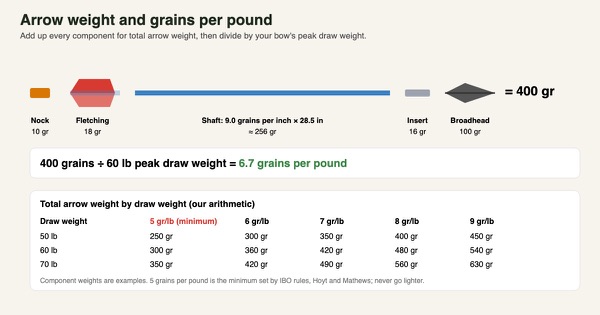
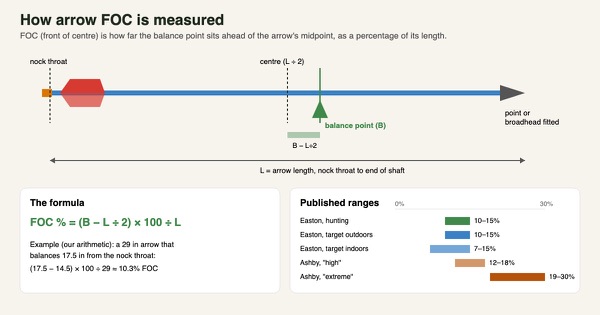
Elk are big, with thick hide, heavy muscle and large bones, so penetration matters. goHUNT suggests, for elk, "a 440 to 500 grain arrow traveling at a rate of 275 to 300 FPS with a front of center of 10% to 15%." Easton recommends 10–15% front of center for hunting, "especially for longer distance shots."
Some states also set arrow minimums. Idaho makes it unlawful to use an arrow and broadhead with a "combined total weight of less than three hundred (300) grains," and Montana's 2025 rules say "the arrow shall weigh no less than 300 grains with the broadhead attached."
Our guides to arrow weight and grains per pound, front of center and kinetic energy and momentum explain how to build and evaluate an elk arrow. Easton's widely published energy guideline places elk in the 42–65 ft-lb band.
Broadheads for elk
Fixed vs mechanical
Both fixed-blade and mechanical (expandable) broadheads are now legal in many elk states, subject to each state's rules. Fixed blades are simple and tough; mechanicals offer a larger cutting diameter and often fly more like field points. Our fixed vs mechanical comparison explains the trade-offs.
Cutting diameter and weight rules
Many elk states use a 7/8-inch standard. Colorado requires an "outside diameter or width of at least 7/8ths of an inch," Washington a "seven-eighths of an inch cutting diameter," and Wyoming and Utah a head that can't pass through a 7/8-inch ring. Montana adds that expandable broadheads must weigh "no less than 70 grains." Check every rule for the state you hunt.
Sharpness and tuning
Whatever head you choose, it must be razor-sharp and fly true. Tune broadheads to hit with your field points before the season; our field points vs broadheads guide explains how, and our broadhead targets guide covers safe practice.
Arrow speed matters less than accuracy
Faster arrows shoot flatter, which helps when you misjudge distance in open country. But most hunting bows already shoot within goHUNT's 275–300 fps elk range with a sensible arrow weight. Our IBO speed guide explains how your real speed compares with the rating. Accuracy at your effective range, and a well-placed shot, matter far more.
Elk anatomy vs deer
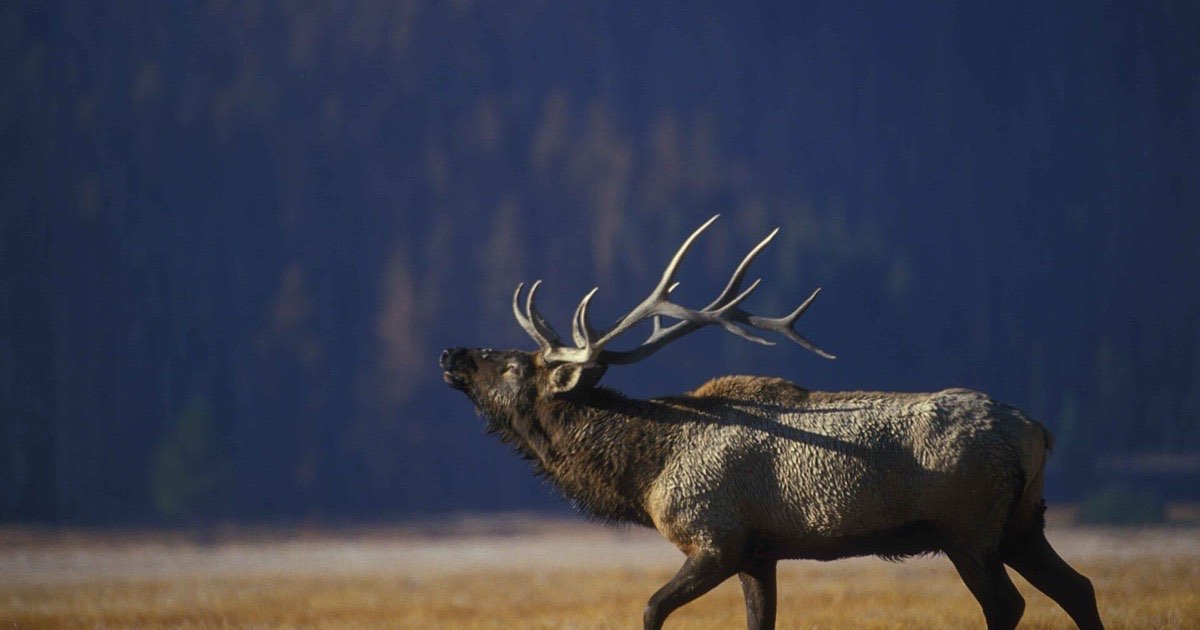
onX describes a mature bull's heart-lung area as spanning "roughly 18-24 inches when he's standing broadside." That's a bigger target than a deer's, but there's a catch: "On a bull elk, the scapula sits further back on the body, covering more of the chest cavity from most angles, and it can measure up to 2.5 inches thick."
Practical points from onX:
- Aim to avoid the shoulder blade. Because it sits further back, place your shot carefully behind it.
- Angles matter. onX says a steep quartering-to angle is, "for bowhunters… close to unshootable."
- Elk react differently. onX notes that "elk don't duck the string" the way whitetails often do, which makes a calm, well-placed shot even more important.
Our deer shot placement guide explains angles; apply the same principles with elk's larger size and shoulder position in mind.
Shot distance and ethics
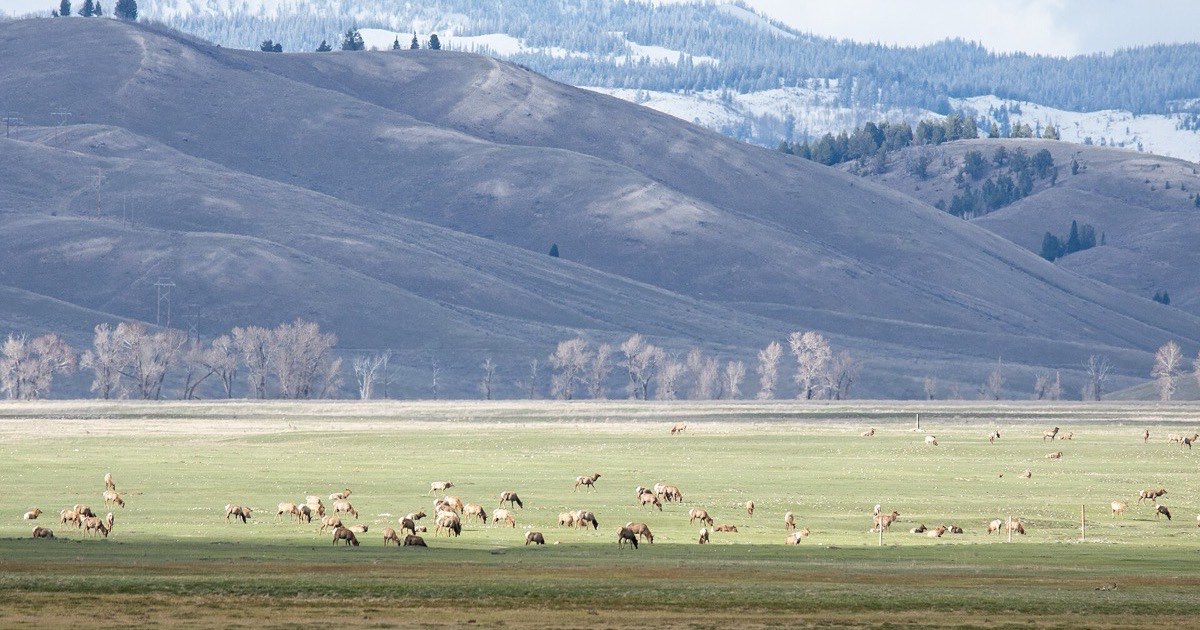
Elk country often offers longer shots than whitetail woods, but longer isn't better. Practise at the distances you might shoot, and set a maximum range where you can reliably hit a small target in hunting conditions. Our guide to effective bow range explains how to find yours. A rangefinder is essential in open country; see how to choose a bowhunting rangefinder.
Practising for elk country
- Shoot uphill and downhill, and learn how steep angles affect your aim.
- Shoot from kneeling and sitting, as you will in the field.
- Shoot when tired, for example after a short run or climb.
- Practise holding at full draw for longer than feels comfortable.
- Practise at your maximum range, in wind, on 3D elk targets if you can.
- Shoot with your pack on and in your hunting clothes.
Building an elk arrow step by step
- Check your state's rules for arrow length, arrow weight and broadhead width.
- Pick a target total weight (goHUNT suggests 440–500 grains) and work out the grains per pound for your draw weight.
- Choose a shaft spine from the maker's chart for your draw weight, arrow length and point weight.
- Choose inserts and broadheads to reach your target weight and an FOC in Easton's 10–15% range.
- Build a test arrow, weigh it and measure its FOC.
- Tune until broadheads and field points hit together, then build the full set and number each arrow.
When an elk comes in close
Many bowhunting encounters with elk happen at close range, often when a bull responds to calling. Draw when the elk's eyes are blocked by a tree or when its head is down or turned, be ready to hold at full draw while it steps into the clear, and pick a precise spot behind the shoulder rather than aiming at the whole animal. Practise drawing slowly and holding for 20 to 30 seconds so it isn't a struggle on the day.
Choosing a sight for elk country
Because shots in open country can be longer and less predictable, many elk hunters think carefully about their sight. Multi-pin sights give instant aiming points for several distances; single-pin sights give one uncluttered pin that you adjust to the ranged distance. Each has trade-offs; our single-pin vs multi-pin comparison explains them. Whatever you choose, check your marks at every distance you might shoot, including steep uphill and downhill angles.
Fitness and altitude
Elk hunting is often physically demanding: long walks, steep climbs and thin air. Tired muscles make it harder to draw smoothly and hold steady, so build fitness before the season and practise shooting when your heart rate is up. Give yourself time to adjust if you travel to high elevation.
Planning an elk hunt
Elk hunting opportunities vary widely: some states offer over-the-counter licences in some units, others use draws, and many archery elk seasons fall in late summer and early autumn. Rules, licence types and season dates change, so start planning early and read each agency's current regulations and application deadlines. Our bowhunting vs rifle hunting comparison explains why archery seasons often give longer, earlier opportunities.
Packing out and meat care
An elk is a very large animal, often taken far from a road. Plan how you will field dress, quarter and pack it out before you hunt, carry suitable game bags and a sharp knife, and keep meat cool in warm early-season weather. Check your state's rules on transporting game and any evidence-of-sex requirements.
Gear checklist
- Bow at a draw weight you can control, meeting your state's minimum
- Arrows at your chosen weight and FOC, meeting any arrow minimums
- Legal broadheads, sharp and tuned
- Rangefinder
- Release aid and spare
- Sight set for your practice distances; see lighted sight rules before adding a light
- Quiver, lighted nocks where legal
- Pack, water, layers and a way to process and pack out meat
After the shot
Elk are tough and can travel a long way after being hit. Mark the spot, watch and listen, and wait before following. The principles in our deer tracking guide apply, with even more patience for elk, especially after a questionable hit.
Common mistakes
- Relying on out-of-date state lists instead of the agency's own rules.
- Choosing draw weight by the legal minimum rather than what you can shoot well.
- Using untuned broadheads.
- Aiming like it's a deer and hitting the heavy shoulder blade.
- Taking long or steep quartering-to shots.
- Never practising in the mountains, at angles or when tired.
Building a dedicated elk setup
Advantages
- Arrow weight and broadheads matched to bigger animals
- Meets each state's specific rules
- More confidence on longer, tougher shots
Trade-offs
- Heavier arrows drop more at distance
- Rules vary by state and change yearly
- Needs more practice in realistic conditions
You can browse fixed-blade broadheads or elk hunting arrows on Amazon.
Frequently asked questions
What draw weight do you need for elk?
It depends on the state: Wyoming requires 50 lb, Oregon, Idaho and Washington 40 lb, Colorado 35 lb and Utah 30 lb (as checked October 2026). Practically, choose the most you can draw smoothly in hunting conditions.
Is 50 lb enough for elk?
It meets every minimum in the states we checked. With a well-built arrow and a good shot, many hunters use weights in this range.
What arrow weight is best for elk?
goHUNT suggests 440 to 500 grains at 275 to 300 fps with 10–15% FOC. Idaho and Montana set 300-grain minimums.
Are mechanical broadheads legal for elk?
In many states, yes, if they meet the width and other rules (Montana also requires at least 70 grains). Check your state's current regulations.
How much kinetic energy do you need for elk?
Easton's widely published guideline places elk in the 42 to 65 ft-lb band.
Where do you aim on an elk with a bow?
Behind the shoulder blade, into the heart-lung area, which onX says spans roughly 18 to 24 inches on a mature bull broadside.
How far should you shoot an elk with a bow?
No further than your effective range: the distance at which you can reliably hit a small target in hunting conditions.
Do I need a different bow for elk?
Not necessarily. Many hunters use the same bow for deer and elk, with a draw weight that meets the state's elk minimum and an arrow and broadhead built for bigger animals.
Is a lighted sight or lighted nock legal for elk hunting?
Several of the states above explicitly allow lighted nocks, but rules on electronic sights differ. Check your state's regulations and our lighted sights guide.
Why are some online lists of elk minimums wrong?
State rules change, and compilations aren't always updated. Oregon's own page, for example, now lists 40 lb for elk and allows broadheads with folding blades. Always check the agency's current regulations.
Related articles
 Guides
What Draw Weight Do You Need for Deer Hunting?
How much draw weight do you need for deer? Legal minimums, why arrow energy matters, compound vs traditional bows, elk, and choosing a weight you can shoot.
October 5, 2026 · 10 min read
 Guides
Arrow Weight for Hunting: Grains per Pound Explained
Arrow weight for hunting explained: what grains per pound means, the 5 GPP minimum, a weight table by draw weight, light vs heavy arrows, and starting points.
October 27, 2026 · 10 min read
 Guides
Arrow FOC Explained: Front of Center for Hunting Arrows
What arrow FOC (front of center) is, how to measure and calculate it, Easton's recommended ranges, how to raise or lower it, and the high-FOC debate.
October 27, 2026 · 9 min read