
Archery Targets for Broadheads: What Works
Which archery targets work with broadheads: bag, layered foam, 3D and self-healing foam, crossbow ratings, replaceable cores and arrow removal.

By Archery Insider Editorial Team
· 9 min read
In this article
Every bowhunter needs to shoot broadheads before the season. Broadheads can fly differently from field points, and the only way to know is to shoot them. But broadheads are hard on targets. Sharp blades slice the material that stops field points, mechanical heads open and lodge, and a target that is fine for field points can be destroyed, or simply refuse to give your arrows back.
This guide explains which target types work with broadheads, which do not, what crossbow ratings mean, how to remove broadhead-tipped arrows, and how to make a broadhead target last.
The quick answer
| Target type | Field points | Broadheads | Notes |
|---|---|---|---|
| Bag target | Yes | Generally no | Broadheads cut the cover and get buried |
| Layered foam block | Yes | Possible, but shortens target life | Layers pinch arrows; easy removal with field points |
| Self-healing or dense foam block | Yes | Commonly designed for broadheads | Check the maker's rating |
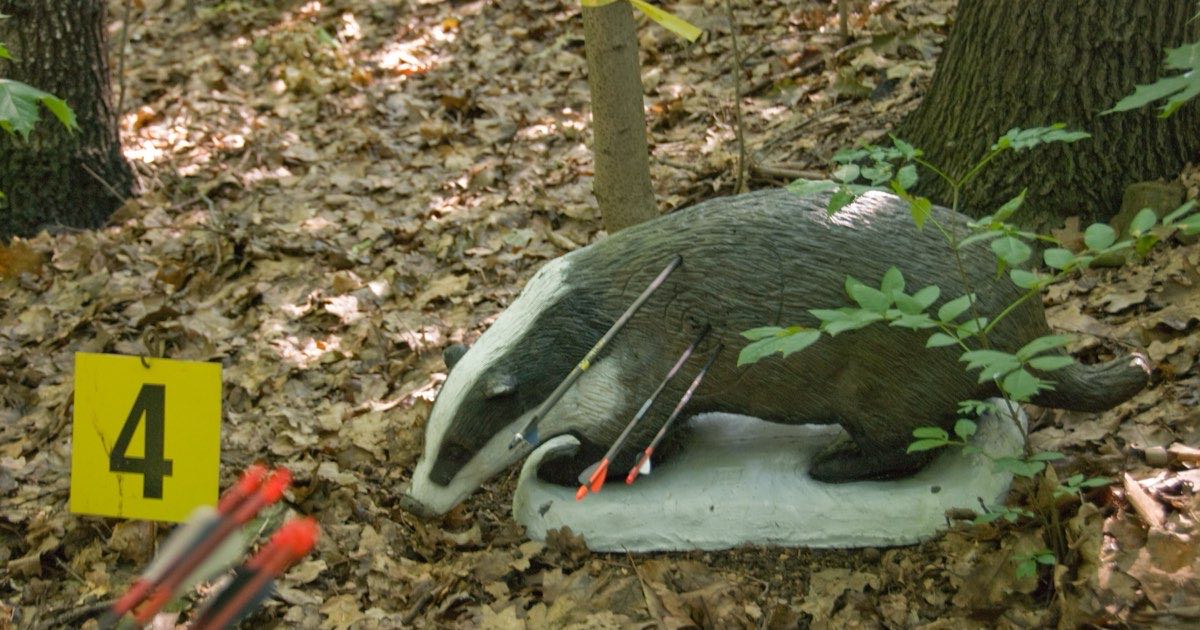
| 3D animal target | Yes | Often into a replaceable core | Realistic for hunting practice |
| Broadhead-specific targets | Some | Yes | Built to stop and release broadheads |
| Straw bosses | Yes | Not recommended | Designed for target archery |
Always follow the manufacturer's rating for your target, bow type and draw weight.
Why broadheads are hard on targets
- Blades cut. Field points push material aside; broadheads slice it. Every shot cuts fibres or foam that never fully recover.
- They go deep. With fewer surfaces in contact, broadheads can penetrate further, especially from fast bows and crossbows.
- They are hard to remove. Blades catch on the way out, and mechanical heads may open inside the target.
- Covers and outer layers suffer. Prime notes that broadheads in bag targets shred the outer covering that keeps the fill contained.
Bag targets
Prime Archery describes bag targets as best for field points only, with easy arrow removal, and suggests avoiding broadheads in them. They deteriorate faster if exposed to rain, although newer versions are more weather-resistant. Some bags are explicitly labelled for field points; Morrell's Outdoor Range replacement cover, for example, is marked "FIELD POINT ONLY" while also "CROSSBOW AND COMPOUND APPROVED" for field points. Our Morrell vs Block target review compares two popular field-point targets.
Layered foam blocks
Layered foam targets stop arrows by friction between layers. Prime Archery notes you "can use broadheads on these targets," but field points "dramatically increase the life of your target." With heavy draw weights, arrows may bury fairly deep before friction stops them, making removal harder. Many hunters shoot field points at layered foam and keep a separate target or zone for broadheads.
Self-healing foam and broadhead blocks
Many targets designed for broadheads use dense or "self-healing" foam that closes up after the arrow is pulled out. These are often shaped as cubes or blocks with several shooting faces, so you can rotate them as one side wears. Check the manufacturer's rating for broadheads, crossbows and maximum arrow speed before buying.
3D targets

3D animal targets let you practise realistic shot angles and aiming at the vital zone. Prime notes that foam cores "can wear out with repetition" and that most have "replaceable mid-sections." Broadheads may be lost inside foam cores if they penetrate too far, so many hunters shoot broadheads only at the replaceable core, and field points at the rest of the target.
Crossbow ratings
Crossbows shoot fast and hit hard. A target that stops vertical-bow arrows easily may be overwhelmed by a crossbow bolt, letting it pass through or bury so deep it is almost impossible to remove. Look for targets explicitly rated for crossbows and for your crossbow's speed. Scheels recommends confirming crossbow zero "with broadheads matching hunting specifications," so you will need a broadhead-rated target as well.
Removing broadhead arrows
- Wear gloves and keep your hands away from the blades.
- Pull straight back along the line the arrow entered, rather than twisting, which can widen the hole and catch blades.
- Use an arrow lubricant on the shaft if the target maker allows it, to reduce friction.
- Steady the target with one hand or your knee, well away from the arrow's line.
- Inspect the broadhead afterwards for bent or chipped blades, and the arrow for damage.
- With mechanical heads, use practice heads where possible; opened blades can be very hard to pull out.
Making a broadhead target last
- Shoot field points for most practice. Save broadheads for confirming flight, as part of tuning.
- Use a separate zone or target for broadheads, such as a replaceable core.
- Rotate faces and aim at fresh spots so damage spreads evenly.
- Use practice heads that match your broadheads' flight, where available, for repeated shooting.
- Keep it out of the weather when not in use; sun and moisture shorten foam life.
- Replace worn cores before arrows start passing through.
Practice heads
Many broadhead makers sell practice heads that match the weight and, ideally, the flight of their hunting heads, but with blunter or replaceable blades. They let you practise repeatedly without destroying your target or dulling your hunting blades. Practice heads are useful for most of your broadhead shooting, but always confirm with the actual heads you will hunt with before the season, because even small differences can change where arrows hit.
Target size and distance
Broadhead tuning means comparing groups at 30 yards and beyond, so your target needs a face large enough to catch a stray arrow at those distances, with room for separate aim points for field points and broadheads. A small block that is perfect for close-range form work can be frustrating, and costly in lost arrows, at 40 yards. Larger blocks and full-size 3D targets give more margin while you are still tuning.
Home-made targets and backstops
Some archers build their own targets from compressed foam, carpet scraps or stacked materials. These can work well for field points, but broadheads are a different matter: they cut through soft or loose materials, and hard materials can damage blades or deflect arrows dangerously. If you build your own, test it first with field points, then a single broadhead at close range, and always keep a safe backstop behind it. For most hunters, a commercial broadhead-rated target is the safer, simpler choice.
How broadhead targets fit into tuning
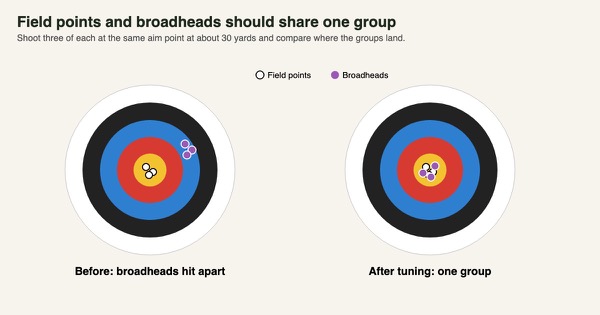
Broadhead targets are part of a tuning routine: shoot field points and broadheads at the same aim point and compare the groups. Bowhunter's broadhead tuning method uses comparison groups at 30 yards, then 40 to 50 yards. Our field points vs broadheads guide explains the full process.
When to replace a broadhead target
Replace a target, or its core, when arrows start penetrating much deeper than before, passing through, or coming out the back. Other signs are large chunks of foam breaking away, deep channels where broadheads have cut the same area repeatedly, and arrows that are much harder to remove. A worn target is not just a nuisance; an arrow that passes through can travel a long way, so keep a backstop in place and do not push a target past its useful life.
Moving and storing targets
Foam targets are bulky and some are heavy. A target stand or a simple wooden frame keeps the target at a sensible height and off wet ground, which extends its life. Between seasons, store targets out of direct sun and rain. Our guide to leaving targets outside explains how weather affects different target types.
Safety
- Use a safe backstop behind any target, in case of a pass-through or miss.
- Never shoot broadheads at a target that is not rated for them, especially with crossbows.
- Store broadheads covered, and do not leave broadhead-tipped arrows in the target.
- Keep children and pets away from broadhead practice, and from the target while arrows are in it.
Our backyard range guide covers safe target placement at home.
Choosing a broadhead target: a checklist
- Rated for broadheads (and crossbows, if you shoot one)
- Rated for your bow's speed or draw weight
- Replaceable core or multiple faces for longer life
- Easy arrow removal
- Suits your practice style: block for distance work, 3D for realistic angles
- Light enough to move, or durable enough to leave in place
Common mistakes
- Shooting broadheads into a bag target and ruining it.
- Using a vertical-bow target for a crossbow, so bolts pass through or bury deep.
- Shooting broadheads for all your practice, wearing out the target and dulling blades.
- Twisting arrows out, enlarging holes and catching blades.
- No backstop, especially as a target wears.
Dedicated broadhead targets
Advantages
- Built to stop and release broadheads
- Let you confirm hunting accuracy before the season
- Often rated for crossbows
Trade-offs
- Wear faster than field-point targets
- Arrow removal is harder than with bags
- Need replacing or new cores over time
You can browse broadhead targets, 3D targets with replaceable cores or crossbow broadhead targets on Amazon. Check the broadhead and speed ratings first.
Frequently asked questions
Can you shoot broadheads into a bag target?
Generally no. Prime Archery advises avoiding broadheads in bag targets; they get buried and shred the cover. Check your target's label.
What target is best for broadheads?
Dense, broadhead-rated foam blocks and 3D targets with replaceable cores are the most common choices. Follow the maker's ratings.
Do I need a different target for a crossbow?
Often yes. Look for targets rated for crossbows and your crossbow's speed, especially for broadheads.
How do I get a broadhead out of a foam target?
Wear gloves, steady the target, and pull straight back along the arrow's entry line. An arrow lubricant can help if the target maker allows it.
How can I make my broadhead target last longer?
Shoot field points for most practice, use a separate zone or core for broadheads, rotate faces and keep the target out of the weather.
Should I use practice heads or real broadheads?
Use practice heads for most of your broadhead shooting to save your target and your hunting blades, then confirm with the actual broadheads you will hunt with before the season.
Can I shoot mechanical broadheads into a foam target?
Yes, if the target is rated for broadheads, but opened blades can make removal difficult and damage the foam. Many hunters use matching practice heads for mechanicals and shoot the real heads only to confirm flight.
Related articles
 Training
Field Points vs Broadheads: Why Impact Changes
Why broadheads hit differently from field points, and how to fix it: paper tuning, spin-testing, micro-tuning the rest at 30 yards, FOC and re-sighting.
October 14, 2026 · 9 min read
 Reviews
Morrell Yellow Jacket YJ-350 vs Block Classic 18: Which Backyard Target?
Morrell Yellow Jacket YJ-350 vs Block Classic 18: published specs, fused versus open-layer foam, sides, speed rating, arrow removal, and which target suits you.
April 24, 2025 · 4 min read
 Guides
How to Set Up a Safe Backyard Archery Range
How to set up a safe backyard archery range: legal checks, safe buffer distances, backstops and netting, choosing a target, layout and house rules.
April 8, 2026 · 8 min read