
Tracking a Deer After the Shot: Blood and Hit Signs
How to track a deer after a bow shot: watch, listen and wait; how long to wait for each hit; reading blood, hair and arrow sign; grid searches and dogs.

By Archery Insider Editorial Team
· 10 min read
In this article
The shot is not the end of a bowhunt. An arrow kills by blood loss, and even a well-hit deer usually runs before it goes down. What you do in the next few minutes and hours decides whether you walk up to your deer or spend the night searching. Good trackers are patient, observant and methodical, and they know when to wait and when to back out.
This guide follows the recovery from the moment you release: what to watch and listen for, how long to wait for each type of hit, how to read blood, hair and arrow sign, how to follow a trail and run a grid search, and when to call in a tracking dog.
The quick answer
| Sign | Likely hit | Typical wait before following |
|---|---|---|
| Pink, frothy, bubbly blood | Lungs | 30 minutes to 1 hour |
| Bright red blood, deer crashes nearby | Heart or major vessels | 30 minutes to 1 hour |
| Dark red blood, sparse; arrow went farther back | Liver | 2 to 6 hours |
| Blood with green or brown matter, foul smell; hunched deer | Stomach or intestines | 4 to 12 hours, or overnight |
| Little blood, deer moves normally | Muscle or non-vital | Short wait, then careful follow-up |
Waiting ranges combine guidance from the National Deer Association and American Hunter; details below.
Step 1: Watch
The National Deer Association advises gathering "as much information as you can by observing the reaction of the deer after the shot." Note:
- How the deer reacted. A hard kick with the back legs is commonly associated with a heart or lung hit. A deer that hunches up, walks off slowly or stands with its back arched may be gut-hit; American Hunter mentions a clamped tail as a liver-hit sign.
- Where it ran and the exact spot you last saw it. Pick a landmark: a tree, a rock, a fence post.
- Where it was standing when you shot.
- Where you think the arrow hit, relative to the shoulder.
Step 2: Listen
Listen hard after the shot. The NDA mentions listening for "the sound of a shoulder being hit or the 'hollow pumpkin' sound of an arrow or bullet passing through the deer's chest." After the deer runs, you may hear it crash or fall. Note the direction and how far away it sounded.
Step 3: Wait
The NDA's rule of thumb: "I normally wait at least 30 minutes in the stand regardless of the shot, unless the deer is dead within view." Use the time to calm down, replay the shot and plan.
How long to wait, by hit
The two sources below differ in detail, so we show both. When in doubt, wait longer.
| Hit | National Deer Association | American Hunter |
|---|---|---|
| Heart or lungs (arrow) | Trail "after one hour" if confident | 30 minutes |
| Liver | "A minimum of 2 hours and sometimes 3 or 4" | 3 to 6 hours |
| Stomach or intestines | "4 to 6 hours", or overnight if cool | 6 to 12 hours |
| Muscle or non-vital | Not specified | 30 minutes, then hunt the deer carefully |
American Hunter adds conditions that change the plan:
- Heavy rain can wash out the trail: wait about 30 minutes, then follow quietly.
- Warm temperatures above 50°F risk the meat spoiling, so do not leave a deer overnight in heat.
- Areas with many predators may justify an earlier follow-up.
- Morning shots: for a gut hit, wait until afternoon. Evening shots: consider leaving a gut-hit deer overnight.
Step 4: Check the hit site and the arrow
Go to where the deer stood, quietly, and look for:
- The arrow. If it passed through, it tells you a lot. Bubbly, pink blood points to lungs; dark blood to liver; green or brown material and a sour smell to the gut.
- Hair. Cut hair at the impact site. Its colour and length can hint at where on the body the arrow hit.
- First blood. Note how much and what kind.
Reading blood
The NDA's guide to blood colour:
| Blood | What it usually means |
|---|---|
| Crimson, frothy | "A hit in the lungs and usually a decent blood trail" |
| Bright red | "Can indicate a heart shot or possible leg wound" |
| Dark red | "Usually means a hit to the liver" |
| Mixed with green or brown material | "Usually means a gut-shot" |
Blood also tells you about the deer's movement. Spray-like blood on both sides of the trail suggests a pass-through with good blood loss. Drops that get smaller and farther apart suggest bleeding is slowing, which may mean a non-vital hit or a wound clotting.
Not sure if it is blood? The NDA's tip: "Blood will fizz when sprayed with hydrogen peroxide." It helps on dark leaves or in poor light.
Step 5: Follow the trail
- Mark the last blood. The NDA drops "a square of paper at each patch or spot of blood," usually toilet paper, so you can see the direction of travel.
- Move slowly and quietly, looking ahead as well as down. A wounded deer may be bedded within sight.
- Search wider when blood stops. Check both sides of the trail, and look on branches and grass at the height of the wound.
- Track with a partner. One person stays on the last blood while the other searches ahead. For a single-lung hit, American Hunter suggests one person follows the trail while the other scouts ahead.
- Use a good light after dark. The NDA's kit list includes a flashlight of about 50 to 70 lumens.
Tracking after dark
Many bowhunting shots happen in the last minutes of light, so plenty of trails are followed in the dark. Blood can be easier to see under a strong, white light than in dim evening light, but sign is easier to miss and a wounded deer is harder to spot. Follow only good, steady blood after dark, and only for a hit you are confident in. If the blood is sparse or the hit doubtful, mark the last spot, back out quietly and resume at first light. Tell someone where you are going, carry spare batteries, and check your state's rules on carrying lights and weapons while tracking at night.
When the trail runs out
- Grid search. The NDA advises beginning "a grid search of the area" and recruiting friends, keeping everyone within sight. Walk slow parallel lines across likely cover.
- Check water. "When all else fails, head to your nearest water source. I have found countless deer near or in creeks or shallow ponds," writes the NDA's author.
- Check thick cover and downhill routes, where wounded deer often go.
- Come back in daylight. If you lose the trail at night, mark it, back out, and return at first light.
Tracking dogs
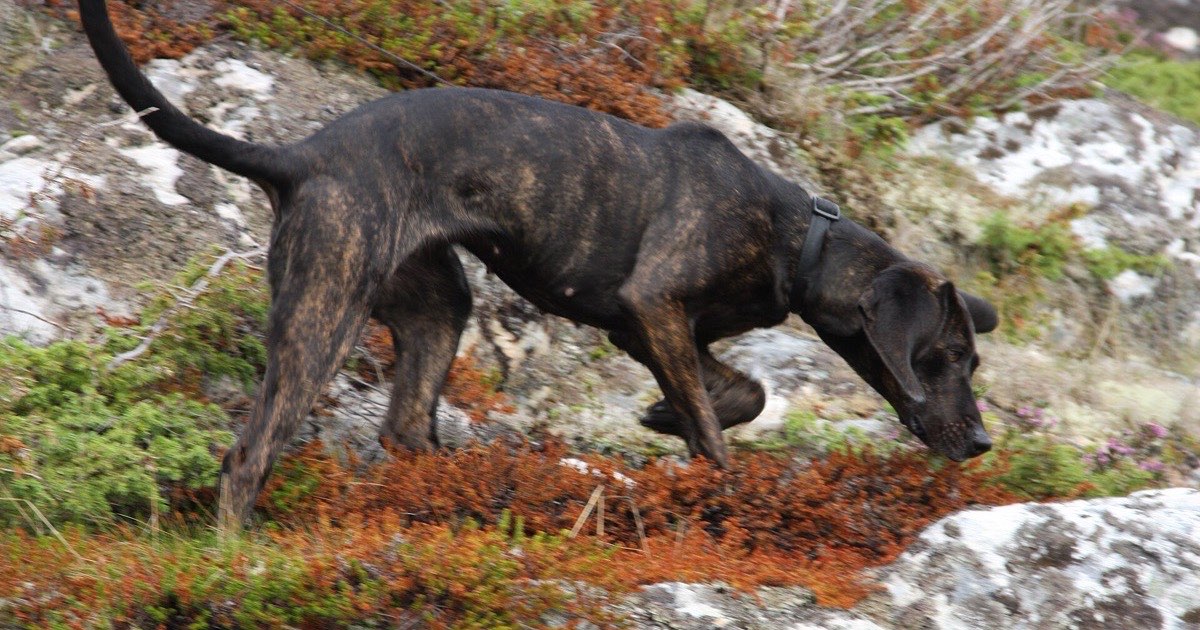
The NDA calls trailing dogs "without a doubt one of the most effective tools for finding a marginally but fatal hit deer, as long as they are legal in your state." American Hunter agrees: "Use a tracking dog where legal and do everything possible to recover that deer, it's your duty as a hunter." Rules on tracking dogs vary widely, including whether the dog must be leashed and whether the handler may carry a weapon, so check your state's regulations and find a local tracker before the season.
Why some shots leave poor blood trails
- High hits may not bleed much externally until the chest fills.
- Single-lung hits, common from steep tree-stand angles, can leave a deer able to travel far. Bowhunter magazine notes that a deer's lungs are separated by a membrane, so "one lung can remain fully functional, even if the other collapses."
- No exit wound means blood collects inside the deer. A pass-through and low exit hole give better trails.
Good shot placement is the best tracking tool there is; our shot placement guide explains how to get a double-lung, pass-through hit.
Common tracking mistakes
- Climbing down too soon. Excitement makes 10 minutes feel like an hour. Set a timer.
- Walking on the trail. Follow beside the blood, not on it, so you do not smudge sign if you have to backtrack.
- Too many people. One or two careful trackers beat a noisy crowd that tramples the sign. Bring helpers in for a grid search.
- Not marking the last blood. Without a marker, it is easy to lose the line when the blood thins out.
- Looking only at the ground. Blood often smears on leaves, grass and branches at the height of the wound.
- Giving up at dark. Mark the spot, back out, and return at first light rather than abandoning the search.
- Assuming a miss. Check the arrow and the ground carefully before deciding you missed. A clean pass-through can leave little visible sign at first.
If you cannot find the deer
Sometimes, despite everything, a deer is not recovered. American Hunter's advice is to "go back the following day and grid search," and to use a tracking dog where legal. Search thick cover, field edges, ditches and water. Watch for birds such as crows or vultures gathering, which can lead you to a carcass. Afterwards, think honestly about the shot: the distance, the angle, the deer's behaviour and your equipment. Most lost deer come from marginal angles, long shots or pushing too soon, and each of those can be fixed.
Check your state's rules on tagging and reporting, and on whether you may keep hunting after wounding a deer, as these vary.
Once you find the deer
- Approach from behind, slowly, and watch for breathing or movement. Make sure the deer is dead before you touch it.
- Tag it immediately, following your state's rules, before moving it.
- Field dress promptly, especially in warm weather, and cool the carcass as quickly as possible.
- Take photos and notes of the hit and the trail; they make you a better tracker next time.
Your tracking kit
The NDA's suggested kit, adapted for bowhunters:
- Flashlight or headlamp, plus spare batteries
- Toilet paper or flagging tape to mark blood
- Compass or GPS, and a map or mapping app
- Hydrogen peroxide in a small spray bottle
- Knife and drag rope
- Phone, charged, to call helpers or a tracker
Waiting longer before tracking
Advantages
- Gives a hit deer time to lie down and expire
- Avoids pushing a wounded deer out of the area
- Usually leads to more recoveries on marginal hits
Trade-offs
- Rain can wash out the trail
- Heat can spoil meat
- Predators may reach the deer first
You can browse blood-tracking lights or flagging tape on Amazon.
Frequently asked questions
How long should I wait to track a deer shot with a bow?
At least 30 minutes for any hit. For a confident heart or lung hit, 30 minutes to an hour; for a liver hit, 2 to 6 hours; for a gut hit, 4 to 12 hours or overnight in cool weather.
What does pink, bubbly blood mean?
It usually indicates a lung hit, and normally a good blood trail.
What does dark red blood mean when tracking a deer?
Dark red blood usually indicates a liver hit, which is fatal but slower. Give the deer several hours.
What should I do if I lose the blood trail?
Mark the last blood, search in widening circles, run a grid search with helpers, check water, and come back in daylight. Call a tracking dog if they are legal where you hunt.
Are tracking dogs legal?
It depends on the state; rules vary on leashes and on whether the handler may carry a weapon. Check your regulations.
Should I track a deer at night?
Only on a strong blood trail from a hit you are confident in. If the sign is sparse or the hit was marginal, mark the spot, back out and return at first light.
Related articles
 Guides
Where to Shoot a Deer With a Bow: Shot Placement
Bow shot placement for deer: where the heart and lungs sit, how to aim broadside, quartering away and from a tree stand, which shots to pass on, and why.
October 6, 2026 · 10 min read
 Guides
Can You Hunt Deer With a Bow? A Beginner's Guide
Yes, you can hunt deer with a bow. Learn the legal basics, which bows work, how hard it is, effective range, gear, shot placement and a first-season plan.
October 6, 2026 · 13 min read
 Guides
How Far Can You Shoot a Deer With a Bow?
Effective bow range for deer: what bowhunter education says, why long shots wound more, arrow flight times, jumping the string, and how to find your limit.
October 7, 2026 · 9 min read