
Archery Practice at Home: Blank Bale and Bow Trainers
How to practise archery at home safely: check local rules, blank bale shooting at close range, stretch bands, shot trainers and a weekly routine.

By Archery Insider Editorial Team
· 10 min read
In this article
Not everyone can get to a range several times a week, especially in winter. The good news is that a lot of archery improvement happens at short range or with no arrows at all. Olympic archers spend plenty of time shooting a few metres from a plain target, and form work with a stretch band can be done in a living room.
This guide shows how to practise at home safely. It starts with the question you must answer first (is it allowed where you live?), then covers blank bale shooting, practice without arrows, a sample weekly routine and a safety checklist.
The quick answer: can you practise archery at home?
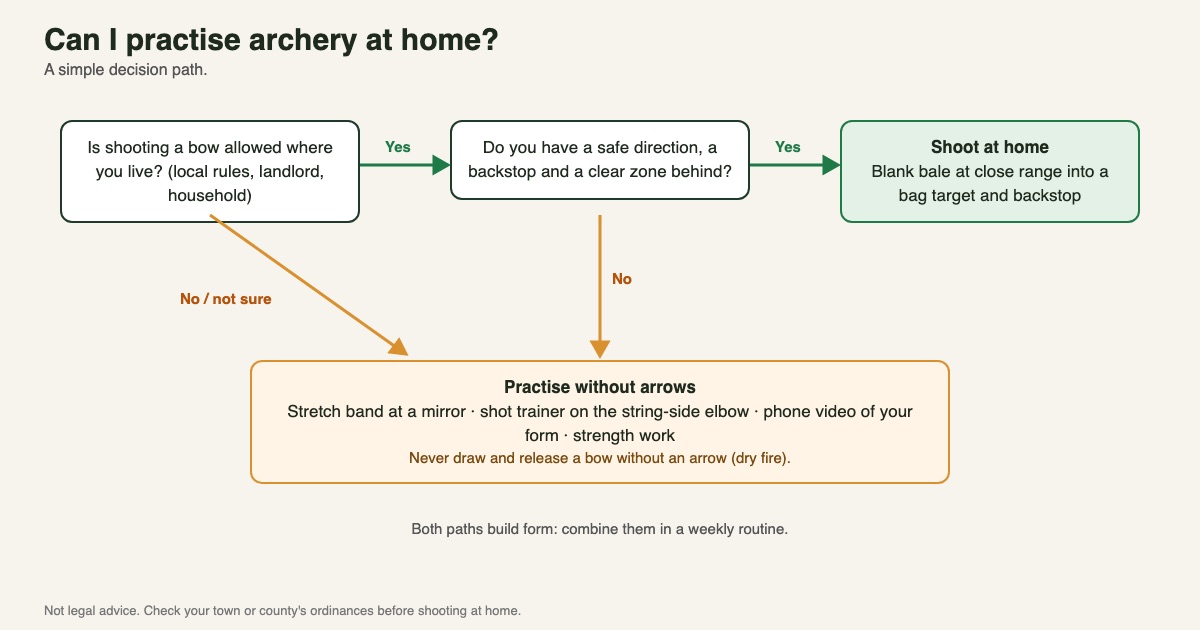
Often, yes, with conditions. You need to be allowed to shoot where you live, have a safe direction and a proper backstop, and keep everyone clear. If you can't meet those conditions, you can still practise form at home without shooting an arrow.
Step 1: Is it legal and safe where you live?
Before you set up anything, find out whether shooting a bow at home is allowed. Archery 360's yard-safety guide recommends:
- Check local ordinances. "Start by checking your town or county's website for archery-related ordinances." If you can't find an answer, Archery 360 suggests calling the local police or asking an archery shop.
- Talk to the neighbours. "Tell neighbors you plan to practice archery in your yard." It avoids alarm, and they may tell you about children or pets you hadn't considered.
- Ask your landlord if you rent, and tell everyone in the household when you'll be shooting.
Archery 360 is also clear about direction: "Don't shoot toward roads, houses or areas where people pass by or hang out."
For a full outdoor set-up, from target choice to layout, see our guide to setting up a backyard archery range. This article focuses on the practice itself.
Shooting at home: blank bale
What is blank bale shooting?
Blank bale means shooting at a target with no aiming face, usually from close range. With nothing to aim at, you can focus entirely on how the shot feels: your stance, draw, anchor, expansion and release.
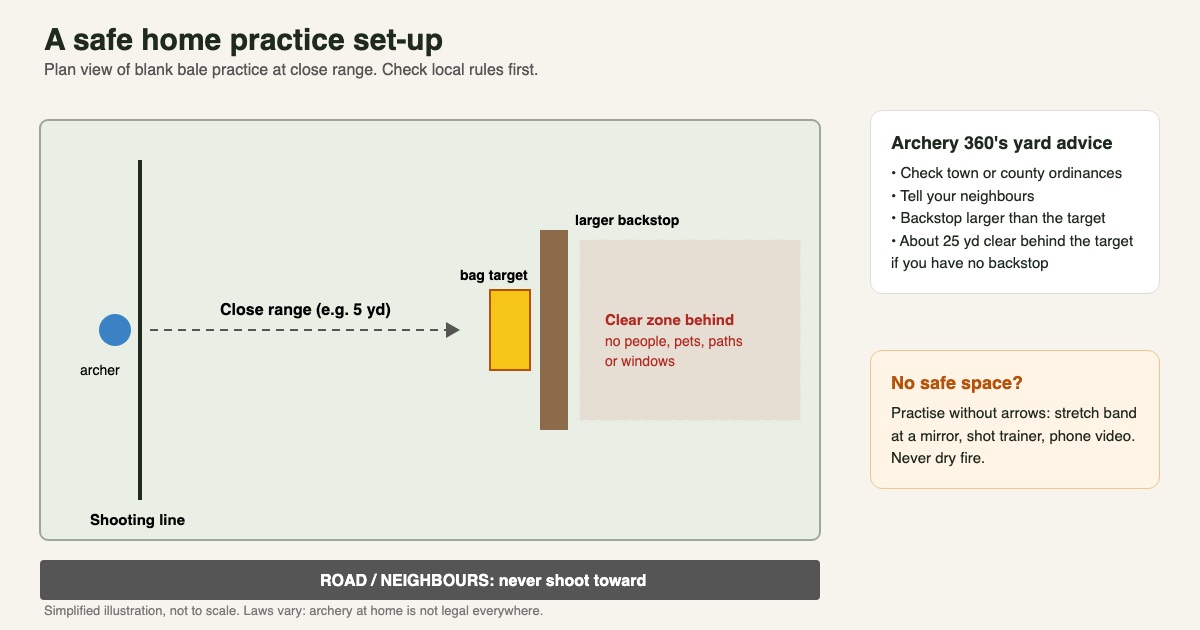
Olympic recurve archer Crispin Duenas explains in Archery 360 that the archer "typically shoots on a blank bale 5 to 70 meters away, depending on the skills they're trying to hone." At home, you'll be at the close end of that range. Archery 360's indoor-range guide notes that "even shooting at 5 yards will develop key abilities."
Some coaches use a variation with eyes closed. Elite Archery describes "blind bale" shooting, where "you shoot at a target with your eyes closed", and stresses: "Stand close to the target so that you don't miss." If you try it, use a large target at very close range, keep the bow pointed safely at the target, and only do it once your form is consistent with your eyes open.
Blank bale is also a standard tool against target panic, because it takes the pressure of aiming away. Our guide to target panic explains how it fits into a recovery plan.
Setting up an outdoor blank bale
- Choose a safe direction, away from roads, houses, paths and gardens where people gather.
- Use a backstop. Archery 360 says it "should be larger than the target and capable of stopping arrows. This could be an old carpet hung behind your target."
- Leave a clear zone behind. Archery 360 advises: "Make sure you allow for 25 yards of space behind your target if you're not using a backstop", and "if possible, also leave about 25 yards of safe area behind the target and backstop."
- Use a target rated for your bow. Check the target's draw weight and speed rating against your setup.
- Store your target properly between sessions. Our guide to leaving archery targets outside explains what weather does to foam and bag targets.
Indoor home ranges
A garage, basement or long room can work for blank bale, with care. Archery 360's guide to building an indoor range suggests that "many archers choose to use a big bag target as a backstop. They will then place a smaller target in front of the bag target."
Indoors, protect the building as well as people. Archery 360 warns that "arrows can damage walls, doors and other homebuilding materials", and stresses: "Always shoot in a safe direction and be sure to have the proper backstop to catch any arrows." Practical steps include:
- Shoot towards a solid wall, never towards a door, window or room someone might walk out of.
- Hang heavy material (an old carpet or purpose-made netting) behind and around the target to catch any stray arrows.
- Lock or block doors into the shooting lane, and tell the household when you're shooting.
- Check the ceiling height so your bow limbs and arrows clear lights and beams at full draw.
- Use field points, never broadheads, indoors.
For choosing a target, our Morrell Yellow Jacket vs Block Classic review compares two popular bag and block designs. Our range safety rules also apply at home.
Practice without arrows
If you can't shoot at home, or between shooting sessions, there's still plenty to work on.
Stretch bands and bow trainers
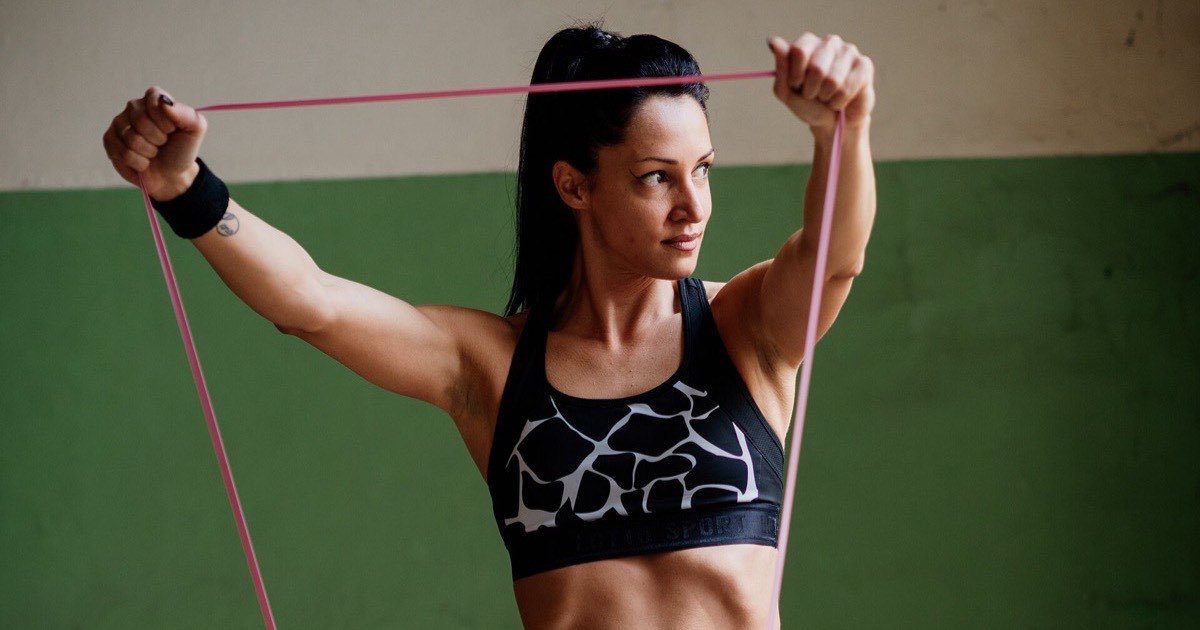
A stretch band, or a purpose-made bow trainer (a band with a grip that mimics a bow), lets you rehearse your draw without a bow or arrow. Duenas suggests that "you can also pull a stretch band in front of a mirror to study your body position during your draw cycle." The FITA coaching manual notes another use: "An elastic string is helpful to determine draw length."
How to use a band or bow trainer:
- Stand side-on to a mirror in your shooting stance.
- Raise your bow arm and hold the band (or trainer grip) as you would a bow.
- Draw to your anchor, watching your shoulders, elbow and head position in the mirror.
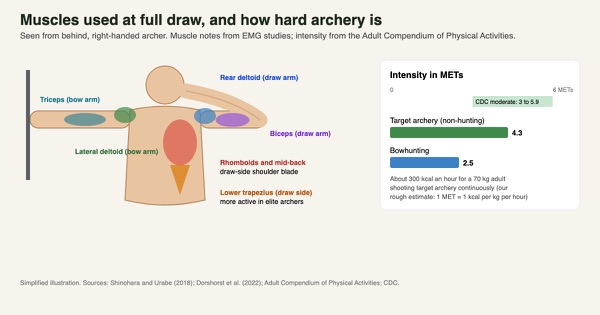
- Hold for a few seconds, feeling your back muscles do the work.
- Let down slowly. Don't let the band snap back, and never aim it at anyone.
Start with a light band and short sessions. The goal is form, not exhaustion.
Shot trainers
A shot trainer, as Duenas describes it, is "a strap system that attaches to your bowstring and connects to your string-side elbow." It lets you "feel the back tension without putting any load on your fingers", which helps you learn to pull with the back rather than the arm. Use it as the maker instructs, and stay in control throughout the draw and let-down.
Video feedback
Duenas notes that "you can use your phone for video feedback." Prop the phone up behind you and to the side, record a few draws or shots, and compare them. Look for:
- A consistent stance and head position.
- A straight line from bow hand through to drawing elbow at full draw.
- The same anchor every time.
- A relaxed follow-through after release.
Our archery form steps and how to shoot a recurve bow give you a checklist to compare against.
Never dry fire
One rule overrides all the others: never draw and release a bow without an arrow. Hoyt's manual explains: "Dry fire means to draw and release your bow without an arrow. Shooting without an arrow, which absorbs most of the bow's stored energy, could cause severe damage to the bow and possible injury."
That's why form work without arrows uses a band or trainer, not your bow. If you draw your actual bow for practice, have an arrow nocked and let down slowly towards a safe backstop. Our guide to dry firing a bow explains what to do if it happens.
Strength and conditioning
Archery fitness complements home practice. Simple band and bodyweight exercises strengthen the shoulders and back that hold you steady at full draw, and help prevent injury. Our archery exercises guide includes a full routine.
A weekly at-home routine (example)
This is an example, not a prescription. Adjust it to your schedule, fitness and access to a safe shooting space.
| Day | If you can shoot at home | If you can't shoot at home |
|---|---|---|
| Monday | 20 to 30 blank bale shots focusing on stance | 10 minutes of band draws at a mirror |
| Tuesday | Rest or strength work | Strength work |
| Wednesday | Blank bale with video; review one form point | Shot trainer and video review |
| Thursday | Rest | Rest |
| Friday | Blank bale focusing on release and follow-through | Band draws with a hold at anchor |
| Weekend | Range session or league night | Range session or league night |
Keep sessions short and focused on one thing at a time. When you get to a range, test what you've worked on at real distances. Our archery practice plan gives more structured drills, and our guide to indoor archery explains how to join a winter league.
Home practice safety checklist
- Confirm shooting is allowed where you live, and tell neighbours and household members.
- Shoot only in a safe direction, never toward roads, houses or paths.
- Use a backstop larger than the target, and keep the zone behind it clear.
- Use a target rated for your bow, and field points only.
- Indoors, protect walls and doors and block access to the shooting lane.
- Never dry fire; practise draws with a band or trainer instead.
- Store bows and arrows away from children when you've finished.
When you're kitting out, you can browse archery bow trainers or archery bag targets on Amazon.
Frequently asked questions
Can I practise archery at home?
Often, if local rules allow it and you have a safe direction, a proper backstop and a clear area behind the target. If not, you can still practise form with a stretch band, shot trainer and video.
What is blank bale shooting?
Shooting at a plain target, without an aiming face, from close range so you can focus on form. Crispin Duenas says archers use blank bales from 5 to 70 metres depending on the skill they're working on.
What is a bow trainer and how do you use it?
A band, usually with a grip, that mimics drawing a bow. Stand side-on to a mirror, draw to your anchor, hold briefly and let down slowly, watching your body position.
Is it legal to shoot a bow in my backyard?
It depends on where you live. Check your town or county's ordinances, ask the local police or an archery shop if unsure, and check any lease or homeowner rules.
Can I shoot indoors in my garage?
If it's allowed where you live and you set it up safely, yes: shoot toward a solid wall, use a bag target in front of a larger backstop, protect walls and doors, and keep others out of the lane.
Can I draw and release my bow without an arrow?
No. That's a dry fire, which Hoyt warns "could cause severe damage to the bow and possible injury." Use a band or bow trainer for no-arrow practice.
How often should I practise at home?
Little and often works well: short, focused sessions on most days, with rest days and a range session when you can.
Related articles
 Guides
How to Set Up a Safe Backyard Archery Range
How to set up a safe backyard archery range: legal checks, safe buffer distances, backstops and netting, choosing a target, layout and house rules.
April 8, 2026 · 8 min read
 Training
Archery Practice Plan: 10 Drills and a Weekly Routine
A structured archery practice plan: arrows per session, warm-ups, 10 proven drills from blank bale to pressure games, weekly routines and a practice log.
March 20, 2025 · 7 min read
 Training
Archery Exercises: Muscles Used, Workouts and Calories
Is archery good exercise? Calories burned, the muscles archery works, archery exercises like SPT holds and band draws, a sample routine, and injury tips.
October 30, 2026 · 9 min read