
Indoor Archery: How to Get Started This Winter
Indoor archery explained: WA 18 m, NFAA 300, Vegas and Lancaster formats, distances and scoring, leagues, arrow limits, the 2027 calendar and your first night.

By Archery Insider Editorial Team
· 12 min read
In this article
When the evenings draw in and outdoor ranges go cold and dark, a lot of archers move inside. Indoor archery means short distances, controlled conditions, regular league nights and some of the biggest tournaments in the sport. It's also one of the easiest ways for a beginner to shoot every week through the winter.
This guide explains what indoor archery is, the four formats you're most likely to meet, how leagues work, the main 2027 indoor tournaments, the equipment rules that matter (especially arrow diameter), and what to expect on your first night.
What is indoor archery?
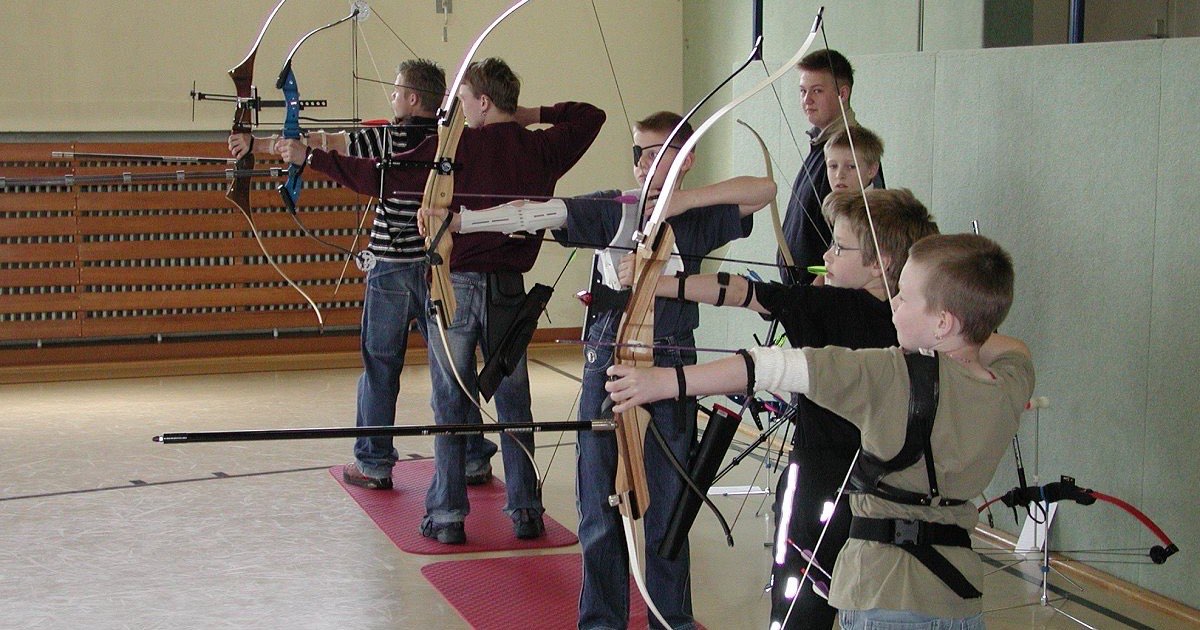
Indoor archery is target archery shot inside, usually in a dedicated archery range, a sports hall or a shop's lanes. Distances are short and the target faces small, so it rewards consistent form rather than wind reading or range estimation. Archery 360 notes that "most lanes offer 20-yard shots, while a few stretch it to about 40 yards."
The two standard distances are 18 metres, used in World Archery and many club rounds, and 20 yards (about 18.3 m), used in NFAA rounds and common in North American leagues. Both use small faces, usually 40 cm across, so scores depend on how tightly you can group.
Indoor archery runs mainly through the colder months, when outdoor shooting is hardest. Start dates vary by club and shop, so check with your local range for when their leagues begin.
The main indoor formats
World Archery 18 m round
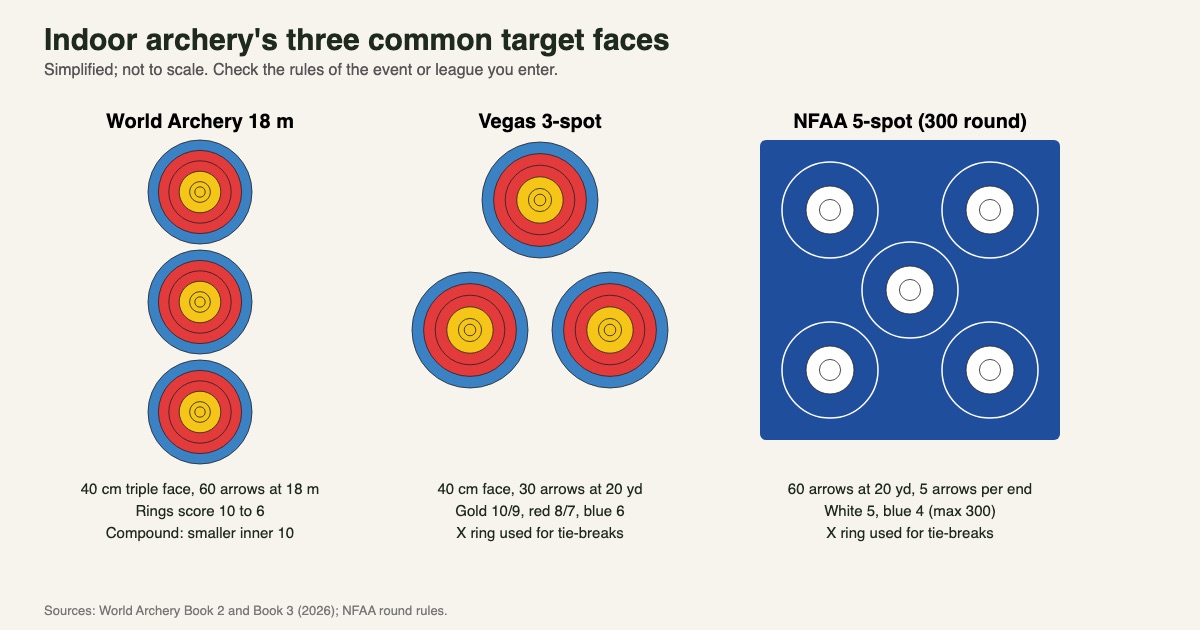
World Archery's indoor round is 60 arrows at 18 metres on a 40 cm face. Book 2 lists the round as "18 m | Indoor & Outdoor | 40 cm | All Divisions | 60" arrows, and says that "for the 18 m Round, the 40 cm triple face will be used for Recurve and Compound individuals and teams."
The triple face has three small target spots, arranged in a triangle or "in a vertical column", with centres about 22 cm apart. Each spot shows only the inner rings, scoring 10 to 6. The 10 ring differs by division: "the 40 cm-R has a 4 cm 10 ring, the 40 cm-C has a 2 cm 10 ring". In other words, compound archers aim at a smaller 10.
Two scoring rules catch beginners out. Book 3 says that "if more than one arrow is shot into the same 40cm 5-ring face (spot), both (or all) arrows count as part of that end, but only the lowest value arrow will score", and "any arrow missing the outermost blue 6-zone will be scored as a miss." So each arrow goes in a different spot, and a 5 doesn't exist on this face.
NFAA 300 round (5-spot)
The National Field Archery Association's indoor round is the 300 round, shot on the blue-and-white 5-spot face. NFAA rules describe it as "shot as three (3) games at a distance of 20 yards. Each game shall consist of four (4) ends of five (5) arrows per end. There are four (4) minutes per end."
That's 60 arrows in total. Scoring is simple: "X - tie breaker / White Rings - 5 points / Blue Rings - 4 points". With 60 arrows at a maximum of 5 points each, a perfect score is 300, hence the name. The NFAA adds that "the inner 'X' ring is used only to break ties", so top archers chase X counts as much as points.
Vegas round (3-spot)
The Vegas round, made famous by the Vegas Shoot, uses a triangular 3-spot face. NFAA rules: "A standard unit consists of 30 arrows"; it's "shot as three (3) games at a distance of 20 yards. Each game shall consist of ten (10) ends of three (3) arrows per end. There are two (2) minutes per end."
The scoring zones are X (tie-breaker), 10, 9, 8, 7 and 6. The NFAA's Vegas guide describes the face as gold (scoring 10 or 9), red (8 or 7) and blue rings. The maximum is 300 for 30 arrows. The NFAA also states a rule that applies across its rounds: "An arrow shaft need only touch the line to be counted in the area of next higher value." Our coverage of the 2026 Vegas Shoot and the 2025 Vegas Shoot shows how close scores get at the top.
Lancaster Classic format
The Lancaster Archery Classic, held in Pennsylvania each January, is one of the biggest indoor events in North America. Its organisers describe "a 60-arrow qualification round, followed by head-to-head matches". In 2025, the published rules set the qualification as "60 arrows from 18m at a 40cm target face w/ inner X's scored as 11's; Maximum possible score of 660." Scoring the X as 11 rewards the very centre in a way most other rounds don't. Check the current year's rules before you enter, because formats can change from year to year.
Indoor formats compared
| Format | Distance | Face | Arrows | Scoring | Max score |
|---|---|---|---|---|---|
| World Archery 18 m | 18 m | 40 cm triple face | 60 | 10 to 6; compound inner 10 | 600 |
| NFAA 300 | 20 yd | 5-spot | 60 | 5 and 4; X for ties | 300 |
| Vegas | 20 yd | 40 cm 3-spot | 30 | 10 to 6; X for ties | 300 |
| Lancaster (2025 rules) | 18 m | 40 cm | 60 | Inner X scores 11 | 660 |
For a general explanation of rings, line-cutters and scorecards, see our guide to how archery scoring works.
How indoor leagues work
Leagues are the backbone of indoor archery. A league usually meets on the same weeknight for a set number of weeks, and you shoot a round each session. Archery 360 explains that most leagues "use a rolling scoring system that carries over one week to the next", so your running total builds over the season.
What varies from league to league:
- Format. Many shoot the Vegas or NFAA 300 round; clubs following World Archery rules often shoot 18 m.
- Divisions. Usually split by bow type (compound, recurve, barebow, traditional) and sometimes by age or skill.
- Handicaps. Some leagues use handicaps so that newer archers can compete with experienced ones.
- Missed weeks. Many let you make up a missed session, but rules vary.
- Cost. Leagues usually charge a fee for the season or per night. Ask what's included, such as target faces and lane time.
Leagues are also the friendliest way in. The NFAA puts it well: "Within the NFAA family, you'll likely have no problems finding other members that can walk you through your first target round."
The 2027 indoor calendar
These are the big dates for the 2027 indoor season, taken from the organisers' own announcements. Always check the official event sites for registration and any changes.
| Event | Dates | Location |
|---|---|---|
| Rushmore Rumble | 8–10 January 2027 | Indianapolis, Indiana |
| Lancaster Archery Classic | 21–24 January 2027 | Spooky Nook Sports, Manheim, Pennsylvania |
| NFAA Indoor National Championships | 5–7 February 2027 | Memphis, Tennessee |
| IFAA World Indoor Championships | 5–7 February 2027 | Memphis, Tennessee |
| The Vegas Shoot | 11–14 March 2027 | Las Vegas, Nevada |
The NFAA published its 2027 indoor calendar on 30 April 2026. Lancaster Archery has announced changes for 2027, including elimination matches for all divisions and a new Youth Barebow division.
Equipment: what you need (and what you don't)
You can start indoor archery with the bow you already own, or with a rental. Most ranges have a basic beginner kit. If you're building your own, our beginner equipment list covers the essentials.
Can I use my hunting bow indoors?
Usually, yes. Many people shoot their hunting compound in winter leagues to stay sharp. Swap broadheads for field points, check that your arrows meet the diameter rule (below), and check the range's draw weight and speed rules. Some ranges cap them.
Arrow diameter limits
Indoor archers often use thicker arrows, because a fatter shaft has a better chance of touching a higher-scoring line. Each organisation caps the diameter:
| Organisation | Maximum arrow shaft diameter | Point diameter |
|---|---|---|
| World Archery | 9.3 mm | 9.4 mm max |
| NFAA | 0.422 in (includes wrap, nock and nock insert) | 0.425 in max |
| Lancaster Classic (2025 rules) | Size 2712 (10.7 mm, .422 in); 9.3 mm for barebow and longbow | See the current rules |
World Archery Book 3: "The maximum diameter of arrow shafts will not exceed 9.3 mm." Arrow wraps are excluded but "will not extend further than 22 cm toward the arrow point", and "the tips/points of the arrows will not exceed 9.4 mm in diameter." The NFAA's rule is that the "maximum arrow shaft diameter allowed in NFAA competition will be 0.422 inches, with point diameter not to exceed 0.425 inches."
So fat arrows are legal, within these limits. If you shoot both World Archery and NFAA events, a shaft that suits the NFAA may be too thick for World Archery.
Fletching
Indoors there's no wind, and the short distance gives an arrow little time to straighten out. Many indoor archers use larger feathers or vanes for fast stabilisation. Our feathers vs vanes comparison explains the trade-offs.
Other kit
- Spare target faces if you practise at home or your league doesn't supply them.
- An arrow puller for tight foam or straw bosses.
- A bow stand or space on a rack, since indoor lines can be crowded.
- Notebook or app to track scores across league weeks.
No tracer nocks for World Archery events: Book 3 says that "tracer nocks … are not allowed."
Browse Vegas 3-spot target faces or NFAA 5-spot target faces on Amazon for home practice.
How to find an indoor range and what to expect
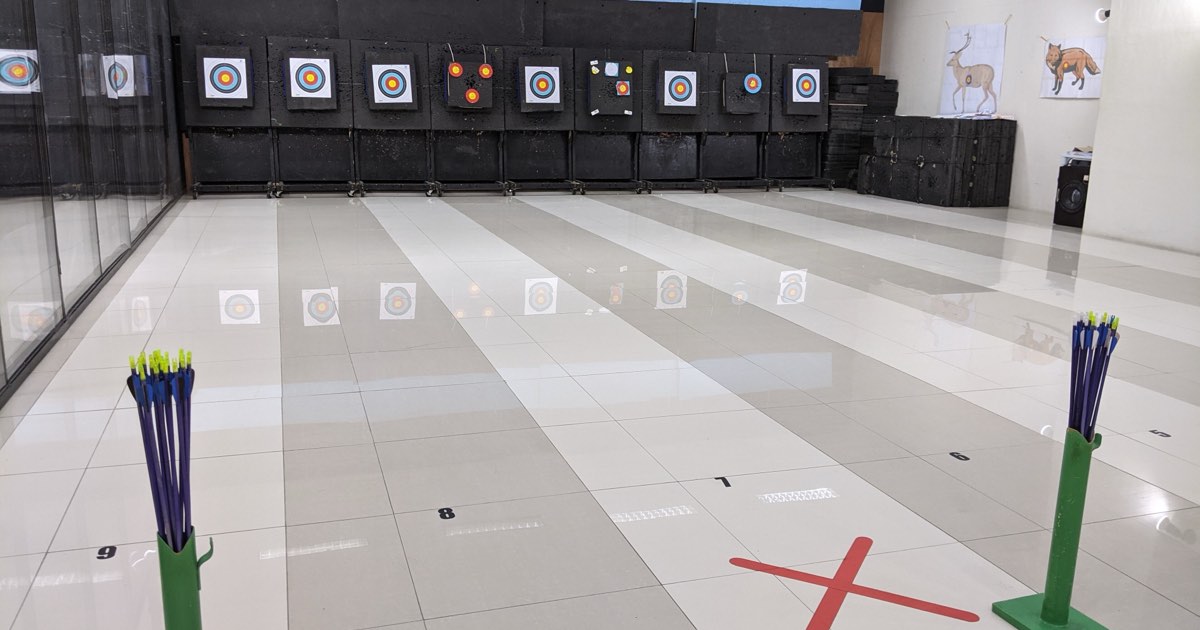
Finding a range. Start with local archery shops: many run lanes and leagues. Then look at archery clubs, which often book a sports hall for winter sessions, and at sports centres. Ask whether they offer beginner sessions, rental equipment and league nights.
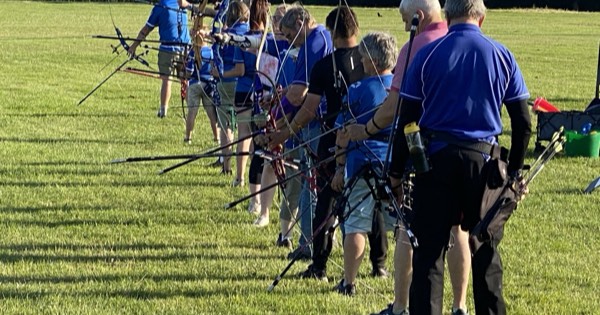
Your first night. Expect a short safety briefing. Most ranges use a shooting line, a waiting line and signals that tell everyone when to shoot and when to collect arrows. Our guide to range safety rules and whistle commands explains the typical system. In short, only shoot when the line is open, never walk forward until everyone has finished and the range is called clear, and never draw an arrow unless you're aiming at the target.
Rental kit. If you rent, staff will usually fit you with a bow of suitable draw weight and arrows of a safe length. Tell them if you've shot before.
Etiquette. Don't touch other people's arrows unless asked, keep your gear tidy behind the line, and stay quiet while others are at full draw.
What is a good indoor score?
It depends on your bow, your division, the format and how long you've been shooting, so we won't give a single number. A compound archer with a release aid and magnified sight scores very differently from a barebow archer, and a 300 on the 5-spot isn't comparable with 300 on the Vegas face.
Better questions to ask:
- Am I improving week to week? Rolling league scores make that easy to see.
- How do I compare within my division? That's why divisions exist.
- Is my X count rising? For the 5-spot and Vegas rounds, X counts separate archers with similar scores.
If you want a structured plan, our archery practice plan breaks training into drills. Our guide to archery practice at home covers winter practice between league nights.
Indoor archery for kids
Indoor ranges are a great place for children to learn, because conditions are predictable and coaches can supervise closely. NFAA age divisions adjust the distance: adults, young adults and youth shoot from 20 yards, while "CUB (Under 12) Shoot from the 10 yard line."
When looking for a junior programme, ask about:
- Age groups and coaching for younger archers.
- Equipment. A bow with a sensible draw weight for the child's size and strength.
- Safety supervision on the line.
- Session length. Shorter sessions keep young archers focused.
Other indoor formats
World Archery, the NFAA and Lancaster formats cover most competition, but you'll also meet club rounds, 3D-style indoor courses and novelty shoots. Barebow archers have their own divisions at many events; see what is barebow archery. If you enjoy indoor 3D lanes, our guide to 3D archery explains how it works outdoors.
First-league checklist
- Find a range and confirm the league night, format and fee.
- Ask about rental gear or bring your own bow with field points.
- Check your arrows meet the diameter rule for that format.
- Bring enough arrows for an end plus spares.
- Learn the range commands before your first session.
- Bring a pencil or app to keep score.
- Arrive early to warm up and meet the people on your lane.
Frequently asked questions
When does indoor archery season start?
Indoor leagues commonly run through the colder months, but start dates vary by club and shop. Ask your local range when its leagues begin. The big national tournaments run from January to March.
What distance is indoor archery?
Usually 18 metres (World Archery) or 20 yards (NFAA). The NFAA's cub division (under 12) shoots from 10 yards.
How do you score a Vegas 3-spot?
Each spot scores 10, 9, 8, 7 and 6 from the centre out, with the X used to break ties. You shoot 30 arrows, three per end, for a maximum of 300. A shaft touching a line scores the higher value.
What is the NFAA 300 round?
A 60-arrow round at 20 yards on the 5-spot face, with five arrows per end. White rings score 5, blue rings score 4, and the X breaks ties, for a maximum of 300.
Can I use my hunting bow indoors?
Usually. Fit field points instead of broadheads, check arrow diameter rules, and ask the range about any draw weight or arrow speed limits.
Are fat arrows legal?
Yes, within limits. World Archery allows shafts up to 9.3 mm; the NFAA allows up to 0.422 inches. Check the rules for each event.
When are the 2027 NFAA Indoor Nationals and Vegas Shoot?
The NFAA Indoor National Championships run from 5 to 7 February 2027 in Memphis, Tennessee, and the Vegas Shoot from 11 to 14 March 2027 in Las Vegas, Nevada, according to the NFAA's 2027 calendar.
When is the 2027 Lancaster Archery Classic?
21 to 24 January 2027, at Spooky Nook Sports in Manheim, Pennsylvania.
Related articles
 Guides
How Archery Scoring Works: Target Faces, Rings and Match Rules
How archery scoring works: ring values and colours, target face sizes, line cutters, X counts, the recurve set system, compound matches and shoot-offs.
Updated September 14, 2026 · 8 min read
 Guides
Archery Range Safety Rules and Whistle Commands Explained
Archery range safety explained: whistle commands, shooting and waiting lines, collecting arrows safely, equipment checks, and what the Fast call means.
Updated April 10, 2026 · 10 min read
 Comparisons
Feathers vs Vanes: Which Arrow Fletching Should You Use?
Feathers vs vanes compared: weight, forgiveness off the shelf, speed, drag, weather, durability, noise, rests, broadheads and which fletching suits your bow.
Updated September 30, 2026 · 5 min read