
Feathers vs Vanes: Which Arrow Fletching Should You Use?
Feathers vs vanes compared: weight, forgiveness off the shelf, speed, drag, weather, durability, noise, rests, broadheads and which fletching suits your bow.

By Archery Insider Editorial Team
· · 5 min read
Research-based: built from maker specs and official sources, fact-checked before publishing. How we review products
In this article
Fletching is what steers an arrow. It adds drag at the back, keeps the point leading, and on most arrows makes it spin. The choice between natural feathers and plastic vanes changes how forgiving your arrows are, how they behave in the rain, how long they last, and which rests and bows they suit.
This comparison explains the real differences and helps you match fletching to your set-up.
The quick answer
| If you shoot... | Usually choose |
|---|---|
| A longbow or recurve off the shelf | Feathers |
| A recurve with a plunger and target rest | Small vanes or spin wings |
| A compound with a drop-away rest | Vanes |
| A compound with a Whisker Biscuit or other full-containment rest | Vanes |
| A crossbow | Vanes |
| In wet weather a lot | Vanes (or waterproofed feathers) |
How they differ
Feathers
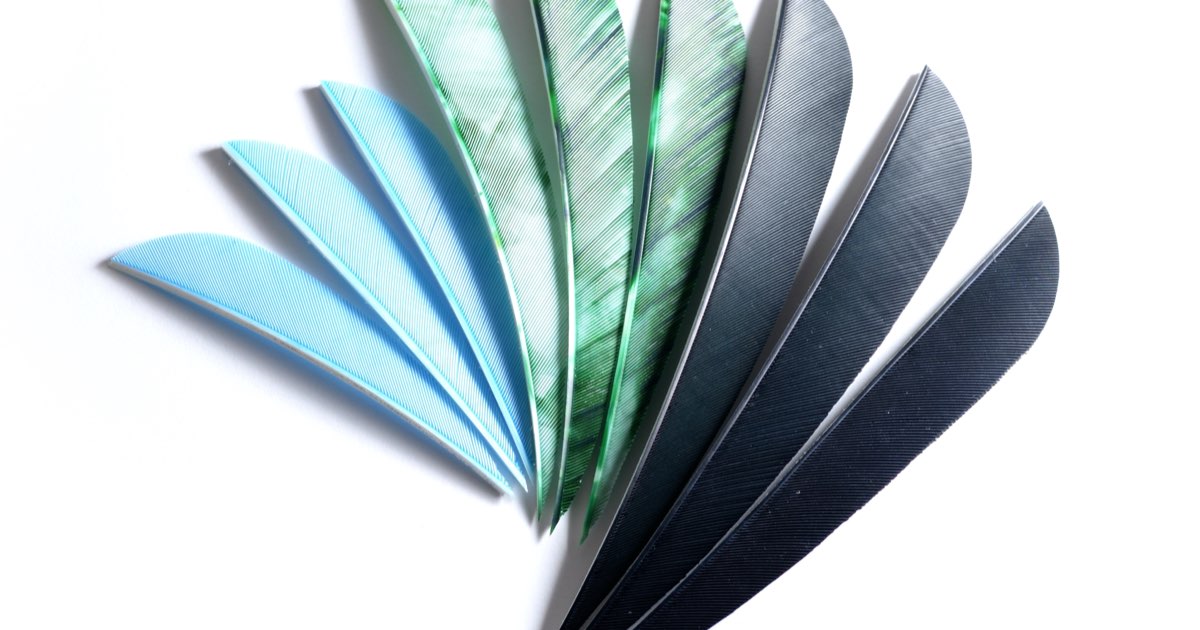
Natural turkey feathers are cut and ground into a shape, such as shield or parabolic. Their surface is rough and slightly flexible. When a feather touches the arrow shelf or rest, it flattens and springs back, barely affecting the arrow. That is why traditional archers shooting off the shelf almost always use feathers.
Feathers are also very light. One manufacturer and several retailers note that a feather weighs roughly half as much as a plastic vane of similar size; a 5-inch shield-cut feather is often quoted at around 3 to 4 grains.
Vanes
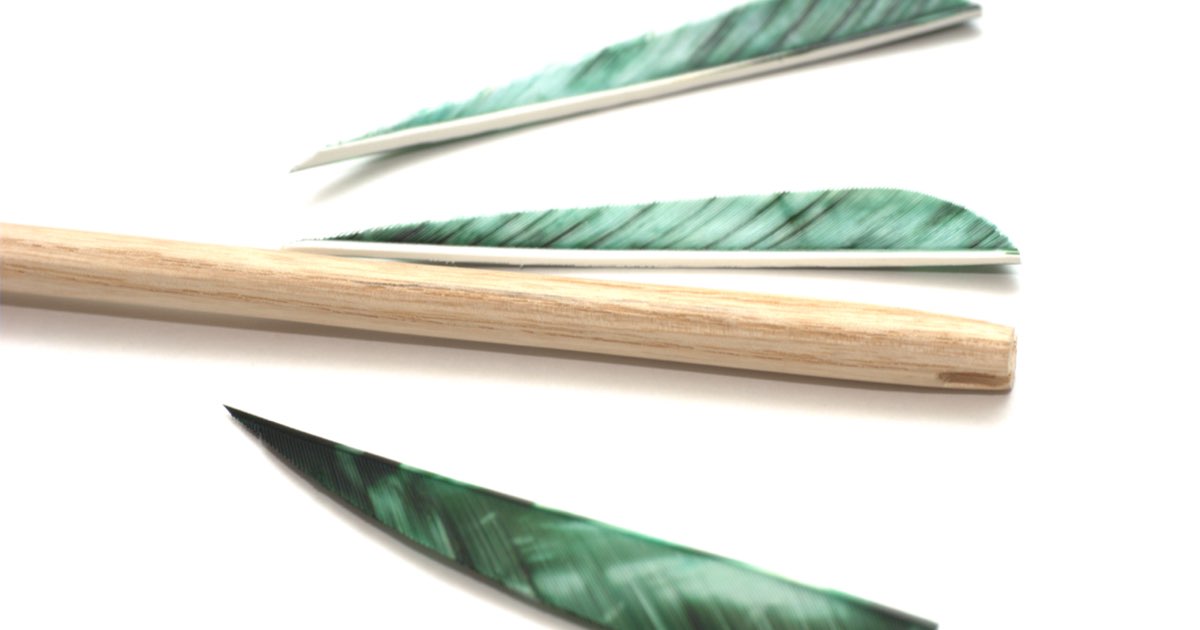
Vanes are moulded plastic, smooth and stiff. They do not absorb water, they hold their shape in all weather, and every vane in a pack is identical. A typical 2-inch vane weighs around 5 to 7 grains, and a 4-inch vane around 8 to 11 grains. If a vane hits the rest or riser it deflects the arrow, so vanes need a rest that lets them pass cleanly.
Side-by-side comparison
| Feathers | Vanes | |
|---|---|---|
| Weight | Light (roughly half a similar vane) | Heavier |
| Forgiveness if they touch the bow | High; they fold out of the way | Low; contact deflects the arrow |
| Speed off the bow | Slightly faster (lighter) | Slightly slower |
| Drag downrange | More (rough surface) | Less |
| Wet weather | Can mat down unless waterproofed | Unaffected |
| Durability | Wear and tear in targets | Very durable |
| Consistency | Natural variation | Identical |
| Shooting off the shelf | Ideal | Not recommended |
| Full-containment rests | Wear quickly | Standard choice |
Speed and drag
Lighter feathers leave the bow slightly faster, while their rough surface creates more drag and slows the arrow more over distance. Forum testers and fletching makers often say the two cross over at moderate distances. In practice, for most hunting and 3D distances, the difference is small; consistency of the arrows matters far more.
Forgiveness and arrow rests
This is the most important practical difference:
- Off the shelf, the arrow sits on the bow itself and the fletching inevitably brushes it. Feathers forgive this; vanes do not.
- Drop-away rests move out of the way, so vanes pass cleanly.
- Full-containment rests such as the Whisker Biscuit push the fletching through bristles on every shot. Vanes are the usual choice; feathers wear quickly. See our Whisker Biscuit review.
- Recurve target rests with a plunger let small vanes or spin wings pass if the arrow is tuned.
Weather
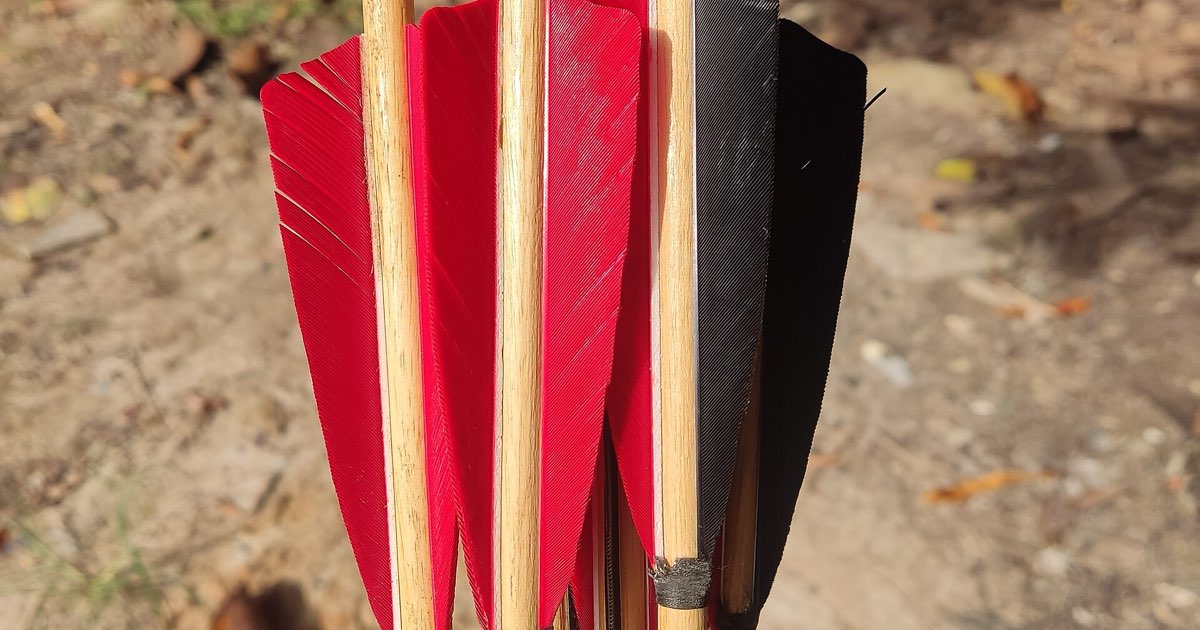
Wet feathers can mat down and lose their shape, which hurts arrow flight. Many traditional archers treat feathers with a waterproofing powder or spray, or carry a quiver cover. Vanes are unaffected by rain, which is a major reason hunters in wet climates prefer them.
Durability and noise
Vanes survive repeated passes through targets and contact with other arrows. Feathers wear and tear more quickly, especially in dense foam targets, and need replacing more often. Feathers can also make a faint rustle in flight, while vanes are usually quieter, though many factors affect noise.
Spin: straight, offset and helical
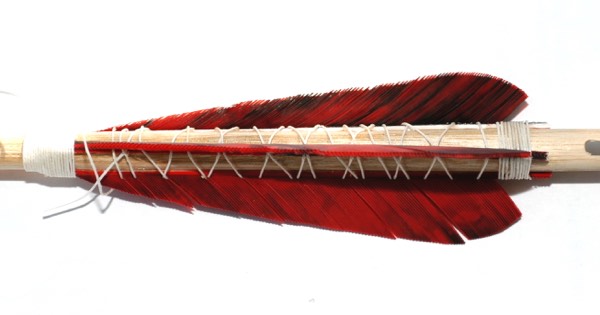
Both feathers and vanes can be fitted straight, offset or helical. More spin stabilises the arrow, especially with broadheads.
Our Bohning Tower Jig review explains how jigs set straight, offset and helical fletching.
Rules
Some competition classes specify fletching. World Archery's longbow class for field and 3D archery requires wooden arrows with natural feathers. Check the rules for your class and event.
Feathers
Advantages
- Very light; fast off the bow
- Forgiving if they touch the shelf or rest
- Essential for shooting off the shelf
- Traditional look; required for some classes
Trade-offs
- Affected by rain unless waterproofed
- Wear faster, especially in foam targets
- Natural variation between feathers
- Wear quickly in full-containment rests
Vanes
Advantages
- Waterproof and weatherproof
- Durable and identical in shape and weight
- Standard for compounds, crossbows and drop-away rests
- Less drag downrange
Trade-offs
- Heavier than feathers
- Deflect the arrow if they hit the bow
- Not suitable for shooting off the shelf
- Not allowed in some traditional classes
You can browse fletching feathers or arrow vanes on Amazon. Check size, shape and wing direction for feathers.
Frequently asked questions
Do feathers or vanes fly better?
Neither is better everywhere. Feathers are more forgiving of contact with the bow; vanes are more durable and weatherproof. Choose the one that suits your rest and conditions.
Can I shoot vanes off the shelf?
It is not recommended. Vanes that hit the shelf deflect the arrow. Use feathers, or fit an elevated rest that gives vanes clearance.
Can I mix feathers and vanes in one set?
No. Arrows in a set should be identical so they fly the same way.
How do I waterproof feathers?
Use a feather waterproofing powder or spray, and cover your quiver in rain. Dry feathers out after a wet session.
Related articles
 Reviews
Bohning Tower Jig Review: Fletch Three Vanes at Once
Bohning Tower Jig review: fletching three vanes at 120 degrees, straight, offset and helical arms, clamps and centring pins, shaft sizes, and how to use it.
June 4, 2025 · 6 min read
 Comparisons
Carbon vs Aluminium Arrows: Which Should You Shoot?
Carbon vs aluminium arrows compared: weight, stiffness, durability, straightness, consistency, safety checks, cost and which suits target, hunting or youth.
Updated May 14, 2026 · 7 min read
 Reviews
Trophy Ridge Whisker Biscuit Review: The Full-Containment Rest
Trophy Ridge Whisker Biscuit review: how a full-containment bristle rest works, sizes and versions, set-up, vane wear trade-offs, and who it suits.
Updated September 3, 2025 · 6 min read