
Hog Hunting With a Bow: Shot Placement and Gear
Hog hunting with a bow: where hog vitals sit, the shoulder shield, best shot angles, broadheads and draw weight, tactics, tracking and safe field dressing.

By Archery Insider Editorial Team
· 10 min read
In this article
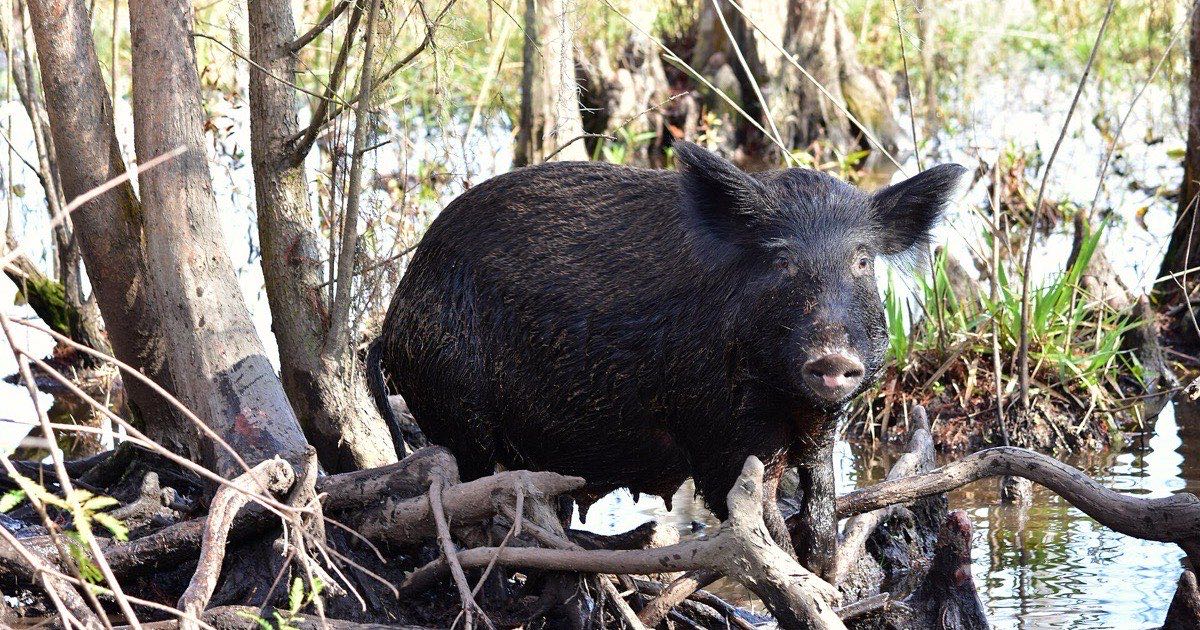
Feral hogs are one of the best opportunities a bowhunter can find. They are an invasive species in much of the United States, they damage crops and habitat, and in many places they can be hunted most or all of the year. They are also tough, smart and built very differently from deer. A shot that would kill a whitetail can glance off a big boar's shoulder, and a hog that runs off can be hard to recover.
This guide covers what makes hogs different, exactly where to aim, the bow and broadheads to use, how to find and get close to hogs, how to track them, and how to handle the meat safely.
Why bowhunt hogs?
- Long or no seasons in many places. In Texas, for example, the state's hunting regulations say that on private property there are "no required means and methods of take, state bag or possession limits, or closed seasons" for feral hogs.
- Plenty of shooting practice in the off-season for deer.
- Good meat when handled and cooked properly.
- Landowners often welcome hog hunters because of crop and habitat damage.
Rules vary widely. In Texas, "No hunting license is required to hunt feral hogs on private property with landowner authorization," but "Hunter Education requirements apply," and a licence is required on public land. Other states have different licence, season, night hunting and method rules, and some states actively discourage recreational hog hunting because it can spread hogs. Always check your state's regulations and get landowner permission.
How hogs differ from deer
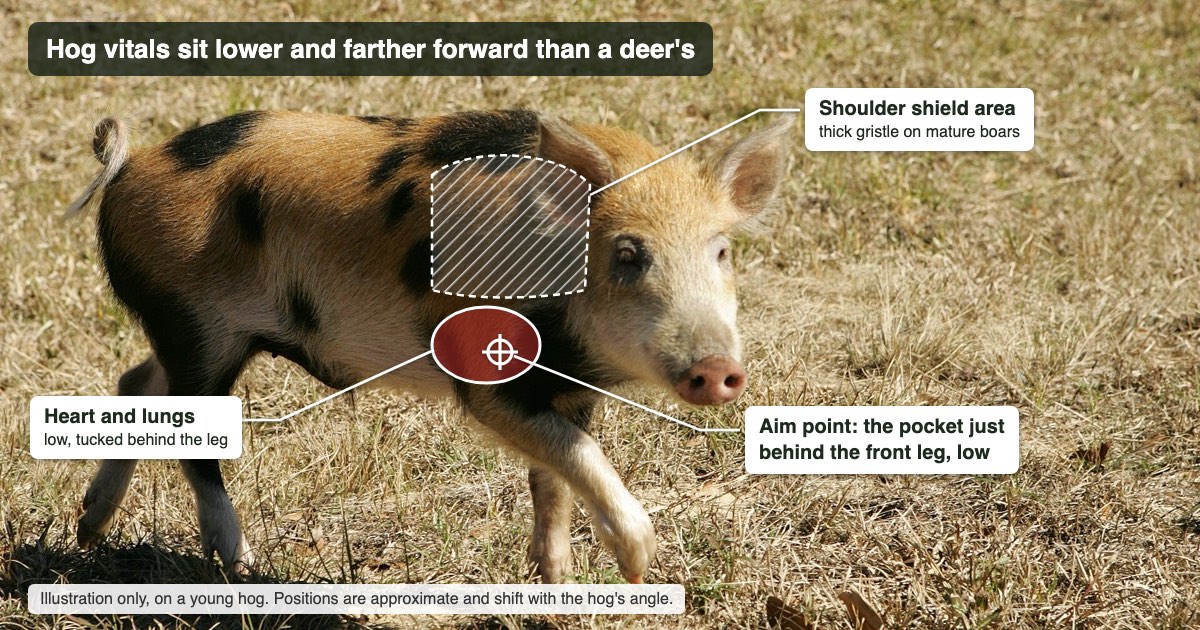
- Vitals placement: the heart and lungs sit low and forward, tucked between the front legs. Outdoor Life notes: "Hog anatomy is different than deer anatomy. The vitals are located lower and more forward."
- Armour: Outdoor Life describes big boars as "semi-armored with a thick cartilage shield, heavy shoulder bones and thick rib bones with little space in between." The shield is a dense layer of gristle over the shoulders that thickens with age and fighting.
- Shape: hogs are low, compact and thick, with a smaller vital area than many people expect.
- Senses: hogs have a superb sense of smell and good hearing, though their eyesight is weaker.
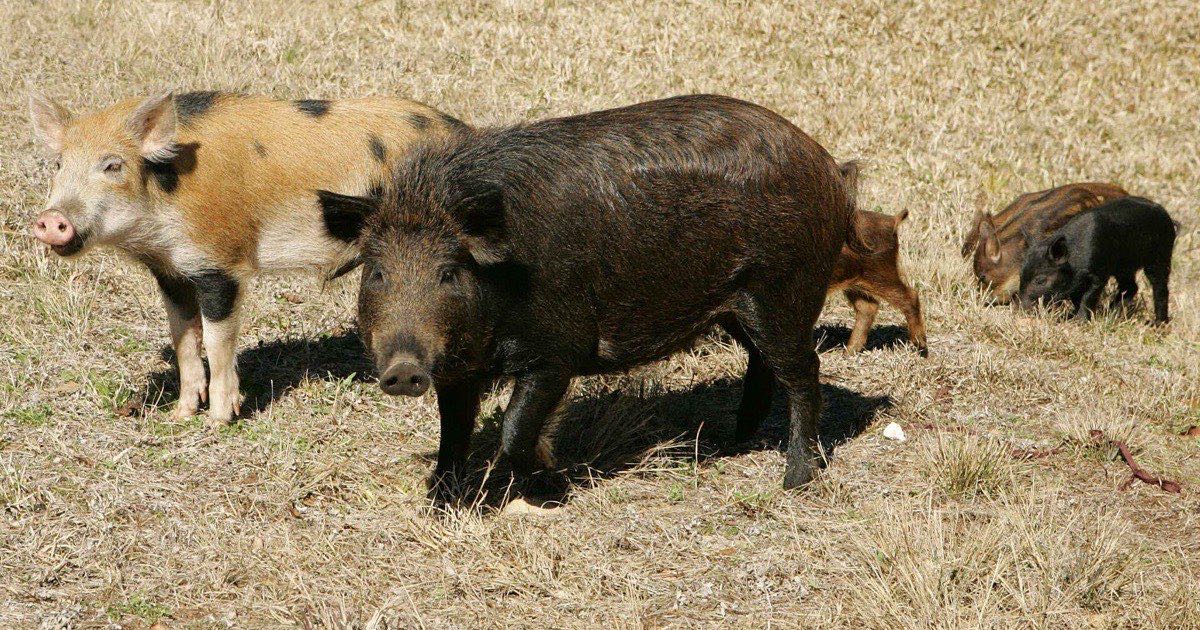
- Behaviour: hogs often move in groups (sounders) of sows and young, while mature boars tend to travel alone.
Where to shoot a hog with a bow
Outdoor Life is clear: "The best shot placement for bow hunters, by far, is the heart-lung shot." The aim point is "that pocket or armpit immediately behind the facing front leg."
Broadside
On a broadside hog, follow the back of the front leg up from the ground and aim a short way into the chest, about a third of the way up from the bottom of the body. Do not aim in the middle of the body as you might on a deer; the vitals are lower and farther forward.
Quartering away
A hog quartering slightly away is the best bow shot. The arrow enters behind the shoulder shield and angles forward through the vitals. Outdoor Life sums it up: "Slightly quartering away is better than broadside, and low and forward is better than high and rearward." Aim so the arrow will exit through the opposite front leg.
Shots to avoid
- Head and neck shots: Outdoor Life calls these "dodgy for bowhunters." The target is small and the brain is well protected.
- Quartering toward: the shield and shoulder bones cover the vitals.
- Facing toward or away: there is no clean path to the vitals.
- Running or moving hogs: wait for a standing hog.
Our deer shot placement guide explains angles in more detail; just remember that hogs need you to aim lower and farther forward.
Shot distance
Because the vital area on a hog is small and low, keep shots within the distance at which you can reliably hit a small target, which for many bowhunters is closer than their comfortable range on deer. Hogs also move constantly while feeding, turning and jostling each other, so a shot that looks good at the moment you draw can change by the time you release. Wait for a hog that is standing still, at a good angle, and clear of other hogs that the arrow could pass through or hit.
Choosing which hog to shoot
In a sounder, you often have a choice. Medium-sized hogs are the easiest targets for a first bow kill: they lack the thick shield of a mature boar and make better eating than old boars, whose meat can be tough and strong-flavoured. Big boars are a challenge best left until you are confident in your setup and shot placement. Whatever you choose, make sure no other hog is standing behind or beside your target.
Bow, arrows and broadheads
Draw weight and arrows
Penetration matters more on hogs than on deer, especially on big boars. Outdoor Life says "small-diameter arrows and heavy, tough, fixed-blade broadheads are generally preferred, slung from bows with at least a 60-pound draw weight." Many hunters take smaller hogs successfully with less, but the lighter your setup, the more important perfect shot placement and a sharp, tough broadhead become. Our draw weight guide explains kinetic energy and momentum.
Broadheads
- Fixed-blade broadheads are the usual choice for hogs because they are tough and do not need energy to open.
- Mechanical broadheads can work on smaller hogs with good shot placement, but some hunters avoid them for big boars.
- Sharpness and durability matter: hog bone and gristle can dull or damage blades.
Our fixed vs mechanical broadhead comparison explains the trade-offs, and our field points vs broadheads guide explains how to tune broadheads to fly with your practice points. Crossbow hunters can use the same principles; see our crossbow broadhead guide.
Lighted nocks
Many hog hunters use lighted nocks to see the hit, especially at dusk. Check they are legal where you hunt.
Practise for hogs
- Practise on a low target. A hog's vitals are close to the ground, so practise placing arrows low and tight behind a leg; a 3D hog target is ideal.
- Practise from your hunting position, sitting in a blind or from a stand, so the downward angle is familiar.
- Practise quick, quiet draws. Hogs move constantly, and you may have only a few seconds when the angle is right.
- Practise at dusk if you will hunt then, to see how your pins and the target look in low light.
- Practise with your broadheads before the hunt to confirm they hit with your field points.
Finding hogs
Hogs leave plenty of sign:
- Rooting: turned-over soil and torn-up ground where they dig for roots, grubs and tubers.
- Wallows: muddy depressions where hogs roll to cool off and coat themselves in mud.
- Rubs: mud-caked trees and posts near wallows.
- Trails: well-used paths, often through thick cover, between bedding areas, food and water.
- Tracks and droppings.
Hogs need water and shade. Look for them near creeks, swamps, river bottoms and thick cover, especially in hot weather. In hot conditions they are often most active at night and around dawn and dusk.
Tactics
Stand and blind hunting
Hunting from a stand or blind over a feeding area, a trail or a wallow is the most common bow method. Hogs' sense of smell is excellent, so play the wind carefully. Our guides to ground blind hunting and tree stand safety apply directly.
Spot and stalk
In open country, glassing for feeding hogs and stalking into bow range can be very effective. Hogs' eyesight is weaker than their nose, so keep the wind in your face and move when they have their heads down feeding.
Hunting over bait
Where baiting is legal, many hog hunters use corn or other feed. Check your state's rules, which can differ for hogs and for other species that may visit the same site.
Night hunting
Some states allow hog hunting at night, with lights or thermal equipment, on private land. Rules for bowhunting at night vary widely, so check them before you try.
After the shot
Hogs are tough, often leave sparse blood trails because of their thick hide and fat, and can be dangerous when wounded.
- Watch and listen to see where the hog went and mark the spot.
- Wait. Give a well-hit hog at least 30 minutes, and longer if you are unsure of the hit.
- Check the arrow for blood, hair and fat to judge the hit.
- Track carefully, looking for blood low on vegetation as well as on the ground.
- Approach with caution. A wounded hog, especially a boar, can charge. Approach from behind, with an arrow nocked.
Our deer tracking guide covers blood trailing in detail.
Field dressing and brucellosis safety
Feral hogs can carry diseases that infect people, including brucellosis. The CDC's leaflet for feral swine hunters recommends precautions including:
- Wear rubber or nitrile gloves and eye protection when handling or field dressing a hog.
- Avoid contact with blood, fluids and organs with bare skin, and keep cuts covered.
- Do not eat, drink or smoke while field dressing.
- Use clean, sharp knives and clean tools with disinfectant afterwards.
- Wash your hands thoroughly with soap and warm water.
- Do not handle hogs that look sick.
- Cook meat thoroughly before eating it.
Dispose of waste as your state requires, and check local rules on transporting hogs. In Texas, "transportation and release of live feral hogs is unlawful, unless in compliance with Texas Animal Health Commission (TAHC) regulations."
Hog hunting gear checklist
- Bow tuned for broadheads, with sharp, tough fixed-blade heads.
- Spare arrows and broadheads.
- Lighted nocks, if legal.
- A rangefinder for checking distances to feeders, trails and wallows.
- A headlamp or torch for tracking and walking out.
- Rubber or nitrile gloves, eye protection, a sharp knife and disinfectant wipes.
- A drag rope or cart, and a cooler with ice in warm weather.
- Your licence, landowner permission and a copy of the rules, where needed.
Common mistakes
- Aiming like it is a deer, too high and too far back.
- Shooting a boar broadside through the shield with a light setup.
- Using a weak or dull broadhead.
- Ignoring the wind.
- Pushing a wounded hog too soon, or approaching carelessly.
- Skipping gloves when field dressing.
Bowhunting hogs
Advantages
- Long or no seasons in many states
- Great off-season practice and plentiful meat
- Helps landowners with an invasive species
Trade-offs
- Tough animals with a small, low vital area
- Shoulder shield on big boars demands careful shots
- Disease precautions needed when handling
You can browse fixed-blade broadheads or field dressing gloves on Amazon.
Frequently asked questions
Where do you shoot a hog with a bow?
Tight behind the front leg and low in the chest. The vitals are lower and farther forward than a deer's.
What draw weight do I need for hogs?
Outdoor Life suggests at least 60 lb with tough, fixed-blade broadheads, especially for big boars. Check your state's minimum requirements.
What is the shield on a hog?
A thick layer of gristle and cartilage over a mature boar's shoulders and front chest that can stop or deflect an arrow.
Do I need a licence to hunt hogs?
It depends on the state. In Texas, no hunting licence is needed on private property with landowner authorization, but hunter education rules apply.
Is wild hog meat safe to eat?
Yes, if handled with gloves and cooked thoroughly. Feral hogs can carry brucellosis and other diseases.
What is the best broadhead for hogs?
A tough, sharp fixed-blade broadhead is the usual choice, especially for big boars. Make sure it flies with your field points.
Are hogs dangerous to hunt?
Hogs usually run from people, but wounded hogs, boars and sows with young can charge. Approach downed hogs carefully, with an arrow nocked.
What time of day are hogs most active?
In hot weather hogs are often most active at night and around dawn and dusk, bedding in shade and thick cover during the day. In cooler weather they may move more in daylight, so watch feeding areas and trails at the edges of the day and check trail cameras to learn their pattern.
Related articles
 Guides
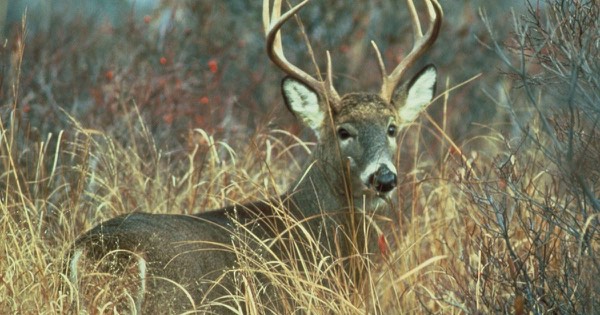
Where to Shoot a Deer With a Bow: Shot Placement
Bow shot placement for deer: where the heart and lungs sit, how to aim broadside, quartering away and from a tree stand, which shots to pass on, and why.
October 6, 2026 · 10 min read
 Guides
Tracking a Deer After the Shot: Blood and Hit Signs
How to track a deer after a bow shot: watch, listen and wait; how long to wait for each hit; reading blood, hair and arrow sign; grid searches and dogs.
October 10, 2026 · 10 min read
 Comparisons
Fixed-Blade vs Mechanical Broadheads: Pros, Cons and Rules
Fixed-blade vs mechanical broadheads compared: flight, tuning, cutting diameter, energy needs, durability, hybrid designs, regulations and which suits your bow.
Updated October 9, 2026 · 6 min read