
Bowhunting From a Ground Blind
Bowhunting from a ground blind: choosing and placing a blind, brushing it in, shooting seated, shooting through mesh, broadhead choice and common mistakes.

By Archery Insider Editorial Team
· 9 min read
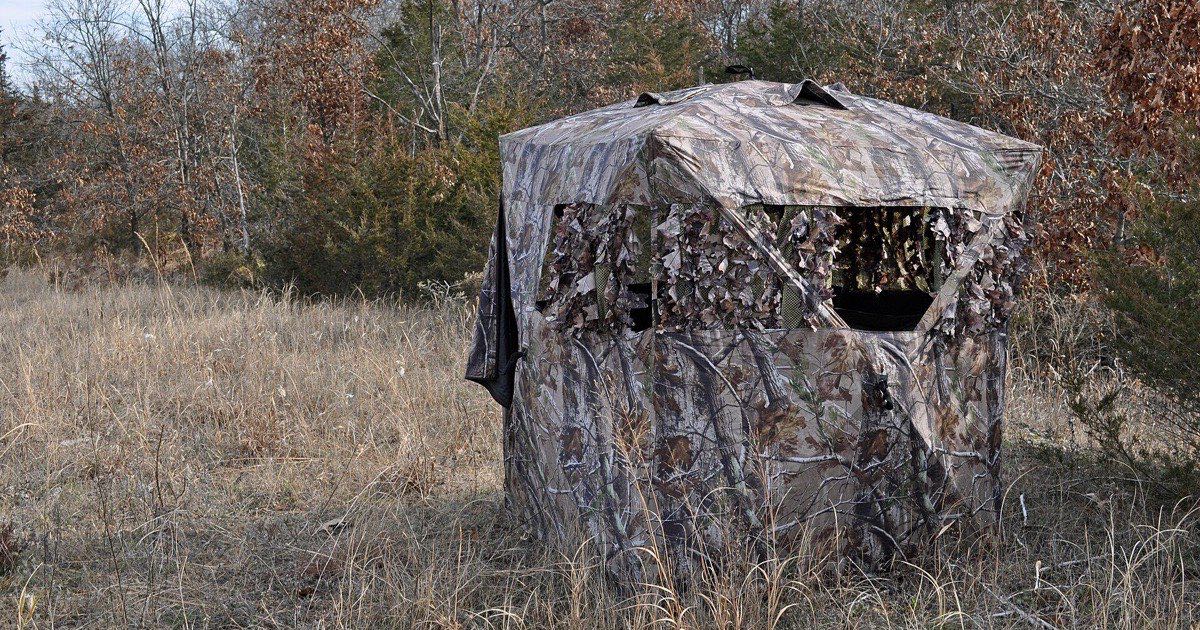
In this article
A tree stand puts you above the deer. A ground blind puts you at their level and hides you inside a dark, camouflaged shell. For bowhunters, that is a big advantage: the hardest part of a close encounter is drawing the bow without being seen, and a good blind hides almost all of that movement. Blinds are also comfortable in bad weather, safer than climbing for many people, and ideal for new hunters, children and anyone who prefers to keep their feet on the ground.
This guide explains how to choose and place a blind, how to make deer accept it, how to shoot from a seated position, whether you can shoot through the mesh windows, and the mistakes that send deer running.
The quick answer
| Question | Short answer |
|---|---|
| Do ground blinds work for bowhunting? | Yes, especially for hiding the draw |
| Can deer see into a blind? | Movement in a dark interior is hard to see; light behind you or open windows give you away |
| How far in advance should I set it up? | As early as possible, ideally days or weeks before hunting |
| Can I shoot through the mesh? | Many blinds allow it, and Bowhunter's test found little effect, but practise first |
| Fixed or mechanical broadheads? | Either can work; many hunters prefer fixed blades through mesh |
| What should I wear? | Dark clothing, especially black, to blend with the dark interior |
Why use a ground blind?
- Hides your draw. A blind conceals the movement deer are most likely to notice.
- Keeps you on the ground. No climbing, no fall risk, and easier for children, older hunters and anyone with mobility issues.
- Weather protection. Rain, wind and cold are easier to manage, which helps on long sits.
- Works where trees do not. Open fields, field edges, young timber and ridge tops with no suitable trees.
- Flatter shot angles. From ground level, the vital zone looks like the classic broadside picture; see our shot placement guide.
Types of blind
| Type | Pros | Cons |
|---|---|---|
| Pop-up hub blind | Quick to set up, portable, dark interior, windows | Shape is unnatural until brushed in; can flap in wind |
| Natural brush blind | Blends perfectly, cheap | Takes effort to build; less weather protection |
| Box or hard-sided blind | Durable, quiet, comfortable | Expensive, not portable |
| Panel or chair blind | Light, fast | Hides less movement |
For bowhunting, check the interior height and width: you need room to draw without hitting the roof or walls, especially with a long bow or a crossbow.
Where to put a blind
- Within your effective range of a trail, food source or funnel. Our effective range guide explains how to set your limit.
- On the downwind side of where deer are likely to come from, for the winds you will hunt.
- Against cover, such as a bush line, tree trunk or field edge, rather than out in the open.
- With the sun behind the blind or to the side at the times you hunt, so you are not silhouetted and light does not shine through rear windows.
- With shooting lanes cleared to the spots where you expect shots.
Making deer accept it
Deer notice new objects. A blind that appears overnight in the middle of a field can make them nervous for days.
- Set it up early. The longer it stands before you hunt, the more deer get used to it.
- Brush it in. Use branches, grass and leaves from the area to break up the shape. Many blinds have loops for this.
- Stake it down firmly so it does not flap in the wind.
- Keep windows the same from day to day, so the blind looks consistent.
- Avoid walking past it in daylight more than necessary.
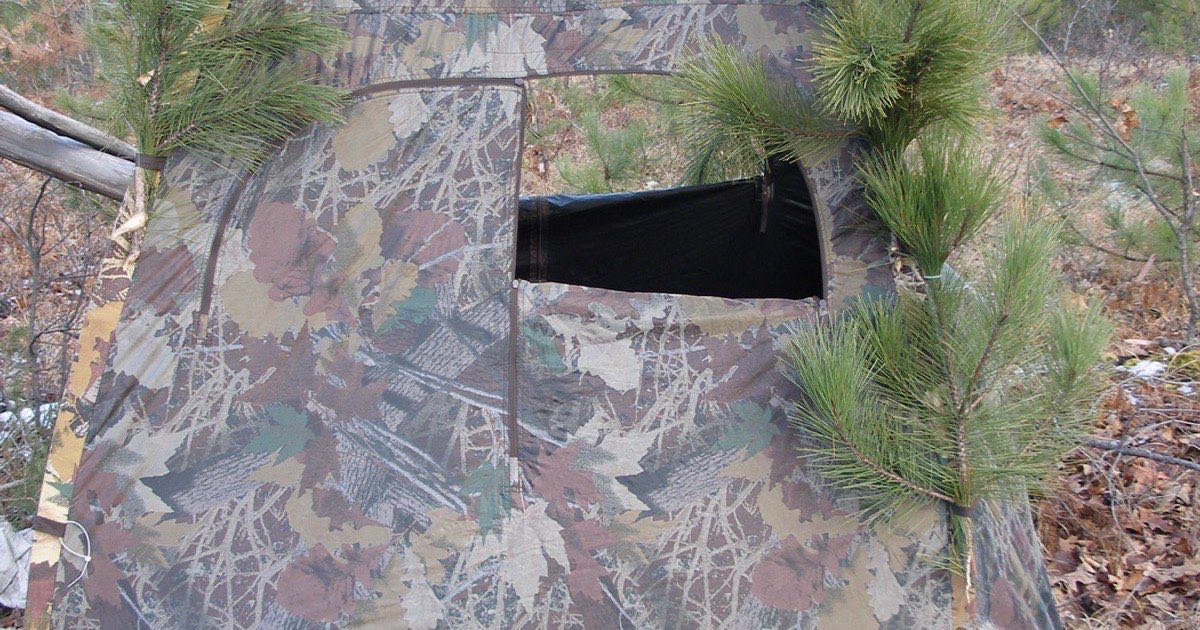
Keeping it dark inside
The darkness inside a blind is what hides you. Light behind you, or bright clothing, makes your silhouette visible through the windows.
- Wear black or very dark clothing, including gloves and a face mask or face paint.
- Open only the windows you need, and keep windows behind you closed.
- Use shoot-through mesh or partly open windows to reduce the view into the blind.
- Sit back from the window, not with your face at the opening.
Shooting from a ground blind
Shooting seated, inside a tent, is different from shooting standing in the backyard. Practise it.
- Chair height matters. A chair that lets you sit upright with your bow arm level makes shooting easier. Some hunters shoot kneeling.
- Check clearance. Draw your bow inside the blind and make sure the limbs, cams and arrow clear the roof, walls and window edges. Many misses from blinds come from an arrow hitting the window frame.
- Mind the window height. Your arrow leaves below your sight line; it must clear the bottom of the window, not just your eye's view of the target.
- Practise from the blind itself. Missouri's conservation department recommends practising from "a seated position to simulate the type of hunting you will be doing."
- Plan your angles. Know which windows cover which lanes, and set a chair position for each.
Can you shoot through ground blind mesh?
Many blinds have shoot-through mesh windows. Bowhunter magazine tested this with a shooting machine, using a bow shooting about 290 fps, to see whether mesh affects accuracy and whether mechanical broadheads open early.
- Mechanical blades: "Not a single blade opened prematurely in any of the mechanical broadhead models." The author admitted this was not what he expected.
- Accuracy: arrows held accuracy through the mesh at 25 yards, though the author noted the results came from "a machine that can drive tacks."
- Conclusion: "I do have much more confidence in the ability of a well-tuned setup to hit its mark when shot through the mesh of a ground blind."
- Caveat: he still had "more confidence in a fixed-blade head shot through mesh," because the possibility of a mechanical opening early always exists.
- Advice: "No matter which style of broadhead you use, if you plan to shoot through mesh you should practice doing it ahead of time."
Our fixed-blade vs mechanical comparison covers the broadhead trade-offs in more detail.
Scent and wind
A blind hides your movement but does little to contain your scent. Air flows through windows and fabric. Choose blind sites for the wind, enter and leave without crossing deer trails, and keep your clothes and gear as scent-free as practical.
Crossbows in ground blinds
Crossbows are popular in blinds because they can be held ready without drawing. Check that the limbs clear the walls and window edges when you shoot, rest the crossbow on a shooting stick or rest, and keep the string and cables away from the blind fabric. Wide crossbows need wider windows than vertical bows.
Blaze orange and blinds
In some places, ground blinds must display blaze orange during overlapping firearms seasons, and hunters moving to and from blinds may need to wear orange. Rules vary by state, so check your regulations.
Blinds for children and new hunters
Ground blinds are one of the best ways to introduce someone to bowhunting. Two people fit comfortably in most hub blinds, so a mentor can sit beside a young or new hunter, whisper advice and help them stay calm. A little movement and quiet talking go unnoticed in a dark blind in a way they never would in a tree. Keep shots short, choose a blind with windows at the right height for a smaller archer, and practise shooting from the same chairs before the hunt.
Comfort for long sits
The longer you can sit still, the more deer you will see. A comfortable, quiet chair with good back support makes a huge difference. Bring layers for cold mornings, a small mat to quiet the floor, a hook or holder for your bow, and a bag for snacks and water that opens without noise. Organise everything before deer start moving, so you are not rustling around at the wrong moment.
Common ground blind mistakes
- Setting the blind up the day you hunt and expecting deer to ignore it.
- Too many open windows, which lets light in and shows your silhouette.
- Light-coloured clothing inside the blind.
- Not checking arrow clearance, then hitting the window frame.
- Forgetting the wind because "the blind hides me."
- Taking poor angles because deer come close; a quartering-toward deer is still a pass.
Hunting from a ground blind
Advantages
- Hides the draw and other movement
- Safe, with no climbing
- Comfortable in bad weather
- Works where there are no suitable trees
Trade-offs
- Does not contain scent
- New blinds can spook deer
- Limited field of view and shooting windows
- Arrow clearance must be checked carefully
You can browse ground blinds or blind chairs on Amazon. Check interior height and window design for bowhunting.
Frequently asked questions
Can you bowhunt out of a ground blind?
Yes. Blinds are popular with bowhunters because they hide the draw. Make sure the blind is tall and wide enough to draw inside.
Can you shoot an arrow through ground blind mesh?
Many blinds have shoot-through mesh, and Bowhunter's machine test found little effect on accuracy and no early-opening mechanicals. Check your blind's instructions and practise first.
How long before hunting should I set up a ground blind?
As early as possible, ideally days or weeks before, so deer get used to it. Brush it in with local vegetation.
What should I wear in a ground blind?
Dark clothing, preferably black, including gloves and a face mask, so you blend into the dark interior.
Are mechanical broadheads OK through blind mesh?
Bowhunter's test found no premature openings, but many hunters still prefer fixed blades through mesh. Whatever you use, practise through the same mesh first.
Can two people hunt from one ground blind?
Yes. Most hub blinds fit two people, which makes them ideal for mentoring a new or young hunter. Plan who shoots from which window and keep movement slow.
Is a ground blind better than a tree stand?
Neither is always better. Blinds hide movement, keep you safe on the ground and work where trees do not; tree stands keep you above the deer's eye level and scent. Many bowhunters use both, choosing for each location and wind.
Related articles
 Guides
Tree Stand Safety for Bowhunters
Tree stand safety for bowhunters: wear a full-body harness from the ground up, use a lifeline and haul line, inspect your stand and plan for a fall.
October 12, 2026 · 10 min read
 Guides
Can You Hunt Deer With a Bow? A Beginner's Guide
Yes, you can hunt deer with a bow. Learn the legal basics, which bows work, how hard it is, effective range, gear, shot placement and a first-season plan.
October 6, 2026 · 13 min read
 Guides
Where to Shoot a Deer With a Bow: Shot Placement
Bow shot placement for deer: where the heart and lungs sit, how to aim broadside, quartering away and from a tree stand, which shots to pass on, and why.
October 6, 2026 · 10 min read