
Tree Stand Safety for Bowhunters
Tree stand safety for bowhunters: wear a full-body harness from the ground up, use a lifeline and haul line, inspect your stand and plan for a fall.

By Archery Insider Editorial Team
· 10 min read
In this article
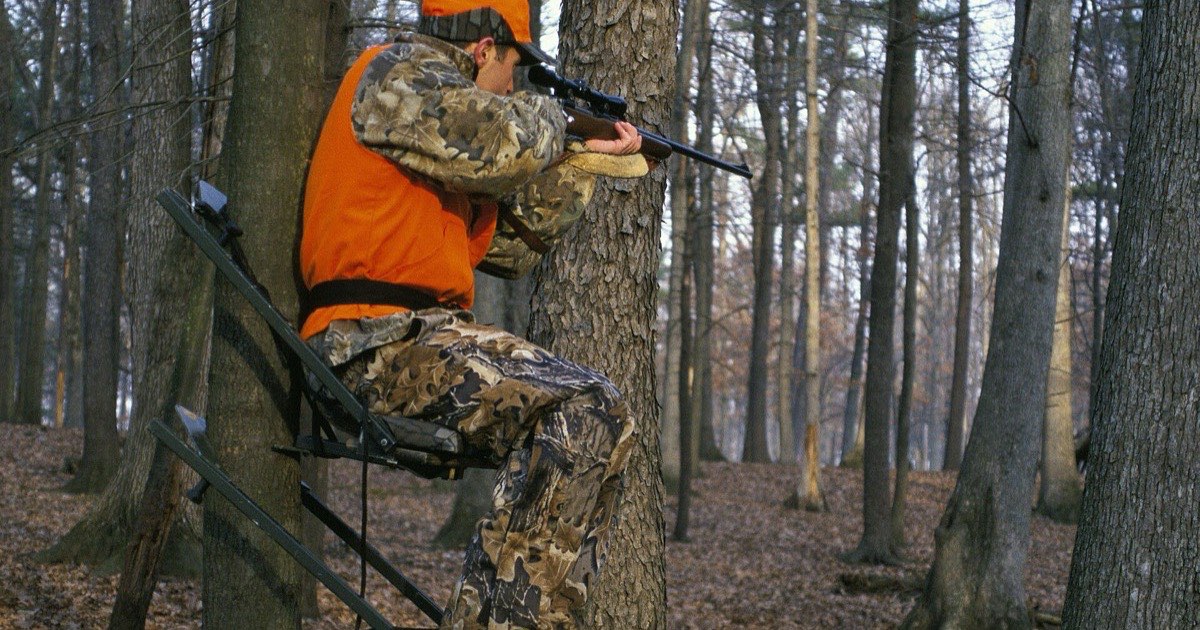
Tree stands are one of the best tools a bowhunter has. They lift you above a deer's line of sight, help keep your scent above the animal, and give you a clear view of shooting lanes. They are also where many of the most serious hunting injuries happen. A fall from even a modest height can cause life-changing injuries, and almost every one of those falls is preventable.
This guide covers the essentials of tree stand safety for bowhunters: the harness and lifeline that protect you, how to climb and get settled safely, how to inspect and choose a stand, how to handle your bow and broadheads at height, and what to do if something goes wrong.
The quick answer
| Rule | Why it matters |
|---|---|
| Full-body harness, connected at all times | Stops a fall before it becomes an injury |
| Three points of contact when climbing | Two hands and a foot, or two feet and a hand, on the steps or ladder |
| Haul line for bow and gear | Keeps your hands free for climbing |
| Inspect before every use | Rust, cracks, worn straps and loose bolts cause failures |
| Tell someone your plan | Help can find you quickly if something goes wrong |
| Take extra care in rain, snow and ice | Wet and frozen surfaces are slippery |
Why tree stands are risky
Height multiplies the consequences of a simple slip. Alabama's treestand safety guidance notes that roughly 74 percent of incidents occur during ascent, descent, or transitioning in and out of stands. That is when you are moving, often in the dark, with cold hands, and sometimes before you have attached your safety system. The rest of the time, falling asleep, reaching too far, or a stand failing can all cause falls.
The good news is that a correctly worn harness, attached all the time, prevents almost all of these falls from becoming injuries.
The full-body harness
Alabama's guidance describes a full-body harness as having "straps under the legs and over the shoulders that are designed to keep you upright." Old-style belts or chest straps are not a substitute; in a fall they can cause serious injury.
- Wear it every time, on every stand, even for a "quick" evening hunt.
- Put it on at the truck, not at the base of the tree.
- Adjust it snugly over your hunting clothes, following the manufacturer's instructions.
- Keep the tether short so that if you slip, you fall as little as possible. Attach it above your head when seated, with little or no slack.
- Replace it after any fall, or when the manufacturer's service life is up, or if webbing is frayed or sun-faded.
Lifelines and climbing systems
A lifeline is a rope fixed above the stand and at the base of the tree, with a sliding knot or a mechanical prusik that your harness tether connects to. You slide it up as you climb and down as you descend, so you are connected the whole way. Lifelines are one of the simplest ways to close the gap between the ground and the stand, and many hunters leave them in place on stands they use often.
For climbing sticks and hang-on stands, some hunters use a lineman's belt while hanging the stand and sticks, then switch to the tether at the top. Whatever system you use, practise it in daylight, at low height, before the season.
Climbing safely
- Three points of contact. Virginia's agency advises you to "maintain three points of contact at all times": two hands and a foot, or two feet and a hand.
- Climb with empty hands. Never carry your bow, pack or anything else as you climb.
- Go slowly, especially in the dark, and test each step before putting your weight on it.
- Use a headlamp so both hands are free.
- Be especially careful in bad weather. Virginia warns to "be especially careful using tree stands during rain, snow and ice conditions."
- Step carefully onto the platform, keeping connected, and only then make yourself comfortable.
The haul line
Virginia's advice: "Always use a haul line for gear," and "tie a haul line to the belt or stand when climbing to keep hands free." Once you are seated and connected:
- Pull your bow up unloaded, with arrows in a covered quiver so broadheads cannot cut you or the rope.
- Tie the line to the bow, not to the string or cable, and raise it slowly so it does not swing into the tree.
- Lower everything the same way before you climb down.
Inspecting your stand
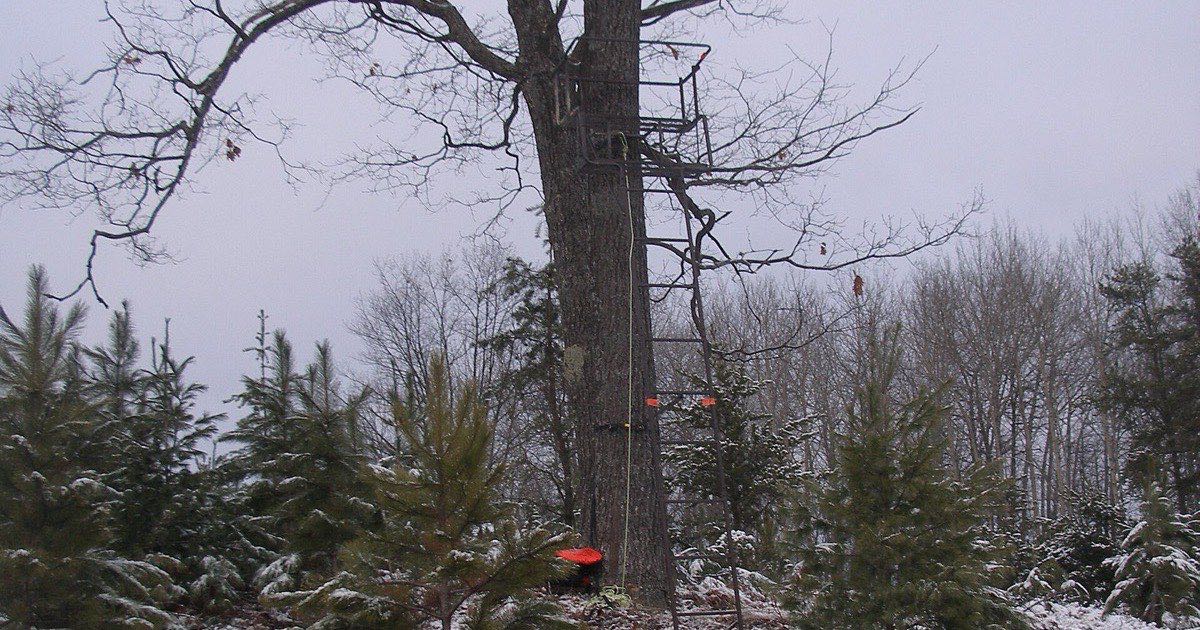
Virginia's agency asks hunters to "carefully inspect your treestand for wear, rust, metal fatigue and cracks, loose or missing nuts or bolts, and rot and deterioration before and after each use." Alabama adds: "Test your treestand slightly off the ground to make sure it's safe."
| Check | What to look for |
|---|---|
| Straps, ropes and chains | Fraying, sun damage, chewing by animals, stretched or cracked buckles |
| Metal frame | Rust, cracks, bent sections, broken welds |
| Bolts and pins | Loose, missing or worn hardware |
| Seat and platform | Torn fabric, rotten wood, loose fittings |
| Climbing sticks and ladder | Worn steps, damaged straps, missing pins |
| The tree | Dead, leaning or rotten trees; trees too thin or too thick for the stand |
Stands left in the woods all year are exposed to weather, sun and animals. Check them especially carefully, and replace straps according to the manufacturer's schedule.
Choosing a stand
Virginia's agency notes that "treestands built since 2006 and approved by the Treestand Manufacturers Association (TMA) are commercially designed and tested to meet recognized industry standards." Choose a stand built to recognised standards and follow its instructions exactly.
| Stand type | How it works | Safety notes |
|---|---|---|
| Hang-on | Straps to the tree; you climb with sticks or steps | Most time spent transitioning; use a lifeline or lineman's belt |
| Ladder stand | Platform on a braced ladder | Install with two or more people; secure the ladder to the tree |
| Climbing stand | Two sections that "walk" up the tree | Attach the harness to the tree as you climb; tether the two halves together |
| Box or tripod stand | Freestanding or enclosed platform | Check the structure and the ground; still use a harness where possible |
Alabama also advises making sure "your stand is fastened to the tree securely and that the tree is the right size."
Hanging a stand safely
Putting up a stand is often riskier than hunting from it, because you are working with your hands while off the ground.
- Work in daylight, weeks before the season, not in the dark on opening morning.
- Bring a partner, especially for ladder stands, which most makers recommend installing with at least two people.
- Wear your harness and use a lineman's belt or lifeline while hanging sticks and the platform.
- Pull the stand up with a rope rather than carrying it as you climb.
- Follow the manufacturer's instructions for straps, cables and the order of fitting, and keep the manual with the stand.
- Install a lifeline at the same time, so it is ready for every hunt.
Bow handling at height
- Hang your bow on a bow hanger within easy reach, so you do not lean far to get it.
- Keep broadheads covered until you nock an arrow.
- Nock and draw carefully, keeping the arrow clear of the tether, the tree and the stand.
- Practise shooting from your stand with your harness on before the season, so you know the tether does not interfere with your draw or bow arm.
- Clear shooting lanes in advance. Alabama recommends clearing "obstructive branches before shooting from a stand," so you are not leaning out to shoot.
- Avoid excessive movement, which Alabama warns "could cause you to lose your balance."
Missouri's conservation department recommends practising "from an elevated platform or a seated position to simulate the type of hunting you will be doing." From a stand, also remember that shot angles change; see our shot placement guide and our rangefinder guide for angle-compensated distances.
If you fall
Even with a harness, you need a plan:
- Stay calm and get back to the stand if you can. Some harnesses include a suspension relief strap: a loop you step into to take weight off the leg straps while you recover.
- Do not hang motionless. Hanging in a harness for a long time can become dangerous. Keep your legs moving and use the relief strap.
- Have a way down. Alabama suggests carrying a screw-in or rope-on step to help you descend if a stand falls, or "an 8-foot length of ¼-inch nylon rope with a loop in each end" that can be looped around the tree.
- Call for help. Keep your phone on your body, not in your pack on the ground.
Before you go: the safety checklist
- Full-body harness on, adjusted, inspected
- Lifeline or climbing system checked
- Haul line attached
- Headlamp and spare batteries
- Phone charged and on your body
- Someone knows where you are and when you will be back
- Weather checked; extra caution in wind, rain, snow and ice
- Stand inspected and tested
Common tree stand mistakes
- Clipping in only after sitting down. The climb is the most dangerous part.
- Too much slack in the tether. A long fall, even if stopped, can cause injury.
- Carrying the bow up. Always use a haul line.
- Old, sun-rotted straps. Replace them before they fail.
- Falling asleep. It happens on long sits; a short, snug tether keeps you on the platform.
- Hunting alone without telling anyone. If you fall, someone needs to know where to look.
- Stands too high. Higher is not always better. It increases fall risk and makes shot angles steeper; many bowhunters find a moderate height works well.
Hunting from a tree stand
Advantages
- Above the deer's line of sight
- Helps keep scent above the animal
- Good view of trails and shooting lanes
Trade-offs
- Serious injury risk without a harness and lifeline
- Steeper shot angles, especially at close range
- Takes time and effort to set up safely
You can browse full-body safety harnesses, tree stand lifelines or haul lines on Amazon. Check that harnesses meet recognised industry standards.
Frequently asked questions
Do I need a safety harness in a tree stand?
Yes. State wildlife agencies and hunter safety organisations recommend a full-body harness every time you leave the ground, including while climbing up and down.
When do most tree stand accidents happen?
Alabama's conservation department reports that about 74 percent happen while climbing up, coming down, or getting in and out of the stand.
How do I get my bow into a tree stand?
Use a haul line. Climb with empty hands, connect your harness, then pull the bow up unloaded with arrows in a covered quiver.
How often should I replace my safety harness?
After any fall, when the manufacturer's service life is reached, or if the webbing is frayed, cut or faded. Check it before every season.
What is a lifeline for a tree stand?
A rope fixed from the base of the tree to above the stand, with a sliding knot or prusik your tether connects to, so you stay attached while climbing up and down.
How high should a tree stand be for bowhunting?
There is no single right height. Many bowhunters choose a moderate height that hides them without making shots too steep. The higher you go, the greater the fall risk and the smaller the vital window on close shots.
Related articles
 Guides
Can You Hunt Deer With a Bow? A Beginner's Guide
Yes, you can hunt deer with a bow. Learn the legal basics, which bows work, how hard it is, effective range, gear, shot placement and a first-season plan.
October 6, 2026 · 13 min read
 Guides
Where to Shoot a Deer With a Bow: Shot Placement
Bow shot placement for deer: where the heart and lungs sit, how to aim broadside, quartering away and from a tree stand, which shots to pass on, and why.
October 6, 2026 · 10 min read
 Guides
How Far Can You Shoot a Deer With a Bow?
Effective bow range for deer: what bowhunter education says, why long shots wound more, arrow flight times, jumping the string, and how to find your limit.
October 7, 2026 · 9 min read