
Single Cam vs Dual Cam vs Hybrid Cam Bows Explained
Single cam vs dual cam vs hybrid and binary cam bows: how each system works, timing, nock travel, speed, maintenance, a short history, and how to choose.

By Archery Insider Editorial Team
· 10 min read
Research-based: built from maker specs and official sources, fact-checked before publishing. How we review products
In this article
The cams at the ends of a compound bow's limbs are what make it a compound: they shape how the draw feels, create the let-off at full draw and store energy for the shot. Bow makers use several different cam systems, usually described as single (solo), hybrid, dual (twin) and binary. Each has its own strengths, and bow companies have argued about which is best for decades.
This guide explains how each system works, compares them on timing, nock travel, speed and maintenance, gives a short history, and explains what matters more than cam type when you choose a bow.
What a cam does
A compound's cams are wheels, often oval or irregular, mounted on axles at the limb tips. As you draw, they rotate, changing the leverage on the limbs. That's what gives a compound its draw-force curve: the weight rises to a peak, then drops off sharply near full draw (the let-off), so you hold much less weight while aiming. The cams also set the draw length. Archery 360 notes that "compound bows have defined draw stops. You can only draw the bowstring so far before part of the cam hits a limb or cable."
The string runs between the cams, and one or more cables connect them, either to each other or to the limbs and axles. How those cams and cables are arranged is what defines each system.
How cam shape changes the draw
Cam profiles differ between models, and that shapes how a bow feels:
- Draw cycle. Rounder, softer cams tend to build weight gradually; more aggressive cams reach peak weight sooner and hold it longer, storing more energy.
- The valley. The drop in weight just before full draw. Some cams have a generous valley that's forgiving if you creep forward; others are short and firm.
- The back wall. What you feel when the cams hit their stops. A solid wall gives a firm reference to pull against; a softer wall feels spongier.
- Holding weight. The let-off at full draw, set by the cam design and, on many modern bows, adjustable.
These characteristics vary as much between models of the same cam type as between types, which is why shooting a bow tells you more than its cam label.
The four cam systems
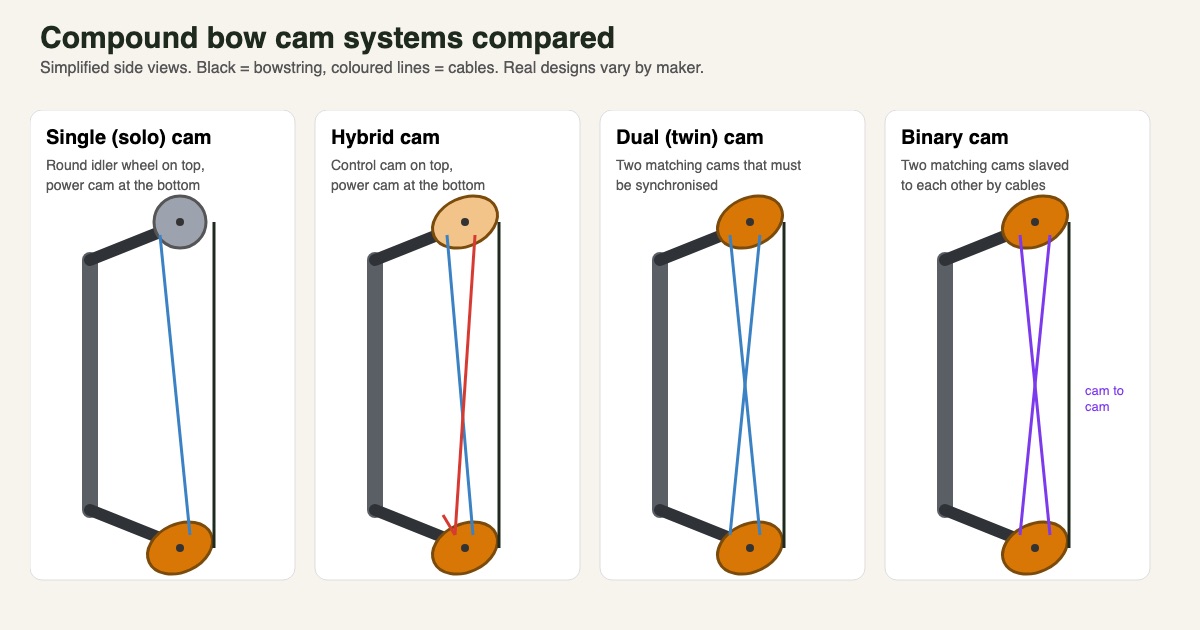
Single (solo) cam
Archery 360: "A solo- (one) cam bow features a round idler wheel on the top limb and an elliptical-shaped cam on the bottom limb. Because the top cam is concentric, solo-cam bows usually produce a smooth draw but slower arrow speeds."
Hunter's Friend says the single cam "is generally quieter and easier to maintain than traditional twin cam systems, since there is no need for cam synchronization. However, single cam systems have struggled to achieve level nock travel (though the technical debate continues...)."
Hybrid cam
A hybrid uses two different cams. Archery 360 describes a "control cam on the top limb and a power cam at the bottom," adding that "the top and bottom cams must be perfectly tuned." Hunter's Friend traces the idea to Darton Archery's "C/P/S Cam System" and to "Hoyt's introduction of the Cam & 1/2… in 2003," noting that hybrids "too need to be oriented (timed) properly."
Hoyt's owner's manual describes how its system works: "Both top and bottom cams are slaved together via the control cable – forcing both cams to always move together." Hoyt also claims that for its Cam & ½, "varying the cam synchronization has little or no variation on downrange arrow impact." That's the manufacturer's claim.
Dual (twin) cam
Dual cams use two matching cams, one on each limb. Archery 360 says these "two-cam systems… produce an aggressive draw with acute string angles to generate faster arrow speeds." Hunter's Friend: "When properly synchronized, twin cam systems offer excellent nock travel, accuracy, and overall speed. However, twin cams can require more maintenance." The cams must roll over together, so timing matters.
Binary cam
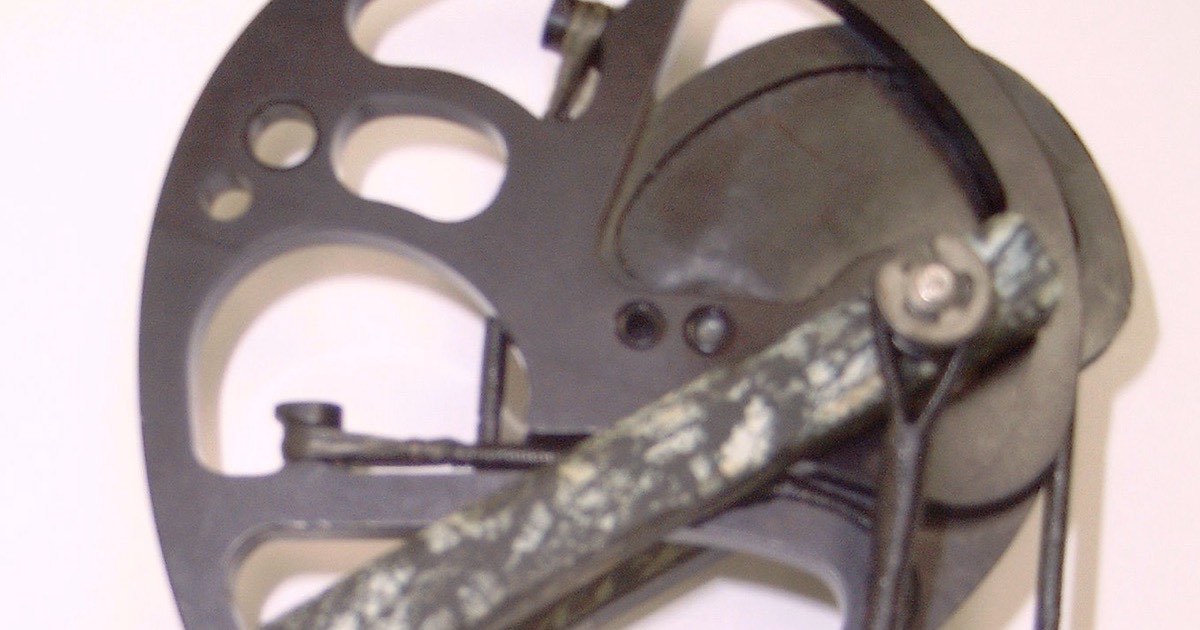
Binary cams are a variation of the dual cam. Archery 360: "A binary-cam system uses synchronized top and bottom cams." Hunter's Friend says the binary system was "introduced by Bowtech Archery as a new concept for 2005" and that it "slaves the top and bottom cams to each other, rather than to the bow's limbs." Bowtech describes its version as "engineered with two perfectly symmetrical cams slaved together for flat-line nock travel."
Cam terms at a glance
- Idler wheel: a round wheel, used on top of a single-cam bow, that guides the string rather than shaping the draw.
- Power cam: the cam that does most of the work of shaping the draw and storing energy.
- Control cam: on a hybrid, the top cam that works with the power cam to control timing.
- Module: a removable or rotating part of the cam that sets draw length (and sometimes let-off).
- Draw stop: the post or peg that stops the cam's rotation at full draw, creating the back wall.
- Yoke: a split end of a cable that attaches either side of the axle, used on many bows to balance the cam; our cam timing guide explains yoke tuning.
Comparison table
| System | Wheels | Timing needed? | Typical claims | Maintenance notes |
|---|---|---|---|---|
| Single (solo) | Idler wheel + power cam | No cam-to-cam synchronisation | Smooth draw, usually slower; quiet | Easier to maintain (Hunter's Friend); cables still stretch |
| Hybrid | Control cam + power cam | Yes, must be oriented properly | Balance of speed and smoothness | Timing and yoke adjustments |
| Dual (twin) | Two matching cams | Yes, must be synchronised | Faster, aggressive draw; excellent nock travel when synchronised | Can require more maintenance |
| Binary | Two matching cams slaved together | Cams slaved to each other | Flat nock travel (Bowtech's claim) | Cable and timing checks |
These are tendencies and maker claims, not rules. Individual bows vary a great deal within each type.
Timing and synchronisation
Any system with two cams that work together needs them to reach their draw stops at the same moment. Even single-cam bows have cables that can stretch and need checking. Our cam timing, cam lean and yoke tuning guide explains how timing is checked and adjusted, usually with a bow press and a draw board.
Nock travel: what it is and why makers talk about it
Nock travel is the path the arrow's nock follows as the string pushes it forward. Ideally it moves in a straight, level line, which makes tuning easier and arrow flight cleaner. If the two ends of the string move unevenly, the nock can move up or down during the shot. Makers often promote level or "flat-line" nock travel. Hunter's Friend notes single cams have "struggled to achieve level nock travel (though the technical debate continues...)," while twin cams offer excellent nock travel "when properly synchronized."
Speed tendencies
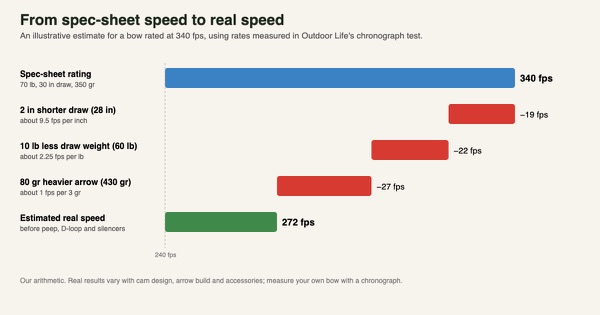
Archery 360 links dual-cam systems to "faster arrow speeds" and single cams to "slower arrow speeds" as general tendencies. But speed also depends on draw length, draw weight, brace height, limb design and arrow weight. Our IBO speed guide explains why real speeds differ from ratings, and our brace height guide explains how brace height affects speed.
Modules and adjustability
Most modern compounds set draw length with modules or rotating settings on the cams, and draw weight with the limb bolts. Some bows change draw length by swapping a module; others rotate a module to a new position; a few need a different cam. Many also let you adjust draw stops, which changes the back wall and sometimes let-off. These features matter far more for a beginner or a growing archer than the cam category. Our draw weight vs draw length guide explains how the two settings interact.
Looking after any cam system
Whatever the system, the basics are the same:
- Keep strings and cables waxed and replace them on schedule.
- Check timing marks and cam lean after new strings settle.
- Inspect cams and axles for damage after any knock or dry fire.
- Use the right bow press for any string or cable work.
- Have the bow inspected by a shop at least once a year.
Questions to ask at the shop
- What draw length and draw weight ranges does this bow cover, and how are they changed?
- Does it need a press to change draw length?
- How does the back wall feel, and can it be adjusted?
- How easy is it to tune, and does the shop support this brand?
- Are strings, cables and parts readily available?
Which is better for hunting? For target?
There's no single best system. Hunter's Friend's summary is that "in the real world there is an obvious performance parity among them all." More important than the cam type:

- Draw length fit and adjustability.
- How the draw feels to you: smooth or aggressive, and how the back wall feels.
- Noise and vibration, especially for hunting.
- Tuning support from your local shop.
- Your draw weight and arrow choice.
Modern bows also offer more adjustment than older ones. Hoyt, for example, says its 2026 RX-10 lets you "adjust draw length to a quarter-inch, as well as let-off and the feel of the back wall." Our 2026 launches article covers current flagship bows, and our reviews of the Diamond Infinite 305 and Bear Cruzer G3 explain adjustable beginner bows.
A short history of compound cams
- 1966–1969: Archery 360 says Allen "applied in 1966 for a patent for the first compound bow. It was granted in 1969."
- Late 1970s: "Martin Archery's Dynabo in the late 1970s was the first single-cam bow."
- 1990s: "Mathews Archery revolutionized the single-cam bow in the 1990s."
- 2003: Hoyt introduced its Cam & ½ hybrid, according to Hunter's Friend.
- 2005: Bowtech introduced the binary cam, according to Hunter's Friend.
Since then, cam designs have become more adjustable, with modules, rotating mods and adjustable draw stops letting archers fine-tune draw length, let-off and feel.
Choosing by cam type
Advantages
- Helps you understand draw feel and tuning needs
- Single cams need no cam-to-cam synchronisation
- Dual and binary systems are known for speed and nock travel
Trade-offs
- Differences within each type can be bigger than between types
- Manufacturer claims are hard to compare
- Fit and feel matter more than cam type
You can browse compound bows or bowstring wax on Amazon.
Frequently asked questions
Is a single cam or dual cam better?
Neither is better for everyone. Single cams are known for smooth draws and simple maintenance; dual cams for speed. Hunter's Friend says performance is broadly similar in practice.
Are single cam bows quieter?
Hunter's Friend says single cams are "generally quieter" than traditional twin cams. Individual bows vary.
Do dual cam bows need more tuning?
They need their cams synchronised, and Hunter's Friend says twin cams "can require more maintenance."
What is a hybrid cam?
A system with a control cam on top and a power cam at the bottom, linked so they work together. It still needs timing.
What is a binary cam?
A dual-cam system where the two cams are slaved to each other by cables rather than to the limbs, introduced by Bowtech in 2005.
Are single cams good for beginners?
They are often described as smooth and easy to maintain, but fit and feel matter more. Try different bows at a shop.
What is cam timing?
Both cams reaching their draw stops at the same moment. See our cam timing guide.
Does cam type affect let-off?
Let-off comes from the cam design, and many modern bows offer adjustable let-off whatever their cam type. Check the specific model's options.
Can I change the cams on my bow?
Usually only with parts made for that model, and often with a bow press. Draw length is more often changed with modules or rotating settings than by swapping cams. Ask a pro shop.
Related articles
 Training
Cam Timing, Cam Lean and Yoke Tuning Explained
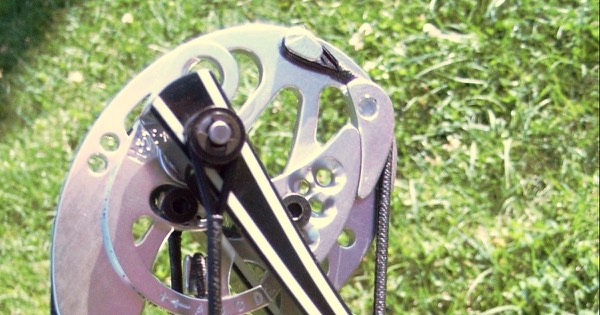
What cam timing, cam lean and yoke tuning mean on a compound bow, how to check them, what makers say about adjusting them, and when to take your bow to a shop.
October 22, 2026 · 11 min read
 Comparisons
Compound vs Recurve Bow: Key Differences Explained
Compound vs recurve bow compared: how each works, let-off and holding weight, aiming systems, competition formats, maintenance, hunting, and which suits you.
February 6, 2025 · 8 min read
 Gear
IBO Speed vs Real Arrow Speed: What to Expect
What IBO and ATA bow speed ratings mean, why your arrows are slower, rules of thumb for estimating real speed, chronographs, and why speed isn't everything.
October 28, 2026 · 9 min read