
Compound vs Recurve Bow: Key Differences Explained
Compound vs recurve bow compared: how each works, let-off and holding weight, aiming systems, competition formats, maintenance, hunting, and which suits you.
By Archery Insider Editorial Team
· 8 min read
In this article
Compound and recurve bows share a purpose and almost nothing else. One is a lever system with cams and cables that lets you hold a fraction of the peak weight at full draw. The other is a refined version of a design thousands of years old.
Which one you should shoot depends on what you want from archery, not on which is "better". This comparison sets out how each bow works, how they are aimed and shot, where they are used in competition and hunting, and what they ask of you in maintenance and learning time.
The quick answer
| If you want to... | Lean towards |
|---|---|
| Shoot Olympic-style target archery or join a typical club programme | Recurve |
| Bowhunt, especially in North America | Compound |
| Keep maintenance simple and travel light | Recurve |
| Hold at full draw with the least physical strain | Compound |
| Find out cheaply whether you enjoy archery | Recurve |
| Compete in compound-specific events (World Cup, World Games, Paralympics) | Compound |
How each bow works
Recurve
A recurve bow has limbs that curve away from the archer at the tips. Drawing the string bends the limbs and stores energy. Releasing lets the limbs snap back and drive the arrow.
Draw weight increases steadily as you draw, so at full draw you are holding the bow's peak weight. Modern target recurves are usually takedown bows with a metal riser and detachable limbs, and the archer draws and releases with their fingers using a tab.

Compound
A compound bow uses one or two cams (eccentric wheels) at the limb tips, connected by cables. As you draw, the cams rotate and change the leverage, so the draw weight rises to a peak and then drops off sharply near full draw.
The amount it drops is the let-off, expressed as a percentage. Modern compounds commonly offer let-off in the range of about 65 to 90 percent depending on the model and cam setting. A 60 lb bow with 80 percent let-off leaves you holding about 12 lb at full draw.
Because the cams also create a firm stop at full draw (the wall), a compound has a fixed draw length that must be set to the archer. Our guide to measuring your draw length explains how to find yours.
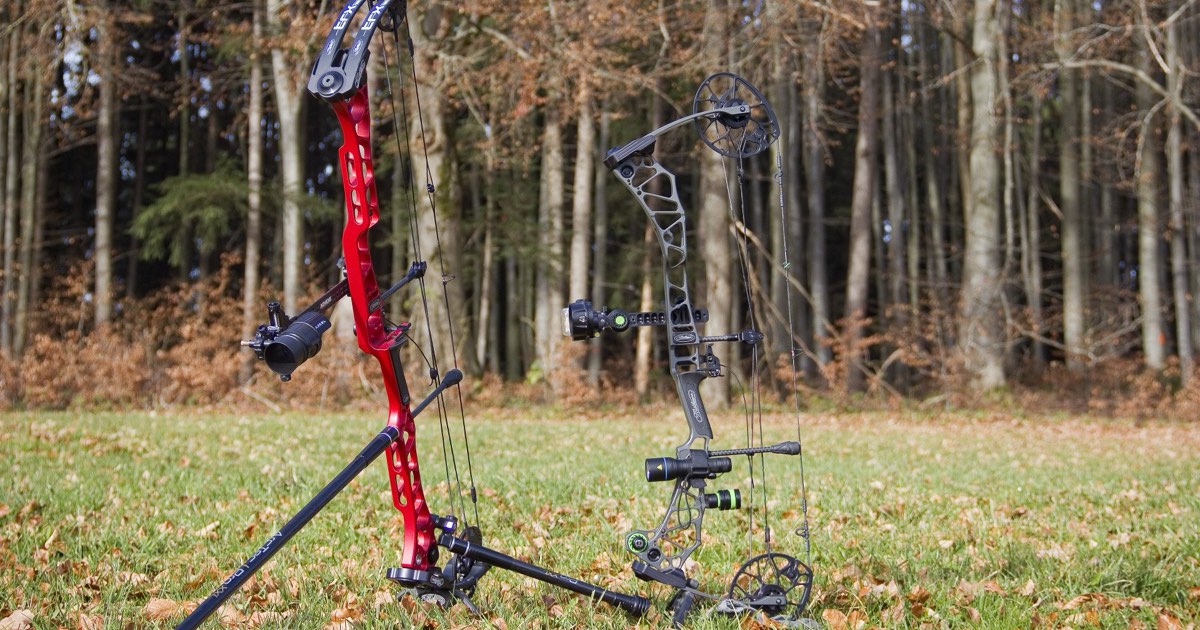
Side-by-side comparison
| Recurve | Compound | |
|---|---|---|
| Energy storage | Curved limbs | Limbs plus cams and cables |
| Holding weight at full draw | Full draw weight | Reduced by let-off |
| Draw length | Flexible, archer-dependent | Fixed by cam setting |
| Typical release | Fingers with tab or glove | Mechanical release aid |
| Typical sight (target) | Non-magnifying pin, no peep | Magnified scope with peep sight |
| Olympic Games | Yes | Not currently a medal event; see note below |
| World Archery Championships | Yes | Yes |
| Paralympic Games | Yes | Yes |
| Home maintenance | String change with a stringer | Usually requires a bow press |
| Portability | Takedown packs small | One piece, bulkier |
Aiming and shooting
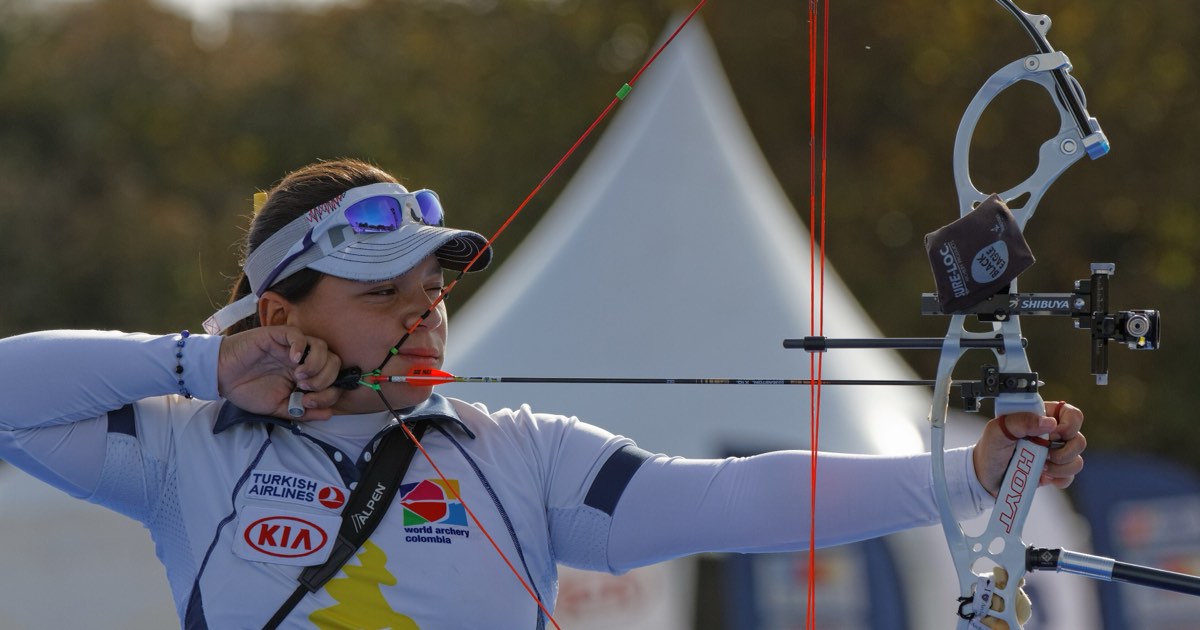
Olympic recurve archers use a sight with a simple pin or ring, no magnification, and no peep sight on the string. Aiming consistency depends on a repeatable anchor and head position.
Barebow recurve archers use no sight at all. They aim by reference to the arrow point or by instinct.
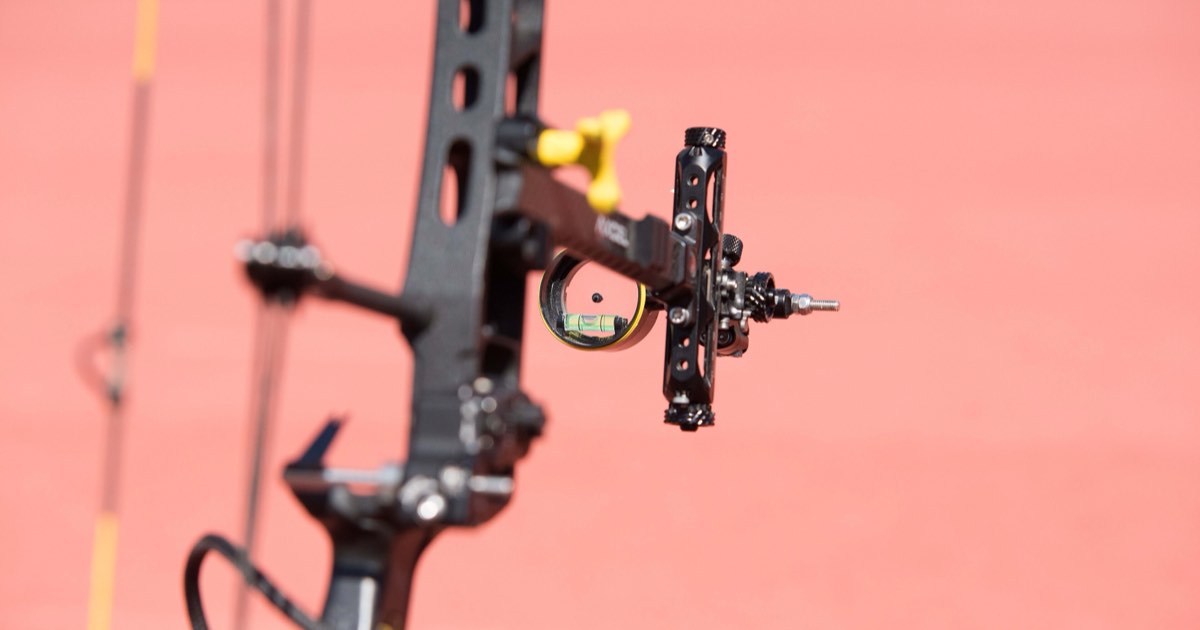
Compound archers in target disciplines typically use a magnifying scope with a level, a peep sight in the string to align the eye, and a mechanical release aid rather than fingers. The combination of let-off, peep, scope, and release makes the compound capable of very tight groups, which is why compound competition is often decided by a single point over dozens of arrows.
Neither system is easier in an absolute sense. The compound removes some of the physical difficulty of holding weight and releasing cleanly, but it adds tuning complexity and raises the standard needed to be competitive.
Competition formats
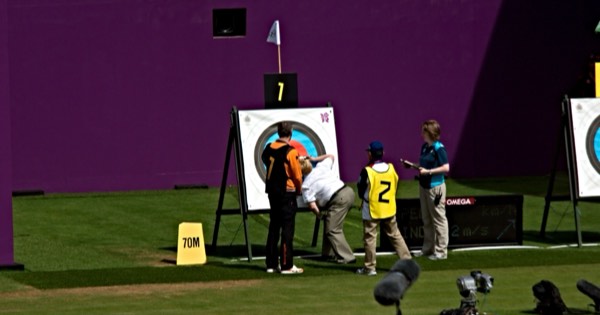
Recurve has been the Olympic discipline since archery returned to the Games in 1972. Olympic recurve events are shot at 70 metres on a 122 cm target face.
Compound is contested at the World Archery Championships, the World Games, the World Cup series, and the Paralympic Games. World Archery compound target events are typically shot at 50 metres on an 80 cm face. World Archery has worked for years toward compound's inclusion in the Olympic programme; check World Archery for the current status before relying on it.
Barebow (recurve without sights) and traditional categories exist in field and 3D archery and at many national events.
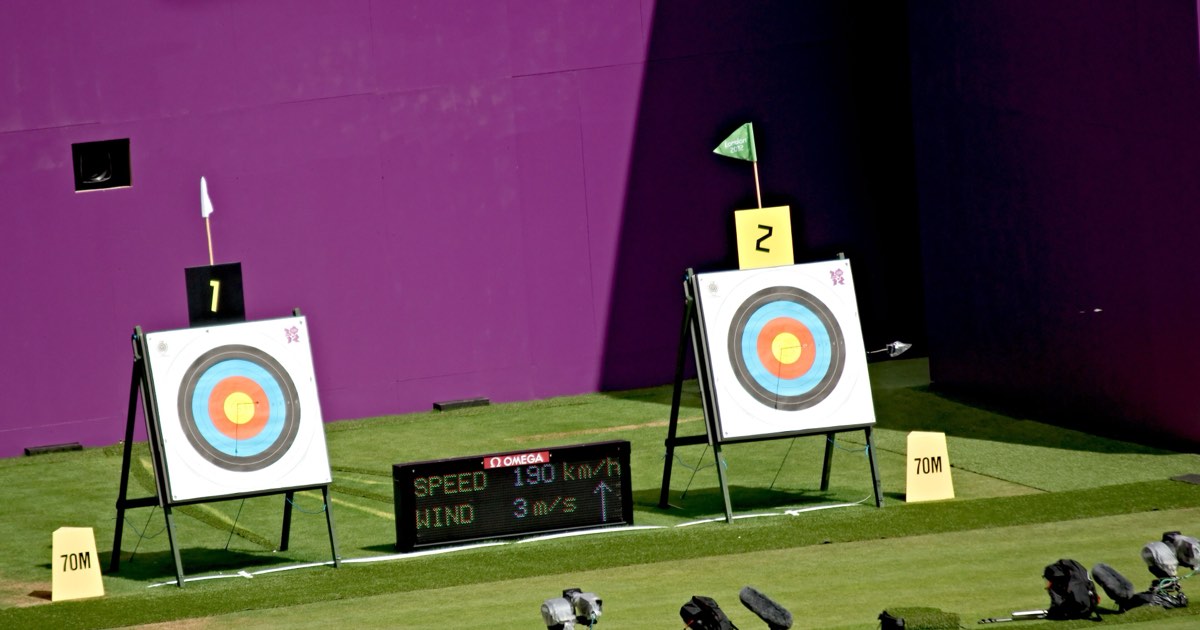
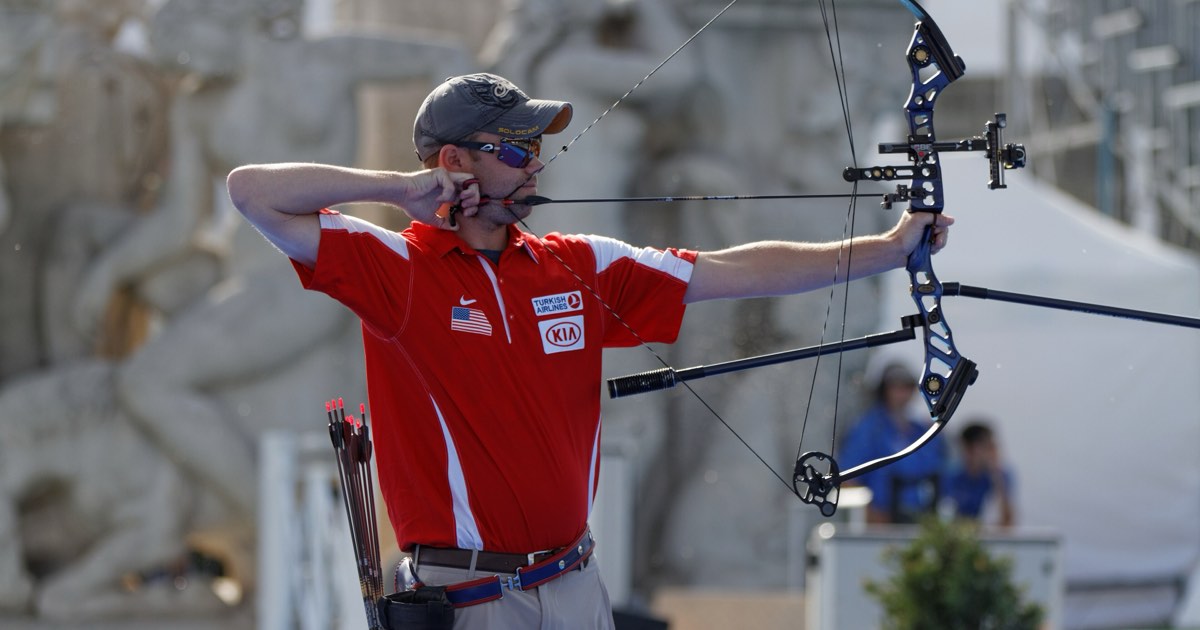
If your goal is Olympic-style target archery, recurve is the path. If you want to compete at a high level with a compound, there is a full international calendar for it.
Hunting
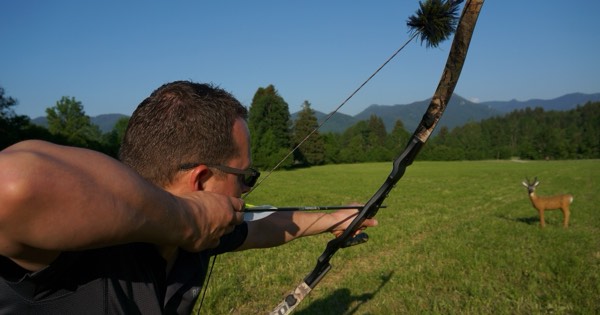
Compound bows are the most common choice for bowhunting in North America. Let-off allows the hunter to hold at full draw while waiting for a shot, and the higher arrow speeds that modern compounds generally produce reduce the arrow's drop over hunting distances.
Recurves and longbows are also used for hunting, typically at closer range and by archers who have invested heavily in instinctive shooting.
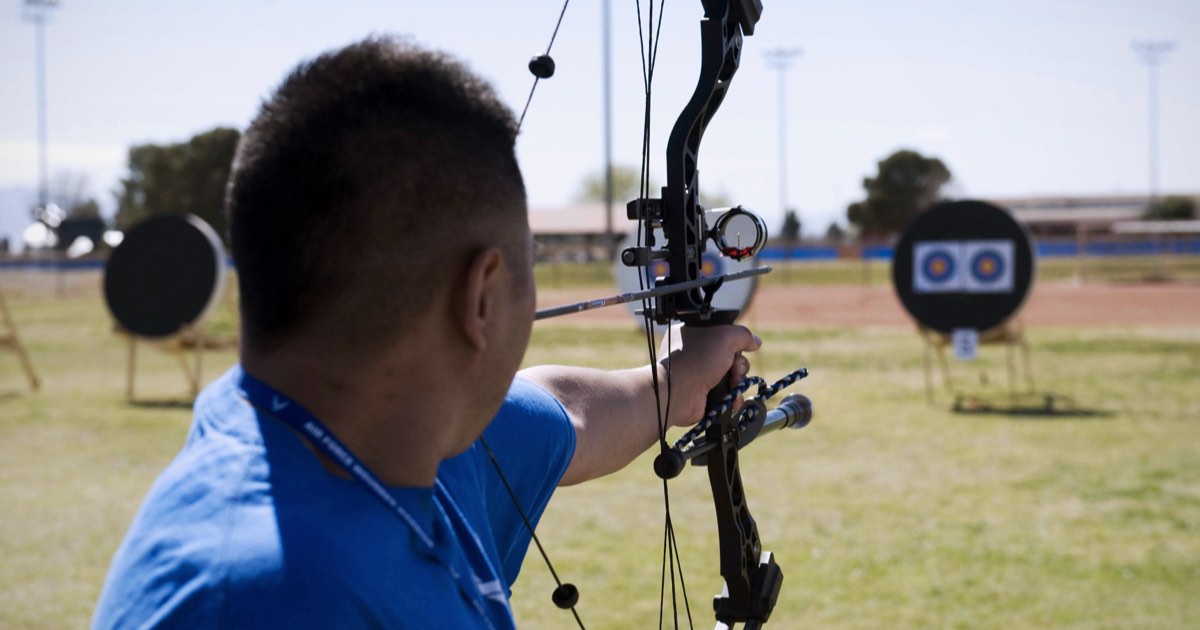
Many regions set a minimum draw weight for hunting game, and some regulate equipment such as let-off or lighted nocks. Those rules vary by jurisdiction and change over time, so always check your local hunting regulations rather than relying on a general article.
Maintenance and setup
A recurve is the simpler bow to own:
- The string is replaced at home with a bow stringer.
- Brace height is adjusted by twisting the string.
- Takedown limbs come off for transport and can be swapped to change draw weight.
A compound requires more specialised tools:
- Changing strings or cables generally needs a bow press to relax the limbs.
- Cam timing, draw length modules, and peep position often need a shop or an experienced archer to set correctly.
- Strings and cables wear and are typically replaced every couple of years depending on use, and the bow should be waxed and inspected regularly.
Neither is difficult once learned, but the compound has more parts that can go out of adjustment.
Learning curve and physical demands
With a recurve you hold the full draw weight on every shot, so beginners start light and build strength and form over months. The shot is unforgiving of small inconsistencies in anchor and release, which is exactly what makes it a good teacher.
With a compound, let-off means you can hold at anchor for longer with less strain, and the release aid removes finger-release variability. Beginners often shoot acceptable groups sooner. The trade-off is that improvement past that point depends heavily on equipment tuning and on learning to execute a release aid properly without punching the trigger.

Cost and upgrade path
We do not publish prices, but the cost structure of the two bows differs in ways worth knowing.
- A recurve can be upgraded piece by piece. Start with light limbs, add heavier limbs later, then a better sight or stabiliser. The riser can stay the same for years.
- A compound is usually bought as a complete bow. Upgrades tend to be accessories (sight, rest, stabiliser, release aid) rather than the bow itself, and a change of draw weight range may mean a new bow.
- Arrows are a significant cost for both. Compound arrows are often heavier and shot at higher weights, so spine requirements differ.
Recurve
Advantages
- Mechanically simple and easy to maintain at home
- Olympic discipline with broad club and coaching support
- Takedown design packs small and allows cheap draw-weight upgrades
- Teaches fundamental form that transfers to any bow
Trade-offs
- You hold the full draw weight at anchor
- Finger release is harder to make consistent
- Lower arrow speed than a comparable compound
- Less common for hunting in regions where compounds dominate
Compound
Advantages
- Let-off makes holding at full draw far easier
- Release aid, peep, and scope support very tight groups
- Generally higher arrow speed and flatter trajectory
- Dominant choice for bowhunting in North America
Trade-offs
- Fixed draw length must be set correctly for you
- String and cable work usually needs a bow press or a shop
- More components to tune and more that can drift out of adjustment
- Not on the Olympic programme at the time of writing
Which should you choose?
Ask yourself three questions.
- Do you want to shoot Olympic-style target archery or join a typical club programme? Recurve.
- Is bowhunting your main goal? Compound is the mainstream choice, though recurve hunting is a respected path for those willing to practise at closer range.
- Do you value simplicity and portability, or the lowest holding weight and tightest groups? Simplicity and portability point to recurve; holding weight and precision point to compound.
If you decide on a recurve, our guide to choosing your first recurve bow walks through draw weight, bow length, and the accessories you will need.
Frequently asked questions
Is a compound bow more powerful than a recurve?
For the same peak draw weight, a modern compound generally stores more energy and launches the arrow faster than a recurve because of how the cams shape the draw-force curve. Power in hunting terms also depends on arrow weight and shot placement, not bow type alone.
Can a beginner start with a compound?
Yes. Many archers do, especially those focused on hunting. The important step is having the draw length and draw weight set correctly from the start, which usually means buying through a shop or club that can fit the bow.
Why is only recurve in the Olympics?
Archery returned to the Olympic programme in 1972, before compound bows were widely used in competition. World Archery has since pursued compound's inclusion; refer to World Archery for the latest position.
Do compound and recurve use the same arrows?
They use the same basic arrow types (carbon, aluminium, or composite shafts), but spine selection differs because compounds are usually shot at higher draw weights with release aids. Always use the arrow manufacturer's chart for your specific bow type and setup.
Can I switch from recurve to compound later?
Yes, and many archers do. Stance, posture, and mental routine transfer directly. You will need to learn a release aid and get the compound's draw length set, but the fundamentals you built on a recurve are not wasted.
Related articles
 Guides
How to Choose Your First Recurve Bow: A Beginner's Guide
How to choose a first recurve bow: takedown vs one-piece, draw weight, bow length for your draw length, riser types, eye dominance, and essential accessories.
Updated February 6, 2025 · 11 min read
 Training
Archery Draw Length: How to Measure It and Why It Matters
How to measure archery draw length with the wingspan method or at full draw, what the AMO standard means, and how it affects bow size, draw weight, and arrows.
Updated February 6, 2025 · 8 min read
 Guides
How Archery Scoring Works: Target Faces, Rings and Match Rules
How archery scoring works: ring values and colours, target face sizes, line cutters, X counts, the recurve set system, compound matches and shoot-offs.
Updated September 14, 2026 · 8 min read