
When to Replace a Crossbow String and Cables
When to replace crossbow strings and cables: what TenPoint, Ravin, CenterPoint and Barnett recommend, how to spot serving wear, and why it's a press job.

By Archery Insider Editorial Team
· · 4 min read

In this article
Replace crossbow strings and cables when your maker's interval runs out or as soon as you see damage, whichever comes first. Several makers say about two years, or a few hundred shots, but the figures differ by brand. Broken strands or a worn-through serving mean stop shooting now, whatever the calendar says.
What crossbow makers recommend
There's no single industry rule, so start with your own manual. Here's what five makers say.
TenPoint keeps it simple: "We recommend changing the string and cables on your crossbow every two years." It adds: "Always replace both the string and the cables when having them changed."
Ravin sets a shot limit too: "We recommend changing the string and cables every 2 years or 400 shots (2 years or 200 shots for R18 and R500 Series), whichever occurs first."
CenterPoint gives the same headline figure: replace "both your bowstrings and cables every 2 years or 400 shots".
Barnett talks about string life rather than a schedule: with proper maintenance, "the string should last a minimum of 100 shots, with several hundred shots not uncommon".
Mission's engineering team told Realtree that "crossbow strings and cables are expected to last about 200 to 500 shots."
If you practise a lot, the shot count can arrive well before the two-year mark, so keep a rough tally.
Centre-serving wear
The centre serving, the thread wrap in the middle of the string, slides along the rail and sits in the latch on every shot. Mission's team, quoted by Realtree, says: "If the serving is flattened, unraveled or worn through where it contacts the rail, latch or cams, replace it."
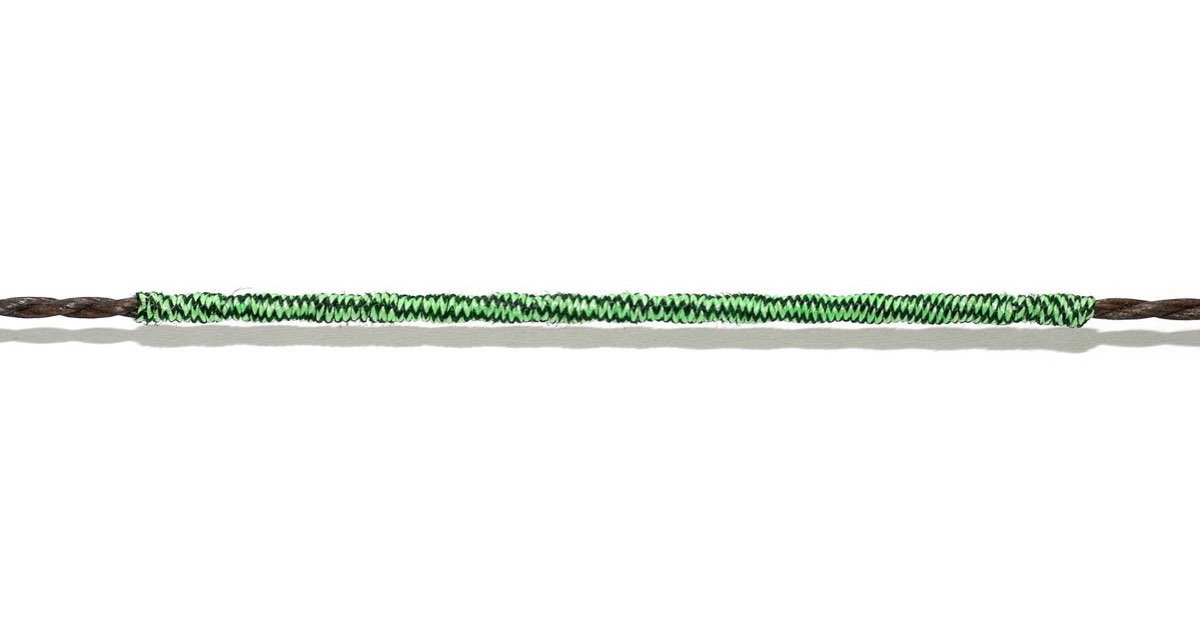
Lubrication slows that wear. Barnett says proper maintenance includes "applying lubricant to the area where the string touches the flight track and keeping the flight track free of nicks, gouges, burrs, dirt, debris". Products differ: Ravin recommends its own polymeric string conditioner, which it calls "a non-wax lubricant". Use what your manual names.
Fuzz vs broken strands: an inspection checklist
TenPoint's advice is to check before every session: "Inspect the cables and crossbow string for signs of fraying or broken strands." Mission's team adds that "broken strands or significant fraying are clear signs the string should be replaced."
Surface fuzz on a dry string can be hard to tell from a cut strand. If you're unsure, treat it as damage and ask a dealer. Never try to "fix" a frayed string yourself.
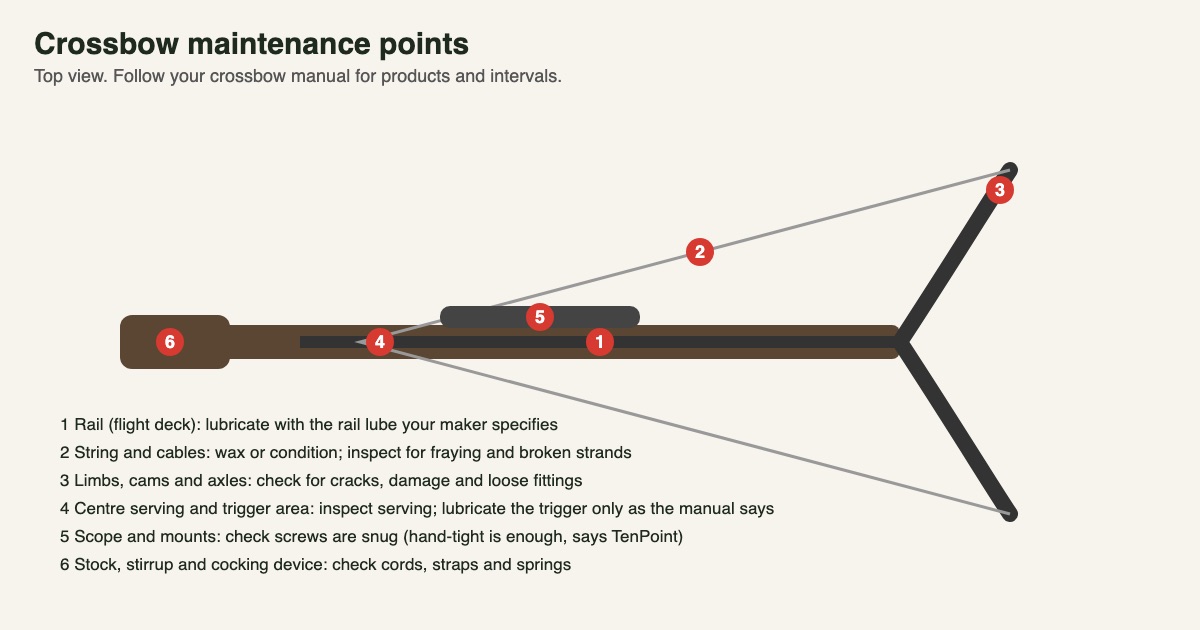
- Strands: any broken, cut or badly frayed strands on the string or cables means stop.
- Centre serving: flattened, unwinding, separating or worn through where it meets the rail or latch.
- End servings and cams: wear where the string and cables wrap the cams or limb tips.
- Cables: fraying anywhere along their length.
- Rail: nicks, gouges or burrs that could cut the serving, per Barnett.
- Age and shots: compare your log with your manual's limit.
Why replacement needs a press and a pro
On compound and reverse-draw crossbows the limbs stay heavily loaded, so the string and cables can't simply be lifted off. Barnett says: "A bow press is required to change the string on synthetic cable systems." Ravin's FAQ recommends "taking it to your local Ravin dealer" when the string and cables need replacing.
Some recurve crossbows are different: Excalibur, for example, sells stringing aids alongside its replacement strings. Even then, follow your manual exactly. Our guide to changing a bowstring explains why presses matter, and how a crossbow works shows where the string and cables sit. A new string can shift your point of impact, so check your scope's zero before you hunt.
You can browse crossbow string wax or crossbow rail lube on Amazon. Treat any listing as an example to consider, and check it matches what your manual specifies.
Frequently asked questions
How often should you replace a crossbow string?
Follow your maker. TenPoint recommends every two years, while Ravin and CenterPoint say two years or 400 shots, whichever comes first. Barnett expects at least 100 shots, often several hundred, and Mission about 200 to 500. Replace sooner if you find broken strands or a worn serving.
Can I replace my crossbow string myself?
Usually not. Barnett says a bow press is required for synthetic cable systems, and Ravin recommends taking the crossbow to a dealer. Some recurve crossbows can be restrung with the maker's stringing aid, but only do it if your manual describes that job for your model.
What does crossbow serving wear look like?
Look where the serving meets the rail, latch and cams. Mission's engineering team says to replace it if the serving is "flattened, unraveled or worn through". Separated wraps or strands showing through are reasons to see a dealer before shooting again.
Related articles
 Training
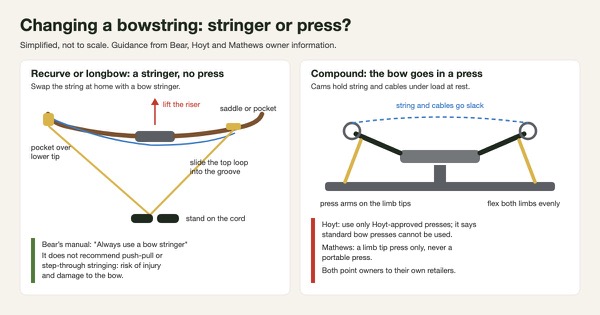
Changing a Bowstring: When You Need a Press
Changing a bow string without a press works on recurves and longbows with a stringer. Most compounds need a maker-approved press. Here's how to tell.
June 23, 2025 · 5 min read
 Gear
GearRangefinding Crossbow Scopes Explained
How a crossbow scope with a built-in rangefinder works: laser ranging, speed calibration, batteries in the cold, and why legality varies by state.
Updated October 6, 2026 · 4 min read
 Gear
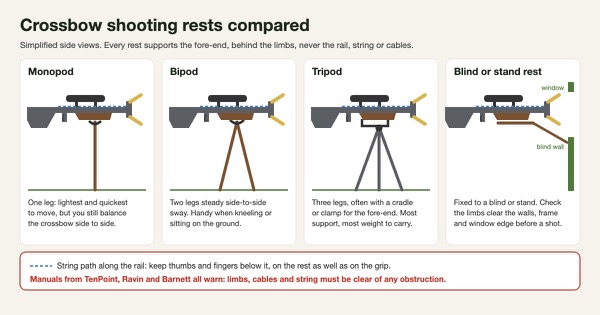
GearCrossbow Shooting Sticks and Rests
Crossbow tripod, bipod, monopod or blind rest? How each one steadies a heavy crossbow, what it costs you in weight, and how to keep limbs and fingers clear.
Updated October 6, 2026 · 5 min read