
How to Keep Your Bow Arm Steady
How to keep your bow arm steady in archery: why some float is normal, how to set the arm, draw weight, stabilizer mass and holding drills.
By Archery Insider Editorial Team
· 5 min read
In this article
To keep your bow arm steady in archery, stop trying to freeze it. Set the arm in an aligned position, keep pushing it gently toward the target, and use a draw weight and stabilizer setup you can hold for the whole shot. Then build holding strength with short, regular drills.
Float vs shake
Every archer's sight moves at full draw. What matters is whether it drifts gently or shakes.
Writing for Archery 360, Crispin Duenas says a floating sight "puts your arrows into the 10 more consistently," and reminds archers that "holding still is just one piece of the shot-process puzzle." A clean release matters more than a frozen pin.
A shake is bigger and faster, and it gets worse the longer you hold. In a later article Duenas notes that "weak triceps are evident if the archer tends to have a shaky bow arm while at full draw."
Set the bow arm, then push
Steadiness comes from position more than effort:
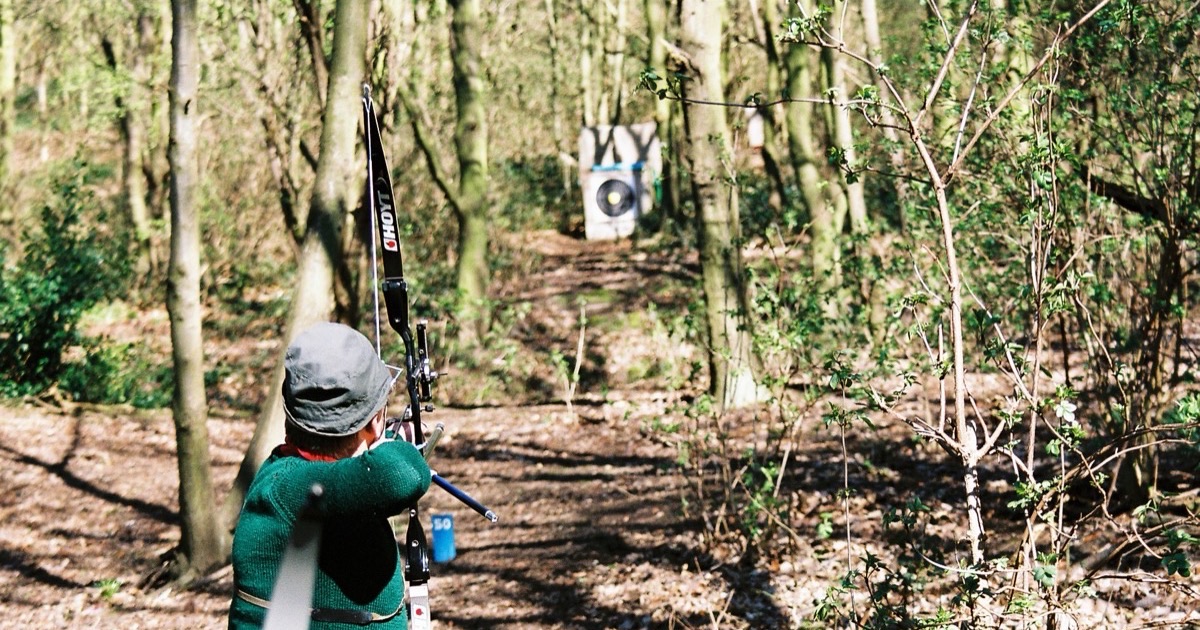
- Shoulder down. Keep the bow shoulder low and settled, not hunched toward your ear.
- Arm toward the target. Firm but not locked hard, with the elbow turned so the string clears your forearm.
- Push, don't grip. The bow sits in the web of your hand, which pushes it toward the target. Our archery form guide covers this.
- Relaxed fingers. A clenched hand can twist the bow at the shot.
Duenas puts it as direction rather than force: "keeping your bow arm stationary isn't about holding it still." You keep pointing the arm at the target while the string side keeps working through the shot.
Check draw weight and stabilizer mass
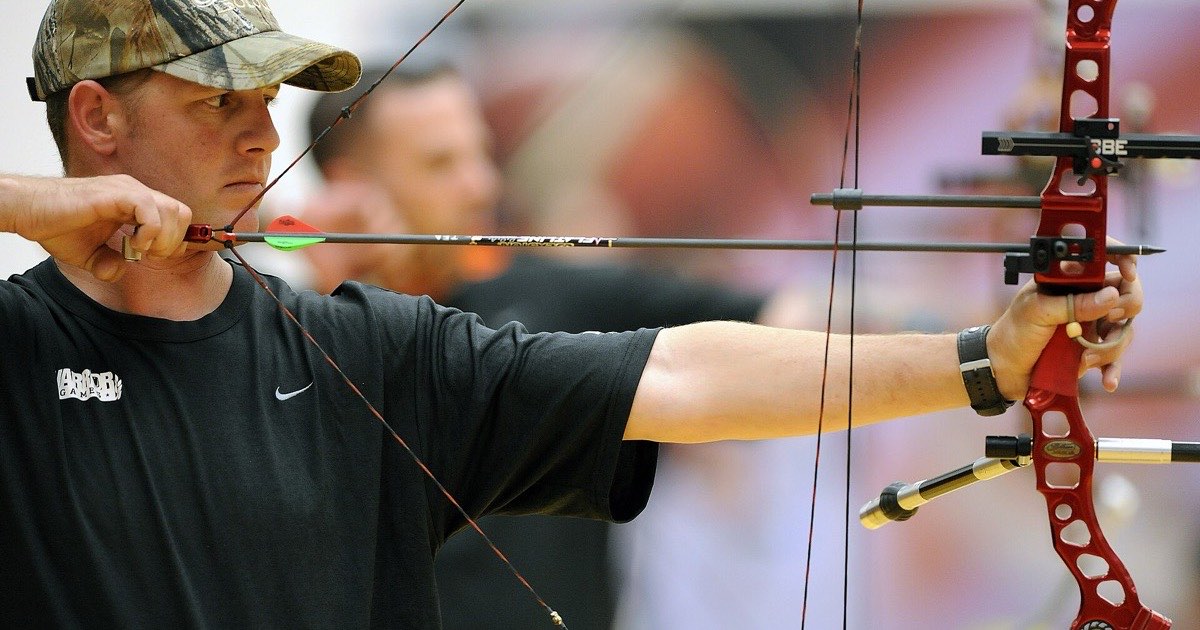
First, make the bow easier to hold. Duenas warns that "many archers try to shoot the highest poundage they can draw, but they often lose control over their bow as their comfort wanes." Our first recurve guide explains how to pick a sensible starting weight.
Stabilizers cut both ways. Mass helps a bow resist small movements, but "too much mass weight makes archers work harder to keep their bow arm up, which affects aiming," Duenas writes. He suggests stripping excess weight first to see how your arm behaves, then experimenting to balance stability against effort.
| What you notice | Likely cause | What to try |
|---|---|---|
| Pin drifts slowly around the middle | Normal float | Keep shooting; focus on the release |
| Shake grows the longer you hold | Fatigue or weak holding muscles | Shorter ends, then holding drills |
| You strain to reach anchor or the clicker | Draw weight too heavy | Lighter limbs or lower poundage |
| Bow arm sags after a few ends | Too much stabilizer mass | Remove weight, then experiment |
Build strength: SPT and holding drills
USA Archery describes Specific Physical Training (SPT) as a way to build "specific strength and endurance for an archer using a bow, light weight bow, stretch band, or training aid." Its holding drill: follow your shot process without an arrow to the holding position, brace for 10 to 30 seconds, rest 40 to 60 seconds, and repeat.
Two warnings matter. Archers must "not dry fire the bow during this drill." With a compound, USA Archery advises against repeated let-downs, which "can increase the probability the archer injures their shoulder," and against drawing without an arrow loaded, so a stretch band is the safer tool.
Off the bow, Archery 360 suggests "planks, balance exercises, and stationary holds that extend your arms," plus narrow-stance push-ups for the triceps. Fit them into our practice plan.
To experiment with balance, you can browse recurve stabilizers on Amazon. Change one weight at a time.
Frequently asked questions
Why is my bow arm shaking?
Usually fatigue, a draw weight that's too heavy or too much stabilizer mass. Archery 360 links a shaky bow arm at full draw to weak triceps. Try a lighter bow or less weight first, then build strength with holding drills. If the shaking comes with pain, stop and see a coach.
How do I get a steady aim in archery?
Accept a gentle float instead of chasing a frozen pin. Set your bow arm with the shoulder down, push toward the target, keep the hand relaxed and concentrate on a consistent release. Archery 360 calls holding still "just one piece of the shot-process puzzle", not the whole of it.
Do stabilizers make your bow arm steadier?
They can, because mass helps the bow resist small movements, but too much backfires. Archery 360 warns that heavy setups make archers work harder to keep the bow arm up. If your arm sags after a few ends, strip weight off, then experiment to find a balance you can hold.
Related articles
 Training
Archery Form: 11 Steps to a Consistent Shot
Archery form step by step: stance, hook and grip, set-up, draw, anchor, transfer, aiming, release and follow-through, plus common faults and fixes.
Updated March 21, 2025 · 10 min read
 Gear
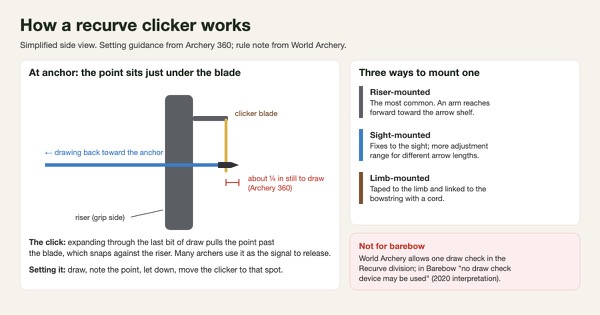
GearWhat Is a Clicker in Archery?
What a recurve bow clicker does, the three ways to mount one, how to set its position, how it relates to target panic, and why barebow archers can't use one.
Updated October 8, 2026 · 5 min read
 Guides
Can You Teach Yourself Archery?
Can archery be self taught? Yes, with limits. How to learn safely on your own, use video feedback, and when a few coached lessons pay for themselves.
Updated October 6, 2026 · 5 min read