
Bow Stabilizers: Do You Need One and What Length?
What a bow stabilizer does, whether you need one, hunting vs target lengths, side rods and back bars, weights, stabilizers vs dampers, and how to set one up.

By Archery Insider Editorial Team
· 8 min read
In this article
Look at a target archer's bow and you'll see long rods sticking out of the front and sides. Look at a bowhunter's bow and you'll usually see one short bar. Both are stabilizers, and both are doing the same basic jobs: steadying the bow, resisting twisting at the shot, and soaking up vibration. The difference is how much stability each archer needs, and how much length and weight they can carry.
This guide explains what a stabilizer does, whether you need one, how long it should be for hunting or targets, what side rods and back bars are for, how stabilizers differ from dampers, and how to set one up.
What does a bow stabilizer do?
Lancaster Archery is clear that you don't need a stabilizer "in order to shoot your bow." But it lists several things a stabilizer does well.
Resisting torque at the shot
"Stabilizers combat torque that takes place at the point of release," Lancaster explains. "The more weight that is farther out in front of your bow, the more the stabilizer will resist torque." Small twists of the bow hand or a less-than-perfect release turn the bow at the shot; a weighted bar out front resists that movement.
Steadier aiming
"Another major part of that stabilization… is calming your pin float," Lancaster says. Mathews' guide, written by goHUNT's Brady Miller, says front stabilizers "are meant to give your bow resistance to movement (a tighter hold) while you are at full draw." Our aiming guide explains why a steady hold matters.
Vibration, hand shock and noise
"Stabilizers absorb vibration at your shot which reduces hand shock and deadens the noise from your bow," according to Lancaster. Many hunting stabilizers include rubber or gel dampening sections for this reason.
Balance
Lancaster adds that stabilizers "also balance the bow itself." A bow with a heavy sight and quiver on one side tends to lean that way; a stabilizer, especially a side rod, can correct it.
Do you need a stabilizer?
Not to shoot. Many beginners and traditional archers shoot without one. You might want one if:
- Your pin floats a lot at full draw.
- Your bow tips to one side when you hold it.
- You want a quieter, smoother shot for hunting.
- You compete in a class that allows them and want every advantage.
If you shoot barebow under World Archery rules, you can't use one: "No stabilisers are allowed." Our barebow guide explains the rules.
Is a longer stabilizer better? Hunting vs target lengths
Longer bars with more weight out front generally resist movement more, but they are heavier and harder to manoeuvre. So the right length depends on how and where you shoot.
Treestand and blind hunting
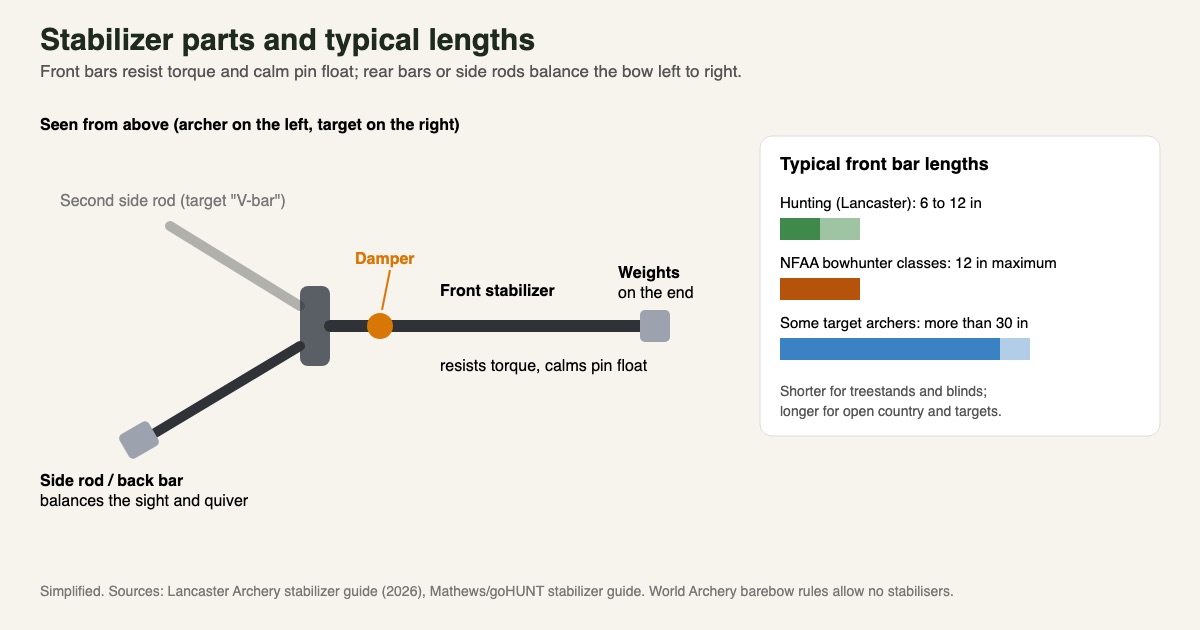
Lancaster notes that "most often, you will see anywhere from 6" to 12" stabilizers on hunting bow setups. The shorter end of the range might be used when hunting from a treestand or from a blind." Mathews' guide agrees: "If you routinely hunt from a ground blind, then a shorter front stabilizer will benefit you the most." In tight spaces, a long bar can catch on branches, blind walls or your clothing. Our ground blind guide covers shooting in confined spaces.
Western and open-country hunting
Longer hunting bars make more sense when shots are longer and space isn't tight. Lancaster says "those longer 12" stabilizers would be more useful when… needing to take 60 yard shots at elk."
Target compound and Olympic recurve
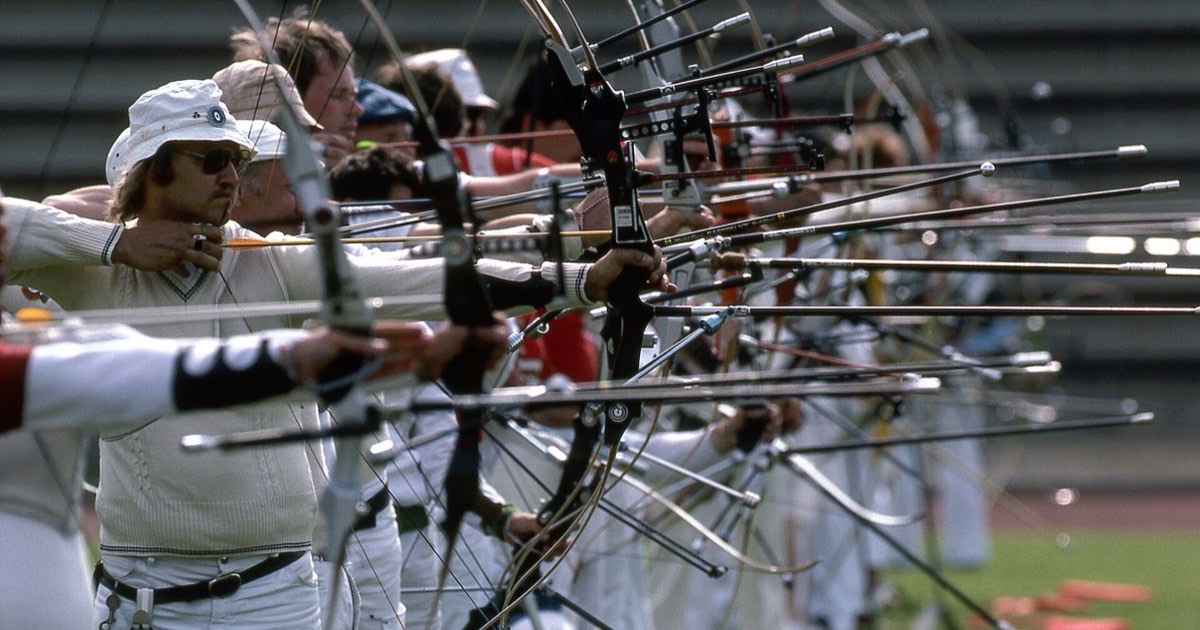
Target archers prioritise stability over weight and manoeuvrability. Lancaster notes that "some professional archers use stabilizer systems in excess of 30" off of the front of their riser," and that target setups "focus much more on balance and stability over noise-reduction." Our featured photo shows recurve archers with long front stabilisers at a 1980s tournament.
Class rules
Lancaster notes that "the National Field Archery Association limits stab length to 12" and below in its bowhunter classes." World Archery permits stabilisers on recurves ("Stabilisers and vibration dampeners are permitted to be attached to the bow") and allows "any number of stabilisers" on compounds, provided they don't touch the archer's body or get in the way, and none on barebows. Always check your class rules.
Side rods, back bars and V-bars
Lancaster explains that "those stabilizers that stick off the bow and point back towards the archer are referred to as 'side rods.'" They do a different job from the front bar. Mathews' guide says rear bars "really shine when it comes to the right and left balance of the bow."
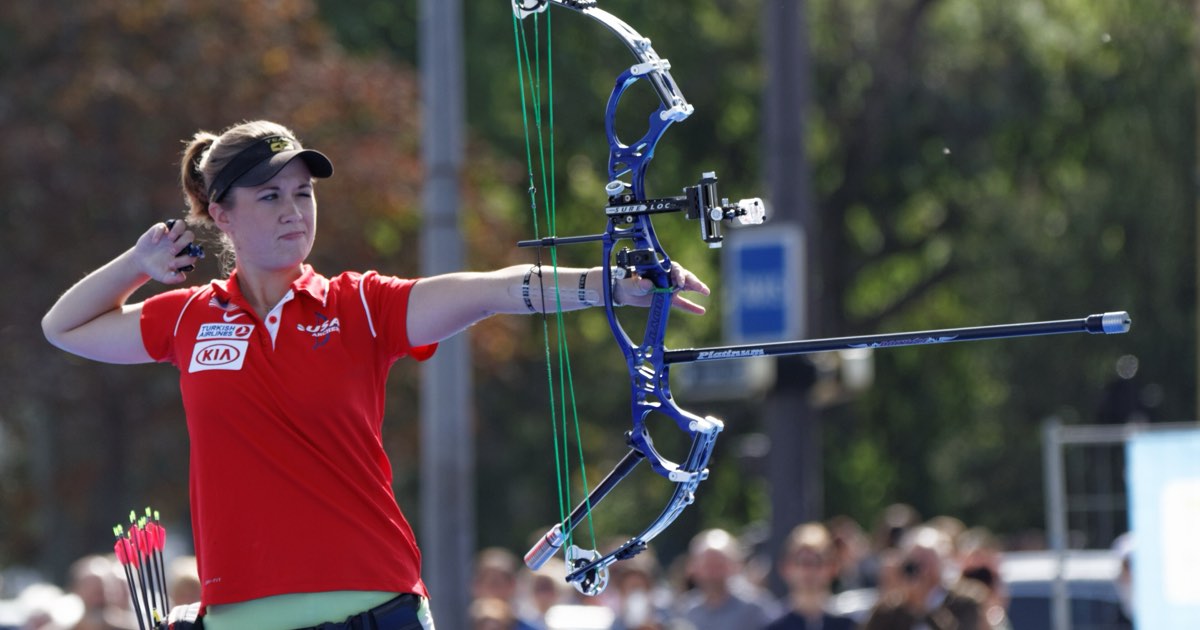
- Hunters may run "a shorter side rod in the pursuit of counteracting the weight of their bow-mounted quiver and sight," says Lancaster.
- Target archers "often run two side rods, one on either side," often in a V shape, for maximum balance.
A side rod usually attaches with an offset mount or quick-disconnect so you can angle it.
Weights: where and how much
Most stabilizers accept screw-on weights at the end. Adding weight to the front bar increases its resistance to movement; adding weight to a side rod shifts the balance. Archery 360's recurve guide notes that "more draw weight and/or a longer draw length means more weight out front," and that "what works for one archer might not give the feel or reaction you prefer." There is no universal formula. Start light, add weight in small steps and see how the bow holds and settles after the shot.
Stabilizer vs dampener
A dampener (or damper) is designed mainly to absorb vibration and noise, rather than to add weight out front. Many hunting stabilizers combine both: a short bar with a dampening element. Lancaster says that if you want to keep a bow "quiet and light… a shorter, dampening style stabilizer might be your choice as your only stabilizer." Archery 360 notes that recurve dampers "come in various shapes, sizes and, more importantly, stiffnesses." Limb dampers and string suppressors are other kinds of dampener that don't stabilise the bow.
Our Bee Stinger Sport Hunter Xtreme review explains an example of a hunting bar with a dampening section.
Choosing a stabilizer: what to look at
- Length: match it to where you shoot. Shorter for treestands and blinds, longer for open country and target archery.
- Adjustable weight: removable end weights let you fine-tune the balance instead of guessing.
- Dampening: for hunting, a dampening section helps quieten the shot.
- Mounting: offset mounts and quick-disconnects make side rods easier to angle and remove for travel.
- Overall weight: remember you will carry and hold it, often for hours on a hunt.
- Rules: check length or type limits if you compete.
Stabilizers and bow-mounted quivers
A full bow-mounted quiver adds weight to one side of the bow, and that weight changes as you shoot arrows or take the quiver off. Lancaster notes that hunters may use a short side rod to counteract the weight of a bow-mounted quiver and sight. If you hunt with the quiver on, balance and sight in the bow with the quiver on and full, so the bow behaves the same way on a hunt as in practice.
How to set up and balance a stabilizer
- Fit the front bar into the stabilizer bushing on the front of the riser, snug by hand or with the right tool.
- Hold the bow at full draw (with an arrow, aimed at a target) and watch how the pin moves.
- Check the balance at rest and at full draw: does the bow tip left, right, forwards or back?
- Add a side rod if the bow leans towards the sight and quiver side, and angle it to bring the bow level.
- Adjust weights in small amounts, front and back, until the pin settles and the bow stays level after the shot.
- Shoot groups at your normal distance to judge the result; a setup that feels steady but makes you tired may be too heavy.
- Re-check your sight marks, because adding weight can change how the bow reacts at the shot.
Common mistakes
- Adding too much weight too quickly, leading to fatigue.
- Choosing a bar too long for your hunting situation, so it catches on the blind or branches.
- Ignoring side-to-side balance, especially with a heavy quiver.
- Not checking class rules before a competition.
- Expecting a stabilizer to fix form. It helps, but it can't replace a good release.
Using a stabilizer
Advantages
- Steadier aim and less pin float
- Resists torque at the shot
- Reduces vibration, hand shock and noise
- Can balance a bow with a heavy sight and quiver
Trade-offs
- Adds weight to carry and hold
- Long bars are awkward in blinds and treestands
- Not allowed in some classes, such as barebow
You can browse hunting bow stabilizers or back bar kits on Amazon.
Frequently asked questions
Do bow stabilizers really work?
They resist torque, calm pin float, absorb vibration and balance the bow, according to Lancaster Archery. You don't need one to shoot, but most archers find one helps.
Is a longer stabilizer better?
Longer bars resist movement more but are heavier and less manoeuvrable. Hunters usually choose 6 to 12 inches; target archers often go much longer.
What length stabilizer for treestand hunting?
Lancaster says hunters in treestands or blinds tend to use the shorter end of the 6- to 12-inch range.
Do I need a back bar?
Only if your bow leans to one side, often because of a heavy sight and quiver. A short side rod can balance it.
What is the difference between a stabilizer and a dampener?
A stabilizer adds weight out front to resist movement; a dampener mainly absorbs vibration and noise. Many hunting bars do both.
Are bow stabilizers universal?
Most bows have a standard threaded bushing on the front of the riser, but check your bow and the stabilizer's fitting.
Can you use a stabilizer on a recurve?
Yes. Olympic-style recurves commonly use front stabilisers, side rods and dampers. World Archery barebow rules don't allow them.
Related articles
 Reviews
Bee Stinger Sport Hunter Xtreme Review: A Hunting Stabilizer
Bee Stinger Sport Hunter Xtreme review: 6, 8 and 10-inch carbon rods, Sims dampener, removable 1 oz weights, how to choose length and weight, and who it suits.
June 10, 2026 · 6 min read
 Guides
What Is Barebow Archery? Rules, Gear and How to Start
What is barebow archery? World Archery's equipment rules, how barebow differs from Olympic recurve and traditional bows, aiming methods and how to start.
October 8, 2026 · 9 min read
 Training
How to Aim a Bow: Sights, Gap and Instinctive
How to aim a bow: eye dominance, anchor points, sights, gap shooting, string walking, face walking and instinctive aiming, with practice drills for each.
October 7, 2026 · 11 min read