
Can You Leave a Recurve Bow Strung?
Can you leave a recurve bow strung? For a session, yes. What makers and coaches say about storage, heat, travel and limb adjustments, and when to unstring.
By Archery Insider Editorial Team
· · 4 min read

In this article
You can leave a recurve bow strung for a shooting session, including short breaks, without harm. But you shouldn't leave a recurve bow strung for long periods: coaches and manufacturers advise unstringing it at the end of the day, before storage or travel, before adjusting the limbs, and whenever it might get hot. Your bow's own manual has the final word.
What makers and coaches actually say
Archery 360, the Archery Trade Association's consumer site, published a recurve care guide by Canadian Olympian Crispin Duenas. His advice is direct: "even though modern recurve limbs can handle it, don't leave your bow strung for long periods." He adds that "manufacturers such as Hoyt note that Korean archers unstring their bows when leaving a range for lunch."
Hoyt's FAQ adds a practical rule: "Be sure to unstring recurve bows before making adjustments." Turning limb bolts to change draw weight or tiller is a job for an unstrung bow.
None of the manuals or guides we read gives a time after which a strung bow is harmed. You'll often hear that limbs "take a set" if left strung, but we found no maker publishing data on it, so treat it as a reason for caution rather than a measured fact.
Heat matters more than time
The WIN&WIN (WNS) owner's manual warns that "excessive heat, such as could be experienced on a sunny day inside of a closed vehicle, could cause limb failure," and that "prolonged storage in a hot, dry attic or damp basement could also be damaging." Elite's recurve manual agrees: "Do not leave your bow in your vehicle on a hot or sunny day."
Archery 360 explains why: "Prolonged heat affects epoxies that hold limb layers together, which can cause twisting and even delamination." If the bow is going in a vehicle, unstring it and keep it out of direct sun.
When to unstring: a quick checklist
| Situation | What to do | Source |
|---|---|---|
| Short break during a session | Fine to leave strung | Archery 360 |
| End of the day or longer storage | Unstring | Archery 360 |
| Car, attic or anywhere hot | Unstring and keep it cool | WIN&WIN and Elite manuals |
| Adjusting limb bolts or tiller | Unstring first | Hoyt FAQ |
| Wet day | Take it apart and dry it | Archery 360 |
| Travelling | Unstring; take a takedown apart | Common practice |
Use a stringer for both jobs. Elite's manual says to "always use a proper recurve stringer to safely string the bow and to avoid damage to the bow or possible injury." Our guide to stringing and unstringing a recurve walks through the method.
Storing a recurve, strung or not
Position matters too. Archery 360 says to "never store a recurve by standing it on one limb," because "the riser's weight and add-on accessories can deform the limb, especially if it's stored like that for a long time." Hang it by the riser, lay it flat in a case, or use a stand that holds the riser; our bow stands guide covers range options.
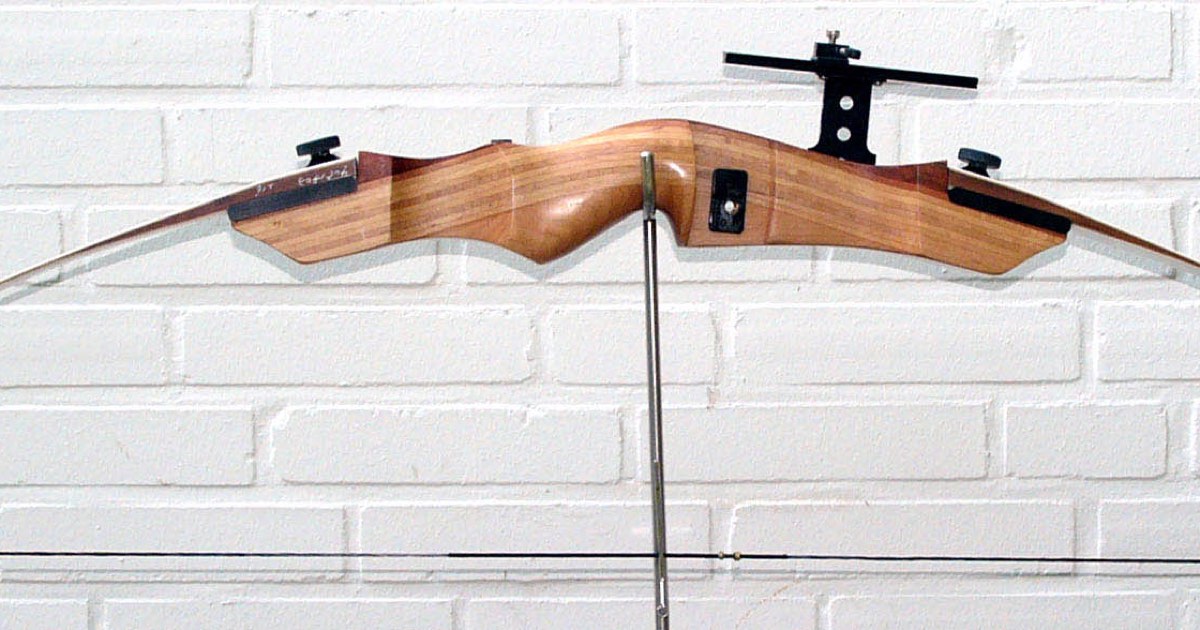
After a wet session, Archery 360 recommends you "disassemble your bow and its sight, plunger and stabilizers, and dry every piece," since moisture can cause rust. A takedown makes that easy, as our Samick Sage review shows.
Traditional wood bows vs modern limbs
The Archery 360 advice is about modern recurve limbs, the fibreglass and carbon laminates on most takedowns. Traditional bows with wooden cores or all-wood construction are a different case, and bowyers' instructions vary. Many traditional archers unstring after every session. Follow your bow's care instructions, or ask the maker before assuming it can stay braced.
If you don't own a stringer yet, you can browse recurve bow stringers on Amazon. If you're still picking a bow, see our guide to choosing your first recurve.
Frequently asked questions
How long can a recurve stay strung?
No manufacturer we checked publishes a time limit. Archery 360 says modern limbs can handle being strung but advises against "long periods," and notes Korean archers unstring even for lunch. A practical rule is strung for the session, unstrung at the end of the day, and always unstrung in heat.
Is it bad to store a recurve bow strung?
Most guidance says unstring it for storage. The bigger dangers are heat, damp and poor positioning: WIN&WIN warns about hot vehicles, attics and damp basements, and Archery 360 says never to stand a recurve on one limb. Store it unstrung, horizontal and somewhere cool and dry.
Can I adjust draw weight with the bow strung?
Hoyt says no. Its FAQ tells owners to "be sure to unstring recurve bows before making adjustments." Unstring first, turn the top and bottom limb bolts by equal amounts, as Hoyt advises, then restring the bow and check brace height and limb alignment before you shoot again.
Related articles
 Training
How to String and Unstring a Recurve Bow Safely
How to string and unstring a recurve bow with a stringer, why step-through stringing twists limbs, post-stringing checks, brace height and string care.
Updated February 1, 2025 · 8 min read
 Gear
GearBow Stands and Kickstands: Keeping a Bow Off the Ground
Compound bow kickstand or recurve bow stand? What each type does, how they attach, why fit and weight matter, and the range etiquette for resting a bow.
Updated October 6, 2026 · 5 min read
 Guides
How to Choose Your First Recurve Bow: A Beginner's Guide
How to choose a first recurve bow: takedown vs one-piece, draw weight, bow length for your draw length, riser types, eye dominance, and essential accessories.
Updated February 6, 2025 · 11 min read