
Samick Sage Takedown Recurve Review: Still the Default First Bow?
Research-based Samick Sage review: the 62-inch takedown recurve's published specs, 25–60 lb limbs, who it suits, its limits, and how it compares with the.
By Archery Insider Editorial Team
· · 5 min read
In this article
The Samick Sage has been the stock answer to "what recurve should I buy first?" for well over a decade. It is inexpensive, it is a takedown, and the limbs can be swapped as you get stronger. This review explains what the Sage actually is, what the published specifications mean for a beginner, where it falls short, and which alternatives are worth a look.
The short version
The Sage is a 62-inch wooden-riser takedown recurve sold in draw weights from 25 to 60 pounds. It has the three threaded bushings a beginner eventually wants (sight, plunger, stabiliser), it ships with a Dacron string, and replacement limbs are widely available. It is not ILF, so limb upgrades are limited to Sage-compatible limbs, and the lightest limb offered is 25 lb, which is heavier than many clubs start adults on.
Adult beginners and returning archers
Samick Sage Takedown Recurve
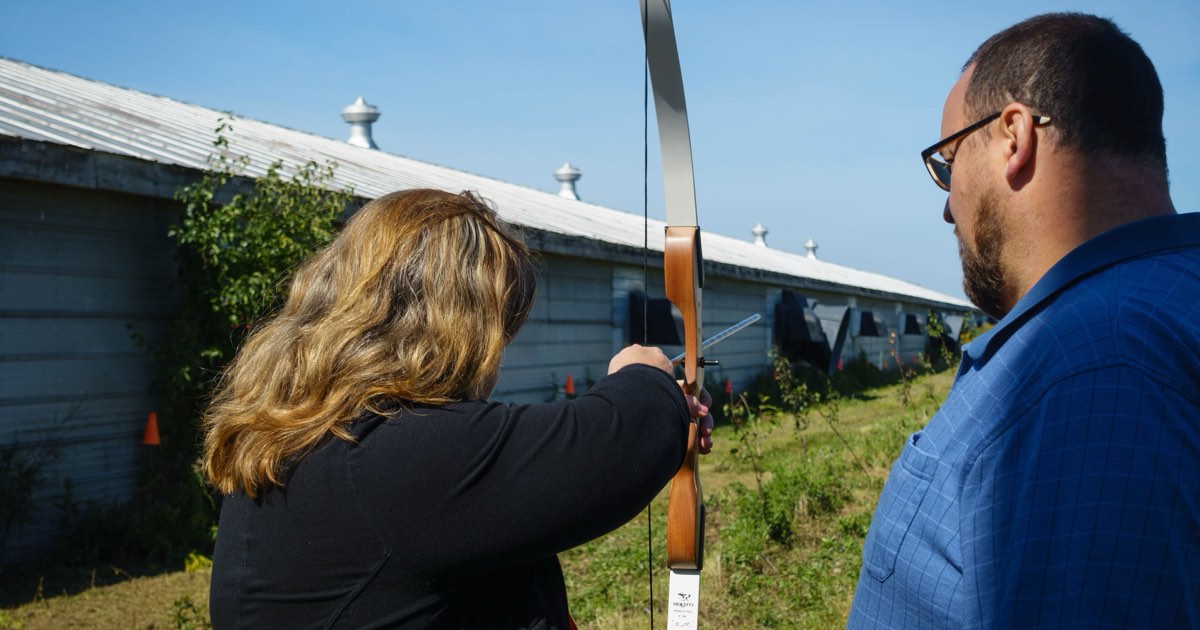
A 62-inch takedown recurve with a wooden riser and bolt-on fibreglass-and-maple limbs. Limbs are interchangeable with other Sage limbs, allowing draw weight to be increased by buying limbs rather than a new bow.
- Bow length (AMO)
- 62 in
- Draw weights
- 25–60 lb in 5 lb steps (at 28 in)
- Riser
- Laminated olive dymondwood and hard maple
- Limbs
- Hard maple core, black fibreglass
- Brace height
- 7.25–8.25 in (recommended)
- String
- 14-strand Dacron
- Bushings
- Sight, plunger, stabiliser
- Mass weight
- Approx. 3.4 lb (retailer figure)
Specifications: manufacturer listing and retailer specification sheets (see Sources)
What you are buying
Riser
The riser is laminated from olive dymondwood (a resin-stabilised wood) and hard maple. It is cut past centre, which matters for arrow clearance and tuning, and it has a crowned (rounded) shelf for shooting off the shelf without a rest. Three brass bushings are fitted: one for a sight, one for a plunger button or screw-in rest, and one below the grip for a stabiliser or bowfishing reel.
For a beginner the practical consequences are:
- You can start shooting off the shelf or with a stick-on rest, then add a sight and plunger later without changing bows.
- A wood riser is lighter in the hand than an alloy riser, which some beginners find easier to hold up and others find less stable. Our guide to choosing a first recurve covers that trade-off.
Limbs
Limbs are a hard maple core wrapped in black fibreglass, with reinforced tips. They attach with a single knob per limb into metal limb pockets, which is the Sage's proprietary fitting. Draw weights run from 25 to 60 lb in 5 lb steps, measured at the standard 28-inch draw.
Two things follow from that:
- Not ILF. The Sage uses its own fitting, so you cannot bolt on limbs from the wider ILF market. Spare and heavier Sage limbs are easy to find, but your upgrade path stays within the Sage family.
- 25 lb is the floor. Many clubs start adult beginners between about 18 and 26 lb. A 25 lb Sage sits at the top of that range, and because the bow is 62 inches, archers with a draw over 28 inches will be pulling noticeably more than the marked weight. See draw length and real draw weight.
String and setup
The Sage ships with a 14-strand Dacron string. Dacron is forgiving on wooden bows and is the right choice for this limb construction. Recommended brace height is 7.25 to 8.25 inches, adjusted by twisting the string. A stringer is not always included, depending on the seller, and you should budget for one.
Who the Sage suits
- Adults who have had a few lessons and want a bow of their own without committing to an alloy ILF setup.
- Archers who shoot off the shelf or barebow and value the lighter wooden riser.
- Anyone who expects to increase draw weight in 5 lb steps over the first year or two.
Who should look elsewhere
- Smaller or younger archers who need less than 25 lb. A youth bow or an ILF riser with light limbs is a better fit.
- Tall archers with a draw length over about 29 to 30 inches, for whom a 62-inch bow will stack. A 64-inch or longer bow is a better match.
- Anyone planning an Olympic-style sight-and-stabiliser setup. An ILF alloy riser gives a far wider choice of limbs and accessories.
How it compares
| Samick Sage | Southwest Archery Spyder / Spyder XL | |
|---|---|---|
| Bow length | 62 in | 62 in / 64 in (XL) |
| Draw weights | 25–60 lb | 25–55 lb (manufacturer list) |
| Riser | Olive dymondwood, hard maple | White oak, dymondwood, padouk |
| Limbs | Maple core, fibreglass | Maple core, fibreglass, reinforced tips |
| String | 14-strand Dacron | 14-strand Dacron; Fast Flight compatible tips |
| Included | Varies by seller | Riser, limbs, string, stick-on rest, stringer, instructions |
| Limb fitting | Proprietary (Sage) | Proprietary (Spyder) |
The Spyder is the most direct alternative. Southwest Archery lists reinforced tips rated for Fast Flight strings, a 64-inch XL option for longer draws, and a stringer in the box. Neither bow is ILF.
Samick Sage
Advantages
- Takedown design: upgrade draw weight by buying limbs, not a bow
- Sight, plunger and stabiliser bushings fitted as standard
- Wide 25–60 lb range covers beginner through to hunting weights
- Spare limbs and strings are easy to source
Trade-offs
- Proprietary limb fitting, not ILF
- Lightest limb is 25 lb, heavier than many clubs start adults on
- 62-inch length is short for draws over about 29 in
- Stringer not always included
What else you will need
A Sage alone is not a usable kit. Plan for arrows matched to your draw length and the limb weight (the Easton XX75 Jazz is a common pairing), an arm guard, a finger tab, a stringer and a target. Our first recurve guide has the full checklist.
You can see current Samick Sage listings on Amazon. Check the draw weight and hand (right-handed bows are held in the left hand) before ordering.
Frequently asked questions
Is the Samick Sage ILF?
No. It uses Samick's own single-bolt limb fitting. Sage limbs fit Sage risers; ILF limbs do not.
What draw weight should I buy?
If you have never shot, the lightest option (25 lb) is the safe choice for an adult of average build, and lighter still would be better if it existed in this range. Draw weight can be increased later by buying heavier limbs.
Can I hunt with a Sage?
The bow is offered up to 60 lb, which covers the minimum draw weights set by most hunting regulations. Whether you should hunt with it depends on your accuracy at hunting distances and your local rules, not on the bow.
Is the Sage left-hand available?
Yes. Choose by your dominant eye, not your dominant hand; our beginner guide explains the test.
Sources
- Samick Sage Takedown Recurve Bow 62-inch (product listing) – Amazon
- Samick Sage – Takedown Recurve (specifications) – Apex Hunting
- Samick Sage recurve bow – The Longbow Shop
Related articles
 Guides
How to Choose Your First Recurve Bow: A Beginner's Guide
How to choose a first recurve bow: takedown vs one-piece, draw weight, bow length for your draw length, riser types, eye dominance, and essential accessories.
Updated February 6, 2025 · 11 min read
 Training
How to String and Unstring a Recurve Bow Safely
How to string and unstring a recurve bow with a stringer, why step-through stringing twists limbs, post-stringing checks, brace height and string care.
Updated February 1, 2025 · 8 min read
 Reviews
Easton XX75 Jazz Arrows Review: The Beginner Aluminium Standard
Research-based Easton XX75 Jazz review: 7075 alloy, ±.005 in straightness, sizes 1214 to 2016, how to pick a size for your recurve, and when to move to carbon.
Updated August 6, 2025 · 4 min read