
What Is a Plunger (Pressure Button)?
Archery: what is a plunger? How a recurve bow plunger sets centre shot and cushions the arrow, what spring tension does, and plunger vs arrow rest.

By Archery Insider Editorial Team
· · 4 min read
In this article
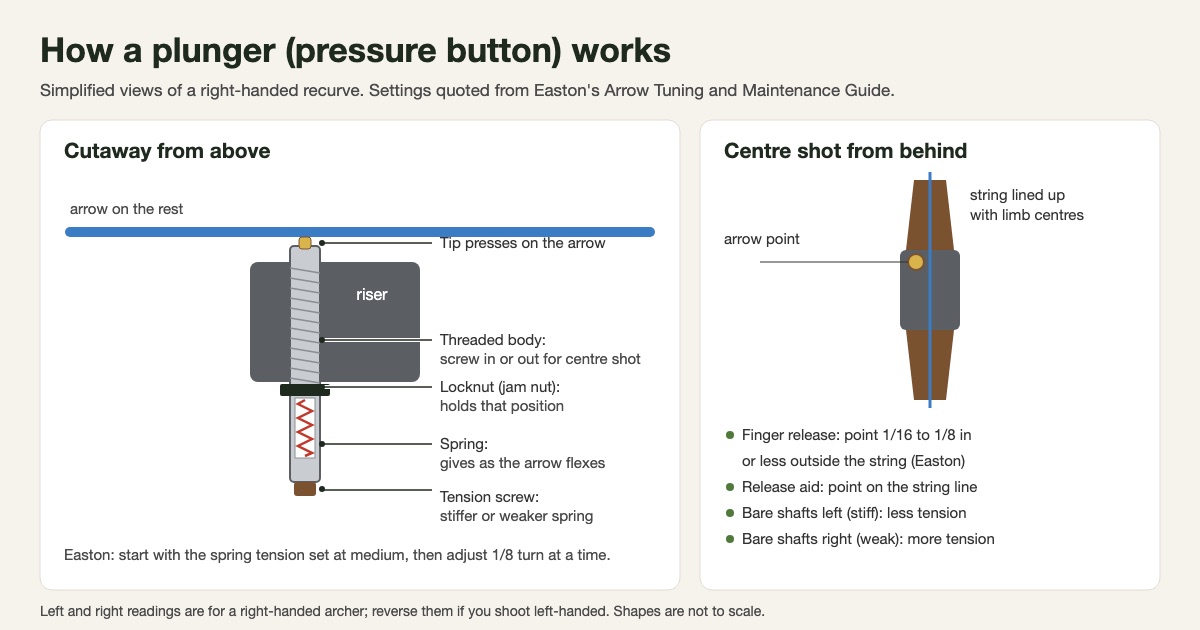
In archery, a plunger (also called a pressure button or cushion plunger) is a small spring-loaded cylinder that screws through a recurve bow's riser just above the arrow rest. Its tip presses on the side of the arrow. It sets the arrow's left-right position on the bow, called centre shot, and its spring gives a little as a finger-released arrow flexes, helping it leave the bow cleanly.
What a plunger does
A plunger exists because of the finger release. Easton's tuning guide explains that "releasing the string with fingers creates a horizontal bending motion within the arrow." World Archery describes the pressure button as "a spring that depresses when the arrow is released and ensures the arrow flies straight as it leaves the bow, combatting the horizontal oscillation caused by the fingers leaving the string."
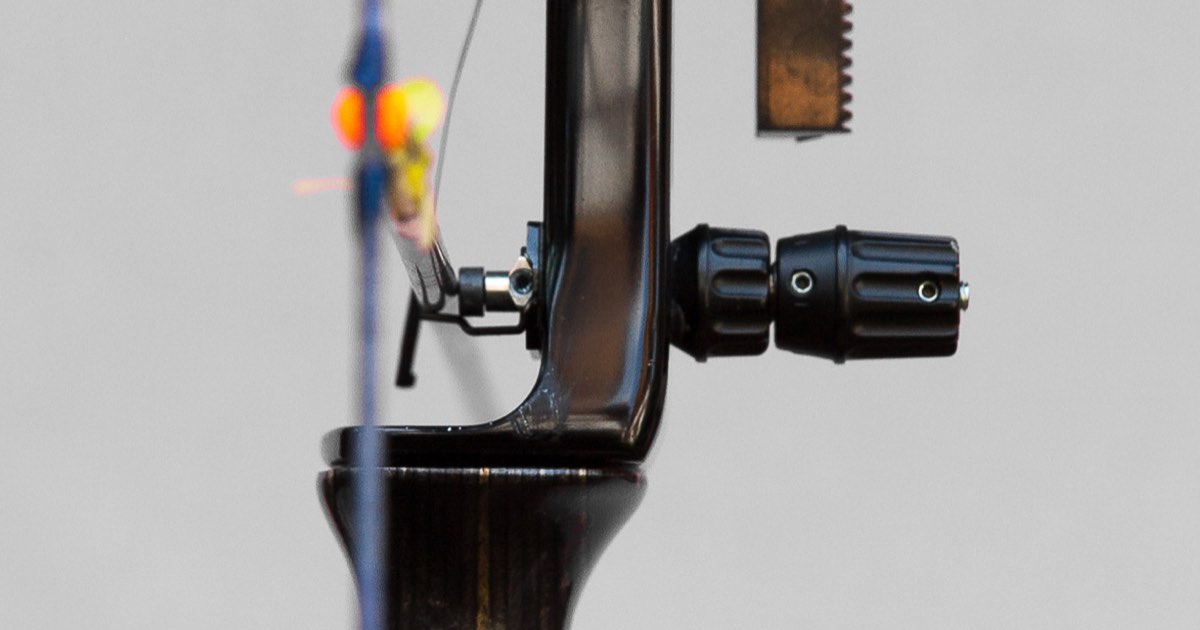
Archery 360 says "the plunger's small amount of give absorbs imperfections and inconsistencies in the arrow's lateral flex, which keeps the arrow on a straight path as it leaves the bow."
Centre shot and spring tension
Centre shot is the arrow's sideways position relative to the string. Archery 360 says the archer or technician "adjusts the plunger so it guides the arrow in line with the center of the bow," aligning the arrow "by loosening the plunger's jam nut and spinning it."
For finger shooters, Easton doesn't put the arrow dead centre. With the string lined up on the limb centres, its guide says to align "the 'tip' of the arrow point 1/16" to 1/8" (1.6-3.2 mm) or less outside the bowstring," to allow for the plunger compressing at the shot.
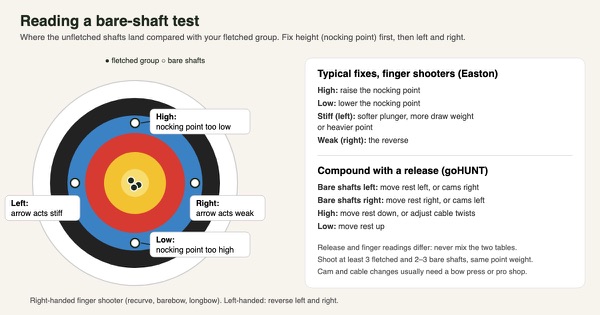
Spring tension sets how hard the tip pushes back. Archery 360: tension "can be adjusted to make a plunger stiffer with less give, or weaker with more give." For a right-handed archer, Easton says bare shafts landing left of the fletched arrows are acting stiff; one fix is to "decrease the spring tension on the cushion plunger." Bare shafts to the right are acting weak, so you increase it.
Plunger vs simple rest
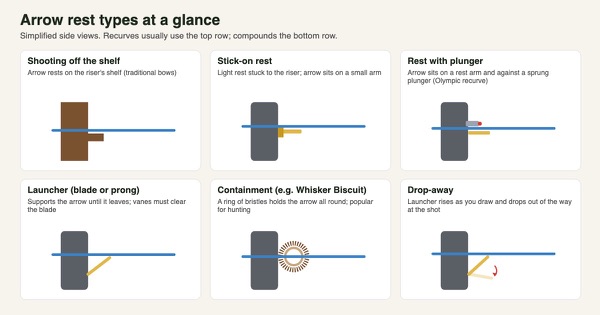
Easton's guide notes that "not every type of bow setup uses a cushion plunger." Here is how the common recurve options compare.
| Setup | What holds the arrow sideways | Adjustable? |
|---|---|---|
| Shooting off the shelf | The side of the riser's sight window | No |
| Stick-on rest, no plunger | The rest's side support or the riser | No |
| Rest plus plunger | The plunger's sprung tip | Centre shot and spring tension |
| Other side-pressure rests | A sprung or flexible rest arm, depending on design | Varies by model |
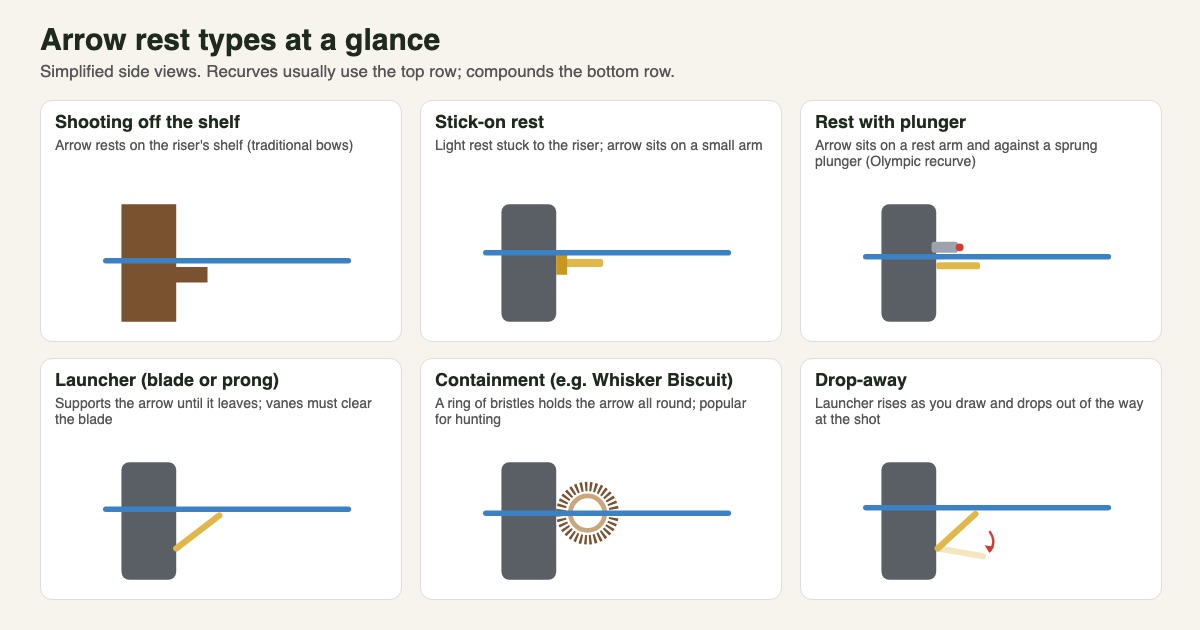
Traditional archers often skip both; see our guide to shooting off the shelf. Archery 360 says anyone interested in "barebow or Olympic recurve archery" needs to learn about the plunger.
Unlike a clicker, which our clicker guide explains is banned in World Archery barebow, a pressure button is part of the normal barebow setup. Our barebow guide covers the other kit rules.
Basic setup
These steps follow Easton's tuning guide; a coach or shop can do the first setup.
- Fit everything first. Easton says to install all accessories before tuning, and "change only one variable at a time."
- Check the rest arm. Viewed from above, it shouldn't stick out past the outside of the shaft.
- Set centre shot. Screw the plunger in or out until the point sits just outside the string, then tighten the locknut.
- Start the spring at medium.
- Test with bare shafts. Easton suggests three fletched arrows and two bare shafts at 15 to 20 yards, then adjust tension 1/8 turn at a time.
Archery 360 says "less expensive plungers also work well," though pricier ones offer "easy, repeatable adjustments." You can browse recurve bow plungers on Amazon for examples to consider. Check the thread size suits your riser.
Frequently asked questions
What is the difference between an arrow rest and a plunger?
The rest holds the arrow up; the plunger pushes on its side. On target recurves they usually work as a pair: the arrow sits on the rest arm and leans against the plunger tip, which sets centre shot and cushions the sideways flex of a finger release.
Do I need a plunger on my recurve bow?
Not to start shooting; a simple stick-on rest works. Archery 360 says you need to learn about plungers for barebow or Olympic recurve, because the adjustable spring and centre shot make fine tuning possible. Add one when your form is consistent enough to tune.
Can you use a plunger in barebow?
Yes. World Archery's barebow page says arrows sit on an arrow rest "and usually against a pressure button," which it describes as a spring that combats the horizontal oscillation from the fingers. Check your own organisation's rules before competing, as national bodies can differ.
Related articles
 Training
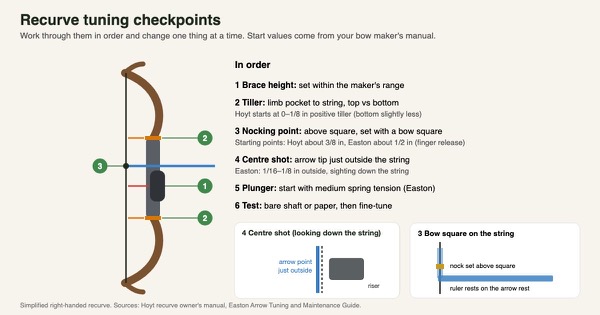
How to Tune a Recurve Bow: Nock Point, Tiller, Plunger
How to tune a recurve bow step by step: brace height, tiller, nocking point with a bow square, centre shot, plunger tension, and testing with bare shafts.
Updated October 27, 2026 · 11 min read
 Gear
Arrow Rests Explained: Drop-Away, Containment, Shelf
Arrow rests explained: shooting off the shelf, stick-on and plunger rests for recurves, launcher, containment and drop-away rests for compounds, and setup.
October 24, 2026 · 10 min read
 Training
Bare Shaft and Walk-Back Tuning Explained
How bare shaft and walk-back tuning work, how to read results for finger and release shooters, what distances to use, and how they fit with paper tuning.
October 21, 2026 · 11 min read