
Practice Broadheads: Are They Worth Using?
Practice broadheads explained: what they match, when they help with mechanical heads, which makers still sell them and why the real broadhead decides.
By Archery Insider Editorial Team
· · 5 min read
In this article
Practice broadheads are worth using if you hunt with a mechanical head and want to save blades and target foam, because a good one copies the weight and closed shape of a specific broadhead. They are a halfway step: before the season, still shoot the exact broadhead you will hunt with and confirm where it lands.
What practice heads are
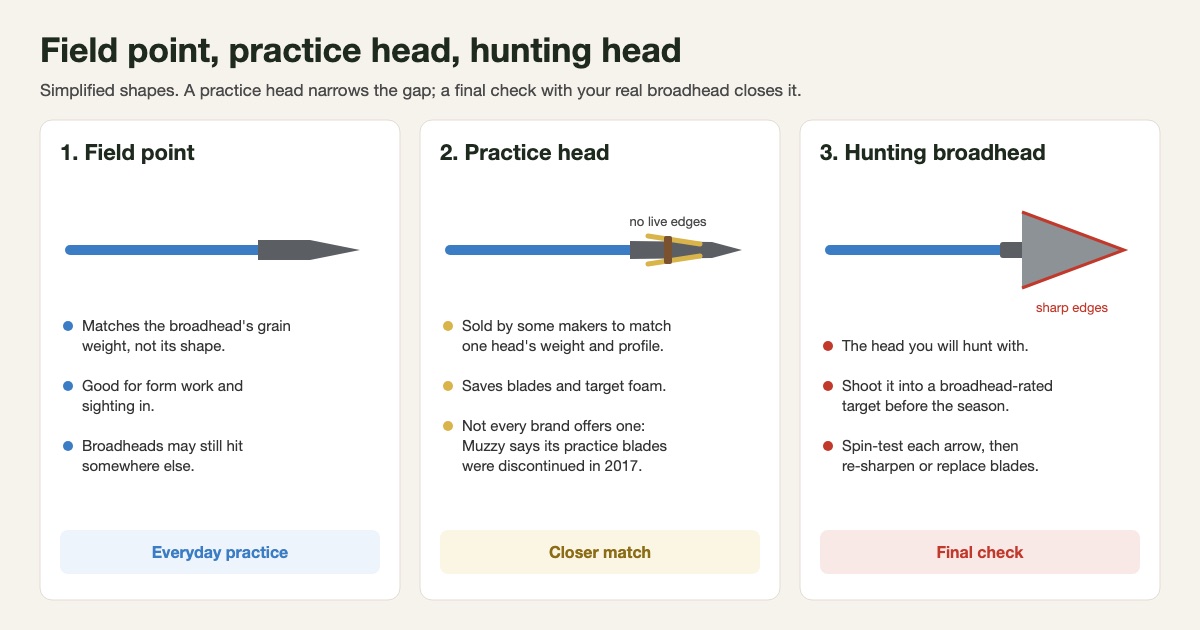
A field point matches your broadhead's grain weight but not its shape. A practice head is built to copy one broadhead's weight and outline, minus the sharp edges. Two examples were listed on maker sites when we checked in October 2026:
- G5 Montec M3 BMP. G5 describes the BMP as "a ballistic match to the Montec M3 broadhead" in 100 and 125 grain. G5 says your Montec M3 "will have the same flight as the B.M.P."
- Swhacker #316 practice points. Swhacker's 100-grain universal practice points (three per pack, standard 8-32 thread) are listed with "Identical Flight to All 100GR Mechanical Broadheads".
Not every brand still makes them. Muzzy's FAQ states that "Muzzy practice blades were discontinued in 2017 and are no longer available." Check that a practice version is still sold before you count on one.
When they help, and when they don't
Practice heads earn their place with mechanical (expandable) broadheads. A mechanical head flies with its blades folded, so a practice head with the same closed profile is a reasonable stand-in for routine shooting, without wrecking blades or your target.
With fixed-blade heads, the exposed blades are what steer the arrow, and a blunt substitute can't copy that. Most fixed-blade shooters practise with matching field points, then tune with the real heads. Our fixed-blade vs mechanical broadheads comparison covers how the two types differ in flight.
| Field point | Practice head | Your hunting broadhead | |
|---|---|---|---|
| Matches grain weight | Yes, if you pick the same weight | Yes, by design | Yes |
| Matches shape in flight | No | Close, per the maker | Yes |
| Best use | Form work, sighting in | Routine practice with a mechanical head | Final check before the season |
They don't replace shooting your real broadheads
However close a practice head is, only the head on your hunting arrow tells you where it goes.
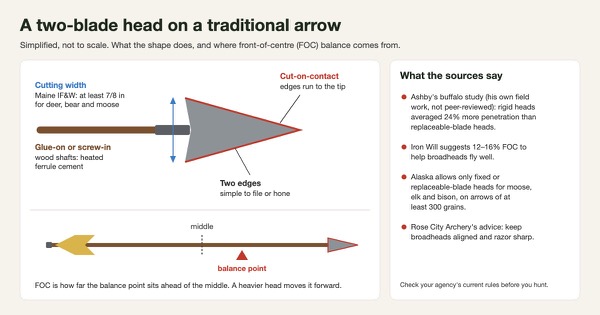
Iron Will's FAQ on broadheads that won't hit with field points explains the core problem: broadheads "have more surface area for pressure to act on at the front of your arrow, so you need more surface area at the back of your arrow to maintain stability." Its fixes include larger vanes with some helical, correct spine, 12–16% front-of-centre (FOC) weight, and paper tuning before comparing bare and fletched shafts at 20–30 yards. Our guide to paper tuning a bow walks through reading tears.
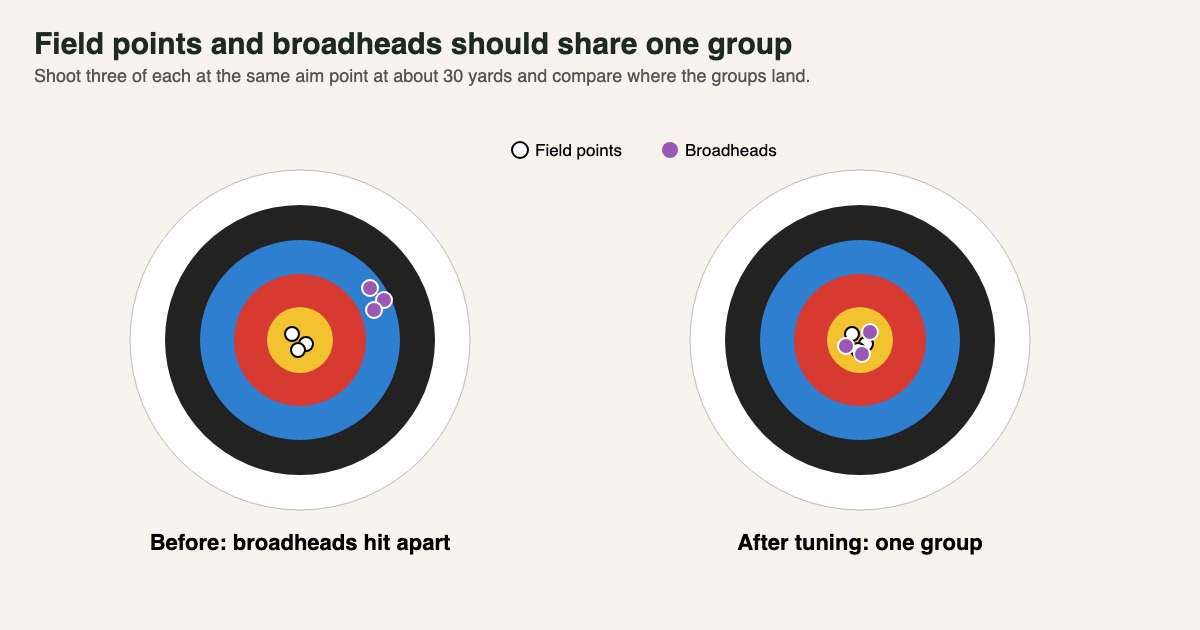
A sensible routine looks like this:
- Sight in with field points or practice heads of the same weight.
- Spin-test every hunting arrow. Muzzy's FAQ says what matters most is "that the broadhead spins true on the shaft and you use proper fletching."
- Shoot each hunting arrow with its real broadhead at your usual distances.
- If they group apart from your practice arrows, tune the bow rather than moving the sight.
- Re-sharpen or replace the blades you shot.
Picking a target for broadhead practice
Field points and practice heads suit most foam and bag targets. Live broadheads need a target its maker rates for broadheads, because sharp blades cut ordinary targets apart quickly. Our Morrell Yellow Jacket vs Block Classic review compares two foam targets that both say they take broadheads. Keep a separate block for broadhead shooting, with a safe backstop behind it.
For examples to consider, you can browse practice broadheads on Amazon or look for field points matched to your broadhead weight. Check the grain weight and thread before you order.
Frequently asked questions
Do broadheads come with practice tips?
Some makers sell matching practice heads separately, such as G5's BMP for its Montec M3 and Swhacker's 100-grain practice points. Many broadheads have no practice version at all, and Muzzy discontinued its practice blades in 2017. Check the maker's own listing for your exact head before you count on one.
Do practice broadheads fly exactly like the real ones?
Makers say theirs match, but that is their claim, not an independent test. Blade fit, ferrule alignment and arrow tuning can still shift impact. Treat practice heads as a convenient stand-in, then shoot your actual hunting heads into a broadhead-rated target to confirm they hit where you aim.
Can I just practise with my real broadheads?
Yes, as long as you use a target rated for broadheads and a safe backstop. It is the most honest test of your setup. The catch is cost and wear: blades dull and targets break down faster. Re-sharpen or replace the heads you practised with before you hunt.
Related articles
 Comparisons
Fixed-Blade vs Mechanical Broadheads: Pros, Cons and Rules
Fixed-blade vs mechanical broadheads compared: flight, tuning, cutting diameter, energy needs, durability, hybrid designs, regulations and which suits your bow.
Updated February 13, 2026 · 6 min read
 Gear
GearBroadheads for Traditional Bows: What Works
Traditional bow broadheads: why two-blade cut-on-contact heads suit recurves and longbows, plus head weight, FOC, sharpening, mechanicals and legal minimums.
Updated October 6, 2026 · 5 min read
 Gear
GearSmall Game Bowhunting: Judo Points and Blunts
Arrows for squirrel and rabbit hunting: why field points skip and bury, how Judo points, blunts and small-game heads differ, and what to check on legality.
Updated October 6, 2026 · 5 min read