
Broadheads for Traditional Bows: What Works
Traditional bow broadheads: why two-blade cut-on-contact heads suit recurves and longbows, plus head weight, FOC, sharpening, mechanicals and legal minimums.

By Archery Insider Editorial Team
· · 5 min read
In this article
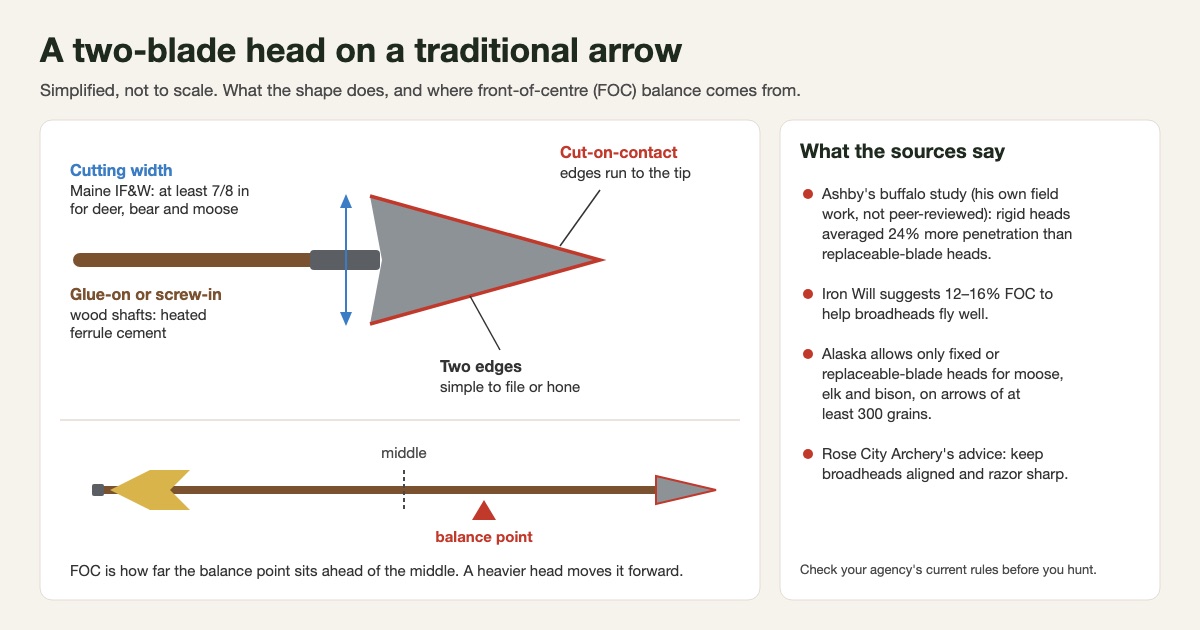
For traditional bows, look first at a strong, fixed two-blade broadhead with cut-on-contact edges, matched to an arrow that is heavy enough and well tuned. A recurve or longbow has less energy to spare than a fast compound, so a head that starts cutting at the tip and never spends energy opening makes sense. Check your state's minimum draw weight and cutting width before you buy.
Why two-blade, cut-on-contact heads
A cut-on-contact head has sharpened edges running right to the tip, so it slices from the moment it touches hide. A two-blade head has two cutting edges on one flat blade, so it is stiff and simple to sharpen.
Much-cited evidence comes from Dr Ed Ashby's buffalo work. Treat it as his own field study, self-published and not peer-reviewed. In his 2005 update covering 364 test shots on Asian buffalo, rigid heads "averaged 24% more penetration than modular broadheads, and 56% more than mechanical broadheads." Modular means replaceable-blade. In his earlier Natal study, rigid single-blade (two-edged) heads showed a 15% damage rate, against 50% for rigid multi-blade heads.
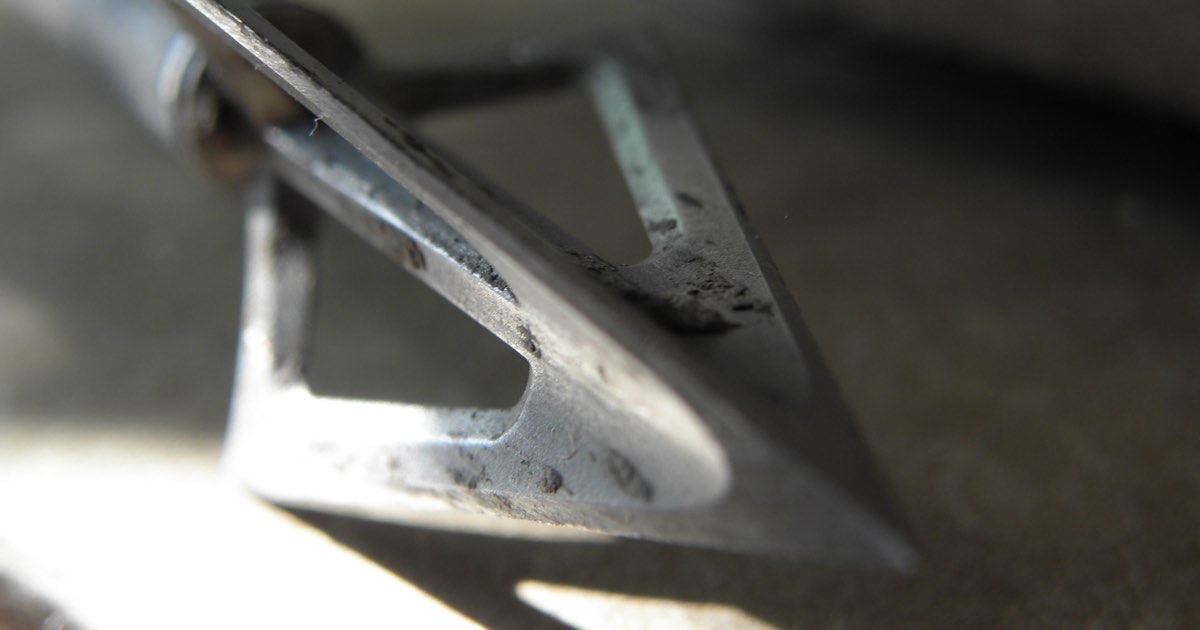
One example to consider is the Magnus Single Bevel 2-Blade. 3Rivers lists it in 125 and 150 grains with a "1-1/16" cutting diameter", a standard 8-32 thread and left or right bevel, and says the main blades "can be resharpened". Our fixed-blade vs mechanical broadheads comparison covers the wider trade-offs.
Head weight, FOC and tuning
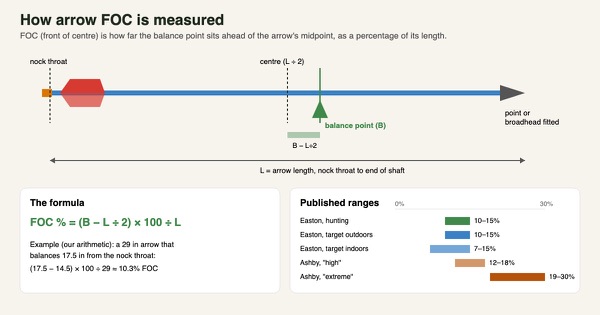
Front of centre (FOC) describes how far an arrow's balance point sits ahead of its middle. A heavier head moves it forward. Iron Will's broadhead FAQ suggests raising FOC to the 12–16% range to help broadheads fly well, along with correct spine and enough fletching.
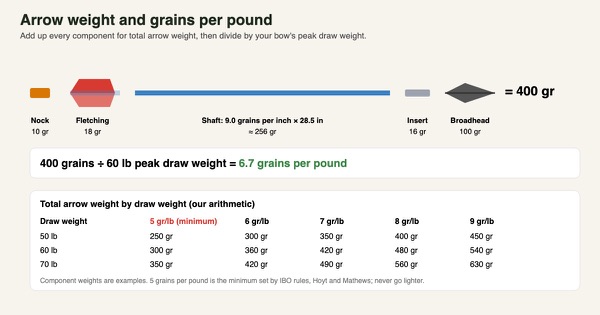
Ashby's 2005 data also bears on arrow weight. He reported that "no correlation trend between impact-kinetic-energy and penetration can be established", while impact momentum "shows a positive correlation trend". He also described early "Extreme FOC" results as "extremely suggestive" for light-draw bows, adding: "Only time and further testing will tell."
Adding head weight changes how stiff your arrow acts, so check spine whenever you change grain weight. Our guide to choosing arrows by spine, length and weight explains how. On wooden shafts, Rose City Archery's guide says to attach points with "a ferrule cement that is heated"; carbon arrows usually take screw-in heads with inserts.
Sharpening, and why mechanicals are rarer on trad bows
Rose City Archery's guide puts it simply: "Broadheads should be kept properly aligned and razor sharp." Two-blade heads make that realistic with a file or stone. Spin-test each arrow before you hunt to check the head sits straight.
Mechanical heads spend energy opening, which matters when energy is limited. In Ashby's data, mechanicals penetrated least of the three types. Some regulators also restrict them: Alaska's rule allows only fixed or replaceable-blade heads for moose, elk and bison.
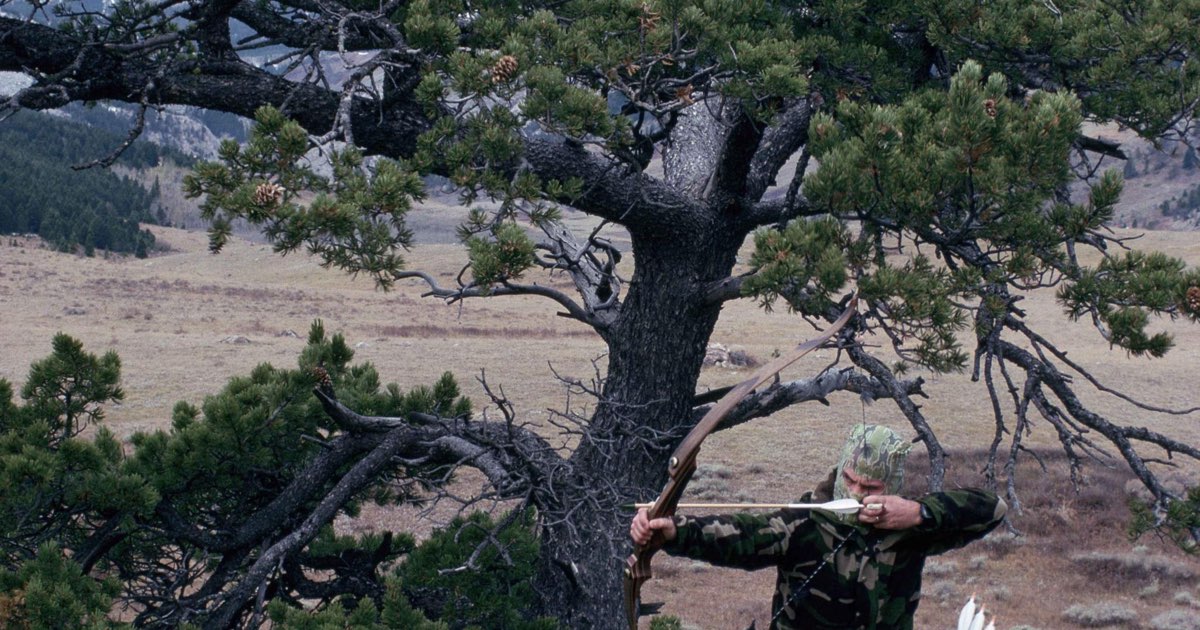
Rose City Archery advises: "Restrict yourself to high percentage shots-usually within thirty yards." Our longbow vs recurve comparison explains how the two bow styles differ.
Legal minimums: two examples
Both come from agency pages we read. Other states and provinces set their own rules.
| Rule | Alaska (5 AAC 92.085) | Maine (IF&W) |
|---|---|---|
| Minimum draw weight | 40 lb for black-tailed deer, black bear and caribou; 50 lb for moose, elk, mountain goat and brown bear | 35 lb; 45 lb for moose |
| Arrow | At least 20 in long and 300 grains, tipped with a broadhead | Not stated on the page |
| Broadhead type | Fixed or replaceable blade for moose and elk; mechanicals allowed for black-tailed deer; no barbs | Mechanicals allowed if at least 7/8 in when open |
| Cutting width | Not stated in this section | At least 7/8 in for deer, bear and moose |
For examples to consider, you can browse two-blade glue-on broadheads on Amazon or look at single-bevel heads. Check grain weight, thread or taper, and cutting width against your local rules.
Frequently asked questions
Are two-blade broadheads good for recurve bows?
Yes, they suit recurves well. A two-blade, cut-on-contact head is rigid, cuts from the tip and is easy to sharpen. Ashby's self-published buffalo study found rigid heads penetrated further than replaceable-blade and mechanical designs. Check that its cutting width meets your state's minimum before you buy.
What grain broadhead should I use on a traditional bow?
There is no single answer. A heavier head, such as 125 grains or more, raises FOC, and Magnus sells its single-bevel two-blade in 125 and 150 grains. Heavier heads change dynamic spine, so match the arrow to the head and confirm flight with broadhead-tipped arrows before the season.
Can I use mechanical broadheads with a longbow?
Sometimes, where they are legal, but they are a poor fit for low-energy bows. Mechanicals use energy to open, and in Ashby's data they penetrated least of the head types he shot. Alaska does not allow them for moose, elk or bison, while Maine accepts them if they open to at least 7/8 inch.
Related articles
 Comparisons
Fixed-Blade vs Mechanical Broadheads: Pros, Cons and Rules
Fixed-blade vs mechanical broadheads compared: flight, tuning, cutting diameter, energy needs, durability, hybrid designs, regulations and which suits your bow.
Updated October 9, 2026 · 6 min read
 Guides
Arrow FOC Explained: Front of Center for Hunting Arrows
What arrow FOC (front of center) is, how to measure and calculate it, Easton's recommended ranges, how to raise or lower it, and the high-FOC debate.
October 27, 2026 · 9 min read
 Guides
Arrow Weight for Hunting: Grains per Pound Explained
Arrow weight for hunting explained: what grains per pound means, the 5 GPP minimum, a weight table by draw weight, light vs heavy arrows, and starting points.
October 27, 2026 · 10 min read