
How to Choose Arrows: Spine, Length, Weight and Spine Charts
How to choose arrows: what spine means, reading a spine chart, measuring arrow length, arrow weight and FOC, fletching, and bare-shaft tuning to confirm it.
By Archery Insider Editorial Team
· · 9 min read
In this article
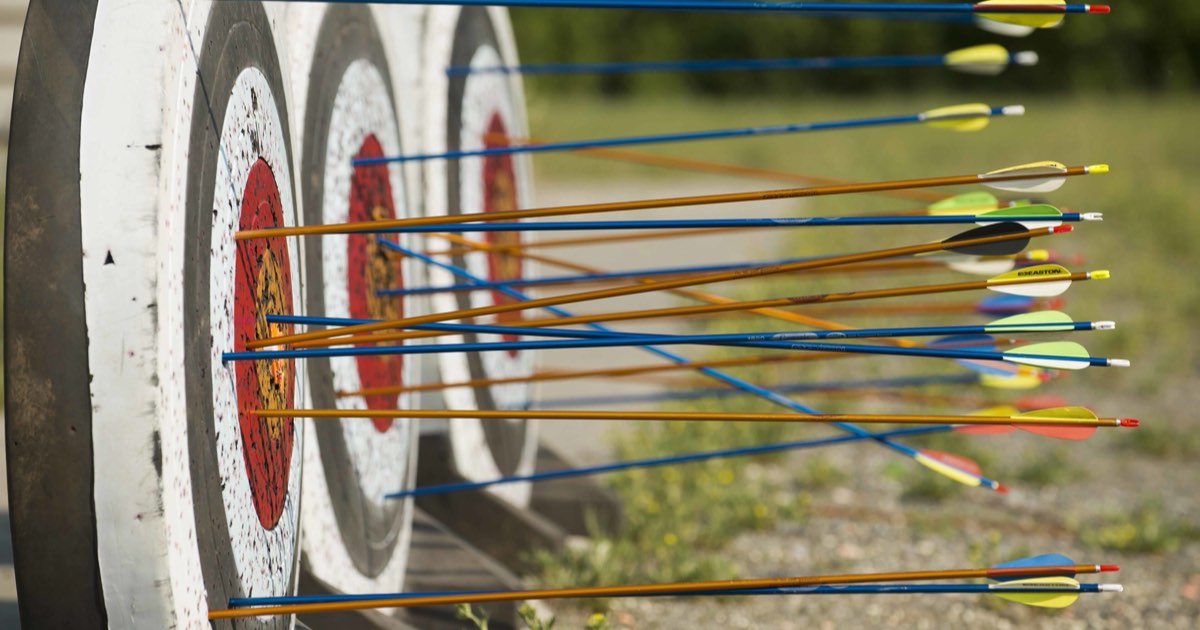
Arrows matter as much as the bow. A beautifully set-up bow will scatter arrows that are the wrong stiffness, the wrong length or mismatched in weight, and a modest bow with well-matched arrows will group surprisingly well.
The good news is that choosing arrows comes down to three decisions in a fixed order: length, then spine, then weight and components. This guide explains each one, shows how to read a manufacturer's spine chart, and finishes with the simple test that tells you whether you got it right.
Anatomy of an arrow
| Part | What it does |
|---|---|
| Shaft | The tube itself: aluminium, carbon, aluminium-carbon composite or wood |
| Point | The tip. Field or target points for practice, broadheads for hunting |
| Insert or bushing | Glued into the front of the shaft to hold the point |
| Nock | The plastic notch that clips onto the string |
| Fletching | Vanes (plastic) or feathers that stabilise flight |
Step 1: Arrow length
Arrow length is measured from the bottom of the nock groove (where the string sits) to the end of the shaft, not including the point.
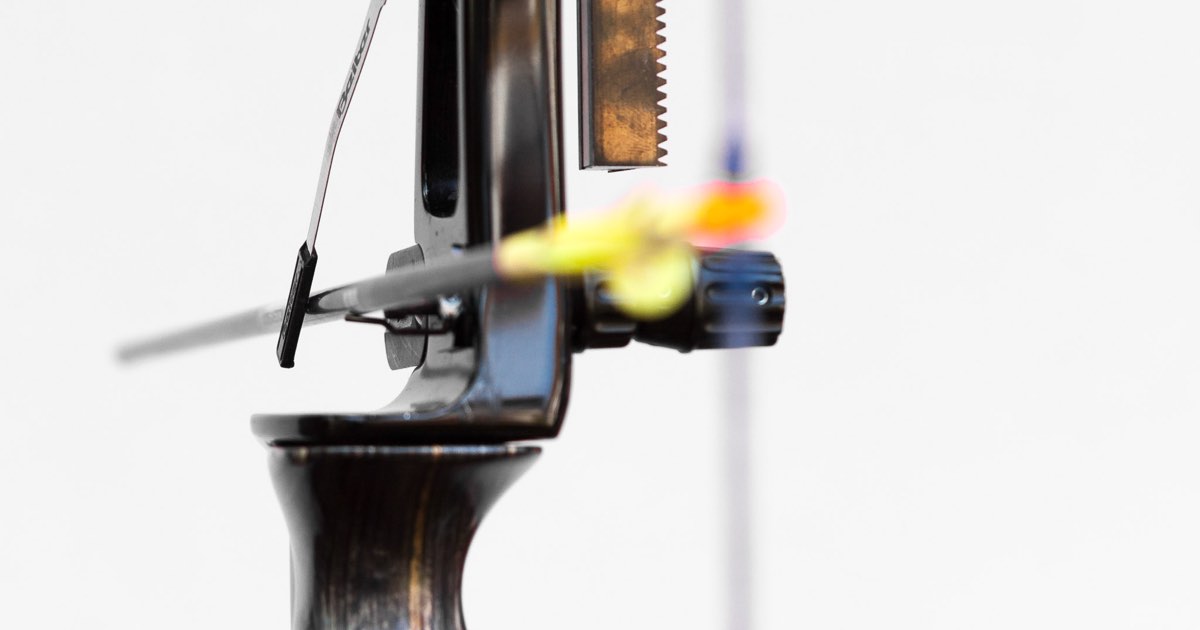
The rule is simple: the arrow must be long enough that the point stays in front of the arrow rest at full draw, with a safety margin. An arrow drawn behind the rest can fall off the rest and be driven into the bow hand.
- Recurve archers usually cut arrows one to two inches longer than their draw length. Beginners often go longer, because draw length grows as form improves.
- Recurve archers with a clicker cut arrows so the point sits just ahead of the clicker blade at full draw.
- Compound archers usually cut arrows so the point sits about an inch in front of the rest at full draw, often shorter than recurve arrows of the same archer.
If you have not measured your draw length yet, start with our draw length guide. Length must be decided before spine, because a longer arrow behaves more flexibly.
Step 2: Spine
What spine actually means
Spine is an arrow's stiffness. The industry standard test, ASTM F2031, rests the shaft on two supports 28 inches apart and hangs a 1.94 lb (880 g) weight from the middle. The deflection in thousandths of an inch is the spine number.
- A 500 spine shaft bends 0.500 inch under that load.
- A 400 spine shaft bends 0.400 inch and is stiffer.
- A 340 is stiffer still.
So on carbon arrows, lower spine numbers mean stiffer arrows, which suit heavier draw weights and longer arrows.
Aluminium arrows use a four-digit size code instead, such as 1816, where the first two digits are the outside diameter in 64ths of an inch and the last two are the wall thickness in thousandths. Each size has a published spine; our Easton XX75 Jazz review shows a full size table.
Why spine matters: the archer's paradox
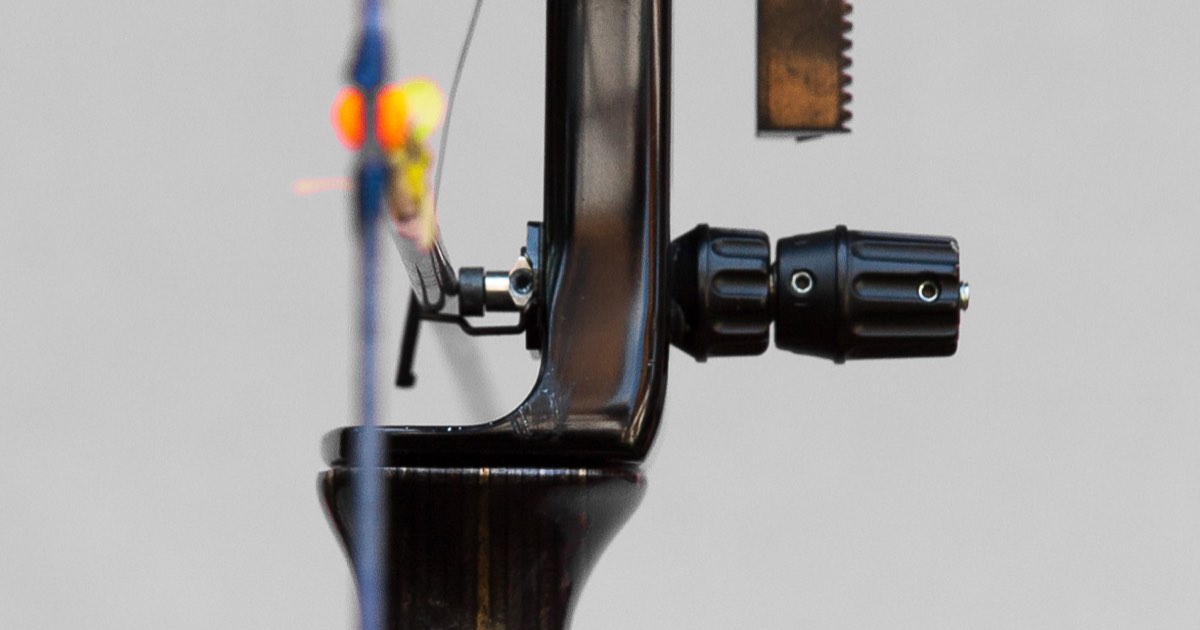
When a recurve archer releases the string with their fingers, the string rolls off the fingertips and moves slightly sideways. The arrow, which is resting against the side of the riser, has to bend around the bow as it leaves. This flexing is known as the archer's paradox: the arrow starts pointing slightly to one side of the target and still flies straight to it.
For that to work, the arrow has to bend the right amount. Too stiff and it is pushed off to the side; too weak and it over-flexes and flies erratically. Compound bows with centre-shot rests and release aids reduce this effect, but spine still matters because the arrow is still flexing under the force of launch.
What changes the spine you need
| Factor | Effect | You need |
|---|---|---|
| Higher draw weight | More force on the arrow | A stiffer spine |
| Longer arrow | Arrow behaves weaker | A stiffer spine |
| Heavier point | Arrow behaves weaker | A stiffer spine |
| Lighter point | Arrow behaves stiffer | A weaker spine |
| Finger release (recurve) vs release aid | Different launch | Follow the chart for your bow type |
| Faster bow design (compound cams) | More force | Often a stiffer spine |
The spine number printed on a shaft is its static spine. How it behaves when shot, its dynamic spine, depends on all of the factors above, which is why a chart is needed.
Step 3: Read a spine chart
Every major arrow maker publishes a selection chart, as a PDF or an online selector. The details differ, but they all work the same way.
- Find your actual draw weight at your draw length. Not the number printed on the limbs, which is measured at 28 inches. A shop can measure it with a bow scale.
- Apply any adjustments the chart lists. For example, Easton's target chart instructions adjust the bow weight by about 3 lb for every 25 grains of point weight above or below 100 grains. Some charts also adjust for release type and string material.
- Find your arrow length across the top of the chart.
- Read off the spine group where your adjusted weight and arrow length meet.
- Pick a shaft from that group in the range you want.
If you land between two sizes, Easton's guidance for recurve archers is to choose the weaker option when more than one size fits. Recurve archers can then tune with plunger tension and point weight.
Step 4: Weight, points and front-of-centre
Total arrow weight
Arrow weight is quoted in grains (7,000 grains to a pound). Shafts are listed in grains per inch (GPI), so total weight is roughly:
GPI × shaft length + point + insert + nock + fletching
Lighter arrows fly faster and flatter; heavier arrows are quieter and carry more momentum. Target archers generally favour lighter arrows for flatter trajectories at distance. Hunters often choose heavier arrows for penetration.
Compound archers must also respect their bow's minimum arrow weight. Most compound manufacturers specify one, commonly expressed as grains per pound of draw weight. Shooting an arrow lighter than the minimum can damage the bow in a similar way to a dry-fire. Check your owner's manual.
Front-of-centre (FOC)
FOC describes how far forward the balance point is. To calculate it:
- Find the balance point of the finished arrow, measured from the bottom of the nock groove.
- Subtract half the arrow's length.
- Divide by the arrow's length and multiply by 100.
A forward balance helps the arrow stay point-first in flight. Heavier points increase FOC, but remember that they also make the arrow act weaker.
Step 5: Fletching and nocks
| Choice | Notes |
|---|---|
| Plastic vanes | Durable, weatherproof, the standard for compound and most target arrows |
| Feathers | Lighter and more forgiving of contact with the rest; preferred for shooting off the shelf and traditional bows |
| Fletching size | Larger fletching steers more but adds drag; target archers use small vanes, hunters larger ones for broadheads |
| Offset or helical | Adds spin, which stabilises broadheads and imperfect launches |
| Nock fit | Should clip onto the string with a light click and hang without falling off |
The index vane (usually a different colour) shows which way to nock the arrow. For recurve archers it normally points away from the riser.
Step 6: Straightness and consistency
Shafts are sold by straightness tolerance, for example ±0.006, ±0.003 or ±0.001 inch. More important than the number is that every arrow in your set is the same: same shaft, length, point, nock and fletching. A dozen identical mid-grade arrows will group better than a mixed set of premium ones.
Number your arrows. If one regularly lands outside the group even when you shoot well, it is probably damaged or mismatched.
Step 7: Check your choice with bare-shaft tuning
Once you have your arrows, a simple test confirms the spine is right. This is the method widely taught for recurve and traditional bows.
- Prepare three fletched arrows and one or two identical arrows with no fletching (bare shafts).
- From about 10 yards, shoot the fletched arrows at a spot, then the bare shaft at the same spot, with your best form.
- Compare where the bare shaft lands relative to the fletched group.
For a right-handed finger archer:
| Bare shaft lands | Meaning | Common fixes |
|---|---|---|
| Left of the group | Arrow too stiff | Heavier point, weaker plunger, slightly more draw weight, or a weaker spine |
| Right of the group | Arrow too weak | Lighter point, stiffer plunger, shorten slightly, or a stiffer spine |
| Low | Nocking point too high | Lower the nocking point |
| High | Nocking point too low | Raise the nocking point |
Left-handed archers read left and right the other way round. Fix vertical errors first, then horizontal, one small change at a time. When the bare shaft groups with the fletched arrows at 10 yards, move back to 15 or 20 and check again.
Quick reference
| Decision | How to decide |
|---|---|
| Length | Draw length plus a safety margin; point in front of the rest at full draw |
| Spine | Manufacturer's chart, using real draw weight and arrow length |
| Point weight | Usually 100 grains as a starting point for charts; adjust to tune |
| Material | Aluminium for beginners and youth; carbon for distance and hunting |
| Fletching | Vanes for durability, feathers for shelf shooting and traditional bows |
| Verification | Bare-shaft test at 10 yards, then further |
Frequently asked questions
Can I use the arrows that came with my bow?
Package arrows are often generic. Check their length against your draw length and their spine against the chart for your draw weight. If either is wrong, replace them before they cause bad habits.
What happens if my arrows are too stiff or too weak?
They will tend to fly to one side and group poorly, and a badly mis-spined arrow can strike the riser. The bare-shaft test above shows which way you are off.
Do I need different arrows as my draw weight increases?
Usually yes. Each significant jump in draw weight moves you to a stiffer spine. Many recurve archers buy new arrows every time they change limbs.
Are carbon arrows better than aluminium?
Not automatically. Aluminium is consistent, repairable and available in very light spines for beginners and children. Carbon is lighter for its stiffness and does not bend, which helps at long distance and in hunting. Our reviews of the Easton XX75 Jazz and Gold Tip Hunter XT cover one of each.
Sources
- Arrow Spine Calculator – AMO/ATA conversion and dynamic spine – Archer's Advantage
- Shaft Selector – Target – Easton Archery
- Using the Target Arrow Selection Chart – Easton Archery (club copy)
- Archer's paradox – Wikipedia
- How to Bare-Shaft Tune Your Recurve or Longbow – Archery 360
- Arrow Spine & Straightness Explained – Gold Tip
Related articles
 Reviews
Easton XX75 Jazz Arrows Review: The Beginner Aluminium Standard
Research-based Easton XX75 Jazz review: 7075 alloy, ±.005 in straightness, sizes 1214 to 2016, how to pick a size for your recurve, and when to move to carbon.
Updated August 6, 2025 · 4 min read
 Reviews
Gold Tip Hunter XT Arrows Review: A Workhorse Hunting Shaft Explained
Research-based Gold Tip Hunter XT review: ±.003 in straightness, .246 in bore, spines 250 to 500, how to pick a spine for your compound, and who these.
August 6, 2025 · 4 min read
 Training
Archery Draw Length: How to Measure It and Why It Matters
How to measure archery draw length with the wingspan method or at full draw, what the AMO standard means, and how it affects bow size, draw weight, and arrows.
Updated February 6, 2025 · 8 min read