
Bow Hangers for Tree Stands and Ground Blinds
Deer hunting bow hangers explained: screw-in vs strap-on for tree stands, public-land rules on tree damage, ground blind hangers and haul line safety.
By Archery Insider Editorial Team
· 5 min read
In this article
A deer hunting bow hanger holds your bow off the ground and within reach while you wait, so you aren't holding it for hours or propping it where it can fall. In a tree stand it fixes to the trunk; in a ground blind it hooks over the blind's frame. It's a convenience, not safety gear: the safety rules are a harness and a haul line.
Screw-in vs strap-on hangers
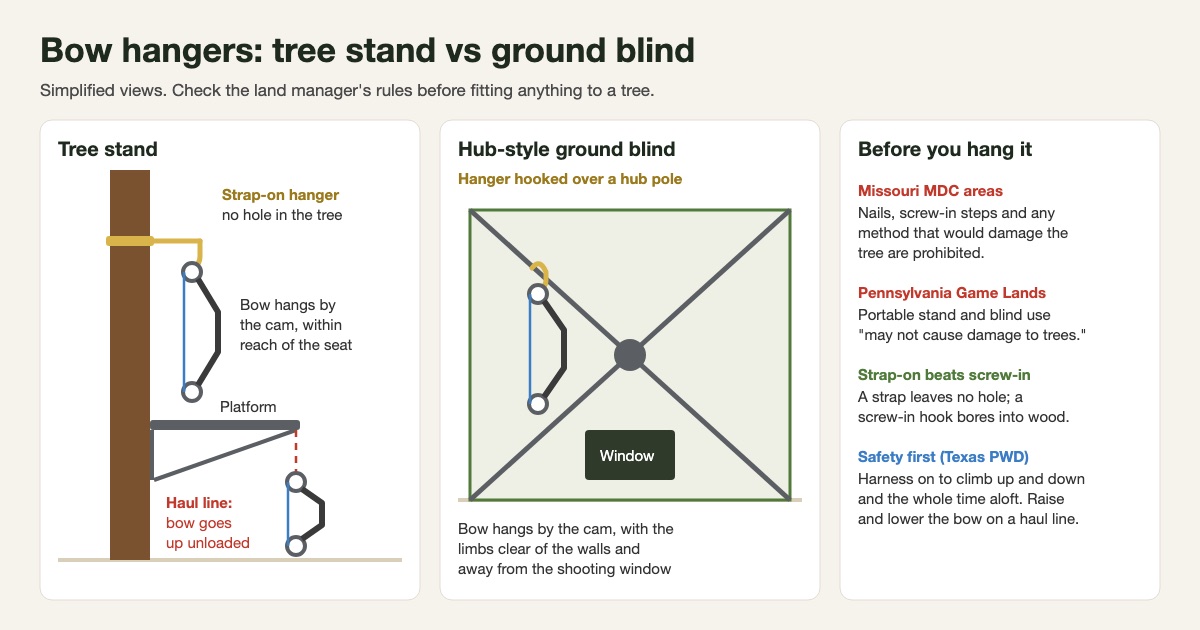
Tree stand hangers come in two main styles. A screw-in hanger is a threaded hook you twist into the trunk: quick to fit, but it leaves a hole. A strap-on hanger is an arm or hook held to the trunk by a strap, so nothing goes into the wood.
That difference matters on public land. Missouri's tree stand rule for Conservation Department areas says: "Use of nails, screw-in steps, and any material or method that would damage the tree is prohibited." It names screw-in steps rather than hangers, but a screw-in hook bores into the trunk in the same way, so we'd treat it as off-limits there.
Pennsylvania's State Game Lands rules allow portable stands and blinds, but their use "may not cause damage to trees." Other public lands set their own rules, so check with the land manager; on private land, ask the owner. Our article on yardage markers covers the same rules for anything you leave near a stand.
| Hanger type | Where it fits | What to check |
|---|---|---|
| Screw-in hook | Tree trunk | Damages the tree; may be banned on public land |
| Strap-on arm or hook | Tree trunk | Strap tight enough not to slip; arm clear of the stand |
| Blind hanger | Hub pole or frame | Bow clear of walls and windows |
Hangers for ground blinds
Blind hangers are built to hook over the poles of a hub-style pop-up blind. Last Chance Archery's Hang-It kit is one example: it includes three blaze-orange, rubber-coated hangers, a 24-inch flexible extension wire and a threaded ring. The maker says to "wrap the Hang-It hanger directly over a blind pole" and to "hang your bow by the cam," with the rubber coating there "to safeguard your bow's cam and limbs."
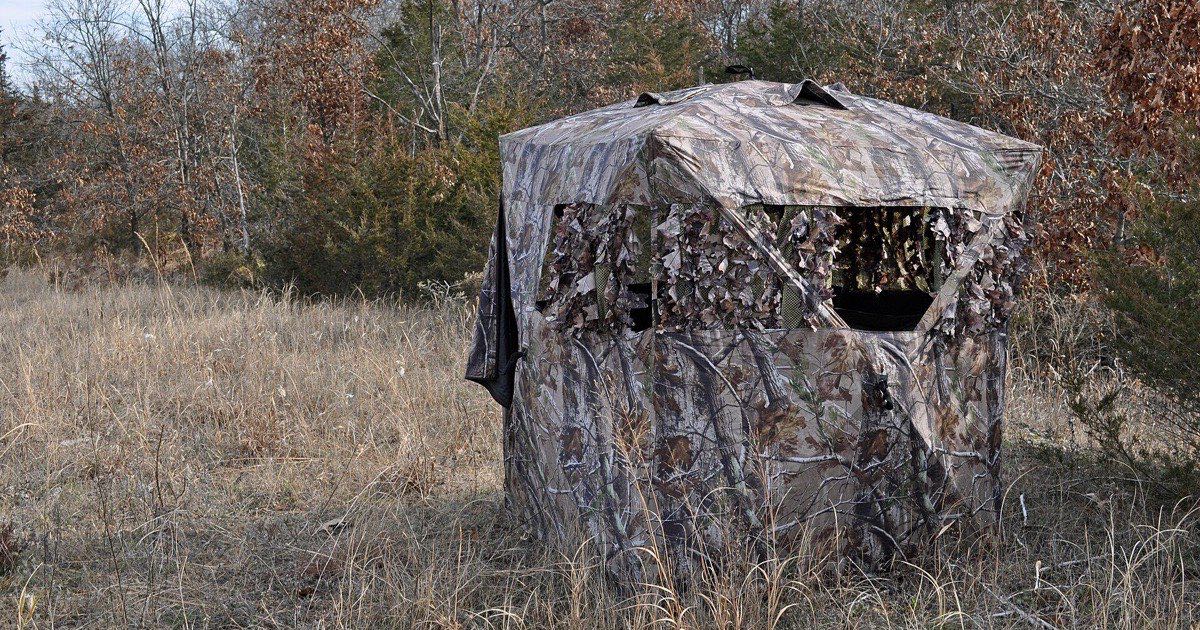
The kit's threaded ring is for screwing into solid wood, such as a tree or a wooden blind. On public land, the same tree-damage rules apply to it as to any screw-in hanger. Inside a blind, the bow should hang clear of the fabric and away from the window you'll shoot through. If you'd rather keep the bow on the floor, a bow kickstand keeps the cams and string off the dirt.
Haul line safety
Texas Parks and Wildlife's hunter education course says "unloaded firearms or bows should not be carried when climbing but rather raised or lowered by an appropriate haul line," and that a harness "should always be used to climb up (and down from) the stand and also worn the entire time the hunter is in the stand."
Virginia's wildlife agency adds: "Tie a haul line to the belt or stand when climbing to keep hands free," and "Unload gun or bow before climbing or descending stand."
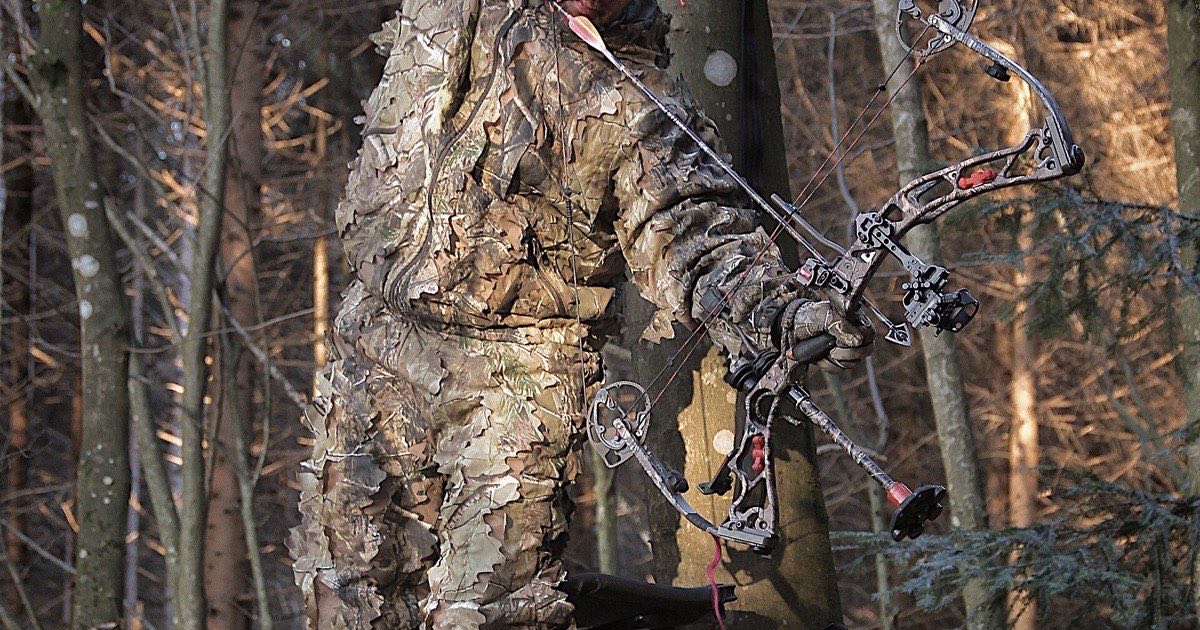
So the order is: climb with empty hands, connect your harness to the tree, then pull the bow up and hang it. Keep broadheads covered in the quiver so they can't cut you or the rope. Reverse the order when you leave. Our tree stand vs ground blind comparison covers the wider safety differences.
Placement for minimal movement
The point of a hanger is to keep movement small when a deer appears. The Hang-It instructions say to "adjust the height of the hanger to keep your bow within easy reach." In practice, set it on your bow-hand side, at a height you can reach from your seat without leaning, and where the cams and limbs can't touch the trunk, the stand or the blind wall.
You can browse bow hangers for tree stands or ground blind bow holders on Amazon. Treat any listing as an example to consider, and check how it attaches before you buy.
Frequently asked questions
How do you hang a bow in a ground blind?
Hook a blind hanger over one of the frame poles near your seat and hang the bow by its cam. Last Chance Archery's Hang-It is designed this way, with a rubber coating to protect the cam and limbs. Keep the bow clear of the walls and away from the window you'll shoot through.
Are screw-in bow hangers allowed on public land?
Often not. Missouri's Conservation Department areas prohibit nails, screw-in steps and "any material or method that would damage the tree," and Pennsylvania's State Game Lands require that stand use "may not cause damage to trees." Rules vary, so check with the land manager. A strap-on hanger avoids the problem.
Related articles
 Comparisons
Tree Stand vs Ground Blind for Bowhunting
Tree stand vs ground blind for bowhunting deer: view, hiding your draw, scent, shot angle, safety and setup compared, with when to choose each.
Updated October 6, 2026 · 5 min read
 Gear
GearString Silencers and Limb Dampeners Explained
Bow string silencers, string stops and limb dampeners: what each does, where it fits, which need a bow press, and what maker claims do and don't prove.
September 28, 2026 · 5 min read
 Gear
GearYardage Markers for Bowhunting Stands and Blinds
Bow hunting yardage markers: range landmarks around your stand, when flagging or stakes make sense, public-land rules and how shot angle changes the number.
Updated October 7, 2026 · 4 min read