
Nock Tuning: Rotating Nocks for Tighter Groups
How to nock tune arrows: number and shoot each shaft, rotate a flyer's nock one vane position, re-test, and avoid the vane clearance trap.
By Archery Insider Editorial Team
· · 5 min read
In this article
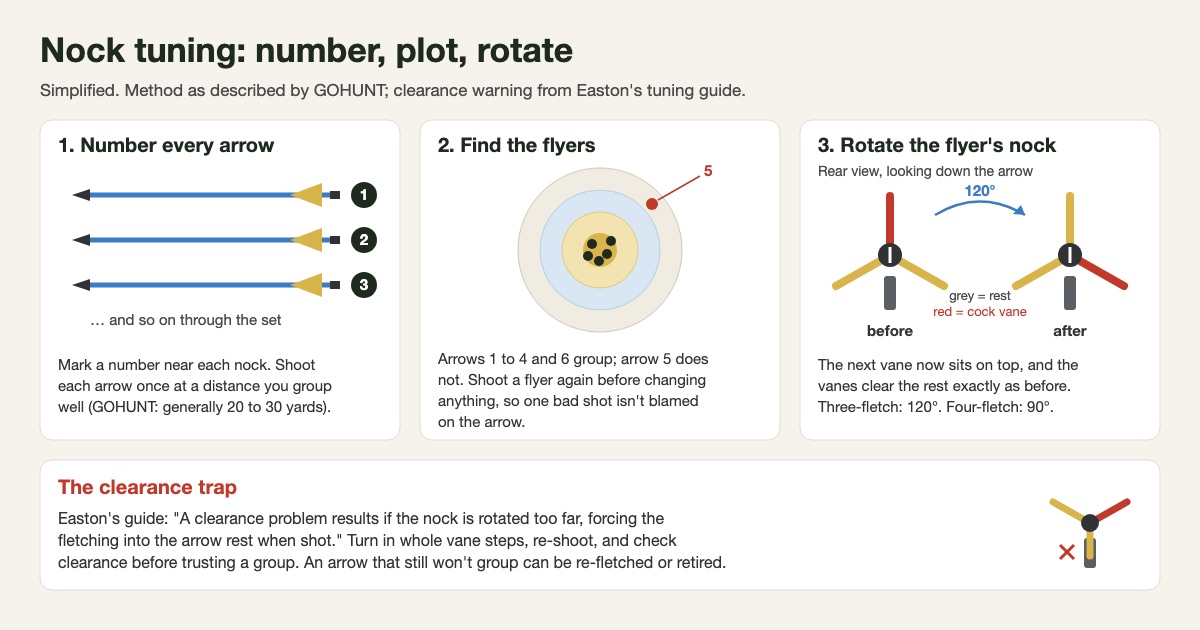
To nock tune arrows, number every arrow, shoot each one at the same aim point, and note which ones land away from the group. Then turn a flyer's nock so the next vane sits where the cock vane was, and shoot it again. It is a final polish for a tuned bow and a sound set of arrows, not a fix for either.
What nock tuning fixes
No two arrows are identical. A popular explanation among hunting writers is that a shaft flexes slightly differently depending on how it's turned on the string, so rotating it can bring a stray arrow back into the group. Treat that as a practical method to try, not a manufacturer's claim.
Easton's tuning guide is more mechanical. When one shaft won't group, check the arrow itself; Easton lists nock indexing among the causes: "It is possible that one nock in the set may be turned more than the others." Tune the bow first: our paper tuning guide covers that, and the arrow selection guide explains spine.
Rule these out first
| Check | Easton's guidance |
|---|---|
| Straightness | Within 0.004 in "for best grouping" |
| Nocks | Check for crooked nocks with a nock gauge or a broadhead spinning wheel |
| Fletching | Even slightly loose fletching can stop an arrow grouping |
| Points and inserts | A loose point can buzz when tapped; reinstall it |
| Weight | A matched set should have "no more than a three grain spread" |
Fix any failure before you rotate anything.
Number and shoot each arrow
GOHUNT's Dave Barnett describes a simple method for hunting arrows:
- Pick a reference arrow. He spins his shafts and chooses the straightest one as the tuning arrow, then sights in with it.
- Number the rest. Easton's guide also recommends numbering arrows so you can "plot each individual arrow impact."
- Shoot each arrow once from a distance you group well. Barnett uses "generally 20 to 30 yards."
- Sort them into those that hit with the reference arrow and those that don't.
- Shoot the outliers again before changing anything, so one bad release isn't blamed on the arrow.

Rotate the nock and re-test
For an arrow that keeps missing, Barnett's fix is to rotate it on the string "a full 120 degrees for a three fletch arrow or 90 degrees for a four fletch arrow." In practice you turn the nock in the shaft until the next vane sits where the cock vane was. The vanes then meet the rest exactly as before; only the shaft has turned.
That is why whole vane positions matter. Turn a nock part of the way and the vanes move relative to the rest. Easton warns that "a clearance problem results if the nock is rotated too far, forcing the fletching into the arrow rest when shot." Fine nock turns have a different job: Easton suggests 1/32-turn steps when fletching is hitting the rest and you need clearance. Our drop-away rest guide covers rest clearance.
Shoot the rotated arrow several times. If it groups, mark it; if not, try the next position. Barnett says the process "will generally get 90% or better" of arrows shooting together. For the rest, he suggests refletching with the vanes "in the negative spaces between the original fletching locations," or retiring the shaft.
When it isn't worth it
- Your groups are form-limited. If they're wider than the flyer's miss, practise first.
- The bow isn't tuned. Nock tuning can't fix a rest or nocking point problem.
Spare nocks are cheap if a rotated one gets damaged: you can browse arrow nocks on Amazon, and bare shafts if a set needs rebuilding.
Frequently asked questions
How do you nock tune arrows?
Number your arrows, sight in with your straightest one, and shoot each arrow once at 20 to 30 yards. Re-shoot any that miss the group. Then turn the flyer's nock one full vane position (120° for three vanes, 90° for four) and test again until it groups or you retire it.
What does nock orientation mean?
It is how the nock slot sits relative to the vanes, which decides how the fletching passes the rest. Most setups use a cock vane pointing one fixed way. Turning a nock part of the way changes that, which is why Easton warns that over-rotating can push the fletching into the rest.
Is nock tuning worth it for beginners?
Usually not yet. If your form spreads arrows more than one stray shaft does, nock tuning can't show you anything. Tune the bow, use a matched set of straight arrows, and build consistent groups first. Numbering your arrows costs nothing, though, and shows early which ones are odd.
Related articles
 Training
Paper Tuning a Bow: How to Read Tears and Fix Them
How to paper tune a bow: what it shows, frame setup, reading nock-high, low, left and right tears, the order of fixes, and when to see a pro shop.
October 8, 2026 · 10 min read
 Guides
How to Choose Arrows: Spine, Length, Weight and Spine Charts
How to choose arrows: what spine means, reading a spine chart, measuring arrow length, arrow weight and FOC, fletching, and bare-shaft tuning to confirm it.
Updated June 26, 2026 · 9 min read
 Gear
GearArrow Wraps: What They Do and How to Apply Them
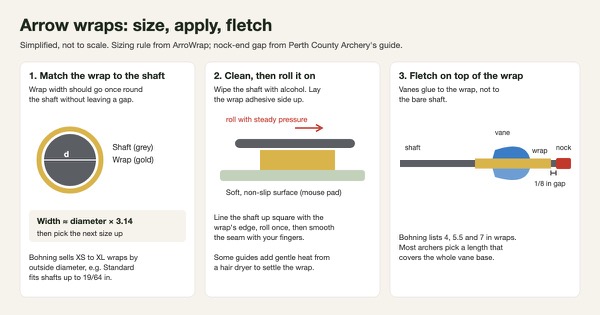
Arrow wraps explained: what they add to arrow fletching, how to size wraps to your shaft, the weight they add in grains, and how to apply them step by step.
Updated October 6, 2026 · 5 min read