
Archery Draw Length: How to Measure It and Why It Matters
How to measure archery draw length with the wingspan method or at full draw, what the AMO standard means, and how it affects bow size, draw weight, and arrows.
By Archery Insider Editorial Team
· · 8 min read
In this article
Draw length is one of the first numbers every archer needs to know, and one of the most misunderstood. It decides how long your bow should be, how long your arrows should be, and how much weight you are really pulling. On a compound bow it is a setting that has to be dialled in before the bow is usable at all.
The good news: you can get a reliable estimate in a couple of minutes, and a precise measurement with a friend and a tape measure.
The quick answer
- Stand against a wall with your arms out to the sides.
- Have someone measure fingertip to fingertip. That is your wingspan.
- Divide by 2.5.
A 70-inch wingspan gives an estimated draw length of 28 inches. That estimate is good enough to choose a first recurve and a safe arrow length. For compound setup or arrow spine selection, measure at full draw as described below.
What draw length actually is
The standard most of the industry uses was published by the Archery Trade Association (ATA), formerly the Archery Manufacturers Organization (AMO). Under that standard:
Draw length is the distance, at full draw, from the nocking point on the string to the pivot point of the bow grip, plus 1.75 inches.
The pivot point is the deepest part of the grip where it rests against your hand. The 1.75 inches is a fixed allowance that approximates the distance from the pivot point to the far side of the bow. Historically it let manufacturers describe draw length relative to the bow's outer face without everyone measuring in a slightly different place.
You will also hear the term true draw length, which is the raw measurement from nocking point to pivot point without the allowance. When a bow or spec sheet says "draw length" it almost always means the AMO/ATA figure.
| Term | What is measured | Example |
|---|---|---|
| True draw length | Nocking point to pivot point of the grip | 26.25 in |
| AMO/ATA draw length | True draw length + 1.75 in | 28 in |
Method 1: the wingspan estimate
This is the quick method used in shops and clubs for a first bow.
- Stand upright against a wall with your arms stretched out to the sides, parallel to the floor, palms forward.
- Have someone measure from the tip of one middle finger to the tip of the other. This is your wingspan.
- Divide the wingspan in inches by 2.5.
A second common formula is (wingspan − 15) ÷ 2. For a 70-inch wingspan this gives 27.5 inches, compared with 28 inches from the first formula.
| Wingspan | Wingspan ÷ 2.5 | (Wingspan − 15) ÷ 2 |
|---|---|---|
| 62 in | 24.8 in | 23.5 in |
| 66 in | 26.4 in | 25.5 in |
| 70 in | 28.0 in | 27.5 in |
| 74 in | 29.6 in | 29.5 in |
| 78 in | 31.2 in | 31.5 in |
Both formulas are approximations based on average body proportions. They usually land within an inch of each other and within an inch of a measured draw. Neither replaces measuring at full draw, but either is good enough to choose a first bow length and an arrow length with a safety margin.
Method 2: measure at full draw
Once you can draw a bow with reasonable form, measure directly.
- Use a light bow you can hold steadily at full draw.
- Draw to your normal anchor point with your bow arm straight but not locked, shoulders down, head upright.
- Have a helper measure from the nocking point on the string to the pivot point of the grip. Mark the string position if needed and measure after you let down.
- Add 1.75 inches to get your AMO/ATA draw length.
Repeat the measurement three or four times. Beginners' draw lengths usually grow slightly in the first months as their form opens up, so measure again after some coaching.

Using a draw-length arrow
A practical alternative is a draw-length arrow: a long, light arrow marked in inches along the shaft. Draw it to your anchor and the helper reads the mark at the back of the riser (not the pivot point).
Because the back of the riser is approximately where the 1.75-inch allowance lands, that reading is roughly your AMO draw length directly. Use a dedicated draw-length arrow or an arrow you know is long enough that the point cannot come off the rest.
Why your anchor changes the number
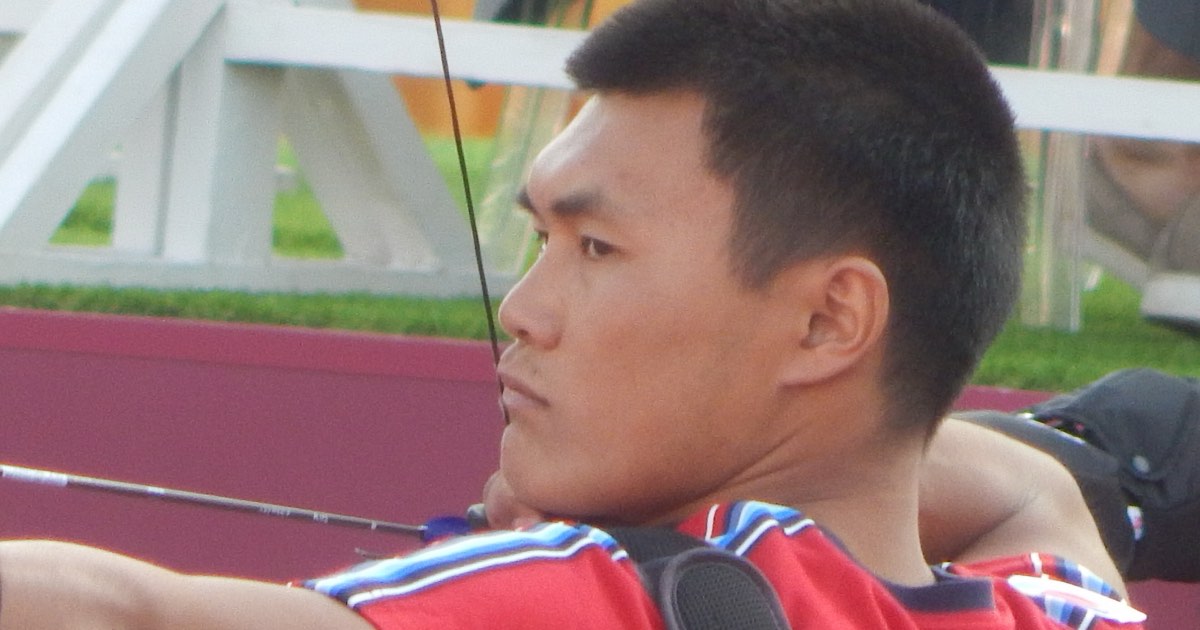
Draw length is not a fixed property of your body. It is the distance you draw to a particular anchor with a particular form. Two archers of the same height can have draw lengths an inch apart because one anchors under the chin and the other at the corner of the mouth.
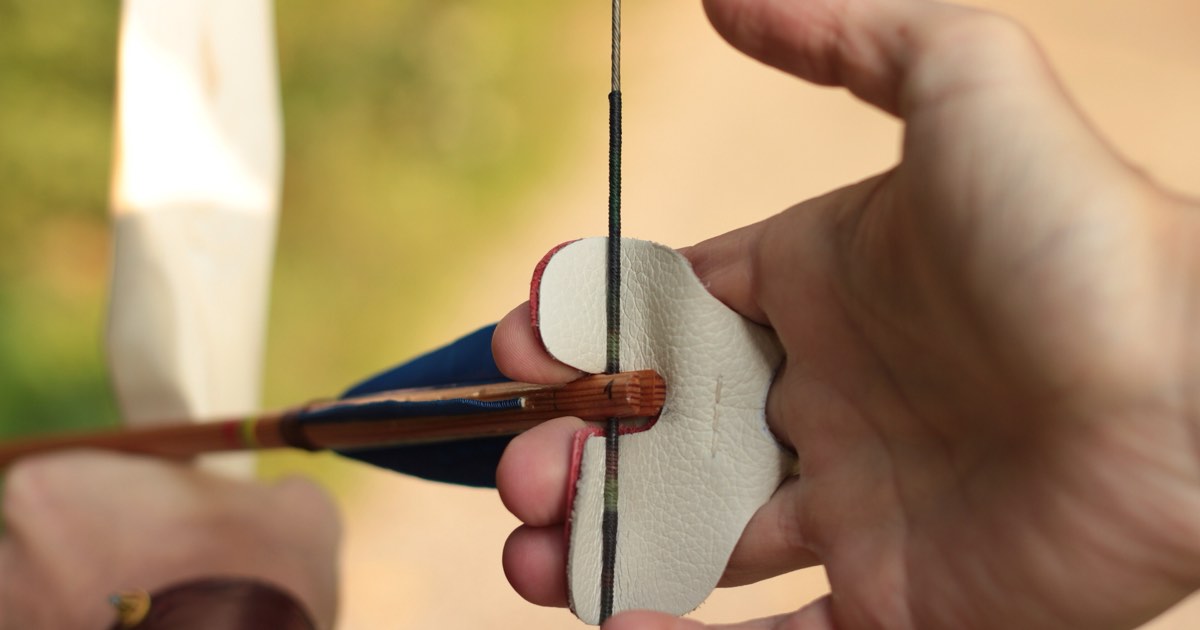
That is why traditional archers who use a thumb draw, or who anchor at the cheekbone, often have a different draw length from the same person shooting Olympic recurve with a low anchor under the jaw.
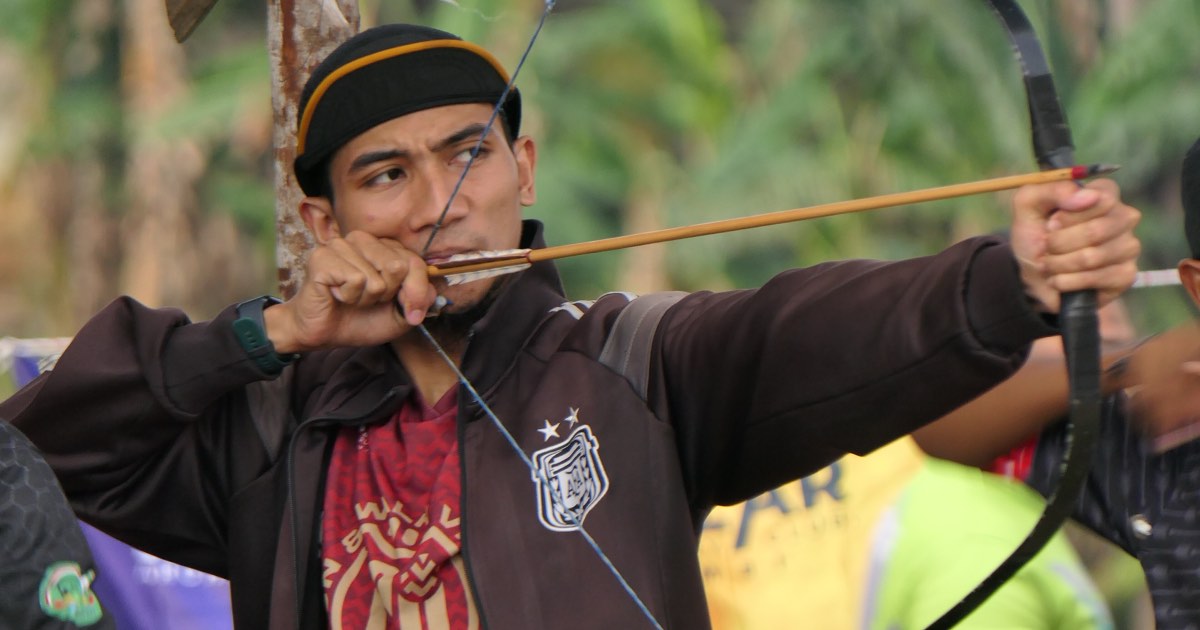
The practical point is simple: measure in the style you will actually shoot, and re-measure if you change your anchor or switch disciplines.
Why draw length matters
It sets your recurve bow length
Recurve limbs are designed to bend through a specific range. A bow that is too short for your draw will stack, meaning the draw weight rises sharply in the last couple of inches. A bow that is too long can feel soft and slow.
Manufacturers and coaches match bow length to draw length using guidelines like the table in our first recurve bow guide.
It changes your actual draw weight
Recurve limbs are rated at a 28-inch draw. Draw further and you pull more than the marked weight; draw shorter and you pull less. A frequently quoted rule of thumb is roughly 2 lb per inch, with the precise figure depending on the limb design.
An archer with a 30-inch draw shooting limbs marked 26 lb is pulling closer to 30 lb. Knowing your draw length is the only way to know what weight you are really shooting.
It determines arrow length and spine
Your arrows must be long enough to stay on the rest with margin at full draw. For recurve archers that commonly means an arrow an inch or more longer than the draw length, and some coaches recommend more for beginners whose draw is still changing.
Arrow length also affects spine (stiffness): a longer arrow behaves more flexibly, so the correct spine depends on both draw weight and arrow length. Arrow manufacturers publish selection charts that take both into account.
On a compound, it is a setting that has to be right
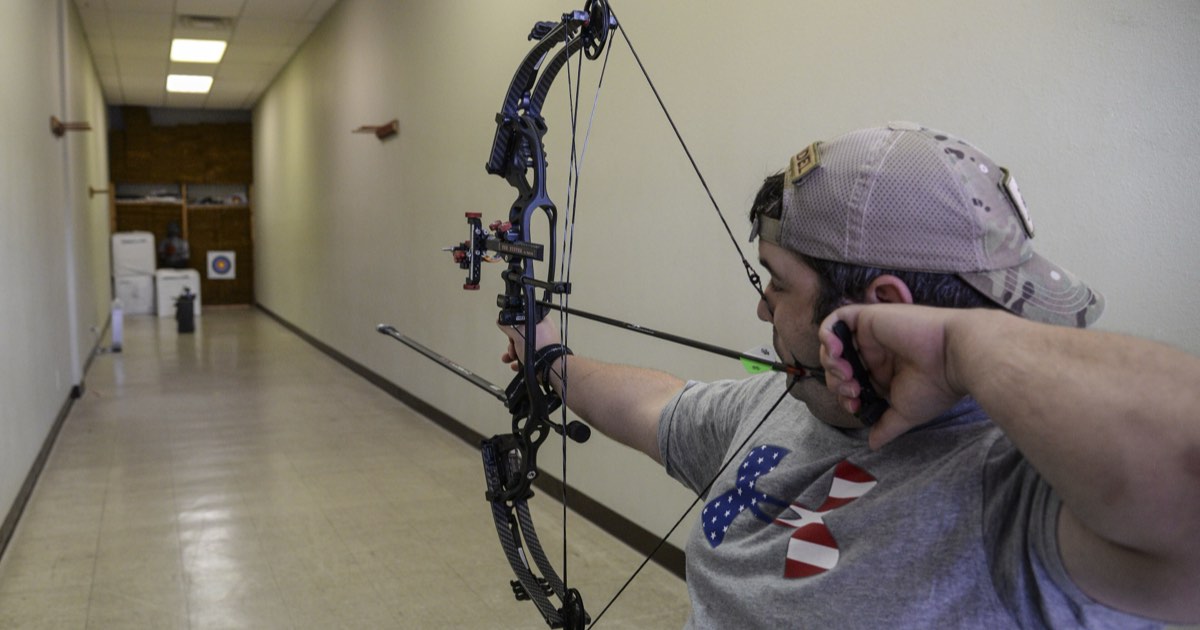
A compound bow draws to a hard stop called the wall, set by the cams or modules. If the bow's draw length setting is longer than yours, you will over-extend or lean back. If it is shorter, you will hunch and your anchor will be inconsistent.
Compound bows are sold with a draw-length range and are adjusted by changing modules, rotating cams, or in some designs replacing cams. A shop or coach normally sets this when you buy the bow, which is why knowing your number beforehand saves a lot of trouble.
Our compound vs recurve comparison covers the other practical differences between the two bow types.
Common mistakes
- Over-drawing to reach a number. Measure your natural draw at a relaxed, repeatable anchor. The number should describe your form, not dictate it.
- Measuring from the wrong reference point. Nocking point to pivot point, then add 1.75 inches. Measuring to the back of the riser already includes most of that allowance.
- Using a heavy bow to measure. If you cannot hold steady, the measurement will be short and inconsistent.
- Measuring once and never again. Draw length changes as form improves, especially in the first year.
- Confusing arrow length with draw length. Arrows are cut longer than draw length for safety; the two numbers should not be the same.
- Copying a friend's number. Draw length is personal. Height is only a rough guide.
Frequently asked questions
What is the average draw length?
Draw length tracks closely with height and arm span. Most adults fall somewhere between the mid-20s and low-30s in inches, with 28 inches used as the industry reference point for rating recurve limbs. There is no correct average to aim for; your own measurement is what matters.
Does draw length change between recurve and compound?
Your body is the same, so your true draw to a given anchor is similar. In practice, compound archers often anchor differently, using a release aid and peep sight, and the bow's wall fixes the draw. The number set on a compound may therefore differ slightly from what you draw on a recurve. Measure for each.
How much longer than my draw length should my arrows be?
There is no single rule. Many recurve archers use arrows at least one inch longer than their draw length, and beginners often go longer because their draw length is likely to increase. The requirement is that the point remains safely in front of the rest at full draw.
Can I measure draw length alone?
The wingspan method needs a helper to read the tape accurately, and measuring at full draw definitely does. If you have no one to help, a club or shop will measure you in a few minutes.
Will my draw length change as I get stronger?
Often, yes. As your shoulders learn to open and your posture improves, your draw usually lengthens by a small amount in the first year. Re-measure after a few months of regular shooting before buying expensive arrows.
Related articles
 Guides
How to Choose Your First Recurve Bow: A Beginner's Guide
How to choose a first recurve bow: takedown vs one-piece, draw weight, bow length for your draw length, riser types, eye dominance, and essential accessories.
Updated February 6, 2025 · 11 min read
 Guides
How to Choose Arrows: Spine, Length, Weight and Spine Charts
How to choose arrows: what spine means, reading a spine chart, measuring arrow length, arrow weight and FOC, fletching, and bare-shaft tuning to confirm it.
Updated June 26, 2026 · 9 min read
 Training
Archery Form: 11 Steps to a Consistent Shot
Archery form step by step: stance, hook and grip, set-up, draw, anchor, transfer, aiming, release and follow-through, plus common faults and fixes.
Updated March 21, 2025 · 10 min read