
How to Measure Draw Weight With a Bow Scale
Draw weight scale guide: hook a bow scale, read peak vs holding weight on a compound, correct a recurve's 28-inch marked weight for your draw, check minimums.

By Archery Insider Editorial Team
· 7 min read
In this article
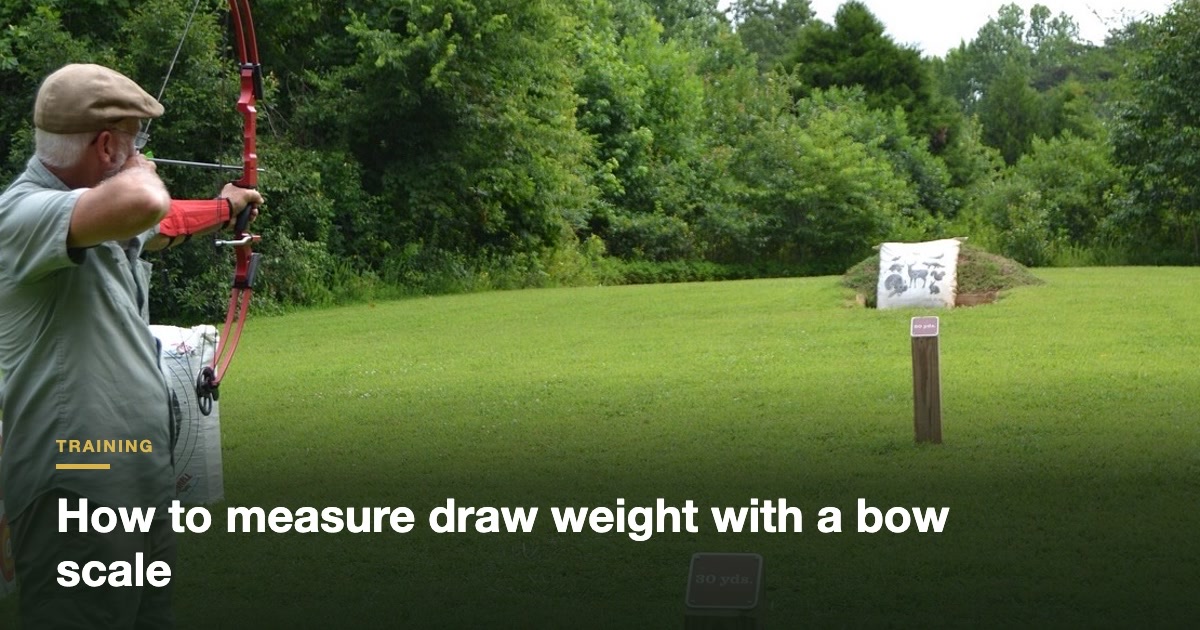
To measure draw weight, hook a bow scale on the string at the nocking point, draw the bow to your anchor exactly as you shoot, and read the display. On a compound you want the peak weight reached during the draw, so use a scale with a peak-hold function. On a recurve or longbow the number at your own draw length is what matters, because the weight marked on the limb was measured at a standard 28-inch draw that may not be yours.
What a draw weight scale is
A draw weight scale, usually just called a bow scale, is a hanging scale with a hook: either a spring scale with a dial and a drag pointer that stays at the highest reading, or a digital scale with a peak-hold button. A 110 lb (50 kg) capacity covers compound, recurve and longbow draw weights, and peak hold matters for compounds, where the weight rises to a peak and then drops.
One honest caution. Many of the digital scales sold for archery come from small or unbranded makers, and we found no published accuracy test for them. Treat the reading as unverified until you've hung a known weight, such as a gym plate, from the hook and seen the number agree.
How to measure draw weight: step by step
- Set the bow up as you shoot it. Brace height, limb bolts and string accessories all change the reading. String a recurve with a stringer, as Hoyt's manual requires.
- Hook the scale at the nocking point, or on a compound's D-loop.
- Draw smoothly to your anchor with your normal stance. On a compound, pull through the peak into the wall; on a recurve, stop where your clicker goes off.
- Read the scale. Compound: the peak-hold value. Recurve: the live value at anchor, or peak hold, which captures full draw because a recurve's weight only rises.
- Let down slowly and repeat twice. Three readings within a pound are your number. If they wander, your draw length is wandering; our draw length guide explains how to settle it.
Compound bows: peak weight vs holding weight
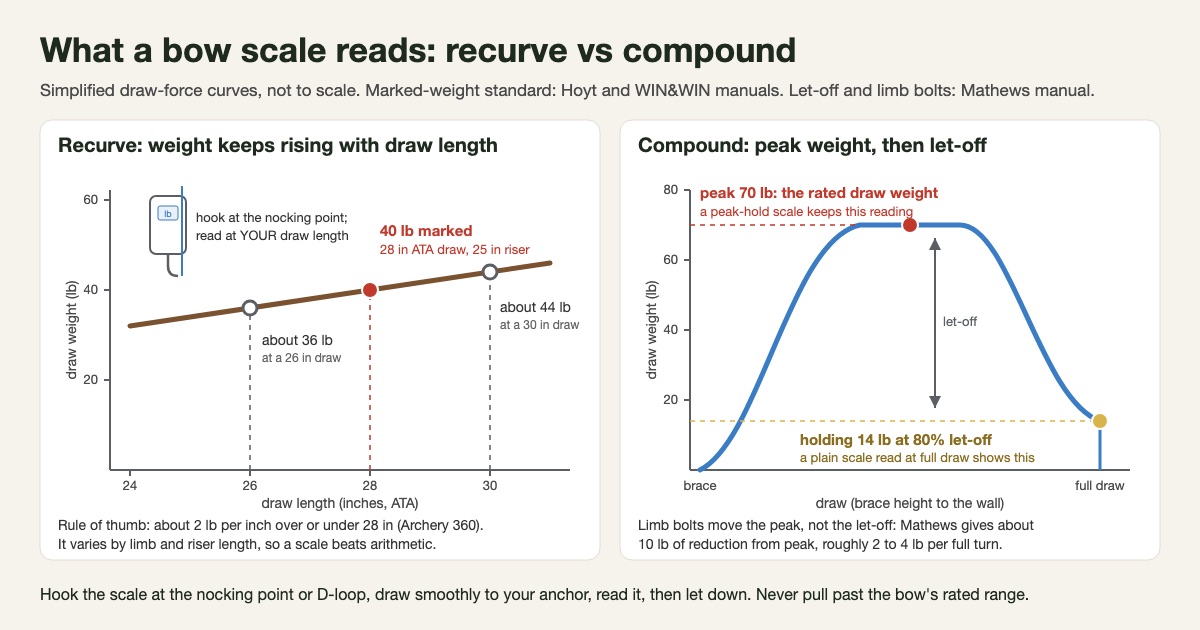
A compound's rated draw weight is its peak weight, the highest force during the draw. The cams then let off most of it: on a 70 lb bow with 80 percent let-off you hold about 14 lb, as our let-off guide explains. A plain scale read at full draw shows that holding weight, which is why peak hold matters.
You'll often find the bow isn't set at its rated weight anyway. Mathews' owner's manual explains that its bows "have approximately a ten pound range of weight reduction from the bow's peak weight (example: if the bow has a peak weight of 70 pounds, it can be adjusted as low as 60 pounds)." Each limb-bolt rotation "equals approximately 2 to 4 pounds of draw weight," and "both limb bolts must be adjusted equally or the bow may become out of tune/synchronization." To change the weight, turn both bolts the same amount (clockwise to increase, per Mathews) and measure again.
Recurves and longbows: marked weight vs your draw weight
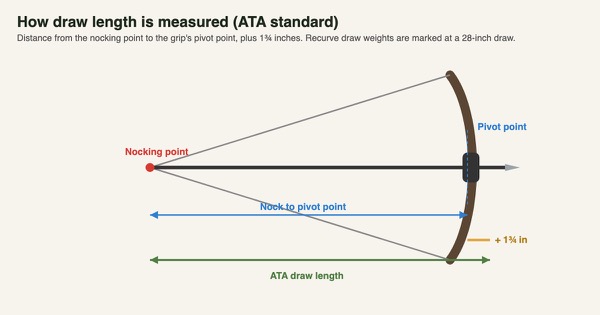
Recurve limbs carry a number such as "38#" measured under an industry standard. Hoyt's 2026 recurve manual spells it out: "The weight marked on the limb is measured at a 28" standard A.T.A. (Archery Trade Association) draw length. A.T.A. draw length is measured at 26 1/4" to the throat of the bow grip plus 1 3/4"." It adds that "all limb weights are indicated for a 25" riser," and that "actual limb weight depends upon draw length, brace height, riser length and limb bolt setting."
So unless your ATA draw is exactly 28 inches on a 25-inch riser, the limb label isn't your draw weight. Archery 360, the ATA's consumer site, gives the usual correction: "In general you'll gain 2 pounds for every inch you draw past 28 inches," and "for every inch under 28 inches, subtract 2 pounds." It's an approximation, which is why a scale is worth owning. Our draw weight vs draw length guide explains the interaction.
| Limb marked | 26 in draw | 28 in draw | 30 in draw |
|---|---|---|---|
| 30 lb | about 26 lb | 30 lb | about 34 lb |
| 40 lb | about 36 lb | 40 lb | about 44 lb |
| 44 lb | about 40 lb | 44 lb | about 48 lb |
Estimates from Archery 360's rule; measure to be sure.
Limb bolts move a recurve's weight too, but less than a compound's: Archery 360 says three turns in from the middle setting adds "about 1½ pounds." WNS limits its bolts to "2 turns from the factory setting" and Hoyt's to "6 turns from the bottomed-out position." Hoyt's FAQ adds: "Be sure to unstring recurve bows before making adjustments." Turn both bolts equally, restring, then measure.
Checking legal minimums and arrow weight
Some hunting rules say how to measure draw weight. Washington's archery rule (WAC 220-414-070) makes it unlawful to hunt big game "with a bow that does not produce a minimum of 40 pounds of pull measured at 28 inches or at full draw." Oklahoma sets 30 lb for compounds and 40 lb for recurves, longbows and self bows; Texas has "no minimum draw requirement." Rules checked on 7 October 2026; this isn't legal advice and regulations change, so confirm with your agency. Our deer hunting draw weight guide covers what the number means for penetration.
The measured figure also sets your minimum arrow weight. Hoyt's recurve warranty says "use of arrows weighing less than 5 grains per pound of draw weight will void the warranty," and Mathews' manual sets the same floor. Multiply your reading by five; your finished arrows must weigh at least that many grains.
Common mistakes
- Reading a compound at full draw without peak hold, then thinking it's set at 15 lb.
- Trusting the limb label when buying arrows; spine charts want the weight at your draw length.
- Adjusting bolts unequally, which puts a recurve out of tiller or a compound out of synchronisation.
You can browse digital bow scales or 110 lb draw weight scales on Amazon. Look for peak hold and a hook that fits a D-loop.
Frequently asked questions
What is a draw weight gauge?
A draw weight gauge is another name for a bow scale: a hanging spring or digital scale with a hook that attaches to the bowstring at the nocking point. You draw to your anchor and read the force in pounds. Gauges with peak hold record the highest reading, which is what a compound's draw weight means.
Can I work out draw weight without a scale?
Only roughly. For a recurve, start from the marked weight at 28 inches and add or subtract about 2 lb per inch of draw, as Archery 360 suggests. For a compound there's no reliable arithmetic, because the bolts may be backed out. A shop will measure either in a minute.
How accurate are cheap digital bow scales?
Nobody we found has published tests of the small-brand scales sold for archery, so treat accuracy as unverified. Check yours against a known weight such as a gym plate, and again if it's been dropped. For a legal minimum or a warranty-related arrow weight, a shop's scale is the safer reference.
Should I measure a compound's peak weight or holding weight?
Peak weight. The rated draw weight, spine charts, state minimum rules and the five grains per pound arrow rule all refer to the peak force during the draw. Holding weight is useful for comparing let-off settings, but it isn't your draw weight.
Related articles
 Guides
Draw Weight vs Draw Length Explained
Draw weight vs draw length explained: what each means, how they are measured (ATA standard), how they interact on recurves and compounds, and how to set both.
October 15, 2026 · 10 min read
 Guides
What Draw Weight Do You Need for Deer Hunting?
How much draw weight do you need for deer? Legal minimums, why arrow energy matters, compound vs traditional bows, elk, and choosing a weight you can shoot.
October 5, 2026 · 10 min read
 Training
Archery Draw Length: How to Measure It and Why It Matters
How to measure archery draw length with the wingspan method or at full draw, what the AMO standard means, and how it affects bow size, draw weight, and arrows.
Updated February 6, 2025 · 8 min read