
Rangefinding Crossbow Scopes Explained
How a crossbow scope with a built-in rangefinder works: laser ranging, speed calibration, batteries in the cold, and why legality varies by state.
By Archery Insider Editorial Team
· · 4 min read
In this article
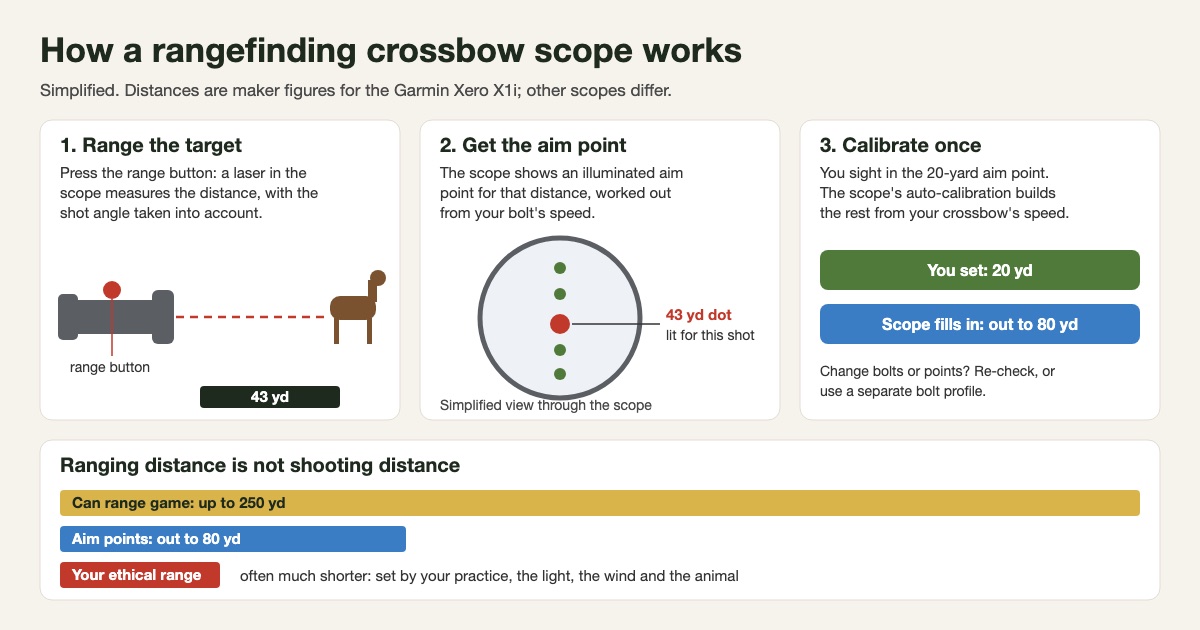
A crossbow scope with a built-in rangefinder puts a laser rangefinder inside the scope. Press a button and it measures the distance to the animal, then shows the aim point for that distance, worked out from your crossbow's speed. Only a few models exist; the Garmin Xero X1i and the Burris Oracle X are the best-known examples.
How built-in ranging works
A normal crossbow scope has fixed dots or lines for set distances, and you range the animal separately. A rangefinding scope merges those steps.
Garmin says the Xero X1i "delivers 3.5X magnification, and a built in laser range finder to help range game targets up to 250 yards away". Its specifications list "angle compensated distance" and illuminated aim points.
Burris takes a similar approach with a zoom scope. It says the Oracle X is a 2–7X scope that "instantly displays the distance to your target and provides an exact aiming point factoring in the angle of your shot". Burris lists its laser range as 200 yards on deer and 500 yards on reflective targets.

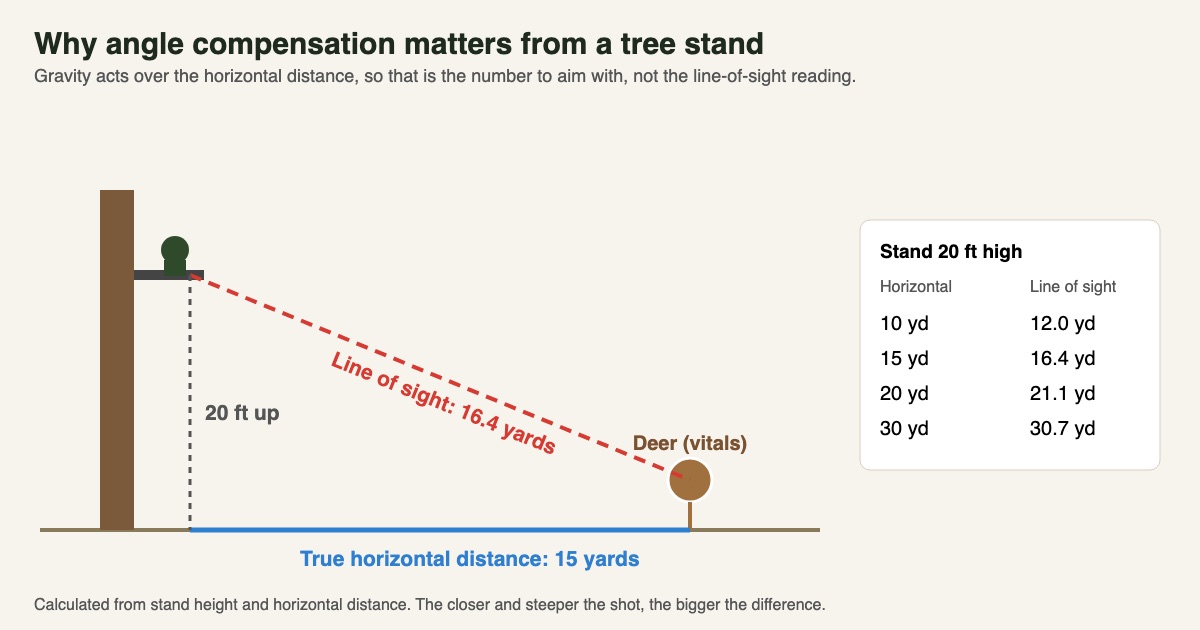
Angle compensation matters most from a tree stand, where the line-of-sight distance is longer than the horizontal distance that governs the bolt's drop.
| Garmin Xero X1i | Burris Oracle X | Conventional multi-reticle scope | |
|---|---|---|---|
| Magnification | 3.5X (fixed) | 2–7X (variable) | Varies by model |
| Ranging | Game up to 250 yd, per Garmin | Deer up to 200 yd, per Burris | None: needs a separate rangefinder |
| Aim point | Illuminated digital point | Calculated aiming point | Fixed lines for set distances |
Speed calibration
Grand View Outdoors explained Garmin's method: "Once the 20-yard aim point is set, an auto-calibration feature uses the bow's speed and algorithms to provide the remaining aiming points out to 80 yards." Garmin's specification sheet lists its AutoCal for "bow speeds up to 650 FPS, out to 80 yds (73 m)".
Burris gives a practical tip for very fast crossbows: above 400 fps, it recommends using 40, 60, 80 and 100 yards as trueing points.
A calculated aim point assumes your bolts fly the way the scope expects. Change bolts, points or broadheads and the curve can change, so confirm at known distances. Our guide to sighting in a crossbow scope covers the 20-yard zero and broadhead checks, and our explainer on how a crossbow works shows why speed varies between crossbows.
Batteries, cold and weight
An electronic scope is useless with flat batteries. Garmin lists two AAA lithium batteries, a battery life of "up to 1 year" and an operating range of -4°F to 140°F (-20°C to 60°C), with an IPX7 water rating. Burris lists a CR123 battery good for "3,000+ activations".
Those are maker figures. Before a cold hunt, fit fresh batteries, check the display works, and keep spares in an inside pocket.
Weight is the other cost: 1.9 lb (Garmin) and 30.8 oz (Burris) is more than many plain crossbow scopes weigh, which changes how the crossbow balances.
Legality of electronic sights varies
Rules on electronics differ by state and sometimes by season. Kansas regulation K.A.R. 115-4-4 says: "No crossbow or arrow shall have any electronic device attached to the crossbow or arrow that controls the flight of the arrow." It then lists devices that may be attached to a crossbow, including "lighted pin, dot, or holographic sights; illuminated nocks; rangefinders".
Other states treat electronics differently, sometimes by season. We haven't checked every state, so check your agency's current rules on crossbows and "electronic devices" before you hunt.
If you're comparing options, you can browse the Garmin Xero X1i crossbow scope or crossbow scope rangefinders on Amazon. Treat listings as examples to consider and check mount compatibility with your crossbow. Own a golf unit already? See whether a golf rangefinder works for bowhunting.
Frequently asked questions
Are rangefinding crossbow scopes legal for hunting?
It depends on the state and season. Kansas regulation K.A.R. 115-4-4 lists rangefinders among devices that may be attached to a crossbow, but bans electronic devices that control the arrow's flight. Other states restrict electronics differently, so check your wildlife agency's current rules before hunting with one.
Do you still need to sight in a rangefinding crossbow scope?
Yes. Garmin's Xero X1i needs a 20-yard aim point set before its auto-calibration fills in the rest, according to Grand View Outdoors. Then confirm the longer aim points by shooting at known distances, and recheck whenever you change bolts, points or broadheads.
How far can a crossbow scope rangefinder range?
Garmin says the Xero X1i ranges game up to 250 yards; Burris lists 200 yards on deer for the Oracle X. That is how far the laser reads, not how far to shoot. Garmin's calibrated aim points go out to 80 yards, and your own ethical range is usually much shorter.
Related articles
 Training
How to Sight In a Crossbow Scope, Step by Step
How to sight in a crossbow scope: safety, mounting, a 20-yard zero, multi-reticle and speed-dial scopes, broadhead checks and fixes for wandering groups.
October 6, 2026 · 9 min read
 Gear
GearCan You Use a Golf Rangefinder for Bowhunting?
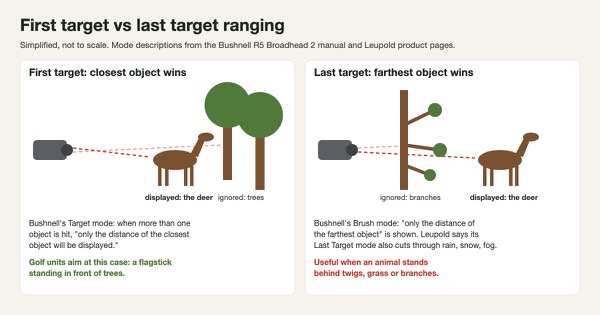
Can you use a golf range finder for bow hunting? Yes on level ground. How golf and hunting modes differ: target priority, slope vs true horizontal distance.
Updated October 7, 2026 · 5 min read
 Gear
GearWhen to Replace a Crossbow String and Cables
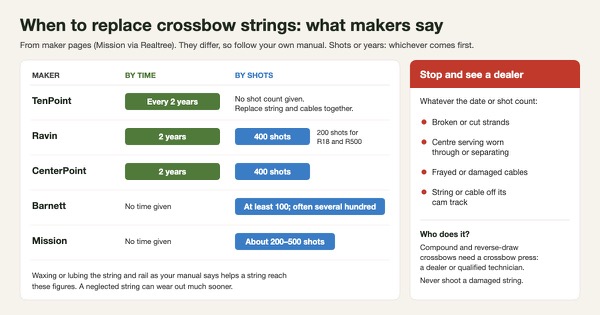
When to replace crossbow strings and cables: what TenPoint, Ravin, CenterPoint and Barnett recommend, how to spot serving wear, and why it's a press job.
Updated October 6, 2026 · 4 min read