
How Long Does a Recurve Bow Last?
How long will a recurve bow last? No maker gives a lifespan. What wears out (string, limbs, bolts), the warning signs, storage rules and a used-bow checklist.

By Archery Insider Editorial Team
· 7 min read
In this article
How long will a recurve bow last? No manufacturer we read puts a number of years on it; the figures quoted online come from forums, not makers. What the owner's manuals do say is which parts wear and what kills them: the string is a consumable, the limbs last until heat, moisture or impact damages them, and the riser usually outlives everything. Stored cool and dry, a recurve can serve for a very long time; left in a hot car, it can fail in a summer.
How long will a recurve bow last? What makers actually say
Owner's manuals talk about use, storage and inspection, never years. Hoyt's 2026 recurve manual tells owners to "carefully inspect your bow before each use" and says "never expose your bow to extreme heat or prolonged moisture." WIN&WIN's WNS manual adds that prolonged storage "in a hot, dry attic or damp basement could also be damaging," and that this "voids your warranty."
Warranties are the closest thing to a published expectation:
| Maker | Riser | Limbs | Notes |
|---|---|---|---|
| Hoyt (recurve) | Lifetime, original owner | Two years from purchase | Register within 30 days; strings and finish excluded |
| WIN&WIN (WNS) | One year | One year | Excludes wear and finish; heat and damp storage void it |
| Bear (traditional bows) | One-year limited, original owner | One-year limited, original owner | Bear's compound limbs, by contrast, are covered in full for five years |
Hoyt backs its risers for life and its limbs for two years, which fits how the parts behave: a machined riser rarely fails, while limbs are laminated, flexed thousands of times and exposed to heat and knocks. The bow lasts as long as its limbs stay sound. Our compound bow lifespan guide finds the same pattern.
What wears out, part by part
| Part | How it ages | What to do |
|---|---|---|
| Bowstring | Fibres fuzz, fray and stretch; servings loosen | Wax regularly; replace when frayed or on the maker's interval |
| Limbs | Heat, moisture and impacts damage the laminations; tips wear at the string grooves | Inspect for twist, cracks and lifting layers; store cool and dry |
| Limb bolts and pockets | Bolts loosen, threads wear, pockets collect grit | Stay within the maker's turn limit; check tightness |
| Riser | Finish wears; threaded inserts can strip | Little else fails; check bushings and the grip |
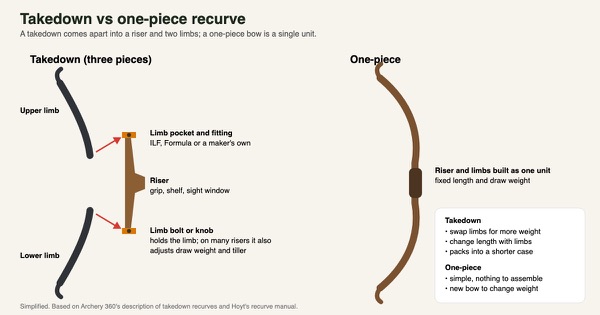
Most "worn out" recurves have a tired string, a chipped finish and loose hardware, all cheap to put right. A takedown makes this easier, since limbs and risers can be replaced separately; our takedown vs one-piece comparison explains the trade-offs.
Limb twist, delamination and set
Limbs are the part worth watching. Archery 360's recurve care guide, by Olympian Crispin Duenas, explains why: "Prolonged heat affects epoxies that hold limb layers together, which can cause twisting and even delamination." The signs:
- Twist: strung, the string doesn't run down the centre of both limbs. A limb that keeps twisting back after alignment is damaged.
- Delamination: a line or bubble where fibreglass or carbon has lifted from the core, often near the tips or pockets. Retire the limb.
- Cracks and chips, especially at the string grooves. Hoyt says "any suspected damage to your bow should be inspected by Hoyt or a Genuine Hoyt Retailer."
- Set: limbs that don't return to their unstrung shape. No maker we read publishes data on it, so treat it as a reason to store unstrung, not a measured fact.
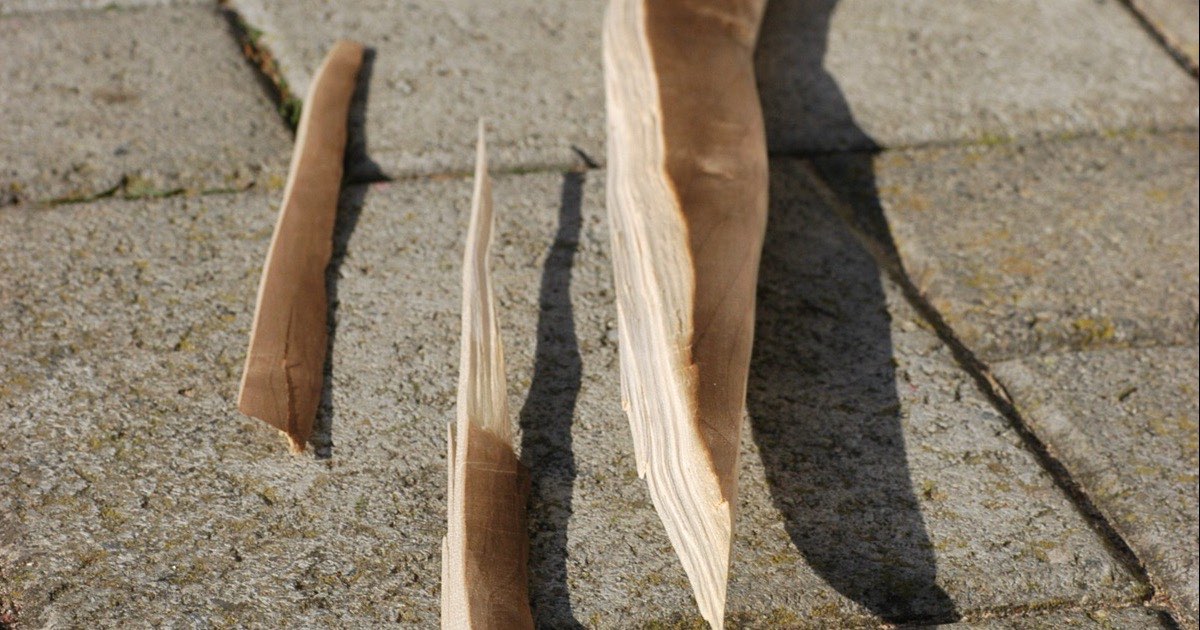
Hoyt adds a detail for wood-core limbs: they're "potentially susceptible to moisture penetration if the protective finish is damaged (by a deep scratch, for example)," and clear nail polish or automotive touch-up paint will re-seal the wood. After wet sessions, "towel dry your limbs and riser to prevent water damage (do not use a heat source)."
Storage and heat
How a recurve is stored probably decides its life more than how much it's shot:
- Keep it out of heat. WNS warns that "excessive heat, such as could be experienced on a sunny day inside of a closed vehicle, could cause limb failure."
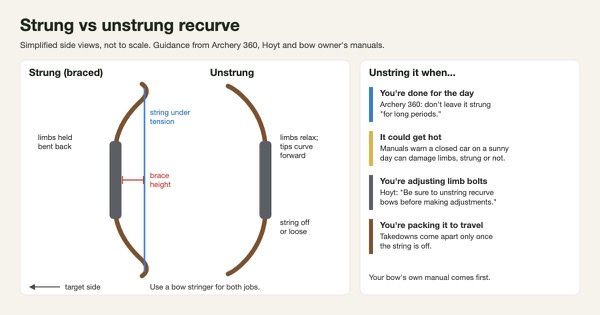
- Unstring it for storage. Archery 360's advice: "even though modern recurve limbs can handle it, don't leave your bow strung for long periods." Our guide on leaving a recurve strung has the detail.
- Never stand it on a limb tip. Archery 360 says "the riser's weight and add-on accessories can deform the limb." Hang it by the riser or lay it flat in a case.
- Dry it after rain. Archery 360 recommends disassembling the bow and drying every piece, since moisture "causes oxidation and possibly rust."
String and tip care
The string is the one part guaranteed to wear out. Hoyt's manual says to "carefully inspect the string and cables each time before shooting your bow," that frayed or damaged strings "should be immediately replaced," and that owners should replace the string "after 2,000 shots or after two years, whichever comes first." Archery 360 puts it plainly: "If you see strands fraying and breaking, buy a new string." Our bowstring lifespan guide compares maker intervals.
Waxing slows the wear. Duenas suggests "a good wax every other week, which keeps out moisture while preventing string fibers from splitting."
The limb tips take the string's load. Check the string grooves for chips and rough edges that could cut the loops, and always use a stringer: Hoyt's manual says to "always use a bowstringer when stringing or unstringing a recurve bow."
A pre-session inspection in two minutes
- Look along each strung limb for twist and for the string sitting off-centre.
- Run a fingernail along the limb edges and string grooves for chips, cracks or lifting layers.
- Check the string for fuzz, broken strands and loose serving.
- Confirm the limb bolts are at their usual setting. Hoyt's FAQ reminds owners to "unstring recurve bows before making adjustments."
Buying a used recurve: a checklist
Age alone tells you little. A twenty-year-old bow kept in a case indoors can be in better shape than a two-year-old one that spent summers in a truck. Check:
- Limbs, unstrung and strung: twist, cracks, delamination at the tips and pockets, and an intact finish.
- String: budget for a new one regardless.
- Limb bolts: they should turn, and the seller should know the setting. Hoyt warns never to loosen tiller bolts "more than 6 turns from the bottomed-out position."
- Riser: stripped bushings, a loose grip, cracks around the limb pockets.
- Fit: the marked limb weight applies at a 28-inch draw on a 25-inch riser, so check the weight at your own draw before paying for limbs you can't pull.
If you don't own a stringer, you can browse recurve bow stringers or bowstring wax on Amazon.
Frequently asked questions
How long do recurve limbs last?
No maker we read gives a figure. Hoyt warrants recurve limbs for two years and the riser for life. In practice limbs last until they're damaged, most often by heat in a car or attic, moisture through a scratched finish, or an impact. Retire any limb with cracks, chips or lifting layers.
How long does a recurve bow string last?
Hoyt's manual says to replace the string "after 2,000 shots or after two years, whichever comes first," and immediately if it's frayed or damaged. Archery 360 notes that strings "can wear out quickly if you practice often." Waxing every other week slows the fraying, but a string is a consumable and a new one is cheap insurance.
Can you still shoot a 30-year-old recurve?
Possibly, if it's been stored well and passes inspection. Check the limbs unstrung and strung for twist, cracks and delamination, fit a new string, and check the string grooves and limb bolts. If anything about the limbs looks doubtful, have a shop look at it before you draw it fully.
Does leaving a recurve strung shorten its life?
Archery 360 says modern limbs can handle it but advises against leaving a bow strung "for long periods." The bigger risk is heat while strung, which affects the limb epoxies. Strung for a session is fine; unstrung, cool and dry is how to store it.
Related articles
 Gear
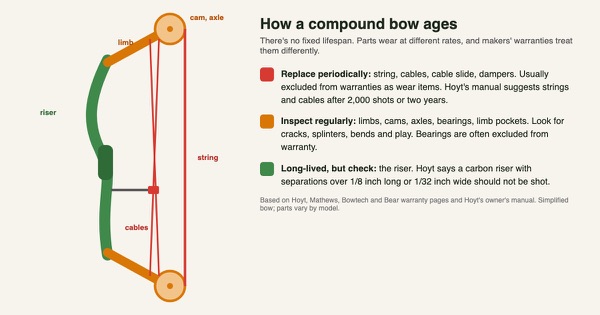
How Long Does a Compound Bow Last? Parts and Warranties
How long does a compound bow last? Which parts wear out, what Hoyt, Mathews, Bowtech and Bear warranties cover, signs a bow is unsafe, and buying used.
October 31, 2026 · 9 min read
 Guides
Can You Leave a Recurve Bow Strung?
Can you leave a recurve bow strung? For a session, yes. What makers and coaches say about storage, heat, travel and limb adjustments, and when to unstring.
Updated October 6, 2026 · 4 min read
 Comparisons
Takedown vs One-Piece Recurve: Which Should You Buy?
Takedown vs one-piece recurve bows compared: how they differ, limb swaps and fittings, hunting and target use, travel, care and storage, and how to choose.
November 4, 2026 · 8 min read