
Bows for Women: Fit Matters More Than Colour
Choosing a compound bow for women or a recurve? Draw length, draw weight, grip and mass weight matter more than a women's label. How to check each one.
By Archery Insider Editorial Team
· 5 min read
In this article
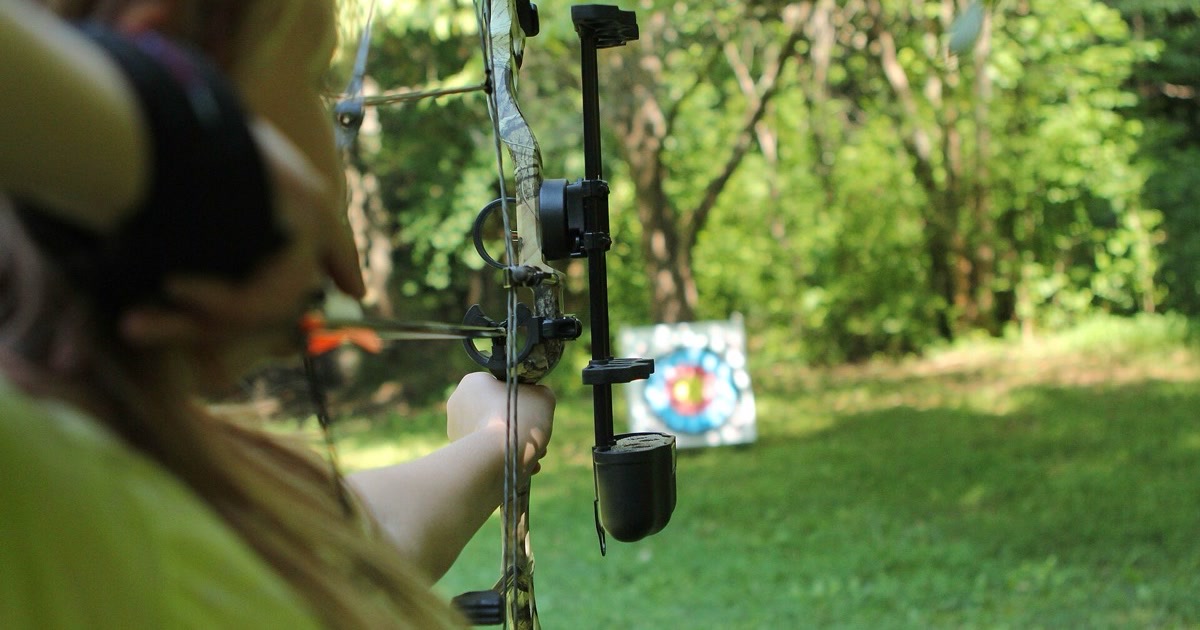
The right compound bow for women, or recurve bow, is the one that fits the archer: correct draw length, a draw weight she can pull smoothly, a grip that suits her hand and a mass weight she can hold steady. A "women's" label or colour tells you none of that. Measure first, then compare spec sheets.
Fit first: the four numbers that matter
None of the sources we read give separate guidance for women; they describe fit by body and strength.
| Fit point | Why it matters | What to check |
|---|---|---|
| Draw length | A compound's cams stop the draw at a set length | Your measured draw length sits inside the bow's range |
| Draw weight | Too heavy ruins form and makes shooting a chore | You can draw smoothly without lifting the bow skyward |
| Grip | The grip is your only contact with the bow | It suits your hand, or can be swapped |
| Mass weight | A heavy bow is harder to hold up while aiming | You can hold it at arm's length for a full shot |
Draw length. Archery 360's compound guide explains that some target bows use cam modules "specific to the draw length," while others "allow you to work with a range of draw lengths, such as 25 to 30 inches." If your draw is shorter than a bow's range, no amount of adjustment will fix it. Our draw length guide shows how to measure.
Draw weight. A 10 lb adjustment range is typical, Archery 360 says, so pick a bow whose bottom setting you can draw comfortably today. For target shooting, it adds that "USA Archery and World Archery limit compound bow draw weight to no more than 60 pounds." Hunting minimums are set by each state, so check your own regulations rather than relying on a general figure.
Grip and mass weight. "Inspect the grip on the bow. Does it fit your style of shooting?" Archery 360 asks, and if not, can it be replaced with an aftermarket grip? Mass weight matters too: another Archery 360 piece warns that "too much mass weight makes archers work harder to keep their bow arm up, which affects aiming."
Women's models vs adjustable unisex bows
Some makers sell bows marketed to women. The spec sheet is what counts. Compare the draw length range, draw weight range and mass weight with your own numbers, as you would for any bow.
Bow length is about height and stability, not gender. Archery 360 says "someone over 6 feet tall might want a 40-inch bow, while someone 5 feet tall might want one just 36 inches long," and that "a longer bow allows the archer to hold steadier while aiming."
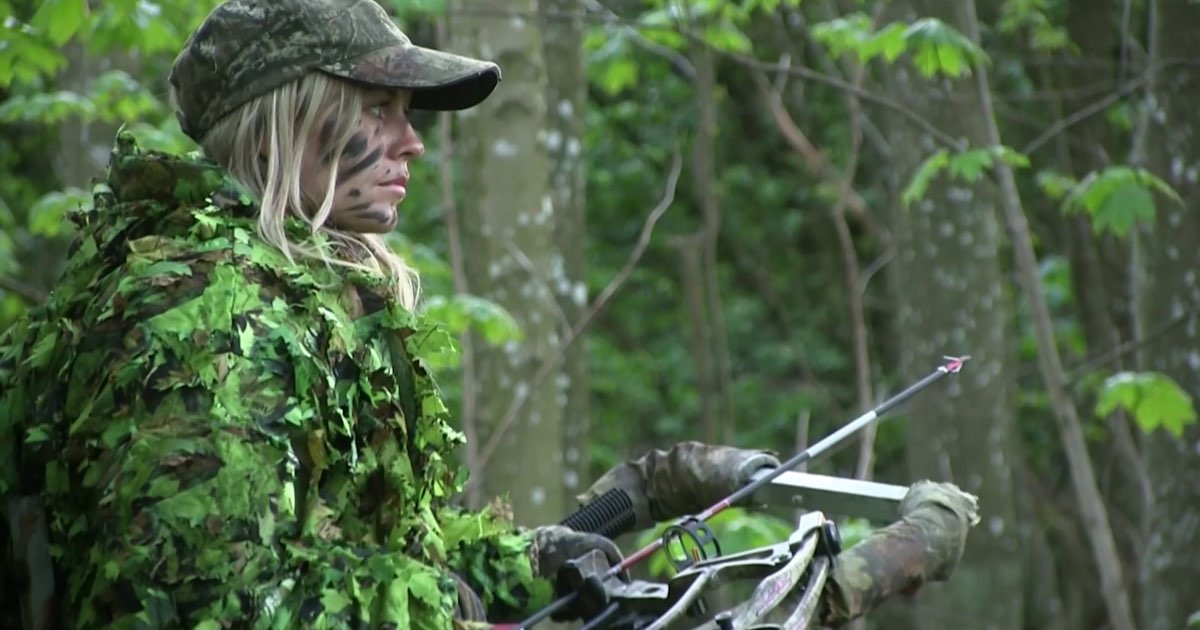
Two adjustable bows to consider show what wide ranges look like. Bear's Cruzer G3 adjusts from a 14 to a 30 in draw and from 5 to 70 lb, according to Bear's 2023 launch announcement; our Cruzer G3 review covers the details. For recurve shooters, the Samick Sage is a 62 in takedown with limbs sold from 25 lb upwards in 5 lb steps, so draw weight goes up by swapping limbs, not buying a new bow. Our Sage review explains why 25 lb can be heavy for a first bow.
Chest guards and string clearance
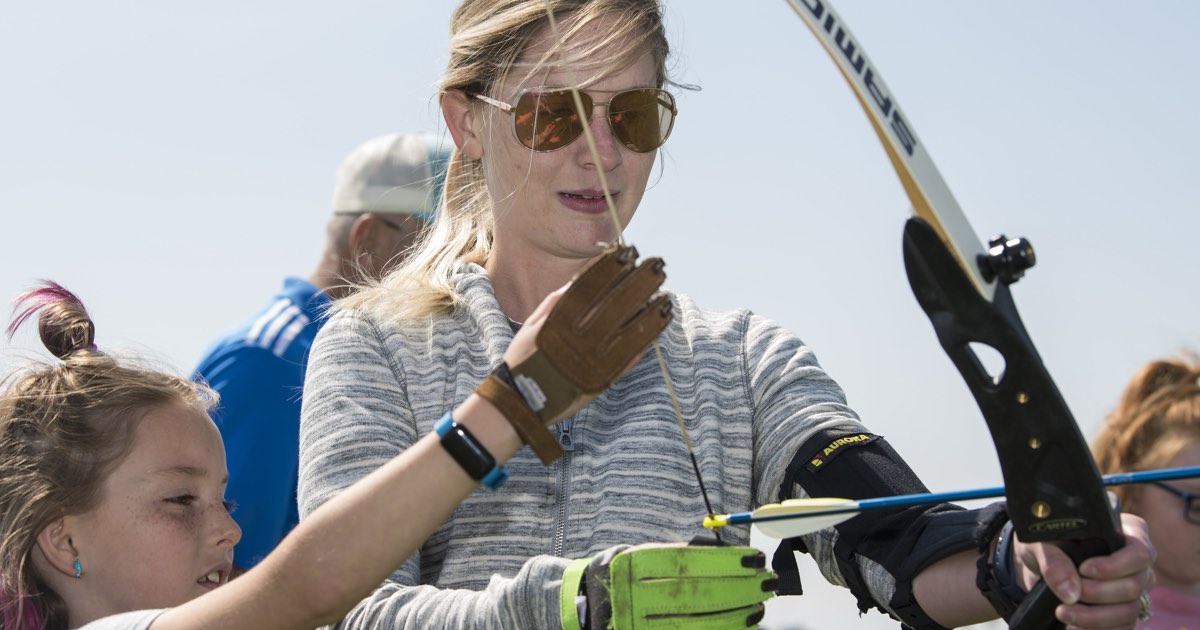
World Archery says recurve archers wear "chest guards to keep clothing out of the path of the string on release." That applies to anyone whose string passes close to the body: loose tops, open jackets and a bow-side chest that the string brushes at release. A snug-fitting top may be all you need; if the string still catches clothing or touches your chest, a chest guard is a cheap fix.
Get fitted at a shop
A pro shop can measure your draw length, set a compound's module and weight, and let you draw several bows back to back. It's the quickest way to compare grips and mass weights.
To compare options, you can browse adjustable compound bows (youth-sized frames often suit shorter draws) or women's recurve bows on Amazon. Treat listings as examples to consider and check the draw length range first. Our guide to choosing a first recurve covers bow length and limbs.
Frequently asked questions
What is a good compound bow for women?
One whose draw length range includes your measured draw length, whose lowest draw weight you can pull smoothly, and whose grip and mass weight feel comfortable. Archery 360 notes most compounds adjust about 10 lb, so start near the bottom of the range and work up as your form and strength improve.
Should a woman shoot a recurve or a compound?
Either. The choice depends on what you want to shoot: recurves suit traditional and Olympic-style archery, while compounds suit bowhunting and many target classes. Fit matters in both: a recurve's draw weight depends on your draw length, and a compound must be set to it. Try both at a club or shop.
Related articles
 Training
Archery Draw Length: How to Measure It and Why It Matters
How to measure archery draw length with the wingspan method or at full draw, what the AMO standard means, and how it affects bow size, draw weight, and arrows.
Updated February 6, 2025 · 8 min read
 Reviews
Bear Cruzer G3 Review: The Grow-With-You Compound Bow Explained
Research-based Bear Cruzer G3 review: 14–30 in draw, up to 70 lb, 75% let-off. Published specs, who it suits, and how it compares with the Diamond Infinite 305.
Updated July 10, 2025 · 4 min read
 Guides
How to Choose Your First Recurve Bow: A Beginner's Guide
How to choose a first recurve bow: takedown vs one-piece, draw weight, bow length for your draw length, riser types, eye dominance, and essential accessories.
Updated February 6, 2025 · 11 min read