
Arm Guards, Finger Tabs and Gloves: Do You Need Them?
Arm guards, finger tabs and archery gloves explained: what each protects, why string slap happens, tab vs glove vs release, sizing and fit, and common mistakes.

By Archery Insider Editorial Team
· 9 min read
In this article
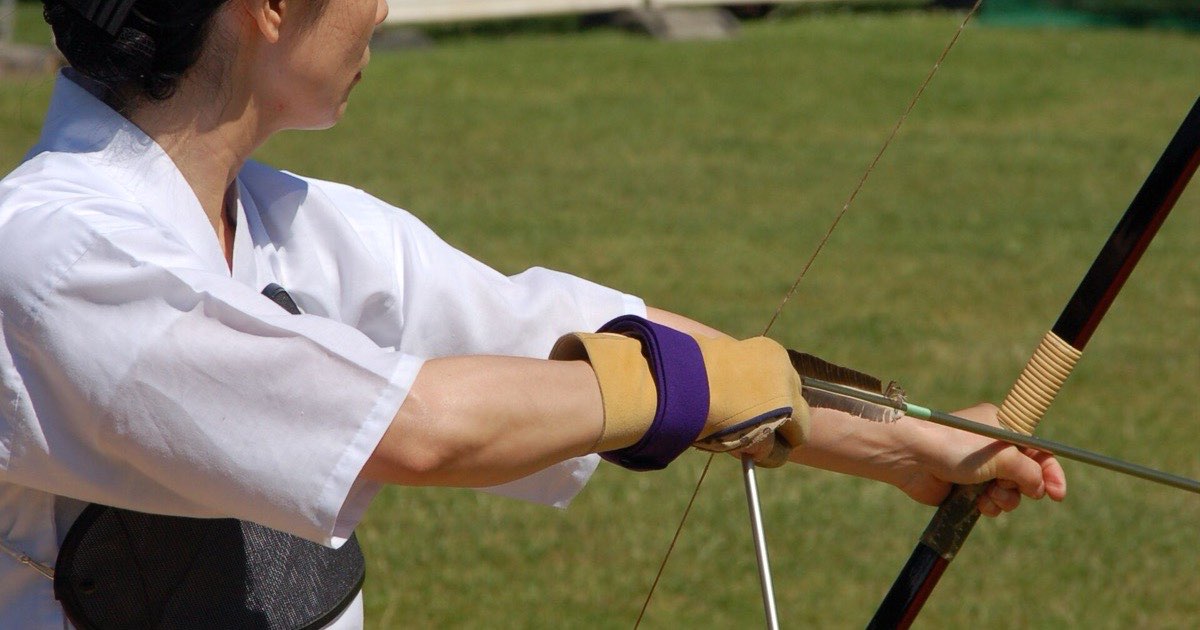
Ask any archer about the first time the string slapped their forearm and you will usually get a wince. Archery is a safe sport, but the bowstring moves fast and it does not care whether it hits the arrow, your fingers or your arm. Three simple pieces of kit prevent most of the pain: an arm guard for the bow arm, and a finger tab or shooting glove for the drawing hand. Compound archers usually swap the tab or glove for a release aid.
This guide explains what each protects, why string slap happens in the first place, how to choose between a tab, a glove and a release, how they should fit, and the mistakes beginners make.
The quick answer
| Item | Protects | Who needs it |
|---|---|---|
| Arm guard | Inside of the bow-arm forearm, plus loose sleeves | Beginners, recurve and traditional archers, anyone wearing loose clothing |
| Finger tab | Drawing fingers | Recurve, barebow and traditional archers who want a clean release |
| Shooting glove | Drawing fingers | Traditional archers and beginners who like the feel |
| Release aid | Fingers (by not touching the string) | Most compound archers |
| Chest guard | Chest and clothing | Archers whose string catches clothing or the chest |
Arm guards
What they do
When you release, the string travels forward past your bow arm. If the inside of your forearm is in its path, the string hits it. Archery 360 explains that an arm guard "protects your forearm from the bowstring, and prevents shirt or coat sleeves from catching the string." A string that catches a sleeve does not just hurt; it robs the arrow of energy and sends it off line.
Why string slap happens
An arm guard treats the symptom. If the string hits your arm often, look at your form:
- Grip. Grabbing the handle with the whole palm, or rotating the bow hand, often puts the forearm in the string's path. A relaxed hand with the pressure on the base of the thumb helps.
- Elbow rotation. Rotating the bow-arm elbow slightly outward, so the crease points more vertically, moves the forearm away from the string.
- Bow arm too straight or locked. A hyperextended elbow brings the forearm into the string path.
- Draw weight too high. Struggling with a heavy bow distorts the whole shot.
Our archery form guide explains grip and bow-arm position in detail.
Types
- Short arm guards cover the inner forearm; they suit most target archers.
- Long arm guards reach past the elbow; useful for beginners and archers with hyperextending elbows.
- Materials: leather, plastic or mesh. Mesh is cooler in summer; leather is traditional and durable.
Finger tabs
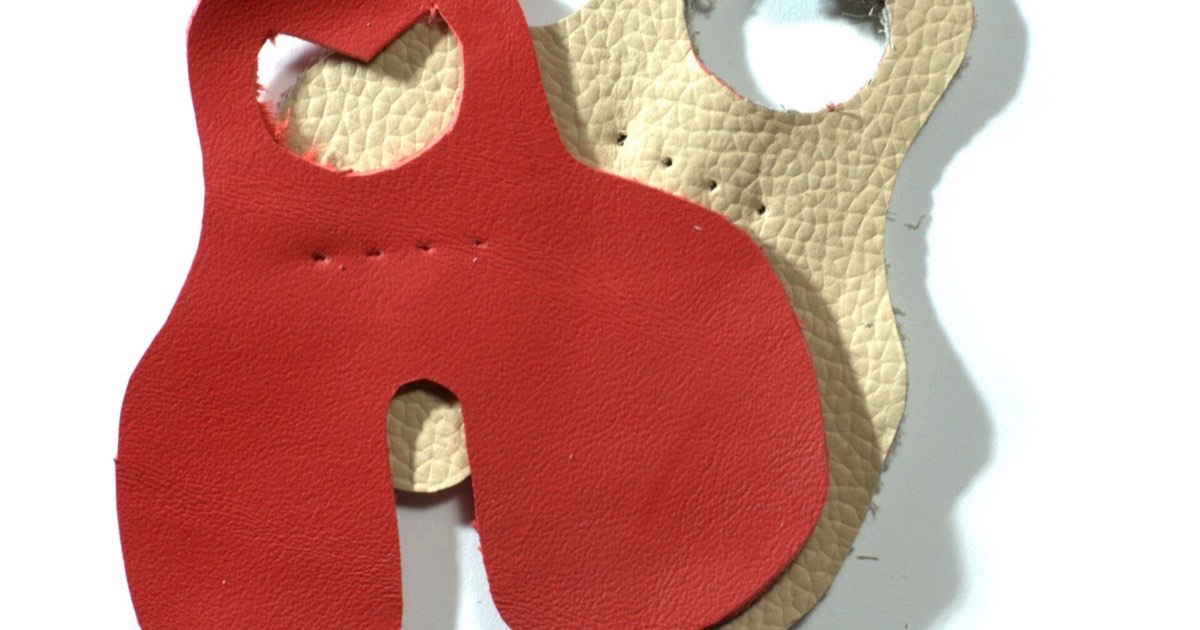
A finger tab is a flat piece of leather or synthetic material between your fingers and the string. Bearpaw describes it as a "lappet" with a hole for the middle finger and, often, a finger separator between the index and middle fingers.
Why archers choose tabs
- A clean release. Bearpaw notes that tabs give a "clean release when shooting." The smooth face lets the string roll off evenly.
- Consistency. The string sits in the same place on the tab every shot.
- Cost and convenience. Tabs are usually cheaper than gloves and quick to put on and take off.
- Barebow string walking. World Archery allows barebow archers to string-walk "with nothing more than a simple scale on their tab," so many barebow tabs carry distance markings. See our barebow guide.
Drawbacks
- Small and easy to lose, as Bearpaw points out.
- Archers who shoot "three under" (all three fingers below the arrow) need a tab without a finger separator.
- Takes a little practice to grip consistently.
Sizing a tab
A tab should cover your drawing fingers fully without extending far beyond the fingertips. Too large and it can catch the string; too small and your fingertips will feel the string. Many tabs are sold in sizes, and many archers trim the edges slightly for a perfect fit.
How to put on and use a tab
- Slide your middle finger through the finger hole so the tab sits on the palm side of your hand.
- Position the finger separator, if there is one, between your index and middle fingers. The arrow nock sits in the gap.
- Hook the string in the first joint, or just in front of it, of your index, middle and ring fingers, with the tab face between your skin and the string.
- Keep the back of your hand relaxed. Hold the string with the fingers, not the wrist.
- Release by relaxing the fingers, letting the string push them out of the way, rather than flicking them open.
If your tab has a platform, it should touch the same spot under your jaw every shot.
Shooting gloves
A shooting glove covers the three drawing fingers (index, middle and ring) with reinforced finger stalls, attached to a strap around the wrist.
Why archers choose gloves
- Protection and warmth. Bearpaw notes "your fingers are well protected and also warmed in colder seasons."
- Flexibility. Gloves work for both split-finger ("Mediterranean") and three-under draws.
- Hard to lose and always in position.
- Popular with traditional archers and bowhunters.
Drawbacks
- Usually more expensive than a basic tab.
- The finger stalls can wear unevenly, which changes the release over time.
- Some target archers find a tab gives a more consistent release at high scores.
Bearpaw recommends trying both "at least once," and says both should "fit well on the skin, do not slip and feel good."
Fitting an arm guard
- Position: on the inside of the bow-arm forearm, roughly between the wrist and the elbow, where the string would strike.
- Snug, not tight: it should not slide around or rotate when you draw, but it should not cut off circulation or press on the wrist.
- Over or under the sleeve: wear it over long sleeves to hold the fabric flat and out of the string's path.
- Straps or clips: make sure buckles and loose straps sit on the outside of the arm, away from the string.
Cold weather and hunting
Hunting and cold-weather shooting change what works. Bulky jackets catch strings easily, so many bowhunters wear a light arm guard, or one sized to fit over outer layers, to hold sleeves down. Gloves keep drawing fingers warm on cold mornings, while tab shooters often keep a hand-warmer pocket and slip the tab on just before the shot. Compound hunters who use a wrist-strap release usually keep it on throughout the hunt so it is ready when a deer appears. Practise wearing your actual hunting clothes and protection before the season, so nothing catches when it matters.
Release aids for compound bows
Most compound archers use a mechanical release aid that clips to a D-loop on the string. Missouri's conservation department explains that "a shooting release helps ensure that the string is released properly and consistently." The main types:
- Index-finger (wrist-strap) releases, fired with the index finger; popular with hunters because the release stays on the wrist.
- Thumb-button releases, held in the hand and fired with the thumb; popular for target and increasingly for hunting.
- Hinge (back-tension) releases, which fire through rotation rather than a trigger; used mainly for target archery and training.
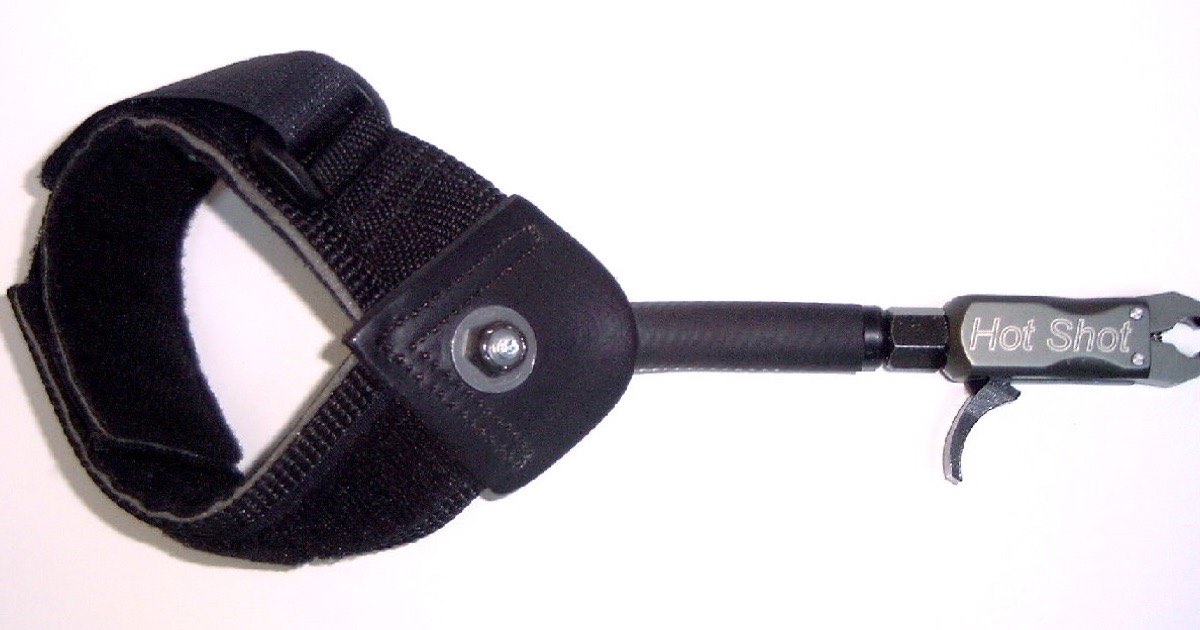
Our TruFire Edge release review covers a popular wrist-strap model, and our peep and kisser guide explains the D-loop and anchor setup.
Tab vs glove vs release: which should you choose?
| If you... | Choose |
|---|---|
| Shoot Olympic recurve or plan to compete | A target tab |
| Shoot barebow and want to string walk | A tab with a scale |
| Shoot traditional bows or bowhunt with a recurve | A glove or a tab |
| Shoot a compound with a sight | A release aid |
| Are a complete beginner on club equipment | Whatever the club provides; try both tab and glove |
Chest guards
A chest guard is a mesh or fabric panel worn over the chest on the bow-arm side. It keeps clothing flat so the string cannot catch it, and protects the chest for archers whose string passes close to the body. Many women archers and anyone shooting in loose or bulky clothing find one useful.
Common mistakes
- Wearing the arm guard on the wrong arm. It goes on the bow arm, the one holding the bow, on the inside of the forearm.
- Relying on the arm guard to fix bad form. Frequent slaps mean fix the grip or elbow.
- A loose tab or glove. If it slides, your release changes from shot to shot.
- Changing tab position. Put the tab on the same way every time, with the same finger placement.
- Worn-out gear. Grooves in a tab face or holes in glove stalls change the release; replace them.
- Loose clothing. Baggy sleeves and hoodies catch strings. Archery 360 advises avoiding baggy clothing.
Care and maintenance
- Leather tabs and gloves: keep them dry, avoid heat, and condition leather occasionally if the maker suggests it.
- Replace tab faces when they groove or harden.
- Clean mesh arm guards and chest guards like sportswear.
- Releases: keep them clean and dry, check the jaw and trigger, and replace worn straps.
Children and beginners
Children should always wear an arm guard and finger protection; their form is still developing and slaps are more likely. Club equipment usually includes both. Our guide to choosing a bow for a child covers safety gear for young archers.
Finger tab
Advantages
- Clean, consistent release
- Cheap and quick to put on
- Can carry a string-walking scale for barebow
Trade-offs
- Easy to lose
- Takes practice to hold consistently
- Separate version needed for three-under shooting
Shooting glove
Advantages
- Good protection and warmth
- Works with split-finger and three-under draws
- Always in position, hard to lose
Trade-offs
- Usually costs more than a tab
- Stalls wear unevenly over time
- Some find the release less consistent than a tab
You can browse arm guards, finger tabs or shooting gloves on Amazon. Check hand size and handedness before buying.
Frequently asked questions
Is an arm guard necessary for archery?
It is strongly recommended, especially for beginners. It protects your forearm from the string and keeps sleeves from catching it.
Which arm do you wear an arm guard on?
Your bow arm, the arm holding the bow, on the inside of the forearm.
Should I use a finger tab or a glove?
Tabs suit target and barebow archers who want a clean, consistent release; gloves suit traditional archers and beginners who like warmth and simplicity. Try both.
Do compound archers use finger tabs?
Most use a mechanical release aid instead, although some compounds can be shot with fingers.
Why does the string keep hitting my arm?
Usually grip or elbow position. Relax your grip, put pressure on the base of the thumb, and rotate the elbow slightly outward.
Related articles
 Guides
Archery Equipment List: What Beginners Really Need
A beginner archery equipment list by discipline: what you need for recurve, barebow, compound, traditional and bowhunting, what can wait, and what to skip.
October 10, 2026 · 11 min read
 Training
Archery Form: 11 Steps to a Consistent Shot
Archery form step by step: stance, hook and grip, set-up, draw, anchor, transfer, aiming, release and follow-through, plus common faults and fixes.
Updated March 21, 2025 · 10 min read
 Reviews
TruFire Edge Buckle Foldback Review: A Sensible First Release Aid
Research-based TruFire Edge Buckle Foldback review: caliper jaws, adjustable trigger travel and length, 360-degree head rotation, 4.8 oz, and who it suits.
July 8, 2026 · 4 min read