
Longbow Shooting Form: Cant, Anchor and Release
Longbow form explained: canting the bow, split-finger vs three-under hooks, traditional anchors, instinctive and gap aiming, and release and follow-through.
By Archery Insider Editorial Team
· · 5 min read
In this article
Good longbow form comes down to a few repeatable habits: a consistent bow-arm position (upright or slightly canted), a finger hook on the string, one solid anchor, an aiming method that suits you and a relaxed release. Most details are coaching choices, not rules, so pick a style and repeat it on every shot.
Canting the bow
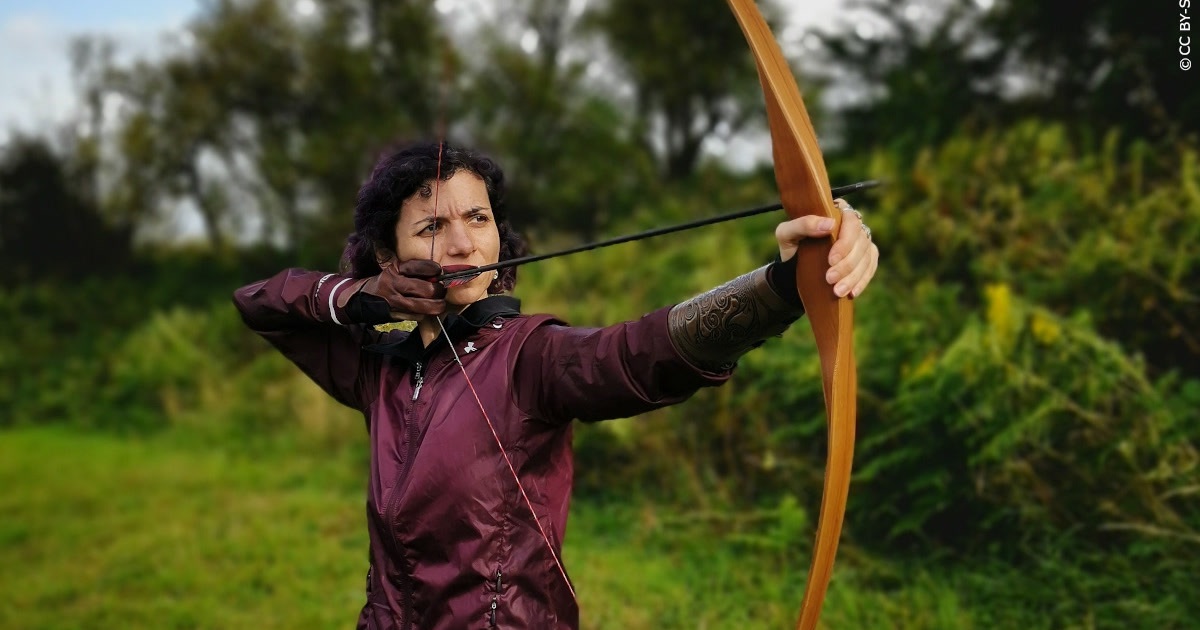
Canting means tilting the bow away from vertical as you draw and aim. Wikipedia's article on instinctive shooting lists "tilting the bow for a better view or holding it straight" among the "subjective factors" each archer settles for themselves, alongside stance and breathing.
No maker or coaching body we read publishes a correct angle. What matters is consistency: if you cant, cant the same amount every time. Our archery form guide covers the stance and bow-arm basics that come first.
Split finger or three under
ImproveYourArchery's Tim van Rooijen describes the two common hooks: split finger, or Mediterranean, where you "place one finger above the arrow and two below it", and three under, where you "place all your fingers below the arrow."
| Split finger (Mediterranean) | Three under | |
|---|---|---|
| Finger position | One above the arrow, two below | All three below |
| Main advantage | More even pressure on the string | Arrow sits closer to your eye |
| Typical anchor | Corner of the mouth, or under the chin with sights | Cheekbone or corner of the mouth |
| Suits | Sighted shooting; required in some longbow classes | Aiming along the arrow without a sight |
Archery 360 notes that "traditional archers shoot either a split-finger or a three-under tab." Your choice can matter to the bowyer, too: Black Widow asks three-under shooters to say so when ordering, because it will "tiller the limbs accordingly."

Check competition rules before you settle on one. The National Field Archery Society, a UK body, says of its longbow class: "The 'Mediterranean' loose only is permitted. No form of release aid is permitted." ImproveYourArchery uses "Mediterranean" for split finger, so ask NFAS before entering with a three-under hook. These are UK rules, not US NFAA rules. Our longbow vs recurve comparison summarises World Archery's longbow class.
Anchors
Your anchor is the spot on your face where the draw hand stops. ImproveYourArchery calls the corner of the mouth "the most common anchor point in traditional archery because it's so easy to feel," and lists the cheekbone as another option. If you aim along the arrow, van Rooijen says you want it "as close to your eye as possible", which is why traditional anchors sit high.
Pick one anchor and keep it. NFAS requires that "one anchor point must be maintained throughout the shoot" in its longbow class, which rules out changing your anchor for distance.
Instinctive or gap aiming
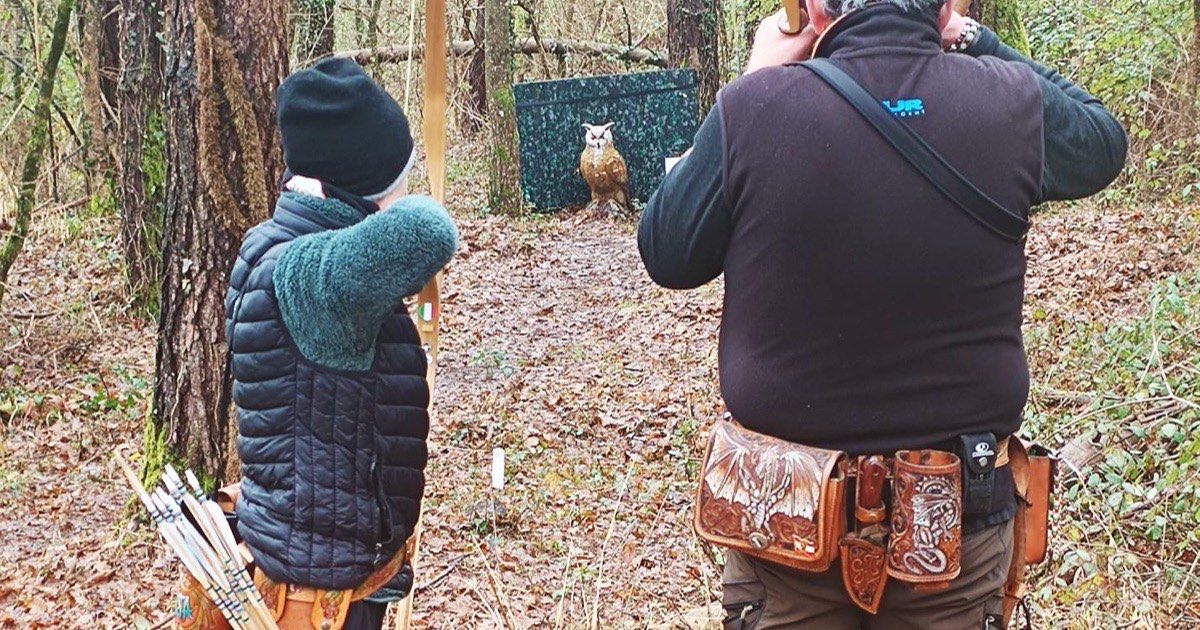
Archery 360 sums up instinctive aiming simply: "You look at the spot you want to hit, draw your bow and shoot. It's like throwing a ball." Gap shooting uses the arrow point as a reference: "Position the tip on, above or below the target, depending on the distance." ImproveYourArchery adds that as distance increases, "you decrease the gap between the point of the arrow and the center of the target."
Neither suits everyone. Our guide on how to aim a bow compares both methods with sight aiming.
Release and follow-through
The release should let the string go without disturbing the bow. Van Rooijen says your draw hand "will shoot backward since all the tension is suddenly removed," and adds: "Don't try to stop this motion." He also warns against gripping the bow tightly, which can "cause any last-minute torque to the bow" and spoil the shot. Stay steady until the arrow lands.
You can browse finger tabs for recurves and longbows on Amazon. Match the tab to your hook: Black Widow, for one, sells separate split-finger and three-under tabs.
Frequently asked questions
Should you cant a longbow?
It's up to you. Wikipedia's instinctive shooting article treats tilting the bow or holding it straight as a subjective choice, and we found no published correct angle. If you cant, keep the tilt identical on every shot, and ask a coach to check it if your groups open up.
Is three under or split finger better for longbow?
Neither is better overall. Three under puts the arrow closer to your eye, which suits aiming along the arrow, while split finger spreads the load more evenly. Some longbow classes, such as the UK's NFAS, allow only the Mediterranean loose, so check your rules before choosing.
Where should I anchor when shooting a longbow?
ImproveYourArchery names the corner of the mouth as the most common traditional anchor, with the cheekbone another option. A high anchor brings the arrow close to your aiming eye. Choose one spot you can feel clearly and use it for every shot.
Related articles
 Training
Archery Form: 11 Steps to a Consistent Shot
Archery form step by step: stance, hook and grip, set-up, draw, anchor, transfer, aiming, release and follow-through, plus common faults and fixes.
Updated March 21, 2025 · 10 min read
 Training
How to Aim a Bow: Sights, Gap and Instinctive
How to aim a bow: eye dominance, anchor points, sights, gap shooting, string walking, face walking and instinctive aiming, with practice drills for each.
October 7, 2026 · 11 min read
 Comparisons
Longbow vs Recurve Bow: Differences for Traditional Archers
Longbow vs recurve compared: limb shape, draw feel, hand shock, speed, length, accessories, competition rules, hunting and which traditional bow suits you.
Updated September 30, 2026 · 6 min read