
How to Shoot a Bow for Hunting: Practice That Transfers
How to shoot a bow for hunting: cold first shots, elevated and kneeling practice, broadheads, 3D targets and an honest range limit, plus a season-long plan.
By Archery Insider Editorial Team
· 8 min read
In this article
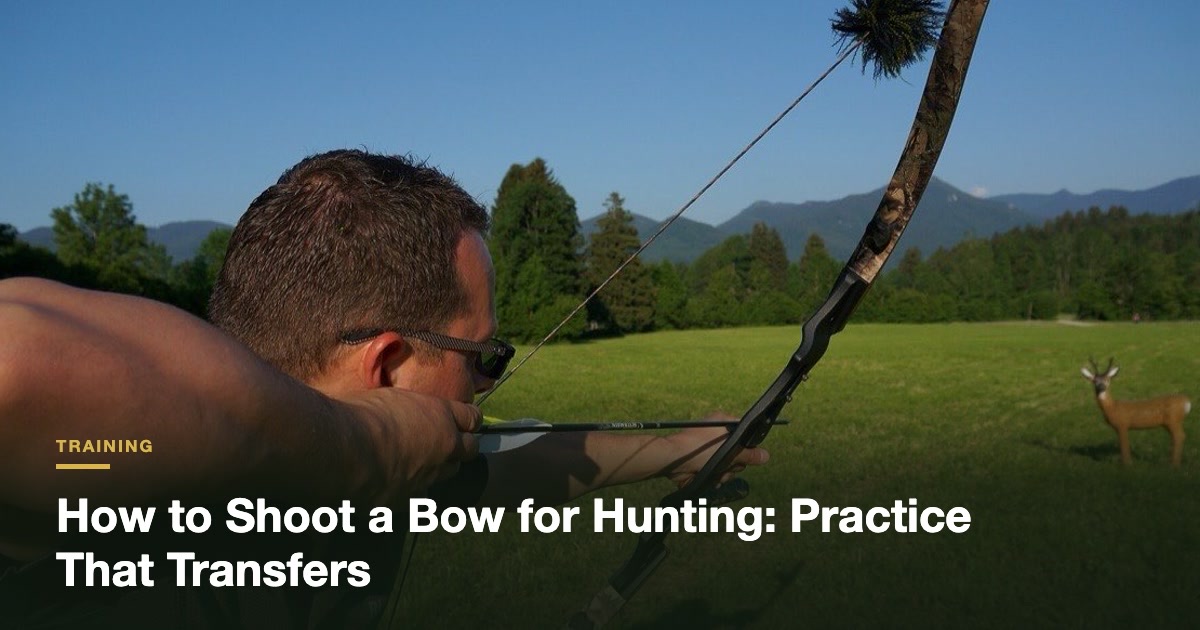
Learning how to shoot a bow for hunting starts with the same form you'd use on a target: a relaxed grip, a repeatable anchor and a clean release. What changes is the practice. A deer gives you one arrow, often from a tree stand or a kneeling position, at an angle and distance you didn't choose, with cold muscles and a racing pulse. Practice for bow hunting should rehearse exactly that, not just tight groups at 20 yards on a flat range.
How hunting practice differs from target practice
Target archery rewards volume: dozens of arrows, the same distance, a flat stance, a printed aim point. Bowhunting flips every one of those.
| Target practice | Hunting practice | |
|---|---|---|
| Arrows per end | 3 to 6, with feedback between each | One, then walk away |
| Body position | Standing on level ground | Seated, kneeling, twisted, elevated |
| Distance | Known and marked | Estimated, or ranged in a few seconds |
| Aim point | A printed centre | A patch of hair you pick yourself |
| Arrow tip | Field point | Broadhead, which may fly differently |
Form built on a flat range is still the foundation; our archery practice plan covers those drills. What follows sits on top.
One-arrow cold shots
The most useful hunting drill costs you one arrow a day. Walk outside, draw once, shoot once, and write down where it landed. No warm-up, no second try. That's what a hunt gives you.
Cold shots expose what a 60-arrow session hides: a pin that's off at 30 yards, a rotated peep, a creeping release, or a shoulder that won't pull your draw weight on a chilly morning.
- Pick a random distance inside the range you expect to shoot at deer, and range it after the shot to see how close your guess was.
- Shoot in the clothes you'll hunt in, including gloves and a face mask once the weather turns.
- Vary the position: standing one day, kneeling the next, seated on a stool the day after.
- Record the result: distance, position, and where the arrow hit relative to your spot.
- Count only the first arrow, whatever you shoot afterwards.
After a few weeks that log, not your best group, should set your maximum range.
Elevated and kneeling practice
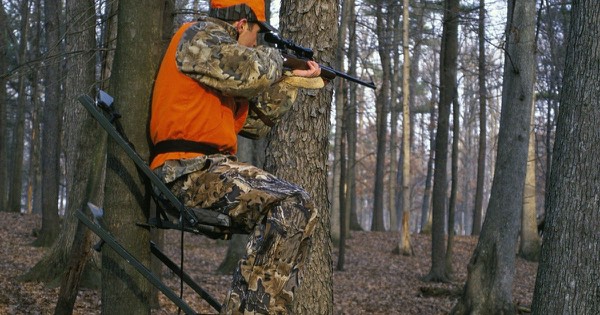
Deer are rarely shot from a flat, level stance. The Pennsylvania Game Commission's pre-season advice is plain: "Bowhunters should also practice with their equipment before the season starts, shooting from the ground and/or an elevated stand, whichever mimics how they'll hunt."
Shooting from height
Shooting downward changes two things. The distance that matters for your sight is the horizontal distance, not the line of sight, so steep close shots hit higher than you expect. And form tends to collapse as archers lean out over the rail and drop the bow arm, which breaks the anchor. Bend at the waist so your upper body keeps its shape and the whole frame tilts together.
Set up a stand at the height you hunt, with targets at 10, 20 and 30 yards, including one almost beneath you. Practise standing, seated, and turned to shoot behind the tree on your off side. Every session needs a harness and a lifeline; our tree stand safety guide covers the system.
Kneeling and sitting
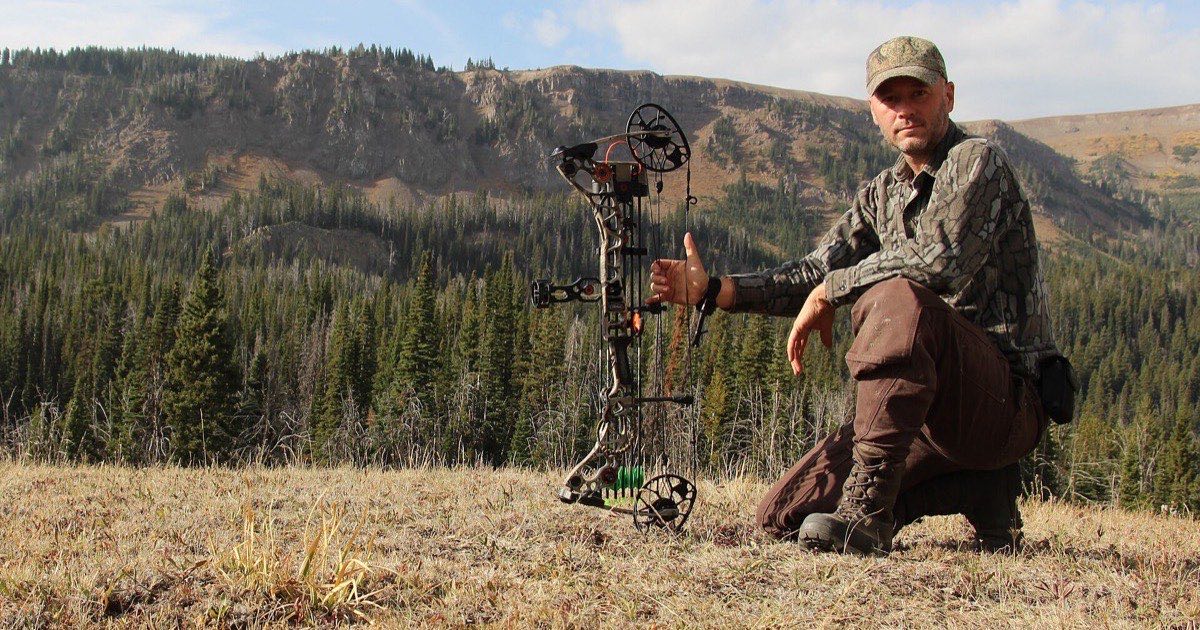
Ground and spot-and-stalk hunters shoot from a knee or a seat more often than standing. Kneeling shortens your draw if your torso slumps, and a bow quiver or long stabiliser can catch the ground on a canted bow. Practise with one knee down, with both, and from a low blind chair, checking that the lower limb clears grass and the blind window.
Broadhead practice
Field points and broadheads weigh the same but don't always fly the same: a fixed-blade head's blades act like small fletching at the front of the arrow, so any tuning or form fault steers it more.
- Shoot every hunting arrow with its broadhead into a broadhead-rated target from 20 yards, and compare the group with your field-point group.
- If they land apart, tune the bow (rest, nocking point or spine) rather than moving the sight to chase the broadheads.
- Spin-test each arrow on its tip; a wobble means a bent insert or a head that isn't seated square.
- Re-sharpen or replace the blades you practised with, and keep them in a covered quiver. The Game Commission's advice is to "always carry broadhead-tipped arrows in a protective quiver, especially when moving."
Practice heads that match a broadhead's weight and profile save blades but don't replace a session with the real thing; our practice broadheads guide explains the trade-off.
3D targets and shot angles
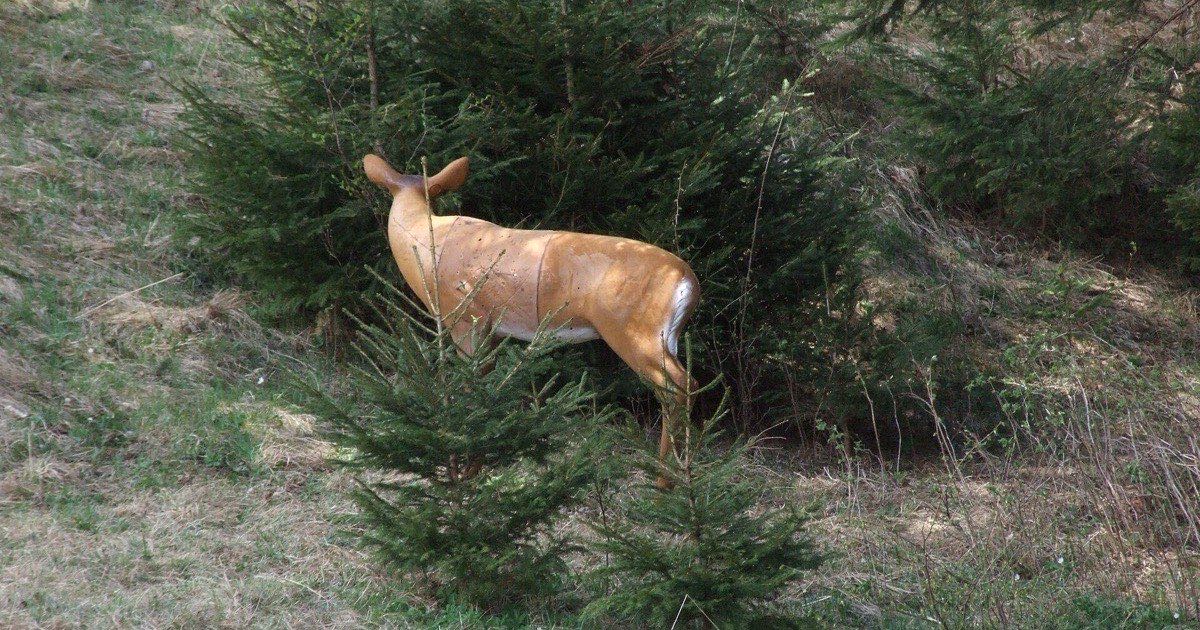
Foam animals are the closest thing to a deer you can shoot at in July. Archery 360 notes that "most 3D targets have three main scoring areas roughly centered on an animal's vital organs. That's another reason 3D archery is great bowhunting practice."
Three things a 3D deer teaches that a bullseye can't:
- Picking your own spot. There's no printed centre; you find the crease behind the shoulder and aim at a tuft of hair. Archery 360's tip: "binoculars help you pinpoint the rings' locations, so you can pick an aiming spot".
- Angles. Turn the target quartering away, quartering toward you and facing you, then decide which you'd shoot. Broadside and quartering-away shots reach both lungs without heavy bone in the way.
- Unknown distance. "Judging distances accurately is an acquired skill," as the same primer puts it. Guess, shoot, then range it.
Alaska's bowhunter-education course ends with a proficiency test: "five out of the eight shots in the vitals (heart, lung, liver)" at "10-30 yards". Set a 3D deer at random distances in that band, shoot eight cold arrows over eight days, and count your hits.
Range discipline: find your personal maximum
There's no universal "ethical range" in yards, and state agencies don't give one. Pennsylvania asks hunters to take only "broadside or quartering-away shots at deer within their personal maximum effective shooting range", and the reason it gives is "to ensure quick, clean kills". The word that matters is personal.
Your maximum is the longest distance at which your cold first-arrow log shows you hitting a deer-sized vital zone almost every time, from the position you hunt in, with broadheads, in hunting clothes. For many hunters that's shorter than their summer-evening groups suggest, and our effective bow range guide explains why live deer shrink it further: reaction time, string sound, and errors that grow with distance.
Range a stump, a sapling and a trail crossing from the stand before a deer arrives, and decide now which are in and which are out. Decide your "no" shots at the kitchen table, not at full draw.
A season-long practice plan
Practice for bow hunting isn't a two-week cram in September. Adjust the arrow counts to your draw weight and your shoulder.
| Period | Focus | Typical week |
|---|---|---|
| Early summer | Form on a flat range; build draw weight gradually | 3 sessions of 40 to 60 arrows, field points |
| Mid summer | Add 3D targets and distance judging; start daily cold shots | 2 range sessions, 1 3D session, a cold shot daily |
| Late summer | Elevated and kneeling positions; first broadhead check | 2 sessions from a stand or a knee, 1 broadhead session, a cold shot daily |
| Last 3 weeks | Everything in hunting clothes; final broadhead check; proficiency self-test | 3 short sessions, a cold shot daily in full kit |
| In season | Keep the cold shot; protect your shoulder | 1 cold arrow most days, 1 short session a week, a broadhead check after any fall or bump |
In season, resist long sessions: 80 arrows the night before a hunt leaves you sore and shaky at dawn.
For practice gear, you can browse broadhead-rated targets or 3D deer targets on Amazon. Check that a target is rated for broadheads first.
Frequently asked questions
How is shooting a bow for hunting different from target shooting?
The form is the same; the practice isn't. Hunting means one unrehearsed arrow, often from a tree stand or a knee, at an angle and distance you didn't pick. Practise cold shots, elevated and kneeling positions, broadheads and 3D targets so the shot at a deer is one you've already made.
How far should I practise for bow hunting?
Practise a little beyond the distance you plan to shoot deer, so hunting distances feel short, but set your limit from your cold first-arrow results, not your best groups. Agencies ask for shots inside your "personal maximum effective shooting range", and that number is yours to prove.
Do I need to practise with broadheads?
Yes. Broadheads can group away from field points because the blades steer the arrow, and the only way to know where your hunting arrows hit is to shoot them. Use a broadhead-rated target, tune rather than chase, and re-sharpen the blades afterwards.
Do I need a bowhunter education course?
It depends on the state. Alaska, for example, requires anyone born on or after 1 January 1986 to complete an approved bowhunter education course before hunting big game with archery equipment. Check your agency's rules, including minimum draw weight and broadhead requirements, before you buy a tag.
Related articles
 Training
Archery Practice Plan: 10 Drills and a Weekly Routine
A structured archery practice plan: arrows per session, warm-ups, 10 proven drills from blank bale to pressure games, weekly routines and a practice log.
March 20, 2025 · 7 min read
 Guides
How Far Can You Shoot a Deer With a Bow?
Effective bow range for deer: what bowhunter education says, why long shots wound more, arrow flight times, jumping the string, and how to find your limit.
October 7, 2026 · 9 min read
 Guides
Tree Stand Safety for Bowhunters
Tree stand safety for bowhunters: wear a full-body harness from the ground up, use a lifeline and haul line, inspect your stand and plan for a fall.
October 12, 2026 · 10 min read