
Scent Control for Bowhunting: What Actually Works
Scent control for bowhunting, evidence first: why wind beats any product, what research found on carbon suits and ozone, plus a cheap DIY routine.

By Archery Insider Editorial Team
· 8 min read
In this article
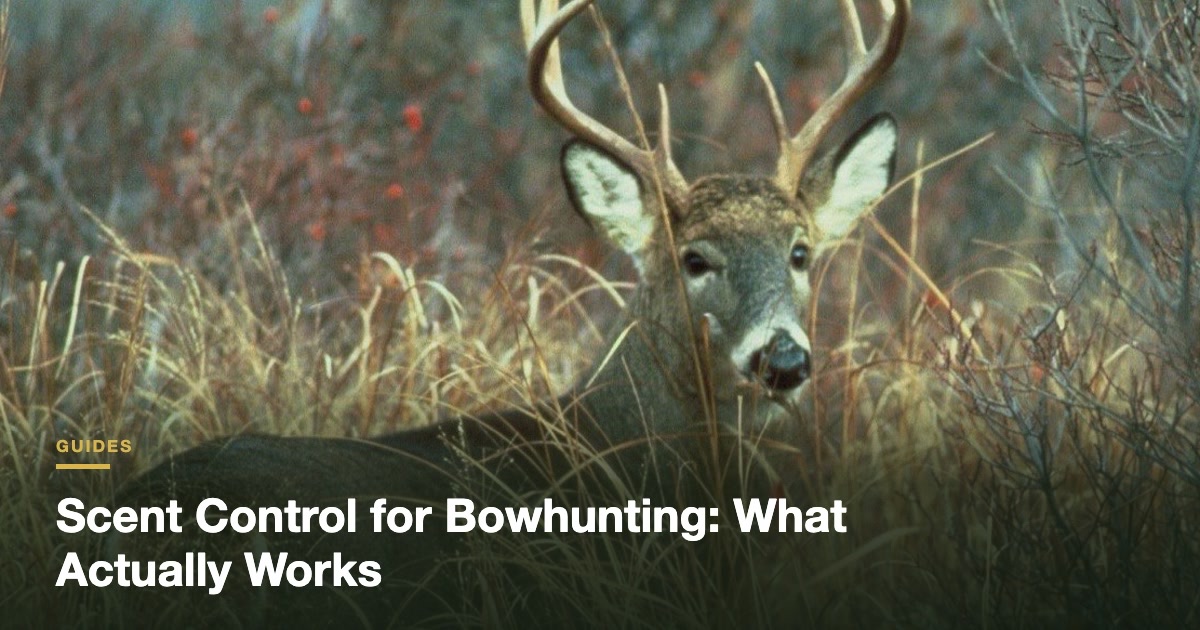
The best scent control for bowhunting is the wind. Everything else, from carbon suits to ozone units to a bottle of spray, is a bet against a nose that Penn State's deer researchers describe as having up to 297 million olfactory receptors, and the published evidence behind those products is thin. Hunt with the wind in your favour, keep your body and clothes as free of added smells as you practically can, and treat the rest as optional.
Wind first: why a deer's nose beats everything else
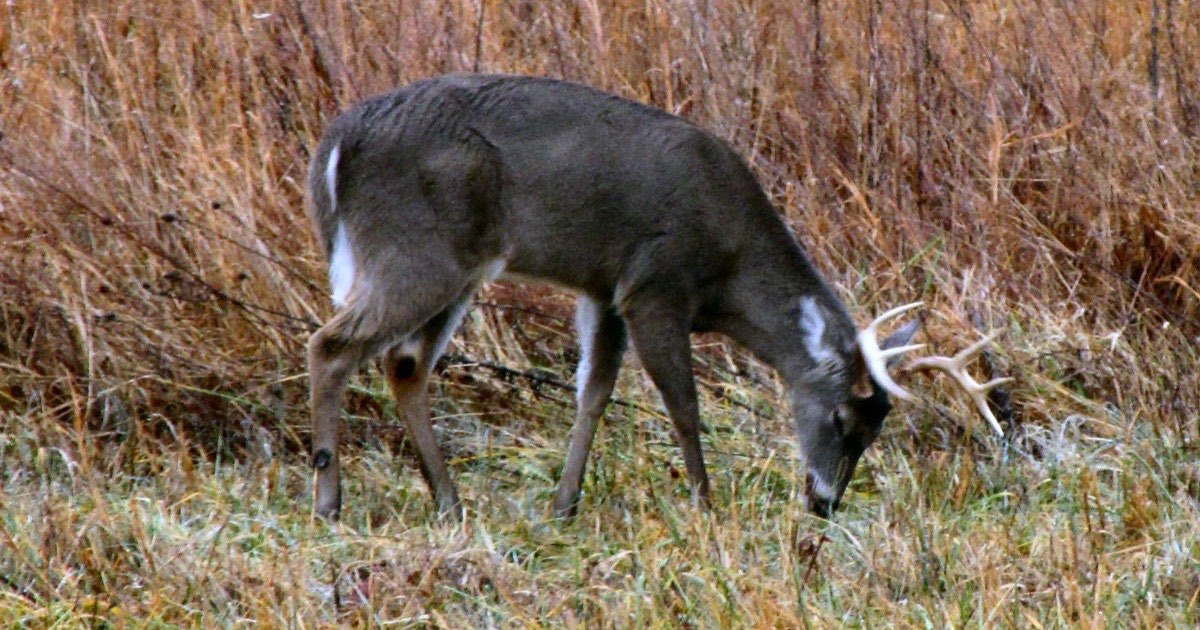
In a 2017 post on the Penn State Deer-Forest Study blog, wildlife biologist Duane Diefenbach describes "white-tailed deer whose nose has up to 297 million olfactory receptors". Dogs have about 220 million, he notes. His conclusion on scent products is blunt: "no amount of them will cover your scent from a deer".
Your body releases odour continuously. It drifts downwind as a plume, and a deer that walks into it reads it. The job of scent control for deer hunting isn't to become odourless, which isn't possible, but to keep deer out of the plume and to avoid adding smells (fuel, smoke, breakfast, detergent) that make it louder.
- Check the forecast, then check the real wind at the stand with unscented powder or a milkweed seed.
- Have a stand for each wind. Two or three sites covering different winds beat one favourite.
- Set up crosswind or downwind of where deer will appear, with your scent blowing into ground deer rarely use: open water, a road, a bare field.
- Watch for swirls in draws, creek bottoms and the lee of ridges. If your powder goes three directions in a minute, the deer will catch you from one of them.
- If the wind is wrong, don't hunt that stand. A stand deer haven't learned to avoid is worth more than anything in the scent aisle.
In hills, many hunters also plan around thermals, which tend to rise as the sun warms a slope in the morning and sink as it cools in the evening; confirm them with powder.
What research says about scent-control products
Marketing claims are easy to find; independent tests on deer are not.
| Product | What makers typically claim | What the research we read found | Our reading |
|---|---|---|---|
| Scent-adsorbing (carbon) clothing | Traps human odour | Penn State's summary of a controlled dog test: "no evidence" the suits reduced the dogs' ability to find a hidden human | Not shown to work on dogs; no deer test found |
| Ozone generators | Destroy odour molecules | EPA: ozone at safe levels "is not effective at removing many odor-causing chemicals"; body odour is masked, "not removed" | Unproven for hunting; health warning |
| Sprays and "99%" claims | Kill odour-causing bacteria | No independent deer test in anything we read; the percentages are the maker's own | Unverified |
| Unscented soap, detergent, sealed storage | Remove added odours | No deer trial either, but they remove the smells you added | Cheap and sensible |
The scent-suit study, and its limits
The study Penn State describes ran "42 trials where a human was hiding under 1 of 10 randomly-selected cardboard boxes for 10 minutes": "21 treatment experiments (human was wearing a scent-adsorbing suit) and 21 control experiments (human was wearing regular clothing)", with trained search dogs doing the finding. The result, in the blog's words: "The author could find no evidence that the scent-adsorbing suits reduced the ability of dogs to find the human". The suits didn't even slow the dogs down.
Two limits. The test animals were dogs, not deer, and it tested one product category. What it shows is that a scent-adsorbing suit failed against a nose with fewer receptors than a whitetail's. We found no study showing any scent product reduces detection by deer.
Ozone: the EPA's view
Ozone units are sold to run in truck cabs and closets. The EPA page we read is about indoor air cleaners, not hunting, but the chemistry is the same: "at concentrations that do not exceed public health standards, ozone has little potential to remove indoor air contaminants", and "body odor may be masked by the smell of ozone but is not removed by ozone".
The health line matters if you're tempted to run one in a closed blind or cab with you inside: "When inhaled, ozone can damage the lungs. Relatively low amounts can cause chest pain, coughing, shortness of breath and throat irritation." Use a unit on empty clothes in a space you're not sitting in, and air the clothes afterwards.
How to wash deer hunting clothes
Washing doesn't make you scent-free; your skin makes new odour every minute. What it does is strip the smells your clothes picked up since the last hunt: wood smoke, cooking, fuel, the dog and perfumed detergent.
- Run an empty hot cycle first if your machine normally sees scented detergent or softener, which leave residue.
- Wash in an unscented, dye-free detergent. Many hunters also avoid optical brighteners; whether deer notice them is unsettled, so treat that as a precaution.
- Skip fabric softener and dryer sheets. Both are mostly fragrance.
- Dry outdoors on a line, or in a dryer that hasn't seen a scented sheet.
- Seal the clothes in a lidded tote or dry bag, stored away from fuel and the mower. Wash hats, gloves and face masks too; they sit next to your two biggest odour sources.
Rubber boots pick up less odour than leather and fabric, and they shouldn't go to the petrol station on the way in.
A DIY scent control routine for hunting
None of this costs more than a bar of soap and a plastic tote.
The night before: shower with unscented soap and shampoo, skip scented deodorant and aftershave (unscented antiperspirant is fine), and pack hunting clothes, hat, gloves and face mask in the sealed tote, with rubber boots in a separate bag.
In the morning: eat and drink your coffee before you dress, then brush your teeth. Wear ordinary clothes to the truck and dress from the tote at the parking spot. Fuel up the day before, never on the way in. Walk in slowly and under-dressed, carrying the outer layer: sweat is the biggest fresh odour you'll make all day, and the late-season guide explains how to layer so you arrive dry.
At the stand or blind: hang your pack and outer layer on a hook rather than piling them where you've been sweating, and wear gloves so you don't leave scent on branches. A pop-up blind hides movement, not smell: air moves straight through the fabric, as our ground blind guide explains, so place a blind for the wind like any stand.
Access routes: the scent you leave behind
Every trail you walk gets a line of scent from your boots and hands, and deer that cross it later may turn around hours after you've settled in.
- Enter from the downwind side of where deer are bedded or feeding, so your trail and your plume both stay out of their path.
- Don't walk the deer's own trail to your stand. Use a creek bed, a field edge, a logging road or a route you've cleared yourself.
- Enter from the side deer are leaving. In the morning they move from food back to bedding; in the evening, the reverse.
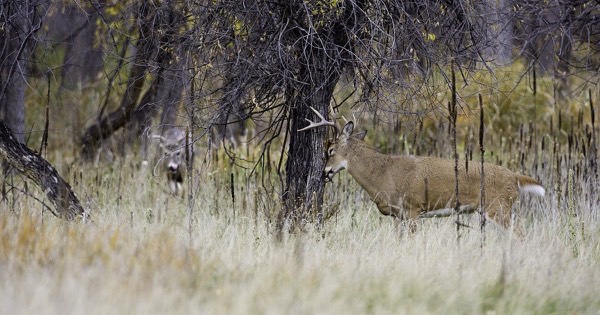
During the rut, bucks are careless but does are not, and one alert doe can empty a stand site. Our rut guide covers setting up on the downwind side of doe areas, where bucks scent-check for does, so you intercept the buck before he reaches your plume.
If you'd like to try a product anyway, you can browse scent-free laundry detergents or scent control sprays on Amazon. Treat any percentage on the label as a claim, not a test result.
Frequently asked questions
What is the best scent control for bow hunting?
The wind. Set stands so your scent blows away from where deer travel, check the real wind with powder, and skip a stand when it's wrong. Unscented washing and sealed storage remove the smells you add on top of your own. No product we've seen has been shown to beat a deer's nose.
Does scent control really work on deer?
Wind planning and hygiene work, in that they keep deer out of your scent stream. For products the evidence is weak: Penn State summarises a controlled test in which scent-adsorbing suits made no difference to trained dogs, and the EPA says ozone at safe levels masks body odour rather than removing it.
How do you wash deer hunting clothes?
Run an empty hot cycle to clear softener residue, wash in unscented, dye-free detergent, skip softener and dryer sheets, dry on a line or in a clean dryer, and seal the clothes in a tote away from fuel and cooking smells. Wash hats, gloves and face masks too.
Are ozone generators safe to use for scent control?
The EPA warns that inhaled ozone "can damage the lungs" and that low amounts can cause chest pain, coughing and shortness of breath. Run a unit only on empty clothes in a space you're not occupying, air the clothes afterwards, and never sit in a closed cab or blind with one running.
Related articles
 Guides
Bowhunting the Rut: Phases, Timing and Tactics
Bowhunting the whitetail rut: what triggers it, when it peaks by region, the rut phases, and stand placement, calling and all-day sit tactics for each phase.
October 12, 2026 · 10 min read
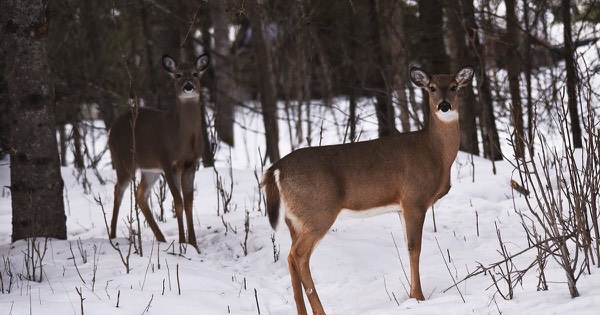 Guides
Late-Season Bowhunting: Hunting and Shooting in the Cold
Late-season bowhunting in cold weather: how deer behave, where to hunt, dressing for long sits, shooting a bow in heavy clothes, gear in the cold, and safety.
October 26, 2026 · 11 min read
 Guides
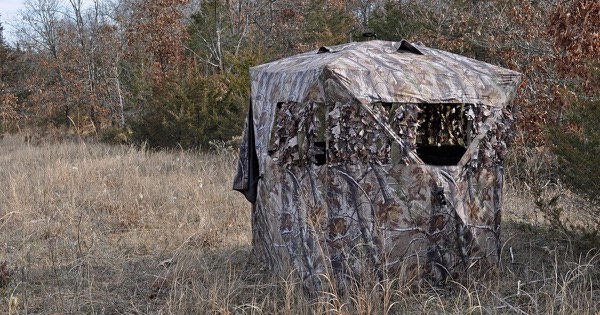
Bowhunting From a Ground Blind
Bowhunting from a ground blind: choosing and placing a blind, brushing it in, shooting seated, shooting through mesh, broadhead choice and common mistakes.
October 13, 2026 · 9 min read