
Javelina Bowhunting: Spot, Stalk and Shot Placement
Bow hunting javelina: why peccaries aren't pigs, how poor eyesight and a keen nose shape the stalk, how state seasons work and where to aim on a small animal.

By Archery Insider Editorial Team
· · 5 min read
In this article
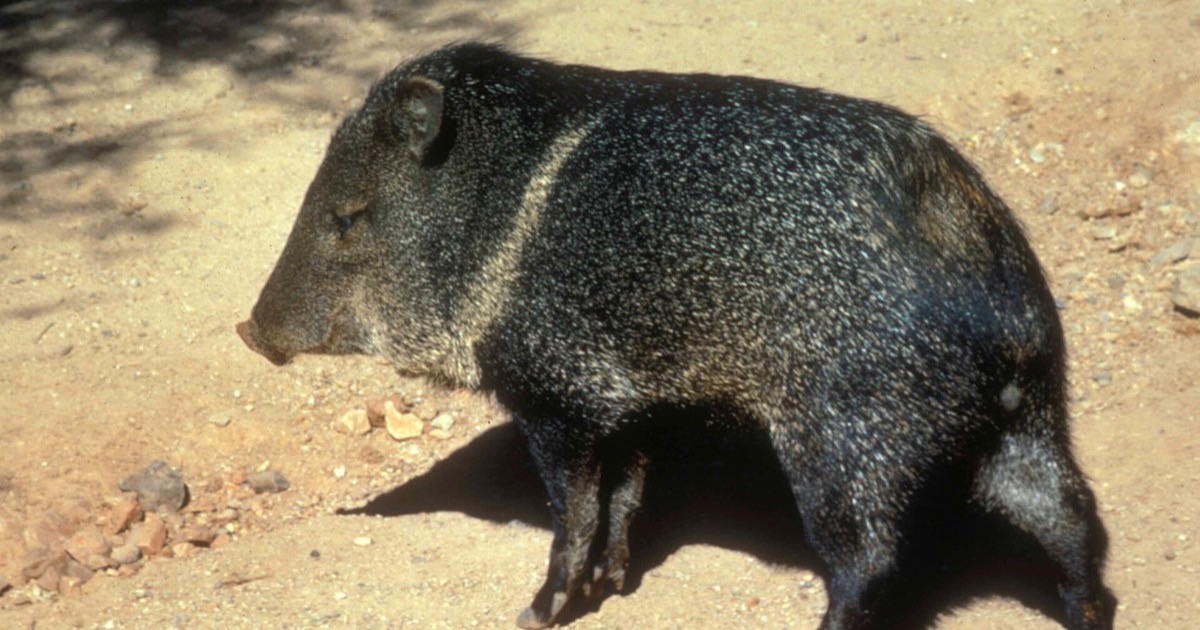
Bow hunting javelina is mostly a spot-and-stalk game in desert and brush country. Javelina see poorly but smell extremely well, so the hunt comes down to finding a herd, keeping the wind in your face and closing in slowly. An adult weighs only about 35–45 lb, so shot placement matters more than speed.
Javelina are not pigs
TPWD's booklet The Javelina in Texas explains that the collared peccary (Pecari tajacu) is "only distantly related to true swine", with a shared ancestor believed to date back some 40 million years. In the United States, the booklet says, javelina live only in Arizona, New Mexico and Texas.
They are also small. TPWD gives an average adult as 18 inches tall and 35 to 45 pounds, and notes they "are much smaller than they appear". Javelina live in herds that TPWD puts at 10 to 40 animals, averaging 20, and they use regular bedding sites in heavy cover, caves and under ledges.
TPWD's comparison with feral hogs:
| Feature | Javelina | Feral hog |
|---|---|---|
| Scent gland | On the back above the tail | Absent |
| Tail | Not visible | Long and hairy |
| Ears | Smaller and less visible | Longer, generally upright |
| Hind feet | Three toes | Four toes |
| Canine teeth | Grow straight up and down | Curve up and out, can grow very long |
Seasons and tags in Arizona, New Mexico and Texas
Each state runs javelina hunting differently, and details change yearly.
- Texas: TPWD's Outdoor Annual for 2026–27 lists a Northern zone season of 1 October 2026 to 28 February 2027 and a Southern zone season of 1 September 2026 to 31 August 2027, with a bag limit of "two per license year". Check your county's zone.
- Arizona: Arizona Game and Fish offers javelina hunts that include archery-only options. Tag types, units and dates change, so read the department's current hunt regulations.
- New Mexico: the New Mexico Department of Game and Fish sets its own javelina seasons and licence rules. Check its current big-game rules before you plan a hunt.
TPWD's booklet calls javelina well suited to "specialized hunts," including archery. Legal broadheads, draw weights and licences are set by each state, so confirm them with the agency.
Spot and stalk with the wind
TPWD says javelina "have difficulty recognizing objects over 100 yards away" and have a poor sense of hearing. That makes them forgiving to stalk, as long as they don't smell you, and a feeding herd has a lot of noses.
A practical approach:
- Glass from high ground. Scan slopes and brushy draws early and late, and check heavy cover and ledges at midday.
- Look for food. TPWD says prickly pear can make up to 80 percent of the diet at certain times of year.
- Plan the stalk around the wind, not the shortest route. Check it often, because wind can swirl around hills and draws.
- Move when heads are down and freeze when an animal looks up. Poor eyesight is not the same as no eyesight.
- Expect the herd to move. TPWD says herds in the Trans-Pecos may travel up to three miles a day from their beds, while South Texas herds generally stay within a mile.
Shot placement on a small animal
The heart-and-lung principle is the same as for deer, which our deer shot placement guide covers in detail. The difference is scale. Coarse hair hides a small body, so pick a spot tight behind the front leg and low in the chest, not in the middle of the hair.
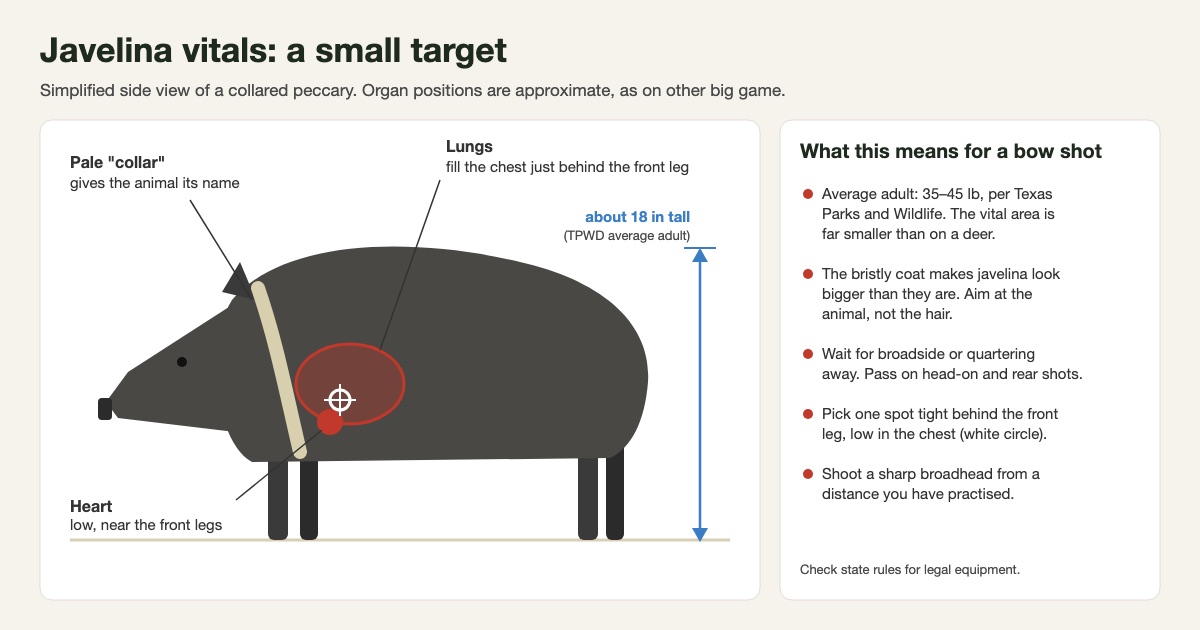
Wait for a broadside or quartering-away angle, and pass on head-on and going-away shots. Shoot a sharp broadhead you have practised with; our fixed-blade vs mechanical broadheads guide explains the trade-offs. New to bowhunting? Our guide to hunting deer with a bow covers the basics.
TPWD also warns that herding "presents possibilities for over-harvest", so spread your hunting pressure across herds.
If you need gear, you can browse javelina decoys on Amazon or look at fixed-blade broadheads. Treat these as examples to consider, and check your broadhead is legal where you hunt.
Frequently asked questions
Are javelina pigs?
No. Javelina are collared peccaries. TPWD says they are only distantly related to true swine and lists clear differences: a scent gland on the back, no visible tail, three toes on the hind feet and straight canine teeth. Feral hogs have a long tail, four hind toes and curving tusks.
Can you hunt javelina with a bow in Texas?
Yes. TPWD treats javelina as a game animal, and its 2026–27 rules list a Northern zone and a Southern zone season with a bag limit of two per licence year. Check the Outdoor Annual for your county, your licence and any equipment rules before you go out.
Is collared peccary hunting the same as javelina hunting?
Yes. Collared peccary is the animal's proper common name, and javelina is the name most hunters in the Southwest use. TPWD notes it has also been called the Mexico musk hog. Whatever the name, it is the same species, Pecari tajacu.
Related articles
 Guides
Where to Shoot a Deer With a Bow: Shot Placement
Bow shot placement for deer: where the heart and lungs sit, how to aim broadside, quartering away and from a tree stand, which shots to pass on, and why.
October 6, 2026 · 10 min read
 Guides
Hog Hunting With a Bow: Shot Placement and Gear
Hog hunting with a bow: where hog vitals sit, the shoulder shield, best shot angles, broadheads and draw weight, tactics, tracking and safe field dressing.
October 17, 2026 · 10 min read
 Comparisons
Fixed-Blade vs Mechanical Broadheads: Pros, Cons and Rules
Fixed-blade vs mechanical broadheads compared: flight, tuning, cutting diameter, energy needs, durability, hybrid designs, regulations and which suits your bow.
Updated October 9, 2026 · 6 min read