
Bowfishing for Gar: Gear, Shots and Rules
Bowfishing for gar: how to tell longnose from alligator gar, which points get through their scales, Texas's alligator gar limit, and handling their teeth.

By Archery Insider Editorial Team
· · 5 min read
In this article
Bowfishing for gar means shooting a toothy, armour-scaled fish that often basks near the surface. A sharp gar point, strong line and a low aim do most of the work, but the rules matter just as much: alligator gar are regulated in Texas, where the bag limit is one per day. Identify the species before you draw.
Gar species and the rules
TPWD says gars stand out by their "long, slender, cylindrical bodies, long snouts, and diamond-shaped interlocking (ganoid) scales." Telling one gar from another matters more, because the rules differ.
| Longnose gar | Alligator gar | |
|---|---|---|
| Snout | Long and narrow; its least width goes "15 to 20 times into its length" (MDC) | Broad; "spatula" means spoon (TPWD) |
| Teeth | Large teeth in single rows on each jaw (MDC) | Two rows of large teeth on each side of the upper jaw (TPWD) |
| Size | Commonly to 3 ft and 5–6 lb; Missouri's largest about 60 in and 30 lb (MDC) | Up to 8 ft and more than 300 lb (TPWD) |
| Texas rule | Nongame fish, legal to bowfish | One per day; no harvest on parts of Lake Texoma in May |
TPWD's bowfishing page says bows "are legal for taking non-game fishes such as gar," and adds: "For alligator gar, there is a limit of one (1) per day." Bowfishing is closed on community fishing lakes and state park property, and you need a fishing licence.
In Missouri, the Department of Conservation (MDC) lists gar among the nongame fish open to bowfishing. Its pages we read don't break the rules down by gar species, so check its fishing regulations summary. Other states set their own gar rules; check your agency before you shoot an alligator gar anywhere.
Gar points and line
MDC describes gar as "covered with hard, diamond-shaped scales," and makers sell points for them. Muzzy's replacement tips come in a six-sided carp tip "designed for all the soft-fleshed fish" and a three-sided gar tip "designed for those harder scaled fish."
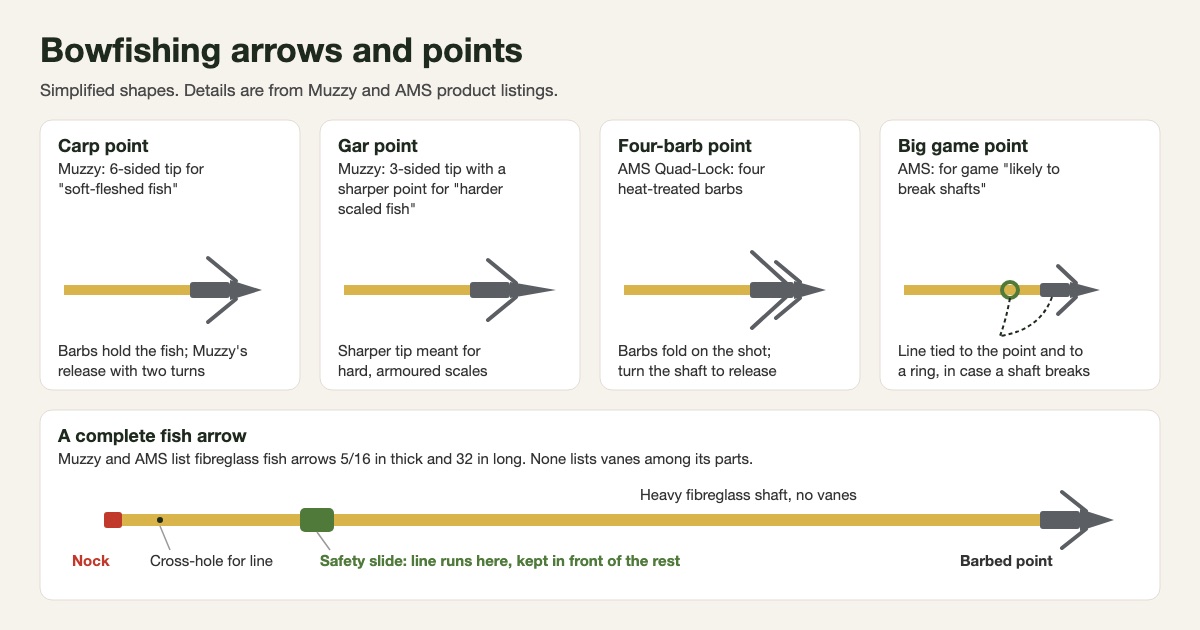
Big fish change the rig. AMS sells Big Game arrows for "game that is likely to break shafts," tying the line to the point as well as a ring "should a thrashing gator break the arrow." It also sells a Big Game version of its Retriever Pro reel. For alligator gar, ask the maker which line and arrow it recommends, and see our bowfishing reels guide for how reels handle line.
Where and when to find gar
MDC describes the longnose gar as "the most widely distributed gar in Missouri," living in "sluggish pools, backwaters, and oxbows along large, moderately clear streams." Gar "are seldom taken on hook and line," it says, but they "often bask near the surface," which is what makes them a bowfishing target.
TPWD says alligator gar live in "large rivers and reservoirs, as well as in coastal bays." They spawn "in shallow areas of flooded vegetation when springtime water temperatures exceed 68 degrees," generally April and May in Texas. That overlaps with the May ban on alligator gar harvest on parts of Lake Texoma.
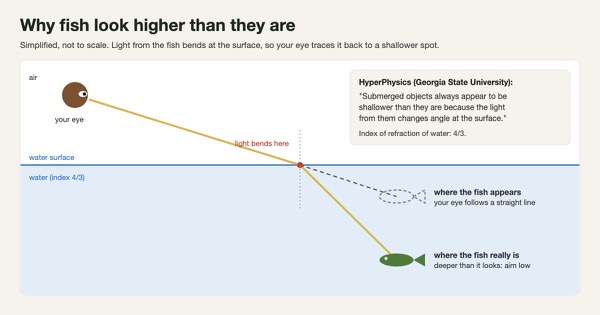
Basking gar still sit deeper than they look. Our guide on how to aim when bowfishing explains why you aim low.
Handling gar teeth safely
A landed gar is still a hazard: both species have rows of large teeth, and a thrashing fish swings its snout. MDC also notes that shot fish "are considered harvested and must not be returned to the water."
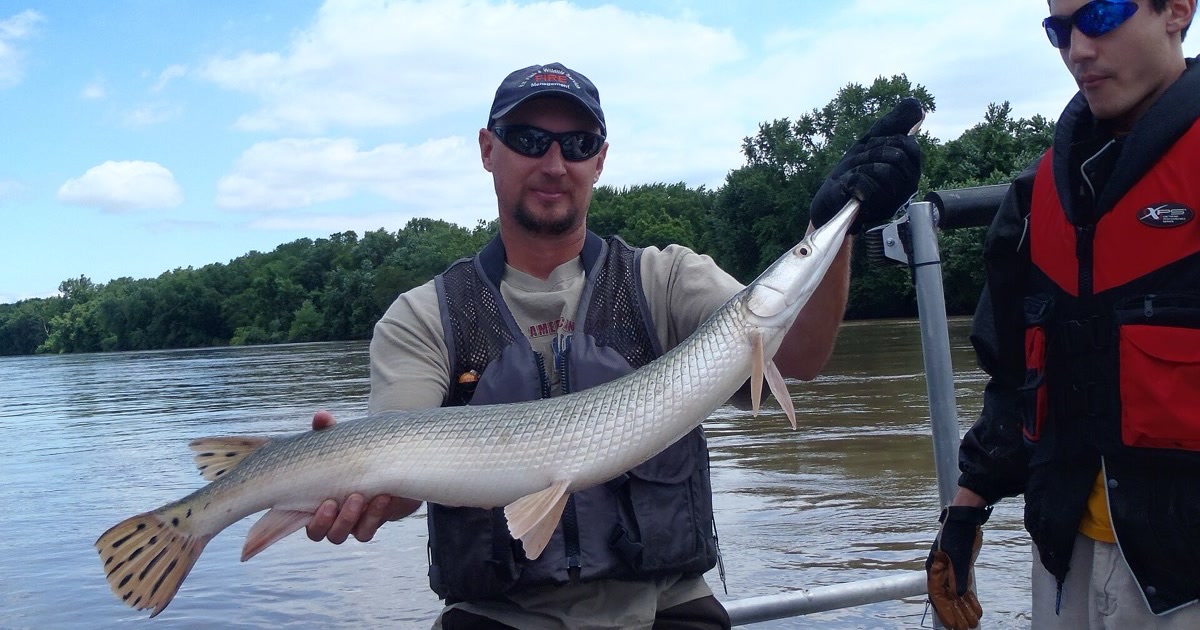
- Wear thick gloves, as in the photo at the top of this page, and grip behind the head or the base of the snout.
- Keep fingers away from the jaws; use long pliers to turn the point's release.
You can browse big game and gar bowfishing arrows on Amazon or compare heavy-line bowfishing reels. AMS's Big Game Retriever Pro is an example to consider. For a starter rig, see our Cajun Sucker Punch review.
Frequently asked questions
Can you bowfish for alligator gar?
In some places, yes, but it's tightly regulated. Texas Parks and Wildlife allows one alligator gar per day and prohibits harvest on parts of Lake Texoma during the May spawning season. Other states set their own rules, and some may restrict the species, so check your agency before you shoot.
What point should you use for gar bowfishing?
Choose a point made for hard scales. Muzzy's gar tip is three-sided with a sharper point than its carp tip, which it designs for soft-fleshed fish. For very large gar, AMS sells Big Game arrows that tie the line to the point in case the shaft breaks.
How do you tell a longnose gar from an alligator gar?
Look at the snout and teeth. MDC describes the longnose gar's snout as long and narrow, with single rows of large teeth on each jaw. TPWD says alligator gar have a broad snout and two rows of large teeth on each side of the upper jaw.
Related articles
 Reviews
Cajun Sucker Punch Review: A Complete Bowfishing Package Explained
Cajun Sucker Punch bowfishing package review: 17–31 in draw, 50 lb peak, Hybrid reel, fish rest and fibreglass arrows, aiming low, safety and the law.
May 7, 2025 · 6 min read
 Gear
GearBowfishing Arrows and Points Explained
What are bowfishing arrows made of? Mostly fiberglass, with barbed points, a safety slide or ring for the line and no vanes. What makers list, and why.
August 6, 2026 · 5 min read
 Training
How to Aim When Bowfishing: Refraction Explained
Bowfishing how to aim: why refraction makes fish look higher, published aim-low rules of thumb, how depth and angle change the hold, and polarised glasses.
Updated October 7, 2026 · 4 min read