
Bolt vs Quarrel: What Crossbow Arrows Are Called
Crossbow bolt vs quarrel: what each word means, where they come from, why makers now say 'arrow', and how medieval bolts differed from bow arrows.
By Archery Insider Editorial Team
· · 4 min read

In this article
In the crossbow bolt vs quarrel question, the short answer is that both words mean a crossbow projectile. "Bolt" is the everyday term and is still used today, while "quarrel" is a historical word for a short, heavy, square-headed bolt. Many modern crossbow makers simply call them arrows.
What is a quarrel?
The Online Etymology Dictionary defines a quarrel as a "short, heavy, square-headed, four-edged bolt or arrow for a crossbow". It dates the word in English to the mid-13th century, from Old French quarel, "bolt, arrow", and traces it back to Late Latin quadrus, "square", which is related to the Latin for "four".
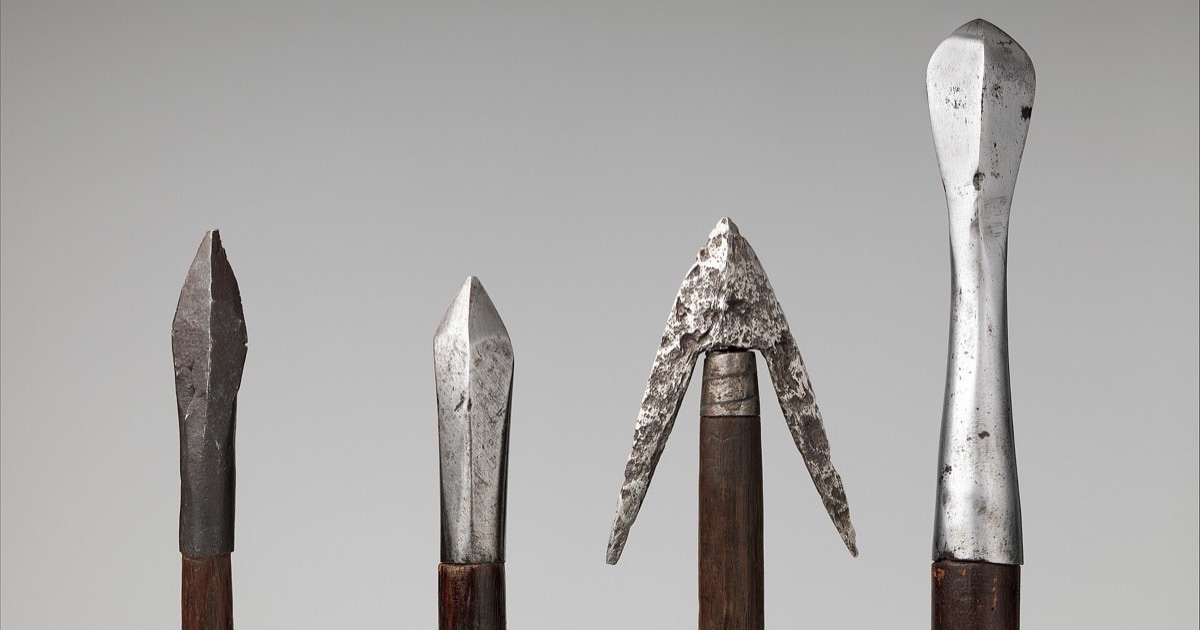
So the name describes the head. A quarrel was a bolt whose head had four faces, a shape that the word itself records.
Museum curators treat the two words as near-synonyms. In A Deadly Art, the Metropolitan Museum of Art's book on European crossbows, Dirk Breiding writes that "the majority of crossbows shot bolts, also known as 'quarrels'". He also notes that heads came in many shapes, from armour-piercing points to barbed, forked and chisel-like hunting heads.
Where "bolt" comes from
"Bolt" is the older English word. The Online Etymology Dictionary gives Old English bolt, "short, stout arrow with a heavy head", and notes the same word was also used for a "crossbow for throwing bolts". It traces the word to Proto-Germanic *bultas.
The dictionary adds that "from the notion of an arrow's flight comes the bolt of lightning (1530s)". So the lightning sense grew out of the projectile, not the other way round.
How medieval bolts differed from arrows
Breiding's book explains why crossbow projectiles got their own name. Because crossbows were usually more powerful than hand bows, "a bolt shaft is shorter and stouter" than an arrow shaft. A bolt also "does not have a nock", and while "most arrows have three flights", most bolts had only two, made of materials such as parchment, leather or wood.
| Medieval bolt or quarrel | Arrow for a hand bow | |
|---|---|---|
| Shaft | Shorter and stouter | Longer and thinner |
| Nock | None; rear end may be flattened | Nock for the bowstring |
| Flights | Usually two (parchment, leather, wood) | Usually three, often feathers |
| Name | "Quarrel" for square, four-edged heads | "Arrow" |
Breiding adds that in the early Middle Ages, arrows for hand bows and crossbows "appear to have differed little, if at all", so the distinction grew as crossbows became more powerful.
"Bolt" and "arrow" today
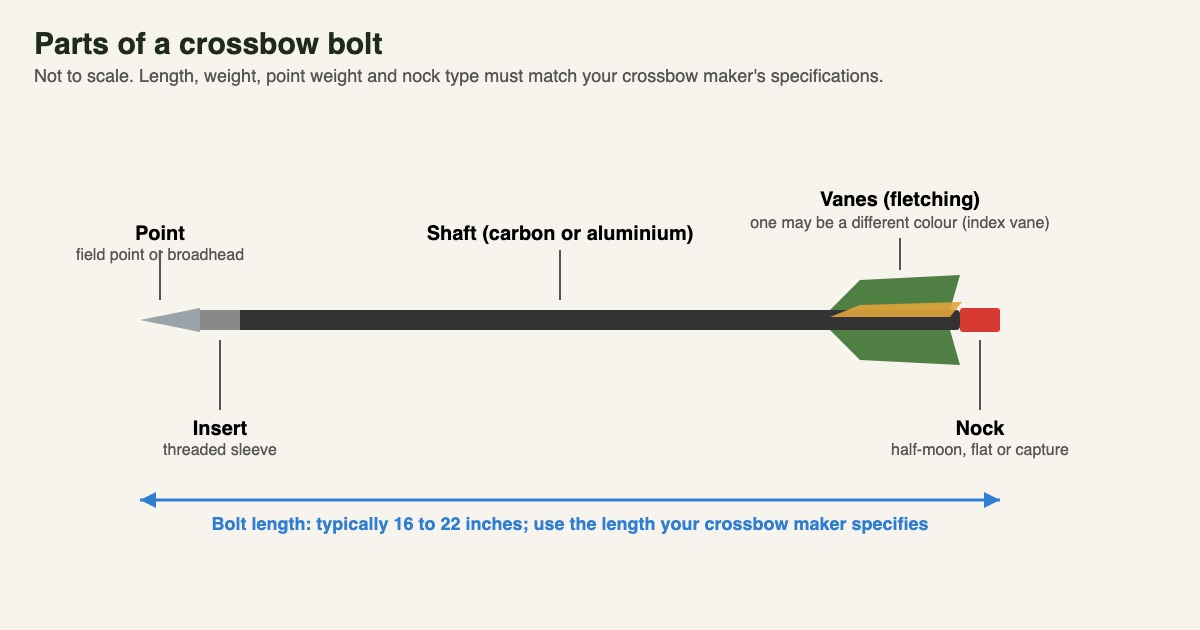
Modern crossbow bolts are usually carbon or aluminium, with nocks and vanes, so they look much more like arrows than their medieval ancestors. That may be why many makers have moved to the word "arrow". TenPoint's FAQ on minimum weight, for example, talks about "finished arrow weight" and never says "bolt".
The word doesn't change the rules that matter. TenPoint says that for its crossbows made in 2012 and after, "the finished arrow weight should be at least 370-grains total", including a 100-grain point. Whatever the box calls them, follow your maker's length and weight specification. Our crossbow vs compound comparison covers how crossbow ammunition differs from bow arrows in practice.
Shooting the right bolt also matters for accuracy. Our guide to sighting in a crossbow scope explains why you should zero with the same bolts and points you hunt with. The kit in our CenterPoint Sniper Elite 385 review is another example of the modern wording: its box contents list carbon arrows, not bolts.
If you need replacements, you can browse crossbow bolts on Amazon. Treat listings as examples to consider, and check length, weight and nock type against your crossbow's manual first.
Frequently asked questions
Why are crossbow arrows called bolts?
"Bolt" is an old English word for a short, stout arrow with a heavy head, according to the Online Etymology Dictionary, and it was used for crossbow projectiles long before modern crossbows. The Met's crossbow book notes that medieval bolts really were shorter and stouter than arrows, so the name fitted the object.
What is a crossbow quarrel?
A quarrel is a historical crossbow bolt with a short, heavy shaft and a square, four-edged head. The word came into English in the mid-13th century from Old French quarel, based on Late Latin quadrus, "square". Today it is mainly used by historians, museums and writers rather than crossbow makers.
Is there a difference between a crossbow bolt and an arrow?
Historically, yes: the Met's crossbow book says bolts were shorter and stouter, had no nock and usually had two flights. Modern crossbow bolts have nocks and vanes, and makers such as TenPoint call them arrows. They are still made for crossbows, so use only what your crossbow maker specifies.
Related articles
 Comparisons
Crossbow vs Compound Bow: Which Is Better for You?
Crossbow vs compound bow compared: how each works, speed and energy, weight, holding and follow-up shots, accuracy, learning curve, hunting rules and costs.
August 12, 2026 · 5 min read
 Training
How to Sight In a Crossbow Scope, Step by Step
How to sight in a crossbow scope: safety, mounting, a 20-yard zero, multi-reticle and speed-dial scopes, broadhead checks and fixes for wandering groups.
October 6, 2026 · 9 min read
 Gear
GearCan You Adjust a Crossbow's Draw Weight?
Can you adjust draw weight on a crossbow? Usually not: most are set at the factory. Why, what makers warn against, and how cocking aids make it easier.
Updated October 6, 2026 · 4 min read