
Tree Stand Types: Hang-On, Climber, Ladder, Saddle
What is a tree stand for hunting? Hang-on, climber, ladder, box and saddle stands compared for set-up, weight, mobility and bow clearance, plus harness rules.

By Archery Insider Editorial Team
· 8 min read
In this article
What is a tree stand for hunting? It's a platform or seat fixed to a tree that puts you above a deer's eye line and lets you shoot down into cover you couldn't see from the ground. There are five ways up: hang-on, climber, ladder, box or tower, and the saddle, which isn't a stand at all but does the same job. The right one depends on how far you walk, whether your trees are straight, and how much setting up you'll put up with. The harness rule is the same for all of them.
What is a tree stand for hunting, and why bowhunters use one
Deer look for danger at their own height. Twelve to twenty feet up, your outline is above their line of sight, you can see over brush into trails, and you can draw a bow with less chance of being spotted. The costs are a downward shot angle, wind and the risk of a fall. Our tree stand vs ground blind comparison weighs those against a blind; this article is about choosing between the stands.
The five tree stand types
Hang-on (fixed-position) stand
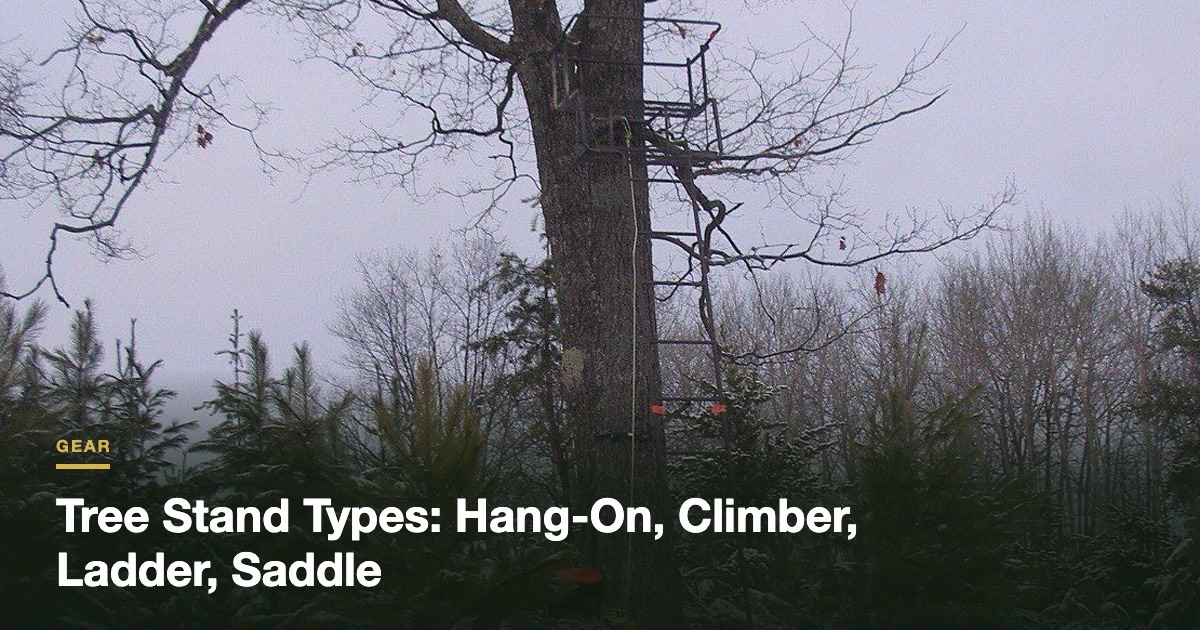
A platform and seat that straps to the trunk, reached with climbing sticks. It's the lightest conventional stand and fits crooked or limby trees that a climber can't. The trade-off is time at height: you hang the sticks, then the stand, all on a lifeline.
Climbing stand
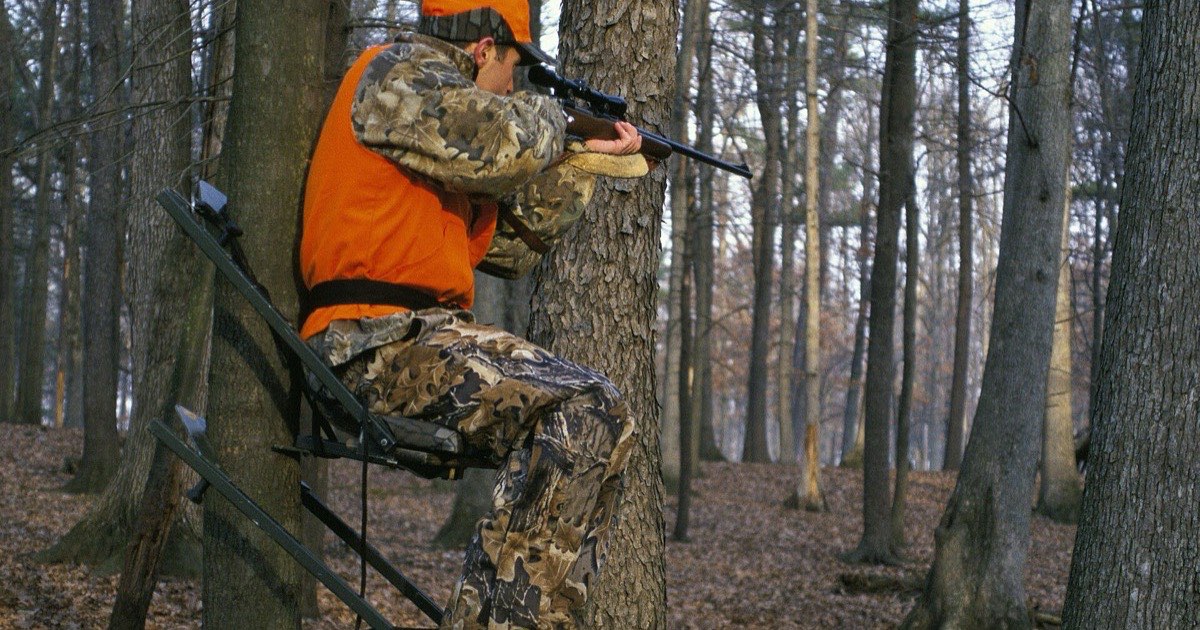
A seat and a platform that grip the trunk and "walk" up it as you shift your weight. Set-up on the right tree is fast and needs no sticks, so you can hunt a new tree every sit, but the tree must be straight, even and limbless all the way up. The front rail on many climbers is the piece bowhunters fight with.
Ladder stand
A platform on a braced ladder, strapped to the tree at the top. It's the most stable and easiest to climb, which suits new hunters and anyone taking a child, but it's heavy: a two- or three-person job that lives in one spot all season.
Box and tower stands
An enclosed box, or an open platform on legs, standing free of any tree. Boxes shelter you from wind and hide movement on a long December sit, but they're semi-permanent and usually on private land. A bowhunter needs a window big enough to draw and shoot through.
Saddle
A fabric seat on a harness, tethered to a rope around the trunk, with a small platform for your feet. You hang against the tree and shoot around it. It's the lightest system and the easiest to move, and you're connected by design, but it takes real practice to shoot well, and the weak-side shot round the trunk is a learned skill.
Tree stand types compared
| Type | Carry weight | Set-up effort | Mobility | Tree needed | Bow clearance |
|---|---|---|---|---|---|
| Hang-on | Light to medium | High: sticks, then stand | Good | Almost any sound tree | Good; no rail |
| Climber | Medium | Low on the right tree | Very good | Straight, limbless, even trunk | Front rail can block the draw |
| Ladder | Heavy | Medium, with helpers | Poor; set for the season | Any sound tree | Good; some rails remove |
| Box or tower | Very heavy | High; semi-permanent | None | None; freestanding | Depends on window size |
| Saddle | Lightest | Medium; steps plus tether | Best | Almost any sound tree | Excellent, with practice |
Tree stand vs saddle
A saddle wins on weight and movement and keeps you tethered from the first step; a stand wins on comfort over long sits and the easier strong-side shot. Hunt one farm for hours at a time and a hang-on or ladder is simpler. Walk miles into public land and move every sit, and a saddle earns its learning curve.
What to look for in a tree stand for bow hunting
Selection criteria come before brand names.
| Criterion | What to check | Why it matters |
|---|---|---|
| TMA listing | The stand, sticks and harness all appear on the TMA list | A production model was tested by a third party to recognised standards |
| Weight rating | Maker's rating against you in winter clothes plus gear | Ratings cover the whole load |
| Platform and seat | Room to turn for a weak-side shot; a seat you can sit on for hours | Fidgeting gets you busted |
| Rail or no rail | Can you draw a full-length bow seated and standing? | Rails and limb tips collide |
| Attachment | Straps that fit your tree, with a backup | Arkansas advises replacing straps left out all year |
TMA standards and the full-body harness
The Treestand Manufacturers Association says it "does not design, certify, approve, test, review, or provide any customer service for any products." A listing means a maker has shown "that a representative production model has been tested by a third party testing firm and certified by that testing firm to meet or exceed industry standards recognized by TMA." Virginia's wildlife agency puts it practically: "treestands built since 2006 and approved by the Treestand Manufacturers Association (TMA) are commercially designed and tested to meet recognized industry standards."
The numbers belong to the agencies that publish them. Arkansas Game and Fish says "treestand falls account for 75 to 80 percent of hunting accidents each year," and cites a Mayo Clinic estimate "that one in three hunters who use tree stands will experience a fall sometime in their hunting career."
The harness is part of a system. Wisconsin lists the rest: "Always have three points of contact while climbing into and out of the treestand," use "a lifeline when climbing up and down," and use "a haul line to raise and lower your unloaded firearm or bow." It warns that "suspension trauma can happen in less than 20 minutes and can be fatal," which is why a suspension relief strap belongs on the harness. The climbing routine is in our tree stand safety guide.
Bow-shooting angles from each stand
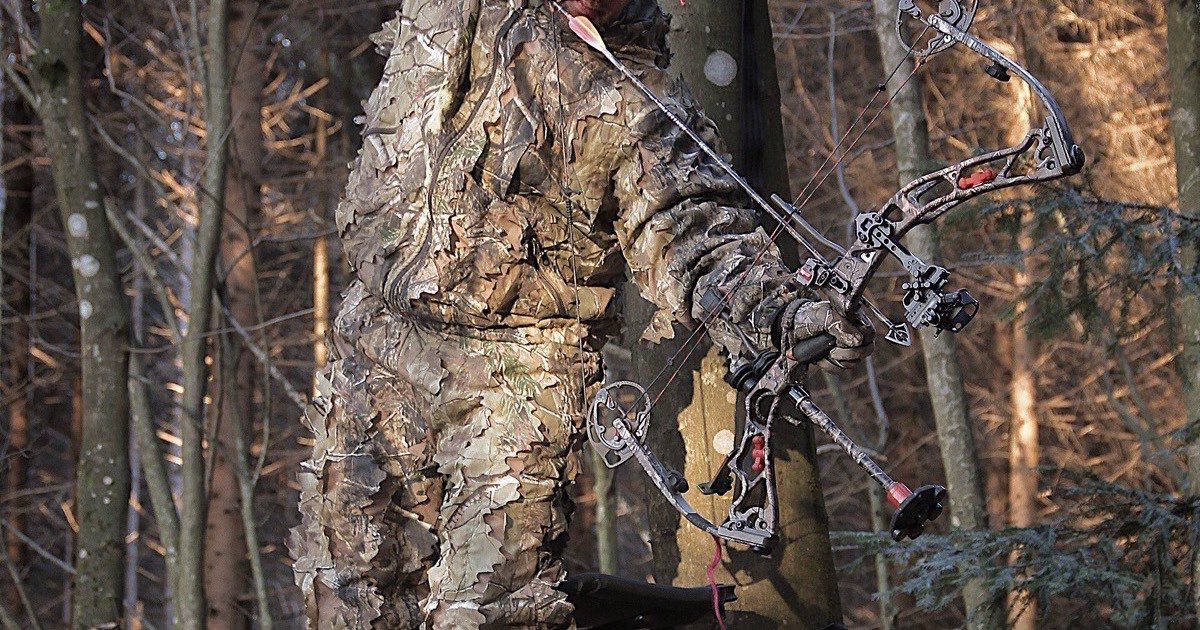
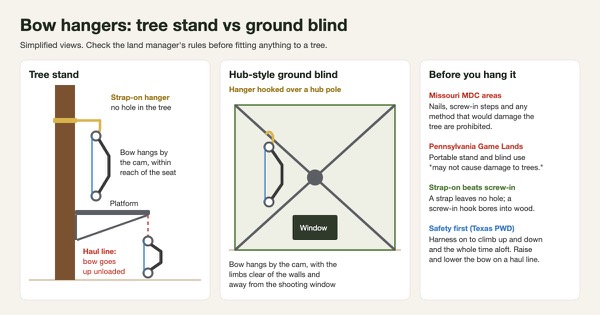
A right-handed archer in a hang-on or ladder stand shoots easily from straight ahead round to the left; the shot to the right means standing and turning your feet, so set the stand with the expected trail in that easy arc. In a climber, check before the season that the lower limb clears the rail on a steep shot. Height changes the aim point too: the steeper the angle, the smaller the vital zone, so shots straight below a 20-foot stand are poor ones. Our bow hanger guide covers keeping the bow within reach without a lunge.
Public land rules
Portable stands are allowed on much public land, but each agency sets the details and they are strict about trees. Missouri's wildlife code for conservation areas says "only portable tree stands are allowed and only from September 1 through January 31," and that "use of nails, screw-in steps, and any material or method that would damage the tree is prohibited." Rules checked on 7 October 2026; this isn't legal advice and regulations change, so confirm with the land manager before you hang a stand.
Examples to consider
The one item every stand type shares is the harness, so spend there first. Two widely sold full-body harnesses from Hunter Safety System are the X-1 Bow-Hunter Harness and the TreeStalker II Harness. Check the weight range and TMA listing; we haven't tested them. For the stand itself, browse hang-on tree stands on Amazon and compare platform size and weight rating.
Hunting from a tree stand
Advantages
- Puts you above a deer's eye line, so drawing a bow is easier to hide
- Wider view into trails and cover than from the ground
- Hang-ons and saddles pack in and out for mobile hunting
Trade-offs
- Falls are the leading cause of hunting injuries, by the agencies' own figures
- Downward shots shrink the vital zone and need practice
- Climbers need straight trees; ladders need helpers; rails fight long bows
Frequently asked questions
What is a tree stand for hunting?
A platform or seat attached to a tree so a hunter can sit above the ground, usually 12 to 20 feet up. Height takes you out of a deer's normal line of sight, hides movement such as drawing a bow, and gives a view into trails and cover.
Is a saddle better than a tree stand?
Neither is better for everyone. A saddle is lighter, moves more easily and keeps you tethered from the first step, which suits mobile public-land hunting. A stand is more comfortable over long sits and makes strong-side shots easier. Practise in a saddle at ground level before you trust yourself with a bow in your hands.
Which tree stand type suits bow hunting?
Any of them, as long as you can draw without the bow touching anything. Hang-ons and saddles give the cleanest draw because nothing sits in front of you. Climbers with a front rail and boxes with small windows need a pre-season check with your full-length bow at every angle you might shoot.
Do I need a harness in a ladder stand?
Yes. Wisconsin's DNR says to use a fall-restraint device "regardless of whether you hunt with a ladder stand, a tower stand or a hang-on stand," and Pennsylvania's Game Commission says to put it on before your feet leave the ground. Ladders feel safe, but stepping on and off the platform is where many falls happen.
Related articles
 Guides
Tree Stand Safety for Bowhunters
Tree stand safety for bowhunters: wear a full-body harness from the ground up, use a lifeline and haul line, inspect your stand and plan for a fall.
October 12, 2026 · 10 min read
 Comparisons
Tree Stand vs Ground Blind for Bowhunting
Tree stand vs ground blind for bowhunting deer: view, hiding your draw, scent, shot angle, safety and setup compared, with when to choose each.
Updated October 6, 2026 · 5 min read
 Gear
Bow Hangers for Tree Stands and Ground Blinds
Deer hunting bow hangers explained: screw-in vs strap-on for tree stands, public-land rules on tree damage, ground blind hangers and haul line safety.
September 5, 2026 · 5 min read