
How to Choose a Deer Hunting Bow for Beginners
How to choose a deer hunting bow for beginners: legal minimums, draw length and weight, compound vs recurve vs crossbow, brace height, let-off, RTH packages.

By Archery Insider Editorial Team
· 9 min read
In this article
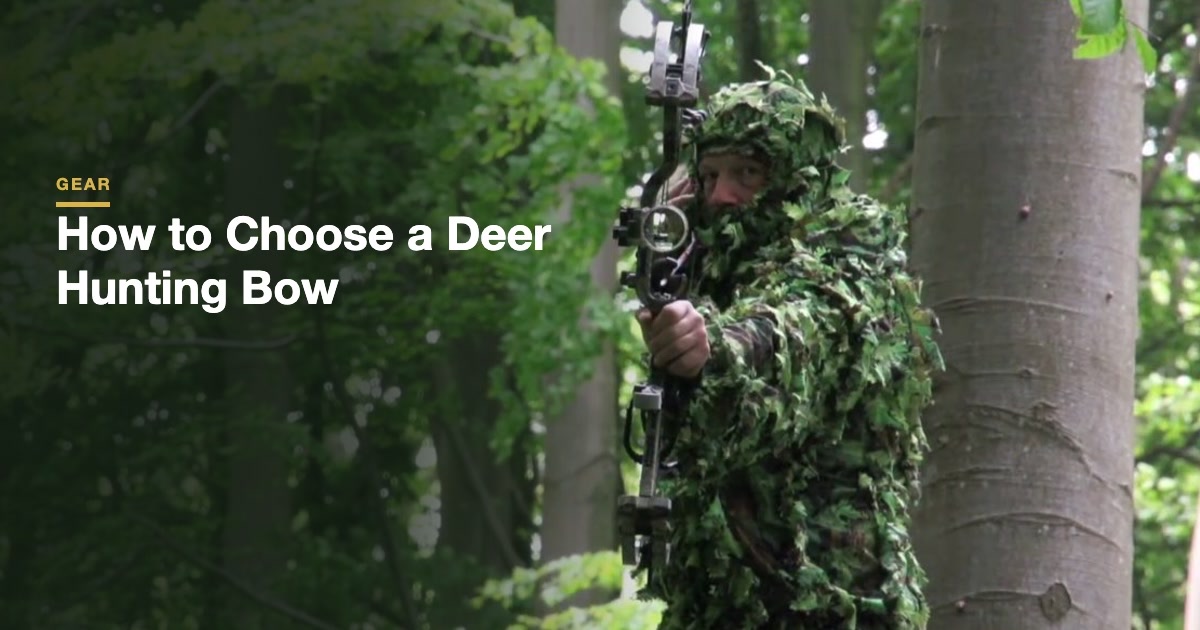
The right deer hunting bow for beginners is the one that fits: a draw length set to your measurement, a draw weight you can pull slowly while seated and cold, and enough weight to meet your state's legal minimum if it has one. For most new hunters that means an adjustable compound sold as a ready-to-hunt package and set up by a shop. Everything else on the spec sheet matters far less than fit.
This guide takes the decision in order: rules, bow type, fit, the three spec-sheet numbers worth understanding, packages and examples to consider. It doesn't rank bows; we haven't shot them.
Step one: the legal minimum where you hunt
There is no national minimum draw weight for deer. Five states we read on official pages show the spread.
| State (source) | Minimum draw weight for deer | Also on the page |
|---|---|---|
| Minnesota (Statute 97B.035) | "a pull that meets or exceeds 30 pounds at or before full draw" | Poisoned or explosive-tipped arrows banned |
| Oklahoma (Wildlife Department) | Compound "30 pounds or more"; "recurve, longbow or self-bow of 40 pounds or more"; crossbow 100 lb with "safety devices" | Points "not less than 7/8 inches wide" |
| Alaska (5 AAC 92.085) | "40 pounds peak draw weight" for black-tailed deer; 50 lb for moose, elk and brown bear | Arrows at least 20 in and 300 grains, with a broadhead |
| Missouri (Department of Conservation) | None: "Missouri regulations do not require minimum draw weights" | "40 pounds or greater is recommended" |
| Texas (Parks and Wildlife, 2026–27) | "There is no minimum draw requirement" | Broadhead required for game animals |
Rules checked on 7 October 2026; this isn't legal advice and regulations change, so confirm with your agency. If your state has a minimum, an adjustable bow has to reach it at your draw length, not just on the box.
Compound vs recurve vs crossbow for deer
All three kill deer cleanly; they differ in the practice needed, what happens at the moment of the shot, and where they're legal.
| Compound bow | Recurve or longbow | Crossbow | |
|---|---|---|---|
| Holding at full draw | Light, thanks to let-off | Full weight | None: cocked and shouldered |
| Draw weight for deer | Typically 40–60 lb settings | Often 45 lb or more, heavier arrows | 100–200 lb, cocked by rope or crank |
| Aiming | Pin sight and peep | Gap or instinctive | Scope |
| Adjustability | Wide on beginner models | Only by changing limbs | Fixed |
| Legal in archery season? | Yes | Yes | Varies by state |
Missouri's getting-started page says "most beginners start with a compound bow". Let-off lets you hold while a deer takes two more steps, a sight makes aiming repeatable, and adjustable models grow with you. Our compound vs recurve comparison goes through the differences in depth.
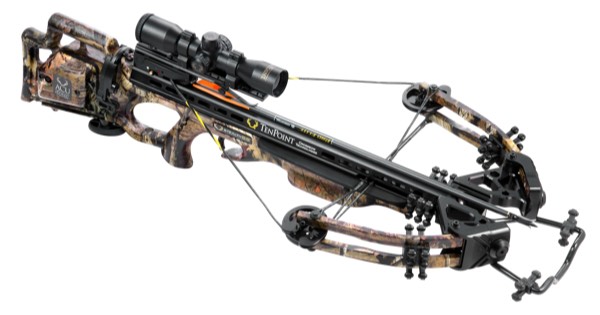
A recurve or longbow suits hunters who want the traditional challenge and will practise for it, with more draw weight and shorter shots. A crossbow removes drawing and holding altogether, but it's heavier, slower to reload and not legal in archery season everywhere.
Fit: draw length and draw weight
A bow set too long pushes your anchor off your face; one set too heavy makes you point at the sky to draw, the movement that spooks deer.
- Measure your draw length. A shop can do it in a minute. Every bow you consider has to cover that number.
- Find your dominant eye. Missouri recommends checking before you buy, because "just because you're right-handed doesn't necessarily mean you're right-eye dominant or vice versa if you're left-handed." Look through a tube at an object with both eyes open, then close one eye; the eye that still sees it is dominant and decides right- or left-handed.
- Pick a weight you can draw seated. Sit, point the bow at the target and draw slowly without lifting it; if you can't, it's too heavy for hunting. Our draw weight guide has the full test and the arrow-energy maths.
- Start low and turn up later. Set an adjustable bow a few pounds above your state's minimum. Missouri again: "Don't feel pressured to shoot the heaviest amount of draw weight. It's more important to hit where you are aiming."
- Have the shop set both. Modules and limb bolts are easy to get wrong without a press and a scale.
Axle-to-axle, brace height and let-off explained
Spec sheets list a dozen numbers. Three of them tell you how a bow will feel.
| Spec | What it is | What it means for a beginner | Figures from maker pages |
|---|---|---|---|
| Axle-to-axle (ATA) | Distance between the cam axles | Around 30 in fits stands and blinds; longer holds a little steadier | Bear Legit NXT 30 in; Diamond Edge XT 31 in |
| Brace height | String to the deepest part of the grip, at rest | Around 7 in is generally considered more forgiving of release errors; shorter is a touch faster | Legit NXT 6.25 in; Edge XT 6.75 in |
| Let-off | Share of peak weight you don't hold at full draw | At 75%, a 50 lb bow leaves about 12.5 lb in hand while you wait | Legit NXT 75% |
Don't chase speed. The ratings (315 fps for the Legit NXT per Bear, 300 fps for the Edge XT per Diamond) are measured at the top of the range under standard conditions; a bow set to 45 lb and 27 inches shoots well under them. Our Bear Cruzer G3 and Diamond Infinite 305 reviews explain what each published spec meant on two adjustable bows: the Infinite's longer brace height suited adults, the Cruzer's shorter draw range suited growing archers.

Ready-to-hunt packages: what's included and what to ignore
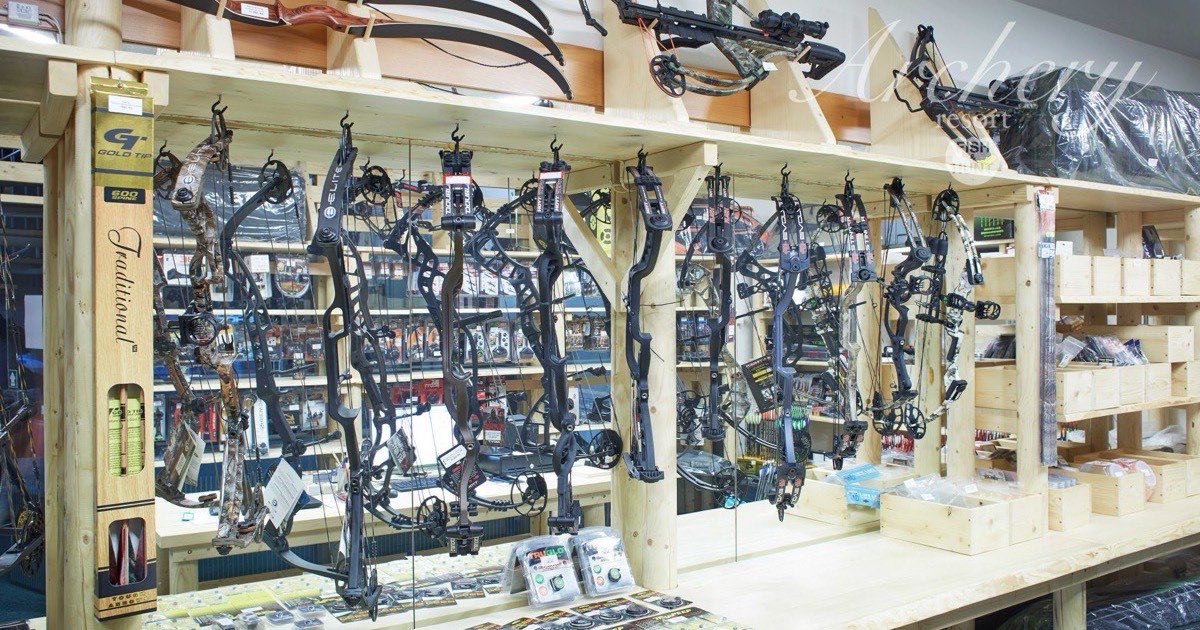
A ready-to-hunt (RTH) package is a bow with accessories fitted at the factory. Bear lists the Legit NXT RTH as "fully equipped with a Trophy Ridge Whisker Biscuit rest, 4 pin sight, 5 arrow quiver, stabilizer, peep sight, and D loop"; Diamond calls the Edge XT "fully accessorized to get you shooting in minutes". That's right for a first bow: basic accessories that work, upgradable later.
Ignore speed ratings (measured at 70 lb and a 30-inch draw with a light arrow, so your setup will be slower) and camo pattern (deer notice movement). "Hunting ready" still means the bow needs its draw length set, a peep tied in and a sight zeroed at 20 yards.
The rest of a deer hunting bow setup
A package doesn't include arrows matched to your draw weight and length, broadheads your state allows (Oklahoma requires points "not less than 7/8 inches wide"), matching practice points, a release aid or a target. Budget for those, and practise from the position you'll hunt in.
How to buy: the shop fitting checklist
- Say you want a deer bow set to a weight you can draw seated, and mention your state's minimum.
- Get measured for draw length and have your dominant eye checked.
- Draw at least three bows in your budget. Notice the draw cycle, the wall at full draw and the grip.
- Have the bow set to your length and a conservative weight, with the peep tied in at your anchor.
- Shoot a dozen arrows at 10 yards before you pay, and write down the settings the shop used.
What to look for in a deer hunting bow for beginners
| Criterion | Look for | Why it matters |
|---|---|---|
| Draw weight range | Reaches your state minimum at your draw length, with room to grow | Legal floor; you'll get stronger |
| Draw length range | Covers your measurement with a few inches either side | Fit decides everything else |
| Axle-to-axle | Around 30–32 in | Manoeuvrability in stands and blinds |
| Brace height | Around 6.5–7 in for a first bow | Forgiveness of release errors |
| Let-off | 75% or more | Holding at full draw while you wait |
| Package | Rest, sight, quiver, peep and D-loop fitted | Saves money and setup time |
| Maker's support | Published specs, a manual, a warranty | You'll adjust this bow often |
Examples to consider
These are examples whose makers publish the figures above, not recommendations; we haven't shot them.
- Bear Legit NXT RTH. Bear lists 10–70 lb, a 14–30 inch draw, 30 inch axle-to-axle, a 6.25 inch brace height, 75% let-off and 315 fps, with the accessories quoted above. It's Bear's current wide-range package; the Cruzer G3 we reviewed may now be harder to find new. See Bear Legit NXT listings on Amazon.
- Diamond Edge XT. Diamond lists 20–70 lb, a 19–31 inch draw, 31 inch axle-to-axle, a 6.75 inch brace height, 300 fps and 3.7 lb, and says it suits "youth to adult, beginner to avid archer". The longer brace height is the point for adult beginners. See Diamond Edge XT listings on Amazon.
- Other adjustable packages follow the same recipe. Browse adjustable compound bow packages on Amazon, then check the ranges cover you, the hand is right and the listing is the package, not the bare bow.
An adjustable RTH package as a first deer bow
Advantages
- Starts light and turns up to a legal hunting weight as you improve
- Accessories fitted, so you can shoot the week you buy it
- Wide draw-length ranges fit most adults and growing teens
Trade-offs
- A bow built to cover a wide range feels less refined at any one setting
- Package sights and rests are entry level and often replaced
- Still needs a shop to set draw length, weight and peep
Frequently asked questions
What is a good deer hunting bow for beginners?
One that fits and meets your state's minimum: usually an adjustable compound package whose draw length range covers your measurement, whose draw weight reaches 40 lb or more, around 30–32 inches axle-to-axle, with a brace height of about 6.5 inches or more, set up by a shop.
What draw weight do I need for deer?
Check your state first: Minnesota requires 30 lb, Oklahoma 30 lb for compounds and 40 lb for traditional bows, Alaska 40 lb, and Missouri and Texas set no minimum. Missouri recommends 40 lb or more. Above the legal floor, choose the weight you can draw seated and cold without lifting the bow.
Is a crossbow easier for a beginner deer hunter?
Easier to shoot accurately in a short time, yes: there's no drawing or holding, and you aim through a scope. It's also heavier, slower to reload and louder, and some states keep crossbows out of archery season. Confirm your state's rules first.
What should a deer hunting bow setup include?
The bow set to your draw length and weight, a peep tied in at your anchor, a rest, a sight zeroed at 20 yards, a release aid, matched arrows with broadheads your state allows, and practice from the position you'll hunt in.
Related articles
 Guides
What Draw Weight Do You Need for Deer Hunting?
How much draw weight do you need for deer? Legal minimums, why arrow energy matters, compound vs traditional bows, elk, and choosing a weight you can shoot.
October 5, 2026 · 10 min read
 Comparisons
Compound vs Recurve Bow: Key Differences Explained
Compound vs recurve bow compared: how each works, let-off and holding weight, aiming systems, competition formats, maintenance, hunting, and which suits you.
February 6, 2025 · 8 min read
 Comparisons
Crossbow vs Compound Bow: Which Is Better for You?
Crossbow vs compound bow compared: how each works, speed and energy, weight, holding and follow-up shots, accuracy, learning curve, hunting rules and costs.
August 12, 2026 · 5 min read