
Mule Deer Bowhunting: Spot-and-Stalk Basics
Mule deer hunting with a bow: how muleys differ from whitetails, glassing, a step-by-step spot-and-stalk, wind and thermals, shot angles and state tag rules.

By Archery Insider Editorial Team
· 8 min read
In this article
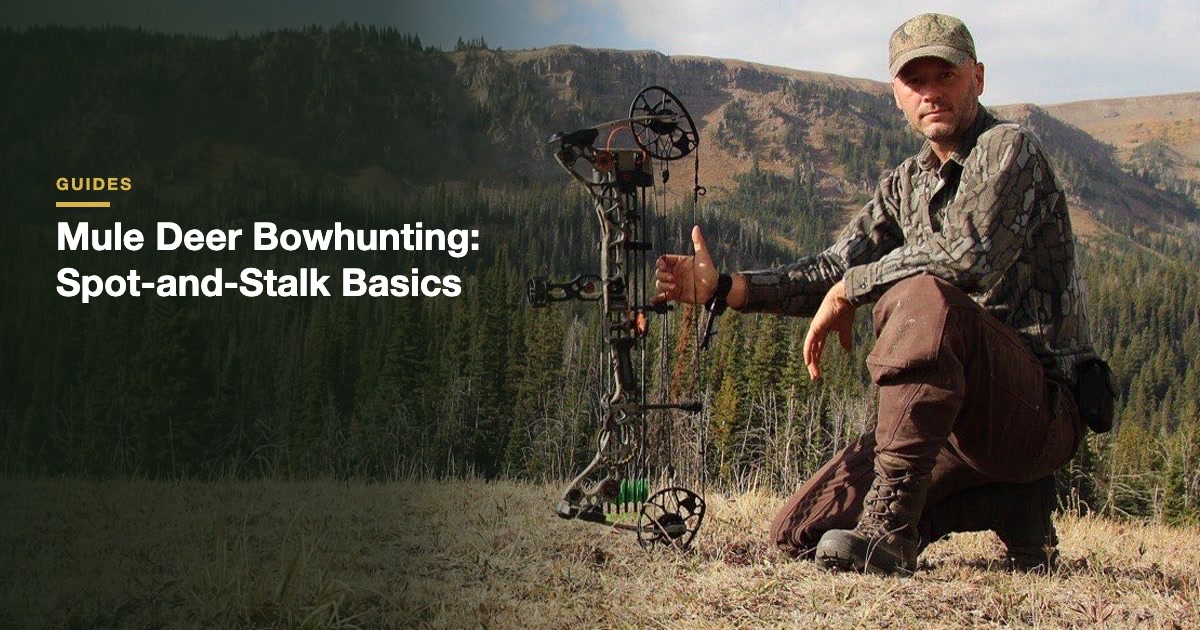
Mule deer hunting with a bow usually means spot-and-stalk: you find a deer with binoculars from a distance, plan a route that keeps the wind and terrain on your side, then sneak into bow range while it beds or feeds. It's harder than sitting a stand, and the shot often comes at an awkward angle. Before any of that, you need a tag, which in most western states means applying for a draw months ahead.
Mule deer vs whitetail: what changes for a bowhunter
If you learned on whitetails from a tree stand, mule deer flip your habits. The Montana Field Guide describes them as "more gregarious and migratory (mostly elevational movements) than White-tailed Deer," living in "grasslands interspersed with brushy coulees or breaks," badlands and brushy draws on the prairie, and open to dense mountain forest and aspen groves higher up.
That's why you hunt them on foot. Deer bedded on open slopes can't be patterned to one trail like a farmland whitetail, but they can be seen from far off, and the field guide says they "feed early and late in the day."
| Trait | Mule deer | What it means for your hunt |
|---|---|---|
| Habitat | Open grassland, coulees, breaks, mountain forest and aspen | Glass big country from a vantage point instead of sitting one trail |
| Movement | More migratory than whitetails, mostly up and down in elevation | Deer may shift elevation as the season goes on; scout close to your dates |
| Daily pattern | "Feed early and late in the day" | Glass at first and last light; stalk bedded deer in the middle of the day |
| Escape | "Bounding leaps, keeping all feet together" | A spooked deer leaves fast over the next ridge; don't push a bad stalk |
Glassing: finding deer before they find you
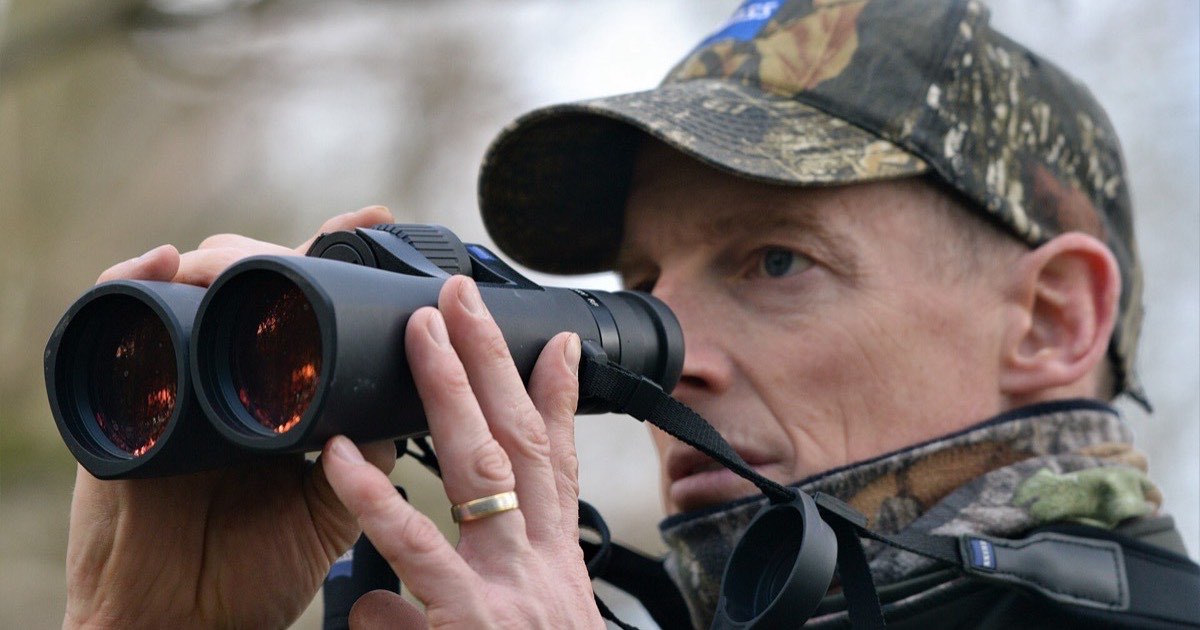
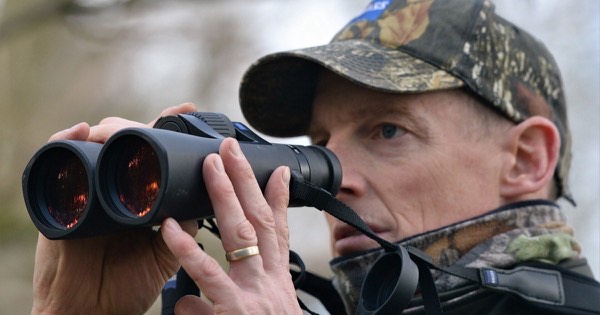
Glassing means sitting still somewhere high and working a slope with binoculars, section by section. Brace your elbows on your knees and look for pieces of a deer: an ear flick, a pale rump, a horizontal back in the brush.
- Get to your glassing spot in the dark so you're set up before first light.
- Glass the open feeding slopes first, while deer are still up and moving.
- Watch where deer go as the sun hits the slope. A deer that beds in sight is the best stalk you'll get all day.
- Pick the shaded side of draws and the base of rock outcrops once deer have bedded.
- Note landmarks around a bedded deer (a dead tree, a boulder, a patch of brush) before you lose sight of it.
Many hunters use a 10x42 binocular as an all-round glassing tool; you can browse 10x42 hunting binoculars on Amazon.
How to archery hunt mule deer: the spot-and-stalk, step by step
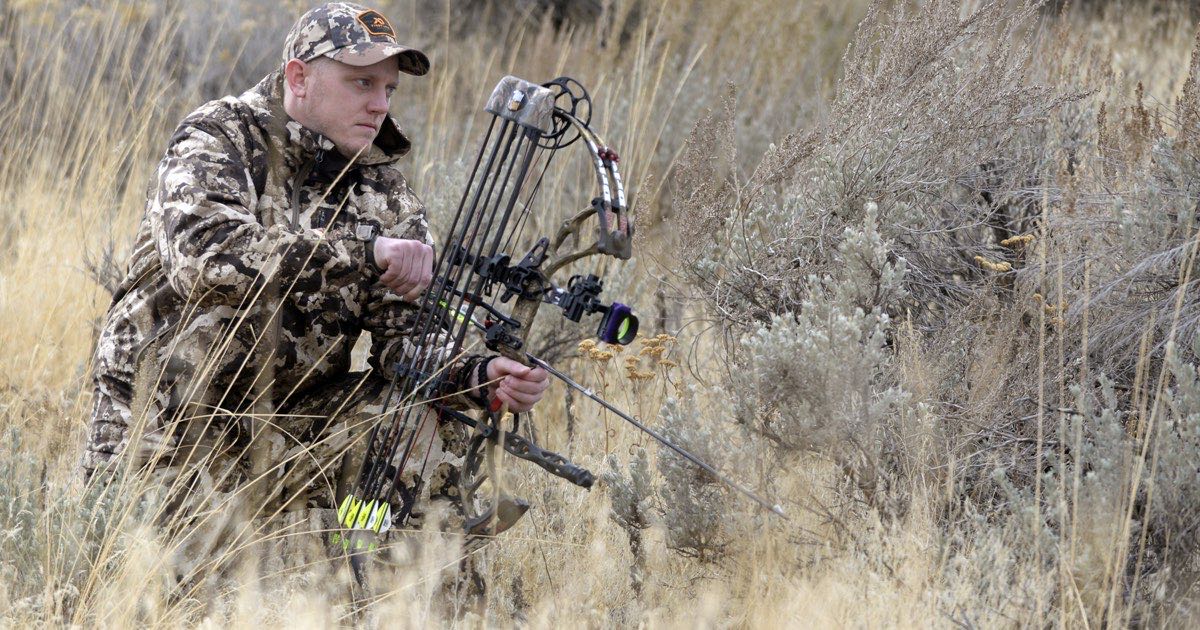
Once a buck is bedded, the stalk begins. Don't rush it.
- Check the wind where the deer is, not just where you are. If the breeze would carry your scent toward it at any point on the route, pick another route or wait.
- Plan a route that keeps terrain between you and the deer. Use ridgelines, draws and brush. Approach from above or the side if you can.
- Memorise your landmarks. The boulder you picked from a mile away may be one of twenty up close.
- Drop your pack a safe distance out and mark the spot on your GPS.
- Slow down for the last 100 yards. Move only when the deer can't see you.
- Range landmarks as you close in, so you know the distance to where the deer will stand.
- Wait for the deer to stand. A bedded deer rarely offers a clean shot. Stay kneeling with an arrow nocked until it rises and steps clear.
Wind and thermals
Swirling wind ruins more stalks than noise. Mountain hunters also deal with thermals: air that drifts uphill as slopes warm in the morning and downhill as they cool in the evening. A stalk that's safe at 10am can go wrong at 4pm on the same slope.
Carry a puff bottle and check it often, especially near ridgetops, saddles and the mouths of draws. If the wind turns in the last 50 yards, back out and try another day.
Mule deer shot placement and honest range limits
The Mule Deer Foundation's advice on angles boils down to one idea: "stop focusing on where the bullet or arrow enters the deer and instead picture where it should come out." On a broadside deer, "a well-placed shot just behind the front shoulder passes through both lungs, often clipping the heart."
| Angle | What the Mule Deer Foundation says | For a bowhunter |
|---|---|---|
| Broadside | Behind the shoulder "passes through both lungs, often clipping the heart" | The shot to wait for |
| Quartering away | A line "that enters behind the near shoulder and exits just ahead of the off-side shoulder" | Good, if you aim for the far shoulder |
| Quartering toward | "The shoulder closest to you now shields a significant portion of the chest cavity" | Pass |
| Frontal | "The vital window is narrower" | Pass |
| Directly away | Vitals "a long way from where your projectile begins its journey" | Pass |
Our deer shot placement guide covers the anatomy in detail. Range is the other half. The official bowhunter education course notes that "the average hunter has a maximum effective range of 30 yards," and gives three reasons long shots wound more: it's harder to hit the vitals, unseen brush can deflect the arrow, and "the longer the arrow is in the air, the greater the chance the animal will move." Open western country tempts people to stretch that. Find your real limit with the method in our effective bow range guide, from kneeling and on slopes.
Steep angles change the distance your sight needs. A rangefinder with angle compensation solves that; our guide to choosing a bowhunting rangefinder explains the feature, and you can browse bowhunting rangefinders on Amazon.
Know your state's tag and equipment rules
Western archery rules differ a lot. The table comes from a compilation of regulation text published by the Nevada Department of Wildlife.
| State | What the regulation text says about archery equipment |
|---|---|
| Utah (R657-5-11) | "Minimum bow pull is 30 pounds at the draw or the peak, whichever comes first"; broadheads with two or more cutting edges that "cannot pass through a 7/8 inch ring"; no electronic device on the bow other than "illuminated sight pins" or a camera that can't aid the take |
| Colorado | No scopes or electronic devices on the bow or arrow, except lighted nocks and recording devices that "do not aid in range finding, sighting, or shooting" |
| Montana | In archery-only seasons and areas, no "bow sight or arrow that uses artificial light, luminous chemicals such as tritium, or electronics" (a lighted nock is allowed) |
| Idaho | No "electronic or tritium-powered device" on an arrow or bow, except lighted nocks |
| Wyoming | "Magnifying sights, holographic sights and range finding sights attached to legal archery equipment are permissible" |
Tags are the other hurdle. Utah's 2026 Big Game Application Guidebook says the state "distributes permits for many big game hunts through a drawing," with an application period of March 19 to April 23, 2026, and remaining permits sold in July. Other states run their own draws, deadlines and point systems, so start planning in winter.
Rules checked on 7 October 2026; this isn't legal advice and regulations change, so confirm with your agency.
Frequently asked questions
How do you archery hunt mule deer for the first time?
Glass at first and last light from high ground, watch a buck bed, then plan a route that keeps the wind in your face and terrain between you. Close slowly, stay kneeling with an arrow nocked, and wait for the deer to stand broadside rather than forcing a shot at a bedded animal.
Where should you shoot a mule deer with a bow?
Aim just behind the front shoulder on a broadside deer. The Mule Deer Foundation says that shot "passes through both lungs, often clipping the heart." On a quartering-away deer, aim so the arrow exits ahead of the far shoulder. Pass quartering-toward, frontal and straight-away shots: the shoulder or the long path to the vitals leaves too little room for error with an arrow.
Can you buy a mule deer archery tag over the counter?
Sometimes, but many western states issue most deer permits through an application draw. Utah, for example, distributes permits for many big game hunts through a drawing, with a 2026 application window of March 19 to April 23, and sells leftover permits in July. Check your state's draw dates, preference points and leftover rules well before the season.
What draw weight do you need for mule deer?
It depends on the state. Utah's rule is a minimum bow pull of 30 pounds at the draw or the peak, whichever comes first, and other states set their own minimums or none. Beyond the legal floor, choose a weight you can draw smoothly while kneeling, cold and out of breath after a long stalk, then build an arrow with a sharp, legal broadhead.
Related articles
 Guides
Where to Shoot a Deer With a Bow: Shot Placement
Bow shot placement for deer: where the heart and lungs sit, how to aim broadside, quartering away and from a tree stand, which shots to pass on, and why.
October 6, 2026 · 10 min read
 Guides
How Far Can You Shoot a Deer With a Bow?
Effective bow range for deer: what bowhunter education says, why long shots wound more, arrow flight times, jumping the string, and how to find your limit.
October 7, 2026 · 9 min read
 Gear
How to Choose a Rangefinder for Bowhunting
How to choose a bowhunting rangefinder: angle compensation, bow modes, scan and target priority, display, magnification, bow-mounted units and field use.
October 11, 2026 · 9 min read