
How to Season Venison: Rubs, Marinades and Mistakes
How to season deer meat by cut: simple rubs for backstrap, marinades for tougher cuts, fat for ground venison, plus the 160°F safe temperature.

By Archery Insider Editorial Team
· 8 min read
In this article
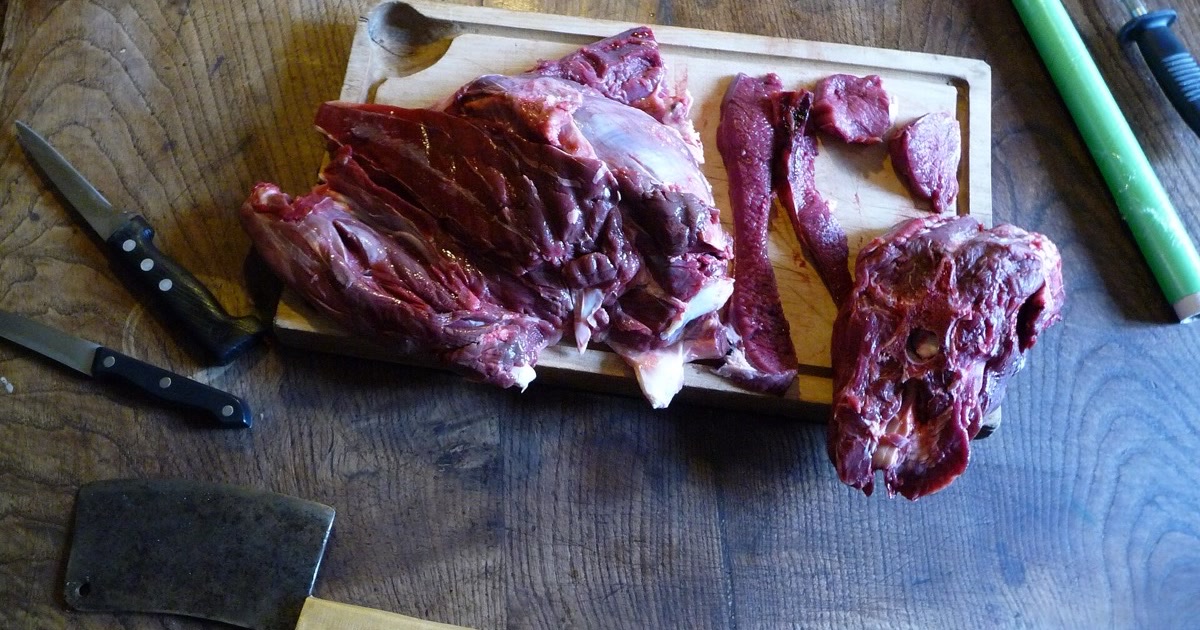
Knowing how to season deer meat comes down to one idea: venison is very lean, so seasoning has to work with fat and the right cooking method, not against them. Keep tender cuts like backstrap simple with salt, pepper and a little fat; give tougher cuts a marinade and slow, moist cooking; and add fat and bolder spices to ground venison.
This guide gives you a seasoning chart by cut, basic rubs and marinades, the food-safety numbers from federal and university extension guidance, and the mistakes that make venison taste "gamey".
Good seasoning starts before the kitchen
No rub fixes meat that was handled badly. NDSU Extension's wild game guide says undesirable strong flavours "can be due to inadequate bleeding, delay or carelessness in dressing or failure to cool the carcass promptly." Clemson Extension adds that if the air is above 50°F, the carcass "should be refrigerated within three to four hours after killing."
For bowhunters, that makes a quick recovery part of good cooking. Good shot placement and a careful track get the deer cooling sooner; see our guide to tracking a deer after the shot. If you're new to it, start with whether you can hunt deer with a bow where you live.
Before seasoning anything:
- Trim fat, silver skin and bloodshot meat. NDSU says strong flavours are concentrated in game fat, and that deer fat should be served "piping hot or very cold to avoid the clinging of fat to the mouth and the greasy taste." Most cooks simply trim it off.
- Keep it cold. Clemson says to store raw venison in the fridge and use it within 2 or 3 days, or freeze it at 0°F or lower.
- Thaw in the fridge. Clemson warns that thawing at room temperature "enhances bacterial growth" and says fridge-thawed meat should be used within one or two days.
Seasoning chart by cut
The cooking methods here follow Clemson Extension's advice: roast or broil tender loin and rib cuts, braise "less tender cuts" from the shoulder and leg, and stew the shank and neck. The seasoning suggestions are ordinary kitchen pairings to adjust to taste.
| Cut | How to cook it | Seasoning style | Mistake to avoid |
|---|---|---|---|
| Backstrap (loin) | Sear, grill, roast | Salt, black pepper, garlic, rosemary or thyme; butter to finish | Heavy marinades that hide a tender cut |
| Tenderloin | Quick sear | Salt and pepper only, plus butter | Cooking it as long as a roast |
| Hindquarter steaks (round) | Marinate, then sear or braise | Acidic marinade with garlic, soy or Worcestershire | Cooking without a marinade or added fat |
| Shoulder roast | Braise low and slow | Onion, garlic, bay, black pepper, red wine or stock | Dry roasting a tough, sinewy cut |
| Shank and neck | Stew | Cumin, paprika, tomato, root vegetables | Boiling hard; Clemson says "Do not boil!" |
| Ground venison | Burgers, chilli, sauce | Bolder spice: chilli, cumin, smoked paprika, onion | Using it lean with no added fat |
Simple dry rubs
Rubs work best on tender cuts that cook quickly. Pat the meat dry, rub on a little oil or melted butter, then the seasoning. Clemson suggests rubbing roasts with fats such as "salt pork, butter, margarine, beef suet, bacon fat, vegetable fat" to add moisture and flavour, and trimming the game fat first.
Four rubs to start with, per pound of meat:
- Classic: 1 teaspoon coarse salt, 1 teaspoon cracked black pepper, 1/2 teaspoon garlic powder.
- Herb: the classic rub plus 1 teaspoon chopped fresh rosemary and thyme.
- Smoky: 1 teaspoon smoked paprika, 1/2 teaspoon ground cumin, 1/2 teaspoon brown sugar, salt and pepper.
- Coffee and chilli: 1 teaspoon finely ground coffee, 1/2 teaspoon chilli powder, salt and pepper. Good on a seared backstrap.
Salt the meat at least 30 minutes before cooking, or just before it hits the pan. Go easy on sugar over high heat, because it burns.
Marinades for tougher cuts
Clemson says marinades "can tenderize, enhance or disguise game flavors to fit your preference." Its fact sheet lists several, including a vinegar, oil, pepper and garlic salt mix, a soy, ginger, garlic and brown sugar mix, fruit juices such as lemon or pineapple, tomato juice, French dressing, commercial marinades and milk.
A basic marinade for 2 pounds of round steaks: 1/2 cup vegetable oil, 1/4 cup red wine vinegar or lemon juice, 2 tablespoons soy or Worcestershire sauce, 2 crushed garlic cloves and black pepper. Add salt sparingly if you use soy.
Follow NDSU's food-safety rules when you marinate:
- Marinate in the refrigerator, covered, turning the meat so it's coated.
- Allow at least 4 hours for best flavour, and "use the marinated meat within 48 hours."
- Don't reuse marinade that has touched raw meat. Set some aside before adding the meat if you want a sauce.
Ground venison: add fat, then season
Venison burgers fall apart and dry out because there's so little fat. Clemson's guidance is to "mix 15% pork or beef fat with ground game and 35% pork fat with fresh game sausage." Many processors will add the fat for you when they grind.
Once the fat's in, season ground venison like beef. NDSU points out that game meat can stand in for beef "in your favorite recipes for chili, soups or stews." For burgers, salt, pepper, garlic and onion powder and a dash of Worcestershire is plenty.
Cook to a safe temperature
FoodSafety.gov, the US federal food-safety site, lists one figure for rabbit and venison, "wild or farm-raised": 160°F (71°C). NDSU Extension gives the same number for game meats, and Clemson's older fact sheet says 160 to 170°F. Both extension guides recommend a food thermometer, and NDSU adds that measuring doneness "will help ensure both a high-quality and safe recipe."
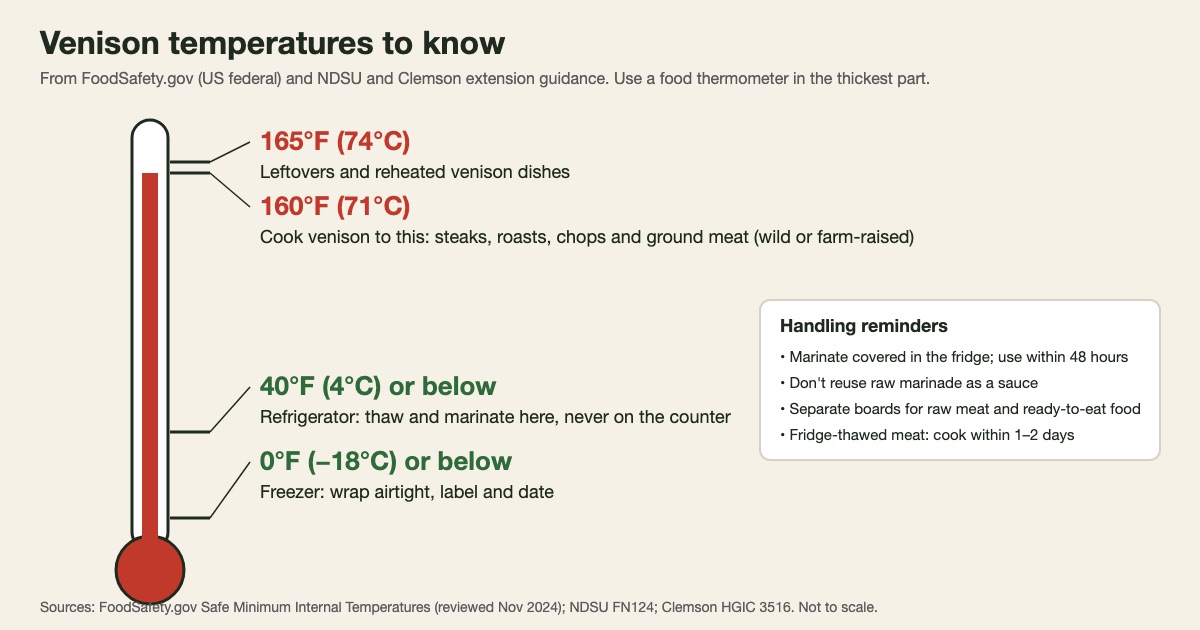
You'll see recipes that serve backstrap pink, well below 160°F. That isn't what the federal or extension guidance says, so it's a choice the cook makes. To stay at 160°F without drying the meat out, cut steaks thick, sear them hot, finish them gently and pull them as soon as the thermometer reads 160°F. Braised cuts reach that easily and stay tender.
An instant-read thermometer makes this simple. You can browse instant-read meat thermometers on Amazon; look for one that reads in a few seconds and has a thin probe for steaks.
A note on chronic wasting disease
If you hunt where chronic wasting disease (CWD) is found, check your state's testing rules before you cook. The CDC says to "strongly consider having the deer or elk tested for CWD before you eat the meat" and "if your animal tests positive for CWD, do not eat meat from that animal." It also says CWD infections in people "have never been reported."
States run their own testing. Wisconsin's DNR, for example, says testing through the DNR "is free for deer harvested in Wisconsin" and that results usually take 10 to 14 days. Checked on 9 October 2026; testing programmes change, so confirm with your state wildlife agency.
Common venison seasoning mistakes
- Overcooking without fat. Lean meat dries fast. Baste, wrap in bacon or finish with butter.
- Too much marinade on tender cuts. Save strong marinades for round and shoulder.
- Leaving the fat on. Trim it and add a neutral fat instead.
- Marinating on the counter. Always use the fridge.
- Salting ground venison too early. Salt mixed in hours ahead can make burgers dense; season just before shaping.
- Serving it lukewarm. Clemson says to serve game "very hot or very cold", because "lukewarm game fat has a very greasy taste."
Frequently asked questions
How do you get the gamey taste out of deer meat?
Most of it comes from handling and fat. NDSU links strong flavours to poor bleeding, slow dressing and slow cooling, and says they're concentrated in the fat. Cool the deer fast, trim fat and silver skin, and use a marinade on tougher cuts. Clemson lists milk and fruit juice among marinades for mellowing game flavour.
What seasoning goes well with venison?
Simple seasonings suit tender cuts: salt, black pepper, garlic, rosemary and thyme. Tougher cuts and ground meat take bolder flavours such as smoked paprika, cumin, chilli, soy, Worcestershire or red wine. Whatever you choose, add fat with it, because venison is so lean.
How long should you marinate venison?
NDSU Extension says to marinate in the refrigerator for at least 4 hours for best flavour and to use the marinated meat within 48 hours. Keep it covered, turn it occasionally, and don't reuse the marinade that touched raw meat unless you set some aside first.
What temperature should venison be cooked to?
FoodSafety.gov lists 160°F (71°C) for venison, wild or farm-raised, and NDSU Extension gives the same figure for game meats. Check with a food thermometer in the thickest part. Leftovers should be reheated to 165°F (74°C), according to the same federal chart.
Related articles
 Guides
Tracking a Deer After the Shot: Blood and Hit Signs
How to track a deer after a bow shot: watch, listen and wait; how long to wait for each hit; reading blood, hair and arrow sign; grid searches and dogs.
October 10, 2026 · 10 min read
 Guides
Can You Hunt Deer With a Bow? A Beginner's Guide
Yes, you can hunt deer with a bow. Learn the legal basics, which bows work, how hard it is, effective range, gear, shot placement and a first-season plan.
October 6, 2026 · 13 min read
 Guides
Where to Shoot a Deer With a Bow: Shot Placement
Bow shot placement for deer: where the heart and lungs sit, how to aim broadside, quartering away and from a tree stand, which shots to pass on, and why.
October 6, 2026 · 10 min read