
First-Season Bowhunting Mistakes to Avoid
Deer hunting bow tips for your first season: the beginner mistakes to avoid, from skipping the tree-stand harness to untested broadheads and long shots.

By Archery Insider Editorial Team
· · 5 min read
In this article
The most common first-season bowhunting mistakes aren't about fancy gear. They're about safety and the shot: climbing without a harness, never testing broadheads, taking shots that are too long or at a poor angle, and practising only from flat ground. These deer hunting bow tips focus on the handful of mistakes that hunter education courses and experienced hunters warn about most, with where each one comes from.
Safety mistakes
Climbing without a harness. This is the mistake that can't be undone. Virginia's wildlife agency puts it simply: "Always Harness Up Before You Climb Up!" Texas Parks and Wildlife's hunter education course says a safety harness "should always be used to climb up (and down from) the stand and also worn the entire time the hunter is in the stand."
Climbing with the bow in your hand. Texas's course says bows "should not be carried when climbing but rather raised or lowered by an appropriate haul line." Virginia's agency adds: tie the haul line to your belt or stand so your hands stay free, and keep three points of contact.
Not inspecting the stand or telling anyone where you are. Virginia advises checking stands for "wear, rust, metal fatigue and cracks, loose or missing nuts or bolts" before and after each use, telling your hunting party where your stand is, and leaving a map and your return time on the dashboard. Our guide to whether you can hunt deer with a bow covers the rest of the first-season basics.
Shot mistakes
Shooting too far. The official bowhunter education course says "the average hunter has a maximum effective range of 30 yards," and that most bowhunters shoot game "from a much closer range." It lists three reasons wounding rises with distance: vitals are harder to hit, unnoticed brush can deflect the arrow, and the animal has longer to move. Our article on how far you can shoot a deer with a bow shows how to test your own limit.
Taking a poor angle. Texas's course says the broadside shot "presents the largest target area to strike the heart and lungs," and that if the animal doesn't present a good angle, "it's best to wait for the shot angle to improve." It also tells bowhunters to avoid quartering-toward shots because of the shoulder bones. Our deer shot placement guide shows the aim points.

Practising only standing on flat ground. Missouri's conservation department advises practising "from an elevated platform or a seated position to simulate the type of hunting you will be doing."
Gear mistakes
Never shooting broadheads before the season. Broadheads can hit somewhere different from field points. Iron Will lists causes from fletching that's too small to an arrow that's under-spined or a bow that's out of tune, and recommends paper tuning, then shooting bare and fletched shafts at 20 and 30 yards to confirm.
Too much draw weight. No authority we found sets a draw weight that's "too much," so treat this as common advice from experienced hunters: a bow you struggle to draw while seated and cold forces big movements and shaky shots. For reference, Missouri sets no minimum but recommends "40 pounds or greater."
Woodsmanship mistakes (our view)
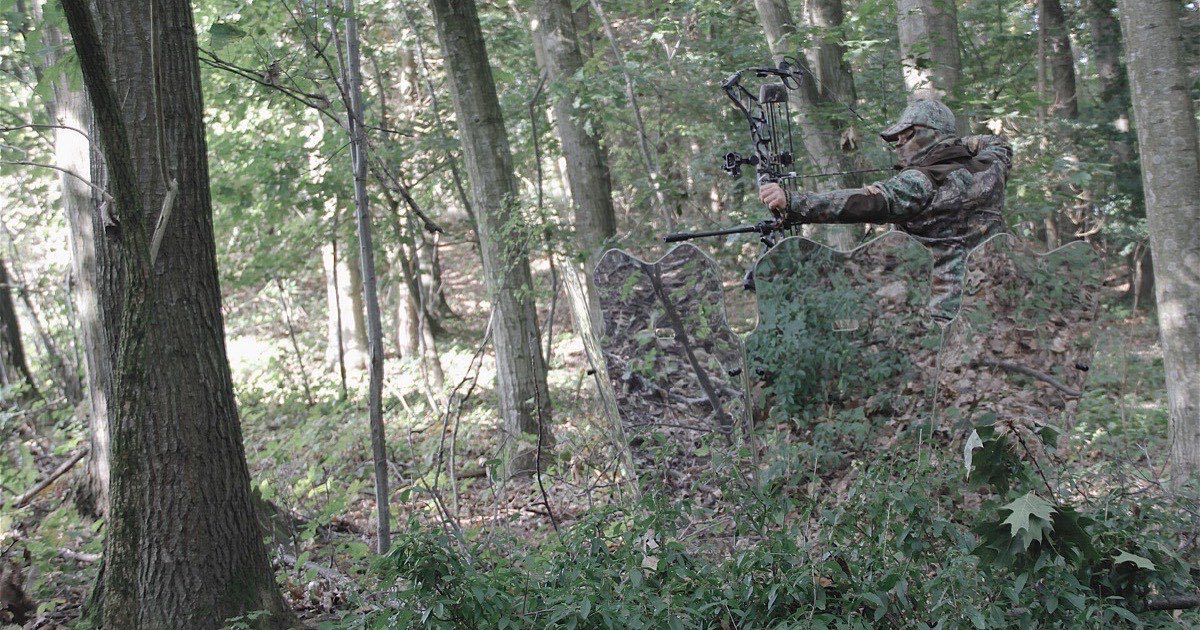
These rest on experience rather than an agency rule, so treat them as opinion. Hunting a stand when the wind blows from you towards where deer travel tends to waste the sit. Hunting the same stand day after day can make deer avoid it. And walking in noisily undoes good stand placement; Texas's course notes you "still need to be quiet in blinds and limit unnecessary movement."
| Mistake | Fix | Based on |
|---|---|---|
| No harness | Full-body harness, on before you climb | Virginia DWR, Texas Parks and Wildlife |
| Bow in hand while climbing | Haul line | Texas Parks and Wildlife |
| Shots past your limit | Set a maximum; range landmarks | Bowhunter education course |
| Poor angle | Wait for broadside | Texas Parks and Wildlife |
| Untested broadheads | Tune, then confirm at 20 and 30 yards | Iron Will |
| Flat-ground practice only | Practise elevated or seated | Missouri Department of Conservation |
| Wrong wind, overhunted stand | Pick stands by wind; rotate them | Our opinion |
For pre-season practice, you can browse broadhead practice targets or bowhunting beginner kits on Amazon. Treat any listing as an example to consider, and check broadhead rules in your state.
Frequently asked questions
What is the biggest mistake new bowhunters make?
Hunter education materials put safety first: Virginia's agency tells hunters to harness up before climbing, and Texas says the harness should be worn the whole time you're in the stand. On the shooting side, taking a shot beyond your effective range or at a poor angle is the mistake most likely to wound a deer.
How far should a beginner shoot at a deer?
Bowhunter education puts the average hunter's maximum effective range at 30 yards and notes most bowhunters shoot much closer. Many beginners set a lower limit and only extend it once practice from their hunting position proves they can hit a vital-sized target every time.
Related articles
 Guides
Can You Hunt Deer With a Bow? A Beginner's Guide
Yes, you can hunt deer with a bow. Learn the legal basics, which bows work, how hard it is, effective range, gear, shot placement and a first-season plan.
October 6, 2026 · 13 min read
 Guides
Where to Shoot a Deer With a Bow: Shot Placement
Bow shot placement for deer: where the heart and lungs sit, how to aim broadside, quartering away and from a tree stand, which shots to pass on, and why.
October 6, 2026 · 10 min read
 Guides
How Far Can You Shoot a Deer With a Bow?
Effective bow range for deer: what bowhunter education says, why long shots wound more, arrow flight times, jumping the string, and how to find your limit.
October 7, 2026 · 9 min read